
Farm-to-Cup Coffee Tourism Expands Across India and Global Origin Regions with Heritage Estate Tours in 2026
Farm-to-cup coffee tourism expands across India, Colombia, Panama, and Ethiopia as travelers book shade-grown estate tours and harvest experiences.

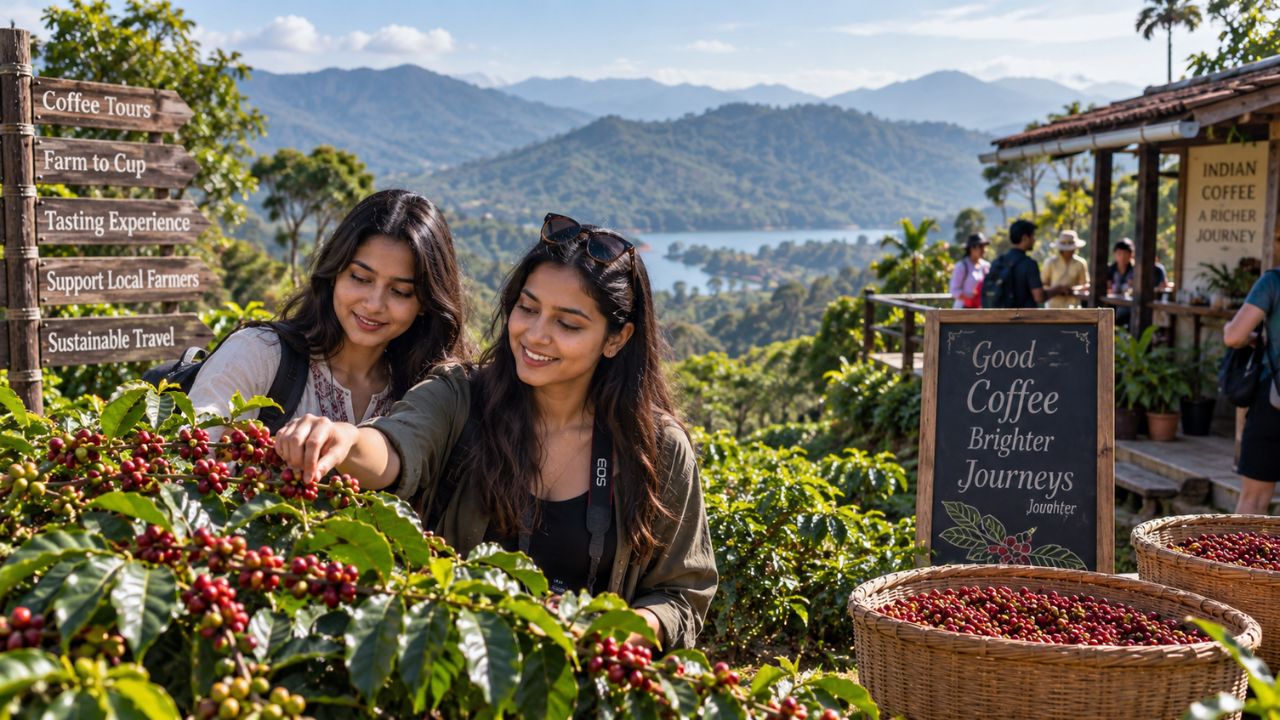
Image generated by AI
Farm-to-cup coffee tourism has emerged as a major sector within global agricultural travel, connecting specialty coffee enthusiasts with origin plantations across India, Latin America, and East Africa. Governed by seasonal harvesting schedules, direct-trade education, and eco-tourism initiatives, travelers are increasingly structuring itineraries around high-altitude estate visits, shade-grown harvesting, and professional cupping sessions in famous growing regions including Chikmagalur, Coorg, Boquete, and Colombia’s UNESCO-listed Coffee Triangle.
Farm-to-Cup Travel Transforms Global Agricultural Regions into Tourism Destinations
Historically focused on sight-seeing or monument tours, international travel itineraries are increasingly oriented around the agricultural roots of specialty beverages. Coffee tourism allows visitors to trace the complete journey of specialty beans—from hand-harvesting ripe red cherries on high-altitude slopes to pulping, sun-drying, roasting, and final extraction.
This experiential travel shift directly benefits agricultural communities. By patronizing family-owned plantations, boutique roasteries, and regional farming cooperatives, tourist spending directly supports the cultivation of high-grade Arabica, specialty Robusta, and rare varietals like Geisha. Furthermore, estate-based homestays provide sustainable revenue streams for rural regions while preserving biodiversity within shade-grown forest canopies.
Global and Indian Specialty Coffee Origin Regions Specifications
Specialty coffee destinations span distinct volcanic microclimates, traditional shade-canopy forests, and urban roasting hubs across five continents.
| Coffee Origin Region | Key Cultivation Districts | Signature Bean Varietals & Methods | Peak Harvest Travel Window | Signature Traveler Experience |
|---|---|---|---|---|
| India (Western Ghats) | Chikmagalur, Coorg (Kodagu), Wayanad | Shade-grown Arabica, Monsooned Malabar | November to February | Heritage estate homestays & bean-to-cup processing |
| India (Eastern Ghats) | Araku Valley (Andhra Pradesh) | Organic high-altitude Arabica | December to March | Tribal cooperative estate tours & regional cupping |
| Colombia | Eje Cafetero (Coffee Triangle) | UNESCO-recognized Arabica, Wet-processed | October to December | Historic hacienda stays & cable-car canopy rides |
| Panama | Boquete & Volcán (Chiriquí) | Rare Geisha varietals, Volcanic soil | January to April | Controlled-access estate tours & micro-lot cupping |
| Costa Rica | Tarrazú & Central Valley | Eco-certified shade-grown Arabica | November to March | Sustainable farm workshops & wet-mill tours |
| Ethiopia | Yirgacheffe, Sidama, Kaffa | Ancient heirloom Arabica, Natural processing | October to December | Traditional Jebena coffee ceremonies & forest origin treks |
| Guatemala | Lake Atitlán & Antigua | Volcanic Arabica, High-altitude shade | December to April | Lakeside plantation hikes & direct-trade workshops |
| Hawaii (USA) | Kona District (Big Island) | Kona Arabica, Rich volcanic slope soil | August to December | Self-guided estate drives & roasting masterclasses |
| Australia (Urban) | Melbourne (Victoria) | Global specialty blends & single origins | Year-round urban travel | Cafe culture walks, barista labs & micro-roasting |
India’s Coffee Heartland: Chikmagalur, Coorg, and Araku Valley
India’s coffee narrative is rooted in the lush rainforest canopies of the Western and Eastern Ghats, where coffee is grown exclusively under a dual-tier shade canopy of silver oaks, rosewood, and fig trees alongside pepper vines and cardamom.
Chikmagalur and Coorg (Karnataka)
Known as the birthplace of Indian coffee—where Sufi saint Baba Budan first planted seven seeds brought from Yemen in the 17th century—Chikmagalur features historic high-altitude estates nestled in the Baba Budan Giri hills. Guided by the Coffee Board of India, local planters offer immersive tours explaining shade-grown cultivation, wet-processing mills, and the art of crafting Monsooned Malabar beans. Nearby Coorg (Kodagu district) combines luxury plantation resorts with active trekking through spice-perfumed coffee forests.
Araku Valley (Andhra Pradesh) and Wayanad (Kerala)
In the Eastern Ghats, Araku Valley has gained global recognition for its organic Arabica cultivated by Indigenous tribal cooperatives. Visitors can tour high-altitude farms and taste specialty single-origin coffees at regional roasting centers. In Kerala's Wayanad district, robusta-heavy plantations integrate eco-tourism with wildlife safaris in surrounding forest reserves.
International Origin Circuits: From Panama’s Geisha Estates to Ethiopia’s Highlands
Beyond India, global coffee origin travel offers diverse regional traditions and rare agricultural varietals.
- Panama’s Boquete Highlands: Renowned for producing high-priced Geisha beans on volcanic slopes near Baru Volcano. Estate owners in Boquete and Volcán utilize controlled-access tours to protect fragile micro-lots while conducting exclusive cupping sessions for specialty connoisseurs.
- Colombia’s Eje Cafetero: Listed as a UNESCO World Heritage site (Coffee Cultural Landscape of Colombia), the Coffee Triangle features traditional wooden haciendas, bright Jeep Willys transportation, and educational processing tours.
- Ethiopia’s Ancestral Highlands: In regions like Yirgacheffe and Sidama, visitors experience coffee’s birthland through traditional Jebena brewing ceremonies, where green beans are hand-roasted over open flames before ceremonial brewing.
Coffee Traveler Logistics Guide: Harvest Timing, Estate Bookings, and Cupping Protocols
Planning a successful farm-to-cup itinerary requires careful coordination with regional harvesting schedules and processing timelines.
Harvest Season Timing and Activity Selection
To observe active cherry picking, wet-milling, and patio sun-drying:
- South India (Chikmagalur & Coorg): Visit between November and February when Arabica cherries turn deep crimson and pickers harvest by hand.
- Latin America (Panama & Costa Rica): Plan travel between December and April for dry-season harvest tours and flowering displays.
Booking Estate Stays and Navigating Rural Transport
- Plan Ahead: Heritage plantation bungalows in Chikmagalur, Coorg, and Boquete have limited room capacities. Secure homestay reservations at least 90 to 120 days prior to winter harvest seasons.
- Transport Logistics: Plantation regions are accessed via winding mountain roads. Renting a private four-wheel-drive vehicle or hiring local drivers is recommended when navigating high-altitude estate tracks in India or Central America.
- Cupping Etiquette: Participate in professional "cupping" sessions led by certified Q-graders to learn how to identify acidity, body, sweetness, and floral aromas.
Frequently Asked Questions: Global Coffee Tourism 2026
What is the best time of year to visit coffee plantations in India?
The peak travel window for visiting coffee estates in South India (Chikmagalur, Coorg, and Wayanad) is between November and February, when coffee cherries are harvested and processed on-site.
Why is shade-grown coffee significant in Indian coffee tourism?
Unlike mass full-sun plantations elsewhere, Indian coffee is grown under a natural two-tier forest canopy, preserving rainforest biodiversity, bird habitats, and soil health while yielding slow-ripened, smooth-tasting beans.
What is Panama's Geisha coffee and why do travelers seek it out?
Geisha is a rare, highly prized Arabica varietal grown in Panama's Boquete volcanic region, famous for its delicate jasmine floral notes, tea-like body, and record-setting auction prices.
Related Travel Guides
Disclaimer
This article is for informational and educational purposes only. It does not constitute legal, financial, or professional advice. While we strive to provide accurate and up-to-date information, travel policies, regulations, and conditions change rapidly. Always verify information with official sources before making travel decisions. Nomad Lawyer makes no representations about the accuracy, reliability, completeness, or suitability of the information provided. Readers should consult qualified professionals for advice specific to their circumstances. The views expressed in this article are those of the author and do not necessarily reflect the views of Nomad Lawyer.
Kunal K Choudhary
Co-Founder & Contributor
A passionate traveller and tech enthusiast. Kunal contributes to the vision and growth of Nomad Lawyer, bringing fresh perspectives and driving the community forward.
Learn more about our team →