
Tourism Harmonizing UNESCO Sites: Gia Lai Targets Premier Eco-Hub Status
Gia Lai's 2026 UNESCO heritage and festival strategy positions Vietnam's Central Highlands as Southeast Asia's next major eco-tourism destination.

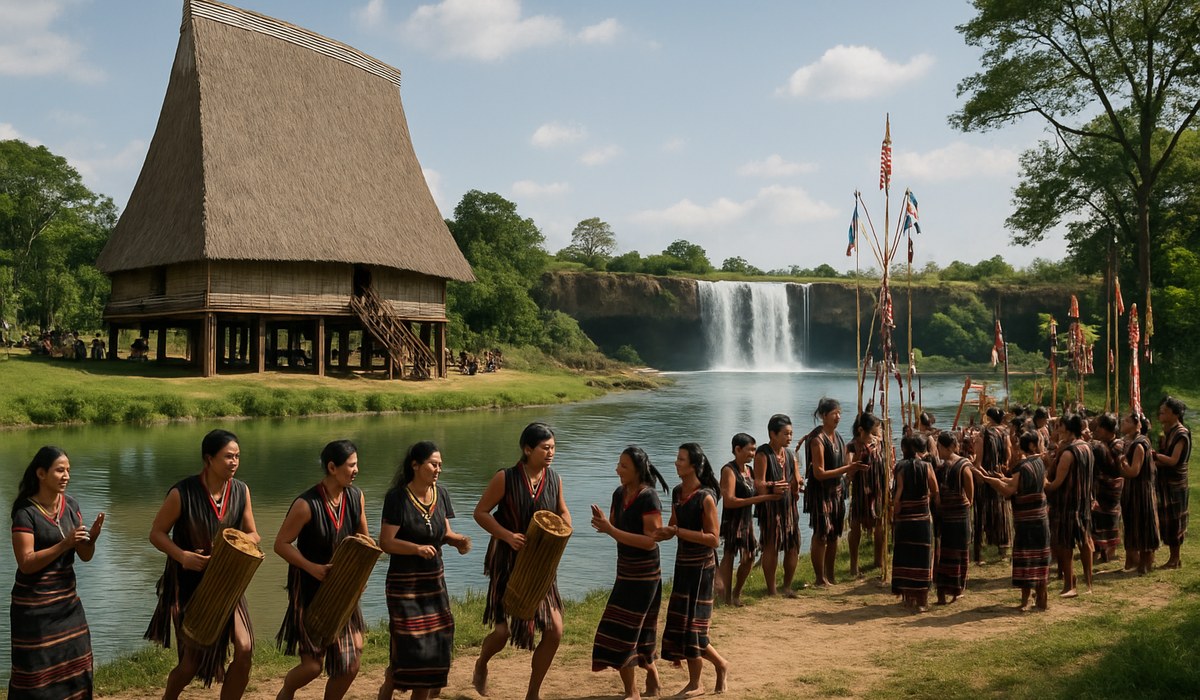
Image generated by AI
Quick Summary • Gia Lai province launches comprehensive eco-tourism initiative combining UNESCO heritage preservation with international festival programming • Strategic infrastructure investments target 2026 completion to position Central Highlands as competitive alternative to Thailand and Indonesia • Provincial authorities collaborate with cultural organizations to create year-round programming showcasing indigenous Jarai and Bahnar communities • New access routes and sustainable accommodation standards align with UNWTO benchmarks for responsible highland tourism
While travelers continue pouring into Bali's rice terraces and Chiang Mai's mountain temples, Vietnam's Gia Lai province is executing a calculated transformation. The provincial administration unveiled plans this week to position the Central Highlands as Southeast Asia's most authentic eco-tourism destination by year-end 2026. The strategy integrates UNESCO-recognized cultural assets with festival programming designed to attract the growing demographic of travelers seeking unfiltered cultural experiences beyond conventional Southeast Asian circuits.
Provincial tourism director Nguyen Van Thanh announced the initiative March 27 during a media briefing in Pleiku, the provincial capital. "We are building tourism infrastructure that respects our indigenous heritage while meeting international sustainability standards," Thanh stated. "The Central Highlands offers what mass-market destinations cannot—genuine interaction with living cultures, intact ecosystems, and uncrowded landscapes."
The timing reflects broader shifts within Asian travel markets. According to data from Vietnam's General Statistics Office, domestic tourism to highland provinces increased 34% between 2024 and 2025, while international arrivals to the Central Highlands region grew 28% during the same period. Southeast Asian business travel trends indicate corporate retreat planners are actively seeking alternatives to overcrowded coastal resorts, creating demand for highland venues offering both meeting facilities and authentic cultural programming.
Why Gia Lai's 2026 Timeline Matters for Southeast Asia Eco-Tourism
The provincial government has committed approximately 2.3 trillion Vietnamese dong (roughly USD 92 million) to tourism infrastructure through December 2026. This investment addresses historical barriers that limited visitor access: substandard road connections, insufficient accommodation meeting international standards, and limited interpretation services for heritage sites.
Three specific projects define the initiative. First, the upgrade of Provincial Road 664 linking Pleiku to the Kon Ka Kinh National Park, scheduled for completion in September 2026. Second, certification programs training 150 local guides in sustainable tourism practices aligned with UNWTO's sustainable tourism guidelines. Third, the launch of a digital platform providing multilingual information about indigenous cultural protocols, environmental conservation zones, and seasonal travel considerations.
The approach differs from conventional tourism development across the region. Rather than constructing large resorts that displace communities, Gia Lai authorities are facilitating homestay networks within Jarai and Bahnar villages. "We studied overtourism damage in northern Vietnam's Sa Pa and learned critical lessons," explained Dr. Pham Thi Mai, an anthropologist advising the provincial cultural department. "Our model keeps tourism revenue circulating within indigenous economies while maintaining community control over visitor numbers and behavior."
The strategy positions Gia Lai competitively against established highland destinations. Thailand's Chiang Rai province attracted 4.2 million visitors in 2025, while Indonesia's Toraja highlands received approximately 380,000 international arrivals. Gia Lai provincial planners project 500,000 total visitors by late 2026, with 30% originating from international markets—primarily South Korea, Japan, and solo female travelers prioritizing safety and cultural authenticity.
UNESCO Heritage Sites Anchoring the Central Highlands Tourism Strategy
Gia Lai's tourism ambitions rest on tangible cultural assets receiving increasing international recognition. The province contains significant archaeological sites linked to the ancient Sa Huynh culture, dating from approximately 1000 BCE to 200 CE. While not yet inscribed on the UNESCO World Heritage list, provincial authorities have submitted preliminary documentation for several sites to Vietnam's Ministry of Culture, Sports and Tourism.
More immediately, the province showcases two intangible cultural heritage elements recognized on UNESCO's Representative List. Gong culture of the Central Highlands—a musical tradition using bronze percussion instruments in ceremonial contexts—received UNESCO recognition in 2005. Space of gong culture encompasses 17 ethnic minority groups across five provinces, with Gia Lai representing the tradition's geographic and cultural center.
"Tourism harmonizing UNESCO heritage preservation requires careful management," noted heritage consultant Tran Duc Anh, who leads the provincial heritage inventory project. "We are creating visitor experiences that generate appreciation for living traditions without commodifying sacred practices." Specific protocols prohibit photography during certain spiritual ceremonies, limit group sizes at culturally sensitive locations, and require advance permission from village councils for any commercial cultural documentation.
The second UNESCO-recognized element is the traditional costume of Vietnam's ethnic groups, officially inscribed in 2021. Gia Lai's Jarai, Bahnar, and Sedang communities maintain distinctive weaving traditions producing indigo-dyed textiles with symbolic patterns reflecting spiritual beliefs and social status. Provincial tourism programming includes textile workshops where visitors learn dyeing techniques from master weavers, with proceeds funding apprenticeship programs preserving traditional knowledge.
A third heritage nomination is under development. The epic literature of the Jarai people—oral narratives performed during agricultural ceremonies and life-cycle events—represents one of Southeast Asia's most extensive indigenous literary traditions. Ethnomusicologist Dr. Hoang Minh Duc has documented more than 400 distinct epic variations across Gia Lai. "These narratives encode ecological knowledge, social norms, and historical memory spanning centuries," Duc explained. "Making them accessible to visitors requires sophisticated interpretation that conveys cultural depth without reducing them to entertainment."
The approach mirrors successful heritage-driven tourism development models in other emerging destinations, where cultural preservation and economic development advance simultaneously rather than existing in conflict.
Festival Programming and Cultural Events Driving International Visibility
Beyond static heritage sites, Gia Lai authorities are developing festival programming designed to create compelling reasons for travelers to visit during specific seasons. The centerpiece initiative is the Central Highlands Gong Festival, scheduled for November 2026 in Pleiku and surrounding villages.
Festival organizers have secured partnerships with cultural institutions in South Korea, Laos, and Cambodia to showcase comparative gong traditions from across mainland Southeast Asia. "We are positioning this as a regional cultural summit, not merely a local celebration," said festival director Le Hoang Nam. "The program includes symposia bringing ethnomusicologists together with community practitioners to discuss preservation challenges, alongside public performances accessible to visitors."
The November timing reflects careful seasonal planning. The Central Highlands experiences peak travel conditions between November and March, when rainfall decreases and temperatures range between 18-25°C (64-77°F). The festival coincides with post-harvest celebrations traditionally held by indigenous communities, allowing authentic integration of tourism programming with existing cultural calendars.
A second major event—the Pleiku Ironman 70.3 triathlon, scheduled for April 2026—targets different demographics. The race route incorporates highland terrain, volcanic crater lakes, and rubber plantation roads. Event organizers project 1,500 participants, predominantly from urban Vietnam and neighboring countries, with average spending of approximately USD 800 per visitor including accommodations, meals, and support crew expenses.
"Endurance athletes represent ideal eco-tourism visitors," observed tourism consultant Bui Thanh Ha. "They seek pristine natural environments, generate significant local spending, and often extend stays to explore surrounding areas with family members." The triathlon strategy reflects growing recognition across Southeast Asian destinations that sports tourism can drive overnight stays beyond typical weekend patterns.
Additional programming targets niche interests: a coffee cultural festival in March celebrating Gia Lai's emerging specialty coffee sector, a highland wildflower documentation project during August's bloom period, and traditional textile exhibitions timed to coincide with lunar new year celebrations.
The festival strategy has attracted notice from international travel media. National Geographic's emerging destinations coverage included Gia Lai among destinations to watch in 2026, citing the province's balance between cultural authenticity and visitor infrastructure development.
Infrastructure Development: Access, Accommodations, and Sustainability Measures
Tourism infrastructure improvements address historical limitations that constrained visitor growth. Pleiku airport currently operates daily connections to Hanoi and Ho Chi Minh City via Vietnam Airlines and VietJet Air. Provincial authorities are negotiating international charter services from Seoul and Busan for the November gong festival, with potential for regular service pending demonstrated demand.
Ground transportation improvements include the ongoing Provincial Road 664 upgrade and repairs to the Ho Chi Minh Highway section passing through Gia Lai. Travel time from Pleiku to Kon Tum province, directly north, has decreased from 3.5 hours to approximately 2 hours since 2024 road improvements. Lonely Planet's Vietnam destination insights now categorize the Central Highlands as accessible for independent travelers with moderate adventure experience, marking a significant reclassification from previous editions requiring 4WD vehicles and experienced drivers.
Accommodation development follows a tiered model. Pleiku city contains approximately 45 licensed hotels and guesthouses, with three properties meeting international three-star standards. Rather than pursuing large resort development, provincial regulations encourage distributed accommodation through community-based homestays and boutique properties under 20 rooms.
The homestay network currently includes 68 participating households across 12 villages, with standardization programs ensuring basic amenities including private bathrooms, potable water systems, and waste management infrastructure. Provincial tourism officials conduct quarterly inspections and operate a centralized booking platform distributing visitors across participating communities rather than concentrating impact in a few locations.
Environmental sustainability measures include mandatory waste sorting at all tourism sites, prohibition of single-use plastics at provincial parks, and vehicle restrictions during sensitive wildlife periods. Kon Ka Kinh National Park, home to endangered primates including gray-shanked douc langurs, limits daily visitors to 200 individuals during breeding season (February through May) and 350 during other months.
"We are designing tourism that fits within ecological carrying capacity rather than maximizing visitor numbers," explained park director Vo Van Minh. "This approach aligns with premium eco-tourism expectations from European and North American markets where visitors pay premium prices for guaranteed wildlife viewing in uncrowded conditions."
The province has also established a tourism revenue sharing mechanism. Fifteen percent of entrance fees collected at heritage sites and national parks fund community development projects selected by village councils, creating tangible links between tourism activity and local benefit. Projects funded through 2025 included school renovations in three villages, traditional medicine gardens, and apprenticeship programs teaching young people traditional crafts.
FAQ: Planning Your Gia Lai Visit in 2026
When is the best time to visit Gia Lai for optimal weather and cultural events?
November through March offers the most comfortable conditions, with moderate temperatures and minimal rainfall. The Central Highlands Gong Festival in November 2026 provides exceptional cultural programming, while March combines pleasant weather with the coffee cultural festival and wildflower season.
What visa requirements apply for international travelers visiting Gia Lai?
Vietnam maintains standard visa policies for international arrivals. Citizens of most Western European nations, ASEAN members, and several Asian countries receive visa exemptions for stays under 15-45 days depending on nationality. Travelers should verify current requirements through Vietnamese embassies, as policies periodically change. Pleiku airport does not offer visa-on-arrival services, so advance arrangements are essential.
How should travelers prepare for visiting indigenous communities?
Respect for cultural protocols is non-negotiable. Provincial tourism guidelines recommend hiring certified local guides who understand community protocols and can facilitate appropriate interactions. Visitors should seek explicit permission before photographing individuals, never touch spiritual objects or ceremonial items, and dress modestly (covering shoulders and knees) when visiting villages. Many communities prohibit visits during specific ceremonial periods.
What language considerations should travelers plan for?
Vietnamese is the primary language in urban Pleiku, with limited English spoken outside major hotels. Indigenous communities speak various minority languages including Jarai and Bahnar. Hiring guides through the provincial tourism platform ensures interpretation services. Translation apps provide basic assistance, though connectivity can be inconsistent in rural areas.
Are there health or safety concerns specific to the Central Highlands?
Malaria risk exists in forested areas, so prophylaxis is advisable after consulting travel health specialists. Standard vaccinations for Southeast Asia apply (Hepatitis A/B, typhoid, tetanus). Travel insurance covering medical evacuation is prudent given limited specialized medical facilities in rural areas. Road conditions vary, making experienced drivers essential for independent travel outside Pleiku city.
Conclusion
Gia Lai's calculated approach to tourism harmonizing UNESCO heritage preservation with sustainable infrastructure development reflects evolving best practices across emerging destinations. The 2026 timeline creates specific opportunities for travelers seeking authentic experiences before mass-market discovery transforms the region. Provincial investments in cultural programming, ecological protection, and community-based accommodation networks position the Central Highlands as a viable alternative to overcrowded heritage destinations across Southeast Asia.
The initiative's success depends on maintaining the delicate balance between economic development and cultural integrity. Early indicators suggest provincial authorities recognize this challenge, implementing visitor management systems and community benefit-sharing mechanisms that have failed in other Vietnamese destinations. For travelers seeking meaningful engagement with living indigenous cultures within intact ecosystems, Gia Lai warrants serious consideration for 2026 itineraries.
Related Articles:
Disclaimer
This article is for informational and educational purposes only. It does not constitute legal, financial, or professional advice. While we strive to provide accurate and up-to-date information, travel policies, regulations, and conditions change rapidly. Always verify information with official sources before making travel decisions. Nomad Lawyer makes no representations about the accuracy, reliability, completeness, or suitability of the information provided. Readers should consult qualified professionals for advice specific to their circumstances. The views expressed in this article are those of the author and do not necessarily reflect the views of Nomad Lawyer.
Raushan Kumar
Founder & Lead Developer
Full-stack developer with 11+ years of experience and a passionate traveller. Raushan built Nomad Lawyer from the ground up with a vision to create the best travel and law experience on the web.
Learn more about our team →