
Deutsche Bahn Launches Direct ICE High-Speed Rail Link Between Cologne and Antwerp
Deutsche Bahn introduces direct ICE trains from Cologne to Antwerp via Brussels Airport and Leuven starting Sept 7, 2026. See the full route and schedule.

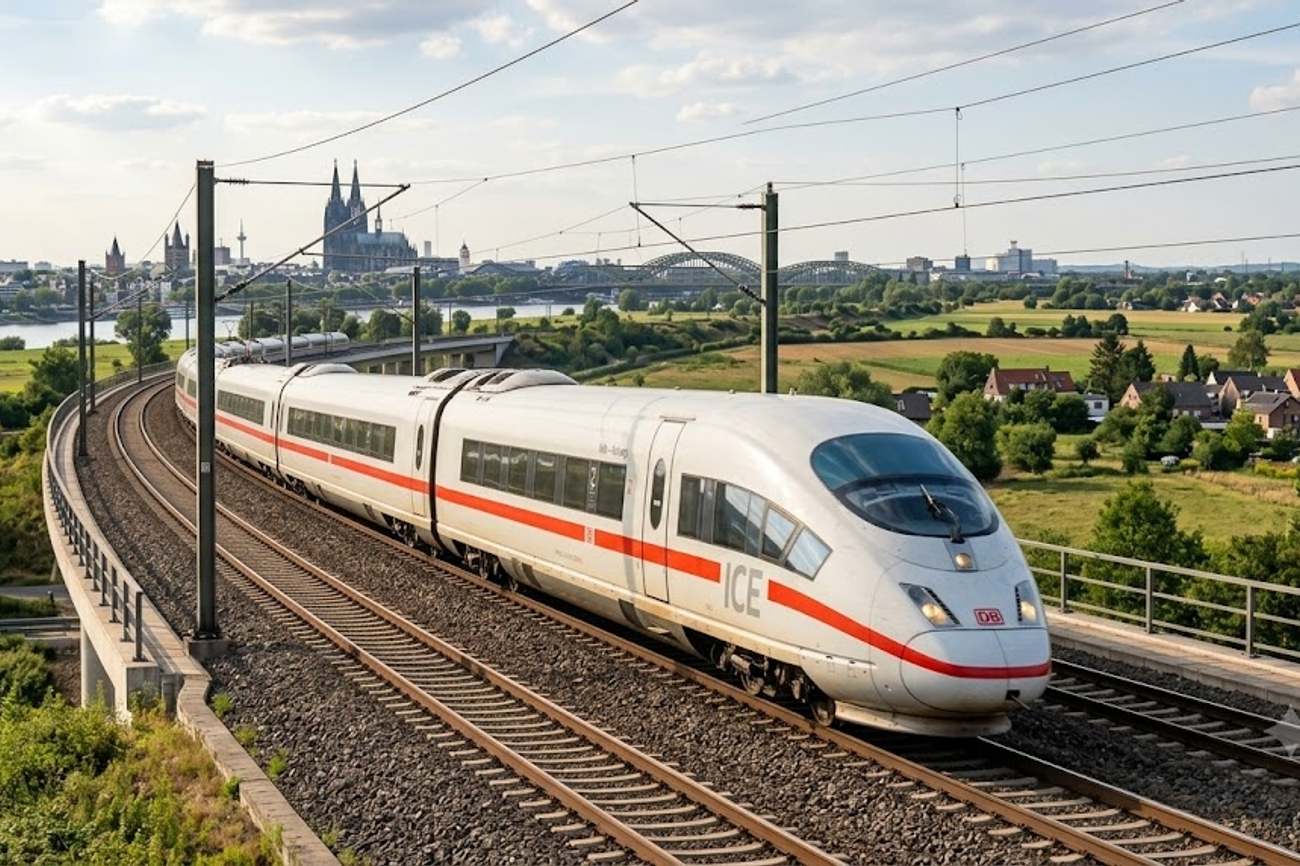
Image generated by AI
Cross-border mobility between Germany and Belgium is entering a new phase of integration as Deutsche Bahn prepares to launch a direct Intercity-Express (ICE) service linking Cologne and Antwerp. Beginning September 7, 2026, this new rail corridor will bypass the traditional necessity of routing all international traffic through central Brussels, instead offering a streamlined path that serves several strategic Belgian hubs and a major international aviation gateway.
The initiative represents a significant expansion of the existing German-Belgian rail network. While high-speed connections between Germany and Brussels have long been established, this new routing extends the reach of the ICE network further into Flanders and creates a direct pipeline for passengers moving between the Rhine-Ruhr region and the Belgian coast and airport.
New High-Speed Schedule and Route Mapping
According to timetable data released by Deutsche Bahn prior to August 4, the service will operate with two daily train pairs, meaning two departures in each direction every day. This frequency is designed to cater to a diverse demographic of travelers, including corporate commuters, leisure tourists, and transit passengers connecting to flights.
The route is meticulously planned to hit several high-value targets. Starting at Köln Hauptbahnhof, the trains will proceed through the following sequence of stops:
| Station | Country | Primary Function |
|---|---|---|
| Cologne (Köln Hbf) | Germany | Primary German Terminus & Network Gateway |
| Aachen | Germany | Critical Border Transit Point |
| Liège | Belgium | Eastern Belgian Hub |
| Leuven | Belgium | Academic and Regional Center |
| Brussels Airport | Belgium | International Air-Rail Interchange |
| Antwerp | Belgium | Final Belgian Terminus |
By utilizing the advanced ICE 3neo trainsets, Deutsche Bahn aims to enhance the efficiency of cross-border travel. The deployment of these modern aircraft-on-rails ensures that the journey is not only faster but aligns with broader European goals of reducing short-haul flight reliance in favor of sustainable high-speed rail.
Cologne as the Strategic Gateway to Western Europe
Cologne serves as the anchor for this service. Due to its position as one of Germany's most connected railway hubs, Köln Hauptbahnhof allows passengers from across the German interior to access Belgium without needing to change trains multiple times.
Industry data from the European Commission highlights the Cologne region as a cornerstone of European transport infrastructure. By linking this hub directly to Antwerp, the service effectively extends the practical reach of the Belgian rail network deep into the German heartland. This is not a standalone project but an evolution of existing services; for instance, during the summer of 2026, Deutsche Bahn expanded its Belgian footprint by introducing weekend services reaching the Belgian North Sea coast. The Antwerp link is the next logical step in this expansion.
Strengthening the Aachen-Liège Border Corridor
Aachen continues to play a pivotal role as the primary German gateway to the west. For residents and businesses in the Aachen region, the new service eliminates the friction of transferring trains when heading to Belgium’s primary airport. The direct link to Brussels Airport transforms Aachen from a mere transit stop into a vital node in an integrated rail-air corridor.
Similarly, the inclusion of Liège ensures that eastern Belgium maintains its status as a key player in international transit. By providing a direct line to Antwerp and Leuven, the ICE service creates a functional east-west axis across Belgium. This reduces the congestion at Brussels' city-center stations and offers a more efficient alternative for those whose final destination is in the north or east of the country.
Expanding International Access to Leuven and Brussels Airport
Perhaps the most impactful change for regional travelers is the direct inclusion of Leuven. Historically, international high-speed rail has focused heavily on the Brussels-centric model. By stopping in Leuven, Deutsche Bahn is providing the city with its first direct high-speed link to Germany.
For the academic community and business professionals in Leuven, the ability to board an ICE train directly to Cologne or Aachen represents a massive reduction in travel time and logistical complexity.
Simultaneously, the direct connection to Brussels Airport solves a long-standing pain point for international travelers. Instead of navigating the transfer from Brussels-South (Midi) to the airport, passengers from Cologne and Aachen can now travel directly to the terminal. This creates a seamless "intermodal" experience, where the train effectively becomes an extension of the airport's arrival and departure halls.
Why This Matters: The Shift in European Transit
For the modern traveler, this development signifies a shift away from "hub-and-spoke" rail travel toward a "mesh" network. Previously, if you wanted to go from Germany to Antwerp or the airport, you were almost always forced through the bottleneck of central Brussels. This new routing breaks that pattern.
From a logistical standpoint, this creates a "bypass" effect. By distributing international arrivals across Antwerp, Leuven, and the airport, the pressure on Brussels' urban infrastructure is reduced. For the passenger, this means fewer crowds, fewer transfers, and a significantly lower risk of missing connections due to delays at a single central hub.
Furthermore, the integration of the ICE 3neo fleet suggests a commitment to passenger comfort and environmental sustainability. As European governments push for "Green Deal" targets, replacing short-haul flights between Cologne and Belgian cities with high-speed rail is a tangible step toward decarbonizing regional travel.
Related Travel Guides
Disclaimer
This article is for informational and educational purposes only. It does not constitute legal, financial, or professional advice. While we strive to provide accurate and up-to-date information, travel policies, regulations, and conditions change rapidly. Always verify information with official sources before making travel decisions. Nomad Lawyer makes no representations about the accuracy, reliability, completeness, or suitability of the information provided. Readers should consult qualified professionals for advice specific to their circumstances. The views expressed in this article are those of the author and do not necessarily reflect the views of Nomad Lawyer.
Raushan Kumar
Founder & Lead Developer
Full-stack developer with 11+ years of experience and a passionate traveller. Raushan built Nomad Lawyer from the ground up with a vision to create the best travel and law experience on the web.
Learn more about our team →