
Southwest Tourism Shift: Phoenix and Arizona Surge as Las Vegas Volume Declines
Las Vegas saw a 7.5% visitor drop in 2025, while Phoenix attracted 47.7 million travelers. Explore the shifting tourism dynamics of the American Southwest.
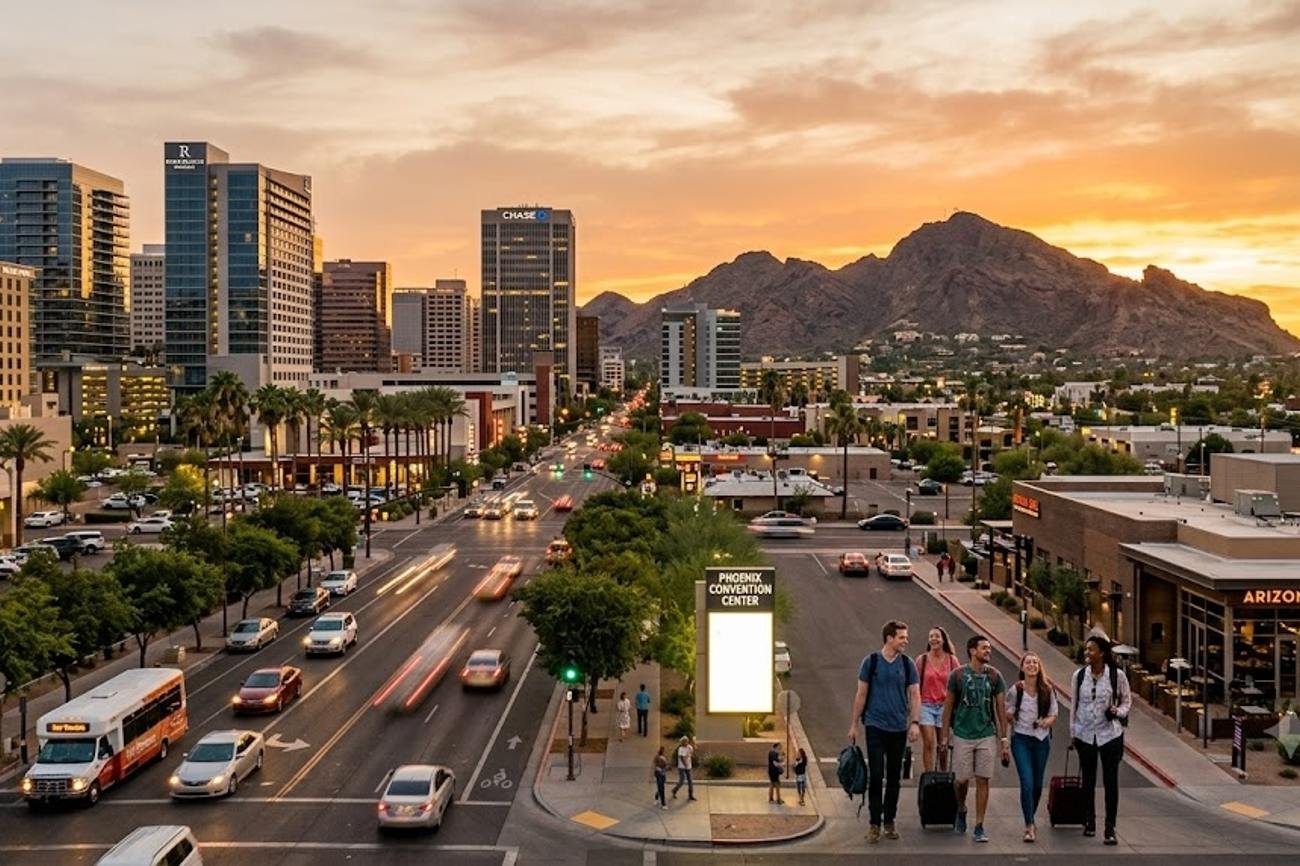
Image generated by AI
[Phoenix, September 9, 2026] — The tourism landscape of the American Southwest is undergoing a structural transformation, characterized by a move away from concentrated resort hubs toward a more distributed regional circuit. New data reveals that while Las Vegas continues to generate massive economic impact, it is experiencing a cooling period, whereas the Phoenix-Sedona corridor is fueling a broader expansion of Arizona's visitor economy.
In 2025, Las Vegas recorded 38.55 million visitors, marking a 7.5% decrease from the 41.68 million seen in 2024. This decline represents one of the most significant annual drops for the city outside of the global pandemic era. Despite this dip in volume, the city remains an economic powerhouse, generating $50.8 billion in direct visitor spending and a total tourism impact of $80.9 billion.
Las Vegas Market Softens Amid Mature Recovery
While the scale of the Las Vegas economy remains dominant, the 2025 metrics suggest a shift in consumer behavior. The hospitality sector felt the impact of reduced demand, with annual hotel occupancy falling to 80.3%, a decrease of 3.3 percentage points compared to the previous year.
Pricing also saw a downward correction. The average daily room rate (ADR) dropped by 5% to $183.52, and Revenue Per Available Room (RevPAR) fell 8.8% to $147.30. Industry observers note that while these figures represent a decline, they still remain among the highest levels ever recorded for the destination, suggesting a market correction rather than a systemic collapse.
The city's resilience is largely attributed to its robust business travel sector. Convention attendance remained a critical pillar of the economy, with 5.99 million delegates visiting in 2025, which helped offset the softening of international and leisure demand.
| Las Vegas Tourism Indicator | 2025 Result |
|---|---|
| Visitors | 38.55 million |
| Visitor Change | -7.5% |
| Hotel Occupancy | 80.3% |
| Average Daily Room Rate | $183.52 |
| RevPAR | $147.30 |
| Convention Attendance | 5.99 million |
| Direct Visitor Spending | $50.8 billion |
| Total Tourism Impact | $80.9 billion |
| Hotel Rooms | 150,300 |
Phoenix Metropolitan Area Expands Regional Reach
Conversely, the Phoenix metropolitan area is positioning itself as a diversified gateway for the Southwest. In 2025, the region attracted 47.7 million visitors, a figure encompassing both overnight guests and day-trip travelers. This volume underscores Phoenix's role as more than just a city destination; it is increasingly a strategic hub for those exploring the wider region.
The economic contribution of these visitors is substantial, with direct spending exceeding $13.4 billion. When accounting for indirect and induced economic effects, the total visitor economy reached $23.6 billion. This activity supported more than 144,000 jobs and contributed an estimated $1.7 billion in local and state tax revenues.
A primary driver of this growth is the connectivity provided by Phoenix Sky Harbor International Airport. In 2025, the gateway processed 51.62 million passengers, including 2.81 million international arrivals. With service to over 130 domestic and 24 international destinations, the airport enables a seamless transition for travelers moving between urban resorts and the natural attractions of northern Arizona.
Arizona Records State-Wide Tourism Employment Growth
The economic benefits of tourism in Arizona are spreading beyond the capital city, reaching deep into rural communities. In 2025, the state's tourism sector supported a record 326,359 total jobs. Direct tourism employment rose by 0.7% to reach 195,190 positions, while total tourism-supported employment grew by 0.6%.
The geographical distribution of this wealth is evident in tax contributions. While tourism accounts for roughly 7.3% of sales-tax revenue in Pima and Maricopa counties, that figure jumps to 12.7% in Arizona's 13 rural counties. This indicates that visitors are increasingly engaging in "circuit travel"—staying in Phoenix but spending money in Flagstaff, Sedona, and the Grand Canyon region.
Spending patterns in 2025 further highlight a shift toward experiential travel. Air travel expenditure rose by 7.7%, and food services generated $6.8 billion. Spending on arts, entertainment, and recreation increased by 3.4% to reach $3 billion. In contrast, accommodation spending saw a slight dip of 1%, and local transportation fell by 1.4%.
| Arizona Tourism Indicator | 2025 Result |
|---|---|
| Tourism-supported Jobs | 326,359 |
| Direct Tourism Jobs | 195,190 |
| International Visitation Share | 12% |
| Domestic Visitation Share | 88% |
| State Tourism Tax Revenue | $1.2 billion |
| Food-services Spending | $6.8 billion |
| Arts, Entertainment and Recreation | $3 billion |
| Visitor-spending Impact of 1% Volume Growth | About $300 million |
Sedona Prioritizes Value Over Volume
While Phoenix and Las Vegas compete on scale, Sedona demonstrates the viability of a high-value, low-volume model. Rather than chasing millions of visitors, Sedona leverages its natural scenery and wellness appeal to drive high room rates and consistent demand.
January 2026 data illustrates this strength. Hotel revenue in Sedona rose 7.7% year-on-year to $11.53 million. Occupancy climbed 4.4% to 57.1%, while the ADR rose 6.3% to $295. This resulted in an 11% increase in RevPAR, reaching $168.
The visitor profile in Sedona differs sharply from the Las Vegas model. Travelers averaged a stay of 2.1 days, with 81% staying overnight. Notably, 52.9% of January visitors were Arizona residents, and more than one-third were repeat guests, indicating strong domestic loyalty and a preference for short, experiential getaways.
Why This Matters (Information Gain & Experience)
For the traveler, this data signals a shift in how the American Southwest is experienced. The decline in Las Vegas volume suggests that the "mega-resort" era is maturing, and visitors are seeking more varied itineraries. Instead of a single-city stay, the trend is moving toward "multi-node" trips—combining the urban amenities of Phoenix with the natural serenity of Sedona and the iconic vistas of the Grand Canyon.
From a logistical standpoint, the growth of Phoenix Sky Harbor as a primary hub means travelers can now bypass the traditional Vegas-centric entry point to the Southwest. This decentralization reduces the pressure on a single destination's infrastructure and spreads economic benefits to rural Arizona. For the leisure traveler, this means more options for "slow travel" and wellness-focused trips, moving away from the high-intensity environment of the Strip toward the experience-led economy of the Arizona highlands.
Related Travel Guides
Disclaimer
This article is for informational and educational purposes only. It does not constitute legal, financial, or professional advice. While we strive to provide accurate and up-to-date information, travel policies, regulations, and conditions change rapidly. Always verify information with official sources before making travel decisions. Nomad Lawyer makes no representations about the accuracy, reliability, completeness, or suitability of the information provided. Readers should consult qualified professionals for advice specific to their circumstances. The views expressed in this article are those of the author and do not necessarily reflect the views of Nomad Lawyer.