
Germany Leverages 32% Tertiary Educated Workforce to Drive Tourism Economy Growth in 2026

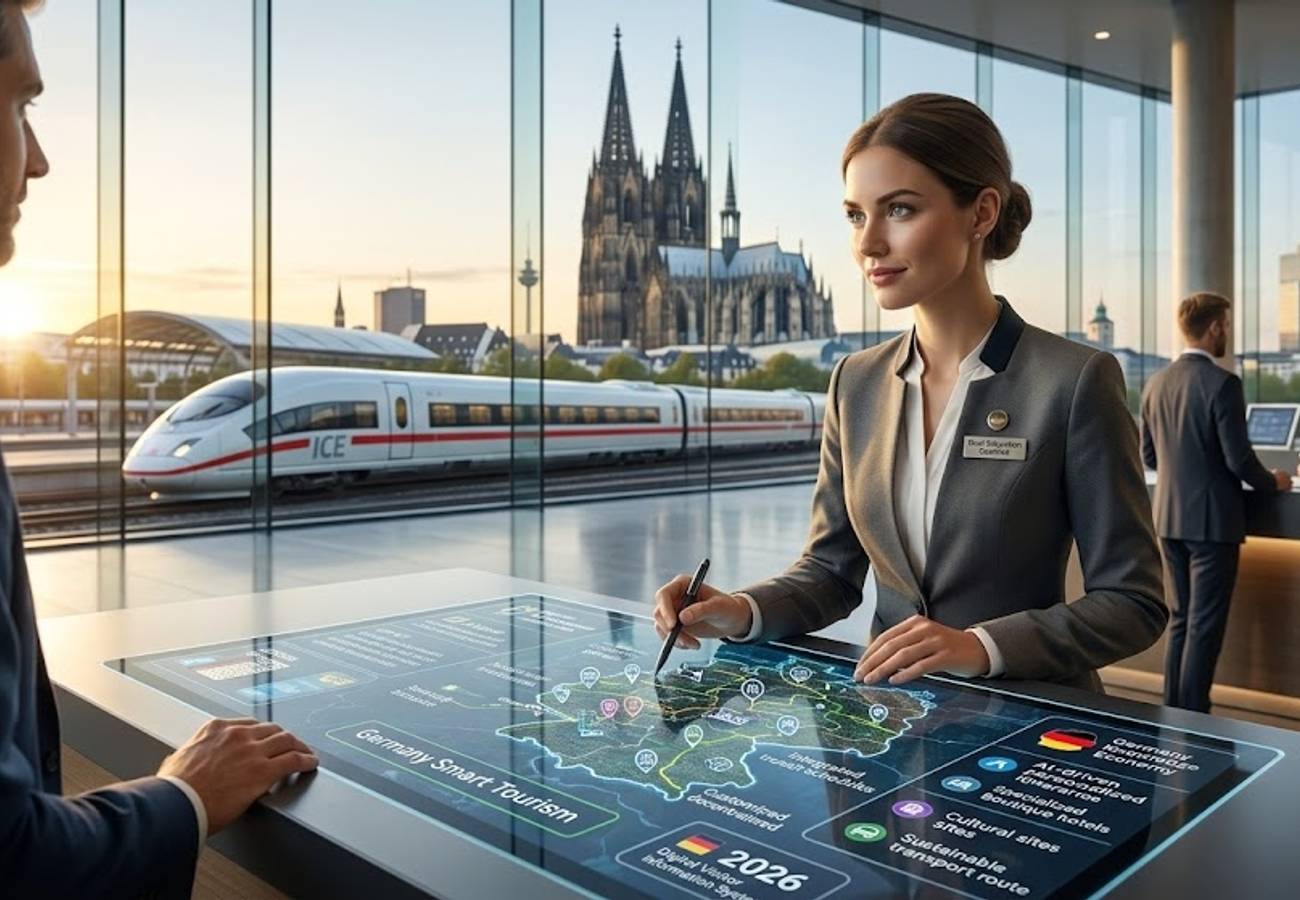
Image generated by AI
Germany is outperforming competing European and global economies by deploying a 32 per cent tertiary-educated workforce and a world-leading 14.3-year average schooling level to scale high-quality tourism, digital transit, and sustainable hospitality services.
BERLIN, Germany — Human capital has become Germany’s primary competitive weapon in transforming its national tourism economy. Official educational performance metrics place Germany at the top of global rankings with an average of 14.3 years of schooling, surpassing major travel economies including Canada, Iceland, the United States, Switzerland, the United Kingdom, and Japan.
Rather than relying solely on historic monuments, fairy-tale castles, and cultural scenery, German tourism strategy prioritizes workforce professionalization. With 32 per cent of the population holding tertiary education degrees, combined with the nation's renowned dual vocational training framework, Germany is supplying hotels, transit networks, and cultural venues with highly skilled management and operational personnel.
Academic Achievement Matrix: 14.3 Schooling Years and 32 Percent Higher Education
The direct connection between educational investment and tourism service quality is central to Germany’s 2026 economic trajectory. High literacy, technical fluency, and multilingual capabilities allow travel businesses to deliver seamless visitor experiences across both urban and rural destinations.
The table below outlines how specific educational benchmarks directly enhance Germany's tourism infrastructure:
| Educational Parameter | National Metric | Impact on Tourism & Visitor Experience |
|---|---|---|
| Average Years of Schooling | 14.3 years (#1 Globally) | Supports complex, high-technology tourism operations & management |
| Tertiary Education Attainment | 32% of population | Supplies qualified executives for hotel, event & destination management |
| Dual Vocational System | Nationwide network | Combines academic theory with practical hospitality apprenticeships |
| International Student Mobility | High global enrolment | Drives VFR travel, student spending & long-term destination promotion |
| Digital Education Integration | Advanced tech literacy | Powers smart tourism applications, automated check-ins & transit apps |
| Professional Accreditation | Standardized licensing | Ensures consistent service quality across all 16 federal states |
Dual Vocational Education System Shapes Professional Hospitality Talent
A key structural advantage of Germany’s hospitality sector is the Duale Ausbildung (dual vocational education system). This model combines theoretical classroom instruction at specialized vocational colleges with mandatory hands-on apprenticeships at hotels, restaurants, and event management firms.
Unlike academic systems focused exclusively on classroom lectures, Germany’s dual approach ensures graduates possess certified practical expertise across vital tourism disciplines:
- Culinary & Food Beverage Management: High-end kitchen administration, nutritional science, and sustainable food sourcing.
- Hotel & Resort Administration: Revenue management, front-office operations, and international guest relations.
- Travel Operations & Logistics: Efficient transit scheduling, ticketing systems, and tour coordination across railway and airport hubs.
- Event & MICE Management: Professional execution of large-scale international trade fairs, conventions, and cultural festivals.
This structured training benefits both major global hotel chains in Berlin and Frankfurt as well as family-owned boutique guesthouses across regional travel corridors.
Regional Tourism Decentralization Across Rural and Cultural Destinations
Education investment acts as a vital tool for decentralizing tourism revenue across Germany's 16 federal states. Equipped with business management qualifications, local entrepreneurs in rural regions—such as the Black Forest, the Bavarian Alps, the Baltic Sea coast, and the Rhine Valley—are developing boutique accommodations and eco-tourism initiatives.
This decentralized approach prevents over-tourism in major metropolitan hubs like Berlin and Munich while channeling visitor spending directly into local rural economies. Trained destination managers preserve cultural heritage, curate regional food trails, and operate nature conservation programs.
Furthermore, international students studying at universities across smaller German cities generate year-round visiting friends and relatives (VFR) travel, boosting local hotel occupancy during non-peak travel periods.
Digital Infrastructure and Smart Tourism Innovation in German Cities
Germany’s digitally literate workforce is accelerating the adoption of smart tourism technologies across transport and hospitality sectors. Automated passenger processing at major hubs like Frankfurt Airport (FRA) and Munich Airport (MUC), combined with integrated transit applications from Deutsche Bahn, allows travelers to navigate multi-modal transit seamlessly.
Hotels and cultural attractions utilize AI-driven reservation systems, digital concierge platforms, and multilingual self-service kiosks. These digital enhancements reduce wait times and eliminate language barriers for international visitors.
Simultaneously, environmental management expertise enables German hotels to obtain recognized Green-Key and Swisstainable-equivalent eco-certifications, meeting growing global demand for sustainable travel.
Global 25-Nation Average Schooling and Human Capital Ranking Matrix
The comprehensive reference table below compares Germany against 24 competing global nations based on average years of schooling data:
| Rank & Nation | Average Years of Schooling | Key Human Capital & Educational Profile |
|---|---|---|
| 1. Germany | 14.3 years | World leader in dual vocational training & 32% tertiary workforce |
| 2. Canada | 13.9 years | International education accessibility & multi-year student mobility |
| 2. Iceland | 13.9 years | Equal education access & specialized eco-tourism management |
| 2. United States | 13.9 years | Elite research universities & commercial hospitality management |
| 2. Switzerland | 13.9 years | World-class luxury hotel schools & precision hospitality training |
| 6. Estonia | 13.6 years | Digital education leadership & e-governance travel integration |
| 6. Lithuania | 13.6 years | High university participation rates & regional Baltic exchange |
| 8. United Kingdom | 13.5 years | Historic university prestige & heritage destination management |
| 8. Israel | 13.5 years | Advanced tech R&D & technology startup event management |
| 10. Latvia | 13.4 years | Vocational technical education & Baltic cultural preservation |
| 11. Poland | 13.2 years | Expanding post-secondary network & regional hotel development |
| 12. Slovakia | 13.1 years | Technical education & Central European regional tourism |
| 12. Norway | 13.1 years | High public education funding & sustainable Scandinavian travel |
| 14. Slovenia | 13.0 years | Green tourism management & alpine eco-education |
| 14. Czechia | 13.0 years | Heritage preservation training & historic city management |
| 14. Finland | 13.0 years | World-renowned basic education & nature-based tourism |
| 14. United Arab Emirates | 13.0 years | Massive investment in modern tourism education & infrastructure |
| 14. Denmark | 13.0 years | Design education & sustainable urban tourism planning |
| 19. Australia | 12.9 years | International student destination & coastal outdoor tourism |
| 19. New Zealand | 12.9 years | Student-focused outdoor learning & eco-tourism circuits |
| 21. Montenegro | 12.8 years | Adriatic coastal tourism development & hospitality training |
| 21. Bahamas | 12.8 years | Regional Caribbean hospitality & marine tourism education |
| 23. Netherlands | 12.7 years | Multilingual education & international travel trade hubs |
| 23. Japan | 12.7 years | High technical discipline & advanced tech-driven tourism |
| 23. Belgium | 12.7 years | European administrative education & culinary heritage |
Practical Implications for International Travelers in Germany
For international travelers visiting Germany in 2026, the high level of workforce qualification translates directly into superior service reliability, safety, and efficiency. Whether booking high-speed Intercity-Express (ICE) rail tickets, checking into boutique eco-hotels, or taking guided tours through historic sites, visitors encounter well-trained, English-fluent professionals.
From a destination management perspective, Germany proves that sustainable tourism growth is driven as much by human capital investment as by physical infrastructure.
By pairing rigorous academic standards with dual vocational apprenticeships, Germany secures its position as a top-tier European travel destination.
Traveler Guidance: Experiencing Germany's High-Service Travel Network
Travelers planning a holiday or business trip to Germany should utilize these operational recommendations:
- Download Deutsche Bahn (DB) Navigator: Use official transit apps for real-time train schedules, digital ticket storage, and platform navigation.
- Look for Eco-Certified Accommodations: Choose hotels displaying recognized sustainability credentials (Green-Key, Biosphere), which feature staff trained in environmental management.
- Explore Regional Cultural Trails: Take advantage of well-managed regional travel routes—such as the Romantic Road or the Castle Road—where local tourism boards offer professionally guided tours.
- Utilize Digital Kiosks at Major Hubs: Save time at airports and central train stations (Hauptbahnhof) by using automated multilingual information terminals.
Related Travel Guides
Disclaimer
This article is for informational and educational purposes only. It does not constitute legal, financial, or professional advice. While we strive to provide accurate and up-to-date information, travel policies, regulations, and conditions change rapidly. Always verify information with official sources before making travel decisions. Nomad Lawyer makes no representations about the accuracy, reliability, completeness, or suitability of the information provided. Readers should consult qualified professionals for advice specific to their circumstances. The views expressed in this article are those of the author and do not necessarily reflect the views of Nomad Lawyer.
Raushan Kumar
Founder & Lead Developer
Full-stack developer with 11+ years of experience and a passionate traveller. Raushan built Nomad Lawyer from the ground up with a vision to create the best travel and law experience on the web.
Learn more about our team →