
GCC Tourism Crisis 2026: Saudi Arabia, UAE, and Qatar Face Record International Arrival Declines
Military tensions in the Strait of Hormuz have triggered a tourism collapse across the GCC, with Dubai hotel occupancy hitting 10% and regional arrivals dropping 14%.

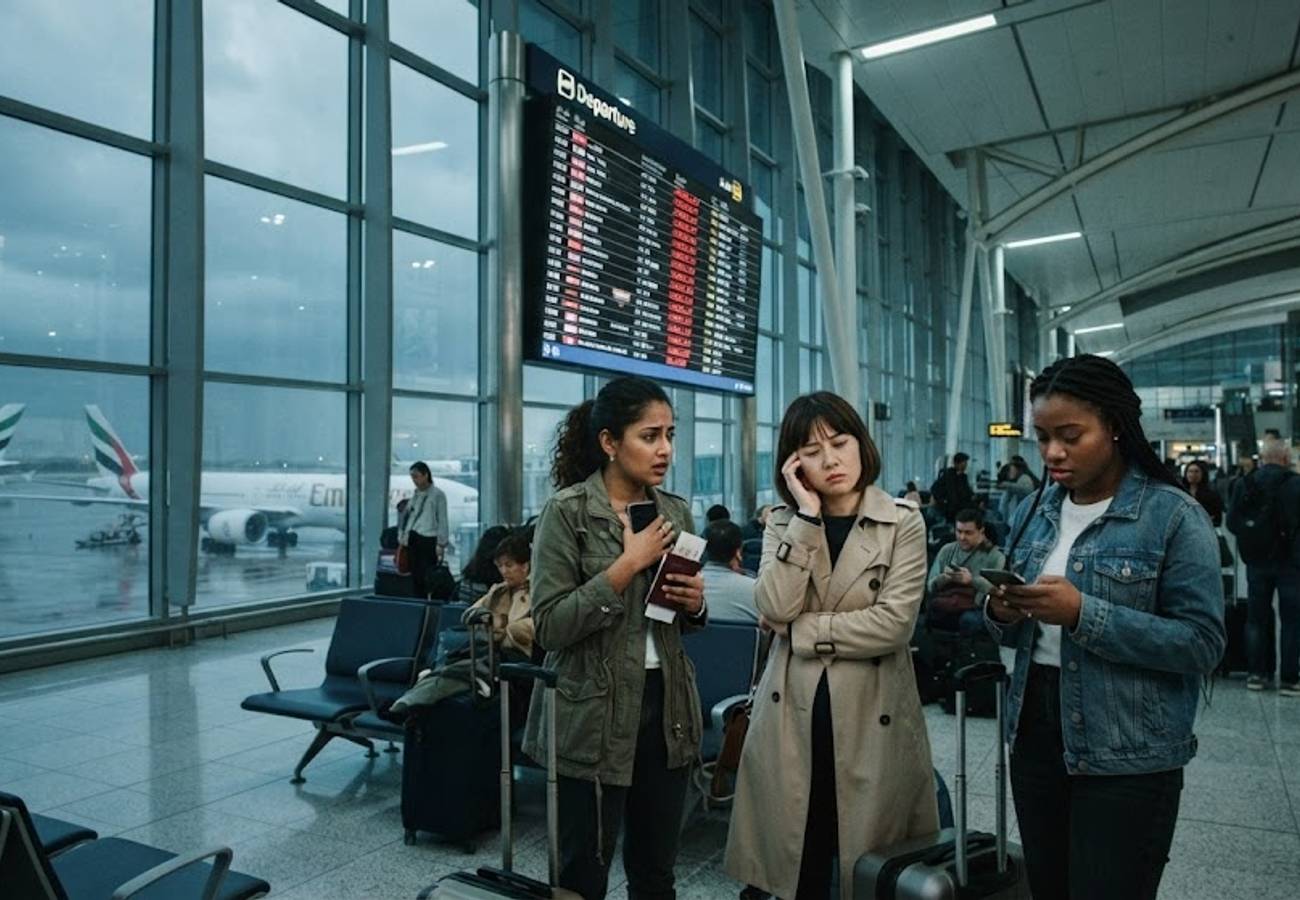
Image generated by AI
[Dubai, August 1, 2026] — A volatile security situation in the Strait of Hormuz has triggered a severe downturn in international travel across the Gulf Cooperation Council (GCC), with some major hubs reporting hotel occupancy rates as low as 10%. The military crisis has compromised regional economic stability, leaving Saudi Arabia, the UAE, Qatar, Kuwait, and Bahrain heavily reliant on domestic visitors to prevent a total industry collapse.
The geopolitical instability has created a ripple effect across the aviation and hospitality sectors. Industry data indicates that the recovery process for international confidence will likely span one to two years, as the perception of the region as a high-risk zone persists among global travelers and corporate planners.
Geopolitical Disruptions in the Strait of Hormuz Impacting Global Travel
The 2026 military escalation has fundamentally altered the tourism landscape of the Gulf. The Strait of Hormuz, a critical maritime artery, has become a focal point of instability, leading to consequences that extend far beyond cargo shipping. The crisis has manifested in restricted airspace, the forced rerouting of international flights, and a sharp increase in insurance premiums for carriers operating in the region.
Global tour operators, cruise lines, and logistics providers have responded to this operational uncertainty by scaling back services or canceling itineraries entirely. This shift is not merely a temporary glitch in scheduling but a systemic change in booking behavior. Travelers are now exhibiting extreme caution, with a significant portion of the leisure and business market redirecting their travel plans toward more stable regions until a permanent diplomatic resolution is reached.
UAE Aviation Hubs and Dubai Hospitality Face Historic Lows
The United Arab Emirates has borne a disproportionate share of the crisis due to its role as a primary global transit node. Traditionally, the UAE manages approximately 14% of the world's international transit traffic, making its airports indispensable for long-haul connectivity. When airspace disruptions intensified, the resulting flight cancellations devastated the local tourism ecosystem.
Dubai, a global benchmark for luxury tourism, experienced a sudden and dramatic collapse in demand. During the peak of the military escalation, the city saw more than 80,000 short-term rental bookings canceled in a single week. More alarmingly, hotel occupancy rates plummeted to a historic low of 10% in some sectors, reflecting a total evaporation of short-term international demand. While flight schedules are beginning a slow recovery, the psychological barrier for international tourists remains high.
Saudi Arabia's Pivot to Domestic and Religious Tourism
Saudi Arabia entered 2026 with an aggressive growth strategy backed by massive infrastructure spending. However, the regional crisis interrupted this trajectory, as international arrivals dropped due to government travel advisories and rerouted aviation paths.
To mitigate these losses, the Kingdom has leaned heavily on its internal market. Currently, nearly 80% of tourists visiting Saudi destinations are domestic travelers. This internal demand has provided a vital safety net for the national economy. Furthermore, religious tourism has shown unexpected resilience; travel to Makkah and Madinah surged by over 60%, partially offsetting the decline in international leisure visits and stabilizing the industry during the downturn.
Regional Connectivity Failures in Qatar, Kuwait, and Bahrain
The crisis has also severely hampered tourism in Qatar, Kuwait, and Bahrain. The near-total commercial blockade affecting the Strait of Hormuz created immense operational hurdles for these nations, which depend heavily on maritime and aerial accessibility.
While the physical tourism infrastructure in Doha, Kuwait City, and Manama remains intact, the "hotspot" perception has deterred visitors. This regional contagion is evident in the broader statistics: international arrivals across the Middle East fell by approximately 14% during the first quarter of 2026. This indicates that the crisis is not localized to a single city but is a regional phenomenon affecting the entire Gulf corridor.
GCC Tourism Crisis 2026: Statistical Impact Summary
| Category | Country / Region | Key Tourism Impact | Major Affected City/Area | Key Statistics |
|---|---|---|---|---|
| Most Affected GCC Country | United Arab Emirates (UAE) | Aviation disruption, airspace closures, reduced connectivity | Dubai | 14% global transit traffic; 80,000+ rental cancellations/week; 10% hotel occupancy |
| Most Affected GCC Country | Saudi Arabia | Decline in inbound arrivals despite growth strategy | Riyadh, Jeddah, Makkah, Madinah | High reliance on domestic travel; 60%+ increase in religious tourism |
| Most Affected GCC Country | Qatar | Reduced international arrivals due to Strait of Hormuz | Doha | Weakened regional connectivity |
| Most Affected GCC Country | Kuwait | Declining arrivals amid regional conflict | Kuwait City | Impacted by aviation/maritime disruptions |
| Most Affected GCC Country | Bahrain | Reduced inbound tourism and travel uncertainty | Manama | Affected by travel advisories |
| Regional Tourism Impact | GCC Region | Military conflict affecting international demand | Entire Gulf Region | Middle East arrivals fell ~14% in Q1 2026 |
Projected Revenue Losses and Economic Fallout
The financial implications of the 2026 downturn are staggering. Industry analysts project that the GCC could lose between $13 billion and $32 billion in international tourism revenue this year. These figures are tied to a projected shortfall of 8 million to 19 million international visitors.
The economic damage extends beyond the "big two" sectors of aviation and hotels. The crisis is bleeding into:
- Retail and Luxury Shopping: High-end districts in Dubai and Doha are seeing a sharp drop in tourist spending.
- MICE Tourism: Conference organizers are relocating events to Europe or Asia to avoid regional instability.
- Hospitality Services: Restaurants and entertainment venues are facing reduced footfall.
This downturn is particularly challenging for GCC nations that have spent the last decade trying to diversify their economies away from oil dependency.
Why This Matters: The Shift in Travel Risk Assessment
For the modern traveler and digital nomad, this crisis highlights the fragility of "hub-and-spoke" travel models. When a single strategic point like the Strait of Hormuz becomes volatile, it doesn't just affect the immediate coastline; it disables the connectivity of an entire hemisphere.
From a logistical standpoint, the 10% occupancy rate in Dubai serves as a warning that even the most robust tourism brands can collapse overnight when security perceptions shift. For those planning travel to the GCC, the current reliance on domestic tourism suggests that while local infrastructure is functioning, the "international experience" is currently compromised. Travelers should expect higher airfares due to insurance premiums and potentially longer flight times as airlines continue to bypass conflict zones.
The GCC's path to recovery now depends less on marketing and more on the restoration of geopolitical stability.
Related Travel Guides
Disclaimer
This article is for informational and educational purposes only. It does not constitute legal, financial, or professional advice. While we strive to provide accurate and up-to-date information, travel policies, regulations, and conditions change rapidly. Always verify information with official sources before making travel decisions. Nomad Lawyer makes no representations about the accuracy, reliability, completeness, or suitability of the information provided. Readers should consult qualified professionals for advice specific to their circumstances. The views expressed in this article are those of the author and do not necessarily reflect the views of Nomad Lawyer.
Raushan Kumar
Founder & Lead Developer
Full-stack developer with 11+ years of experience and a passionate traveller. Raushan built Nomad Lawyer from the ground up with a vision to create the best travel and law experience on the web.
Learn more about our team →