
Small-Ship Expeditions Outperform Land Stays for Multi-Generational Galapagos Islands Travel
Small-ship cruises in the Galapagos Islands offer multi-generational families seamless access to remote islands like Genovesa and Bartholomew.

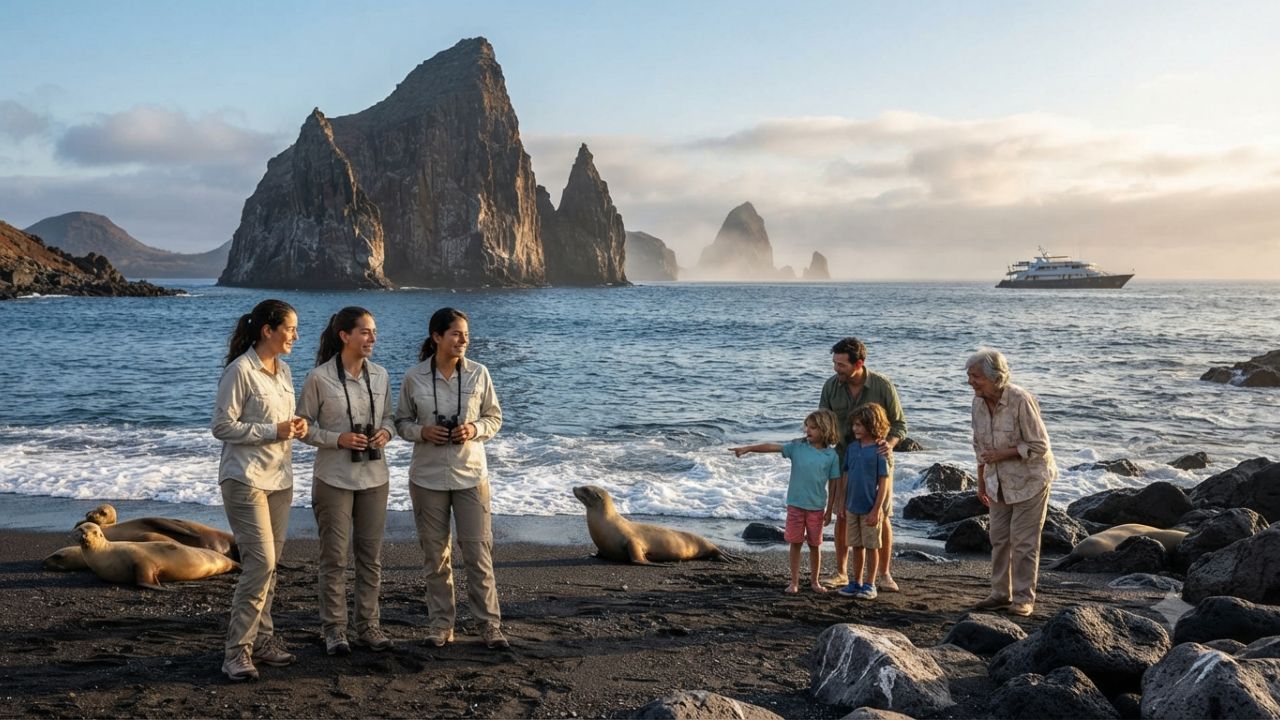
Image generated by AI
Regulated small-ship expedition cruising has emerged as the premier logistical strategy for multi-generational families exploring the Galapagos Islands, bypassing daytime transit restrictions inherent in land-based hotel stays.
According to tourism distribution data from Ecuador's Ministry of Tourism, annual visitor arrivals to the UNESCO World Heritage archipelago fluctuate between 280,000 and 329,000 travelers. While 79 percent of visitors base themselves in urban hubs like Puerto Ayora on Santa Cruz Island or Puerto Baquerizo Moreno on San Cristobal Island, 21 percent opt for regulated maritime cruises. For multi-generational family groups—where over 60 percent of international travelers are aged 40 and above—boutique yachts carrying 16 passengers offer synchronized itineraries that minimize transit fatigue while maximizing remote island access.
Small-Ship Cruising vs. Land-Based Day Trips
Navigating the 19 distinct islands of the archipelago involves strict national park visitor access controls. Land-based hotel stays on Santa Cruz or San Cristobal restrict day trips to nearby central islands due to long speed-boat transit times, leaving outer volcanic sanctuaries inaccessible.
In contrast, small-ship expedition yachts transit overnight while passengers rest, arriving at remote shorelines by sunrise. Smaller vessels like the 16-passenger Natural Paradise eliminate the shore deployment delays associated with larger commercial liners. Shore landings for a 16-guest yacht require under 10 minutes, compared to 45-minute multi-group rotations on 100-passenger ships.
The Western Loop: Volcanic Geology and Endemic Wildlife Immersion
An 8-day Western Loop maritime itinerary provides an intensive exploration of active volcanic geology and endemic wildlife nesting zones across the Pacific basin:
- Bartholomew & Rabida Islands: Features iconic basaltic volcanic spires, tuff cones, and crimson-tinted sand beaches.
- North Seymour Island: Hosts dense nesting colonies of magnificent frigatebirds and blue-footed boobies performing courtship rituals along coastal walking trails.
- Genovesa Island: Known as a bird sanctuary, offering sea kayaking in calm volcanic inlets and snorkeling along reef ledges inhabited by hammerhead sharks.
- Santa Cruz Highland Reserves: Pastures where giant tortoises roam freely, backed by historical captive breeding and habitat restoration programs.
- San Cristobal Island & Kicker Rock: Volcanic rock formations providing deep-water snorkeling alongside marine iguanas, green sea turtles, and galapagos sea lions.
Conservation Fees and Vessel Operational Regulations
To preserve marine ecosystems and manage visitor density, the Galapagos National Park Directorate enforces strict operational mandates:
- Vessel Passenger Caps: Commercial vessels are strictly limited to a maximum of 100 passengers. Roughly 65 of the 80 active licensed ships are restricted to small boutique yachts carrying 16 or fewer guests.
- Naturalist Guide Ratios: Mandatory 1:16 guide-to-passenger ratio ensures detailed ecological education and strict compliance with park trail rules.
- Conservation Fees: Foreign visitors pay a $200 USD Galapagos National Park entrance fee and a $20 USD Transit Control Card. Funds directly support invasive species control, marine patrol fleets, and island waste management infrastructure.
Demographics and Seasonal Visitation Patterns
International visitors account for 62 percent of total annual arrivals—led by the United States at 29 percent and the United Kingdom at 4 percent—while domestic Ecuadorian travelers represent 38 percent. Peak visitation clusters heavily around February, June, and July, which account for more than 30 percent of yearly tourist arrivals.
| Operational Indicator | Small-Ship Expedition Yacht | Land-Based Hotel Stay |
|---|---|---|
| Passage & Logistics | Overnight sailing between remote outer islands | Daily round-trip speed-boat transits |
| Vessel Capacity Limits | 16 Passengers (Boutique) to 100 Max | N/A (Urban hotel accommodations) |
| Shore Deployment Speed | Under 10 minutes for 16 guests | Dependent on commercial day-boat slots |
| National Park Entry Fee | $200 USD Entrance + $20 USD Transit Card | $200 USD Entrance + $20 USD Transit Card |
| Marine Reserve Biodiversity | Access to 2,900+ species (25% endemic) | Concentrated around day-trip coastal radius |
Frequently Asked Questions
Why is small-ship cruising recommended for families visiting the Galapagos?
Small-ship cruises travel overnight between islands, eliminating long daytime boat transits and granting direct early-morning access to remote outer islands for all age groups.
How much is the Galapagos National Park entrance fee?
International travelers pay a $200 USD Galapagos National Park entrance fee and a $20 USD Transit Control Card, which directly fund regional conservation and anti-invasive species programs.
What is the maximum passenger limit for cruise ships in the Galapagos?
The Galapagos National Park limits all cruise ships to a maximum of 100 passengers, with approximately 65 of the 80 active vessels restricted to small yachts carrying 16 or fewer guests.
What islands are covered on the Western Loop itinerary?
The Western Loop typically includes Bartholomew, Rabida, North Seymour, Genovesa, Santa Cruz, and San Cristobal islands.
Related Travel Guides
Disclaimer
This article is for informational and educational purposes only. It does not constitute legal, financial, or professional advice. While we strive to provide accurate and up-to-date information, travel policies, regulations, and conditions change rapidly. Always verify information with official sources before making travel decisions. Nomad Lawyer makes no representations about the accuracy, reliability, completeness, or suitability of the information provided. Readers should consult qualified professionals for advice specific to their circumstances. The views expressed in this article are those of the author and do not necessarily reflect the views of Nomad Lawyer.
Kunal K Choudhary
Co-Founder & Contributor
A passionate traveller and tech enthusiast. Kunal contributes to the vision and growth of Nomad Lawyer, bringing fresh perspectives and driving the community forward.
Learn more about our team →