
Flight Disruptions Strand 500+ Travellers Across France's Major Hubs
Over 500 delayed flights strand hundreds of travellers across France's four major airport hubs on April 12, 2026. Paris, Lyon, Marseille, and Nice report cascading disruptions affecting Air France, Ryanair, Vueling, and other carriers.

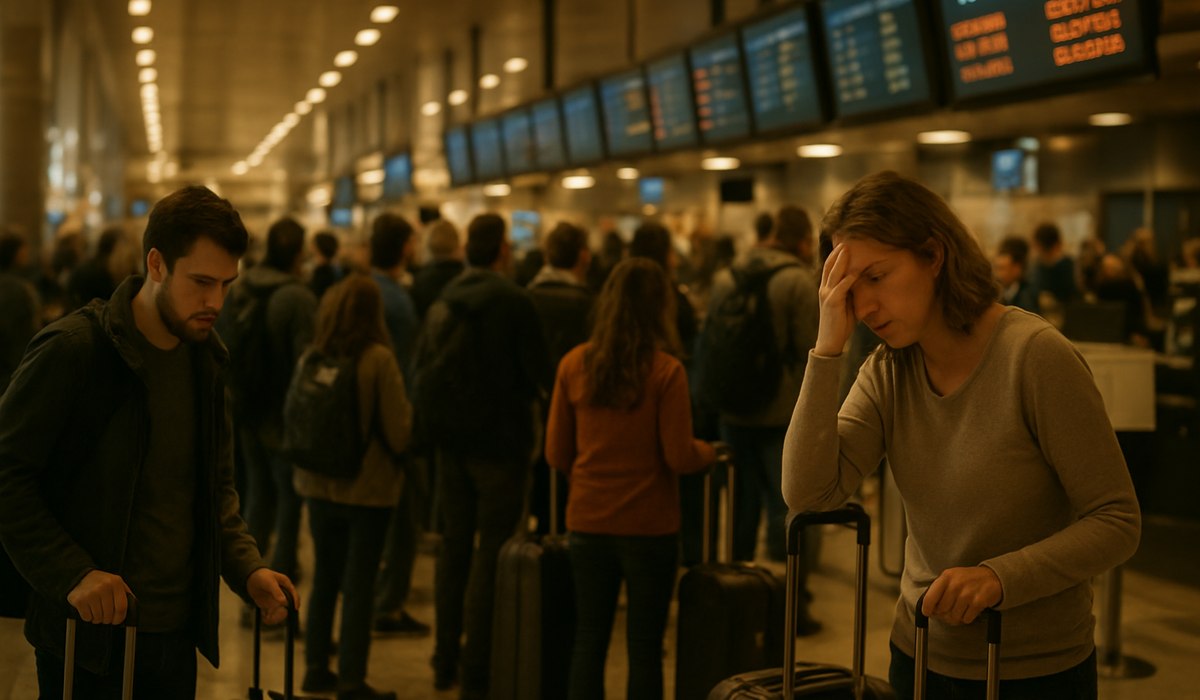
Image generated by AI
Hundreds Stranded as Flight Disruptions Cascade Across France's Busiest Airport Network
Over 500 delayed flights and 21 cancellations disrupted operations across Paris, Lyon, Marseille, and Nice on April 12, 2026, leaving hundreds of travellers navigating missed connections, rebookings, and extended layovers. The systemic disruption affected six major carriers including Air France, Ryanair, Vueling, Transavia France, Lufthansa, and regional operators. Airport operational data confirms that flight disruptions strand passengers across France's entire network, with cascading effects rippling into evening departure banks and onward European destinations.
Widespread Delays Across France's Four Major Hubs
France's primary aviation gateways experienced sustained pressure throughout April 12. Paris Charles de Gaulle, Paris Orly, Lyon Saint Exupéry, Marseille Provence, and Nice Côte d'Azur all registered elevated delay levels, with the majority of disruptions concentrated between morning peak hours and the evening departure wave.
The sheer volume of delayed services created a compounding effect across France's interconnected route network. When aircraft and crew rotate through multiple hubs in single operating days, initial delays in Paris or Lyon fed directly into late departures from secondary airports. This cascading pattern proved more disruptive than outright cancellations, as passengers attempting connections found themselves stranded at intermediate stops.
Unlike major strike disruptions from previous years, cancellation rates remained relatively low—suggesting airlines prioritized operational continuity over schedule reliability. However, this strategy extended passenger wait times and terminal congestion across all four major hubs simultaneously.
For real-time tracking of flight status, FlightAware provides live data on European aviation disruptions.
Cascading Effects: How Morning and Evening Banks Amplify Disruption
The timing of flight disruptions strand operations most severely during peak departure windows—typically 6–9 AM and 5–8 PM—when airlines concentrate their short-haul and medium-haul frequencies. On April 12, delays originating during morning banks snowballed into evening operations.
Aircraft returning late from morning rotations arrived at gates behind schedule. Ground handling teams faced compressed turnaround windows. Crew duty-time constraints activated, forcing schedule adjustments and occasional crew positioning changes. By evening departure wave, these cumulative delays had stacked across multiple carriers and routes.
The interconnected nature of France's hub system amplified this effect. A single delayed Air France rotation from Paris–Nice fed into a connecting service toward Barcelona. That delayed connection then affected an evening departure from Lyon to Milan. Within hours, flight disruptions strand passengers across bilateral France-Spain, France-Italy, and France-UK routes.
Weather sensitivity during spring transition months compounds scheduling inflexibility. Minor wind or visibility constraints that would normally absorb within operational buffers instead triggered holding patterns and flow restrictions across shared airspace sectors.
Multiple Airlines Impacted in Operational Snarl
Air France bore the largest delay burden at Paris hubs and Marseille, reflecting its dominant network position across French airports. The carrier's domestic and European short-haul fleet encountered the deepest schedule pressures.
Low-cost operators including Ryanair, Vueling, and Transavia France experienced secondary impacts on Spain, Italy, and UK routes. These airlines operate tight turnaround schedules with minimal buffer time, making them particularly vulnerable to network-wide cascade effects.
Lufthansa and other European network carriers faced tertiary impacts through connection conflicts. Passengers booked on connecting itineraries through Frankfurt or Munich experienced missed connections when feeder flights into Paris, Lyon, or Nice arrived late.
The multi-carrier disruption pattern reflects systemic vulnerabilities in ground infrastructure rather than individual airline operational failures. Air traffic control staffing constraints and ground handling resource limits affected all operators equally, preventing single-carrier workarounds or competitive schedule protection.
Learn more about passenger rights during disruptions through the US Department of Transportation's air consumer guide, which outlines international standards.
Underlying Causes: Staffing, Weather, and Airspace Constraints
Aviation analysts attributed April 12's disruptions to converging operational pressures rather than a single weather event or infrastructure failure.
Staffing constraints in French air traffic control and ground handling services—already identified as seasonal vulnerabilities during spring peaks—created reduced capacity at all four major hubs. With fewer controllers managing dense departure banks, minor traffic surges cascaded into holding patterns.
Weather sensitivity persisted despite clear local conditions. Earlier 2025–2026 winter windstorms reduced system flexibility; even April's modest adverse conditions triggered precautionary flow restrictions. Visibility thresholds and wind constraints at one airport triggered cascading delays across interconnected airspace sectors.
Route complexity from Middle Eastern and Eastern European airspace restrictions indirectly reduced scheduling margins for long-haul flights transiting through French hubs. This upstream pressure eliminated buffer capacity when domestic operations faced unexpected delays.
The combination proved systemic: staffing limits met weather sensitivity met route complexity, with no single factor dominant enough to prevent cascade effects.
What Passengers Need to Know
Traveler Action Checklist
-
Check your flight status immediately using FlightAware or your airline's app—don't rely on airport boards alone for real-time updates.
-
Contact your airline directly before arriving at the airport if your flight shows delays exceeding 2 hours; confirm whether rebooking options are available.
-
Document all expenses related to delays (meals, accommodation, transportation)—EU261 regulations entitle eligible passengers to compensation up to €600.
-
Verify connection feasibility if you're booked on multi-flight itineraries; proactively request rebooking if connection time drops below 90 minutes.
-
Obtain a written delay statement from your airline at the airport—required for compensation claims under air passenger rights regulations.
-
Review your ticket type to determine whether your airline or fare restrictions limit rebooking options; full-service carriers typically offer more flexibility than budget airlines.
-
Keep all receipts and booking confirmations in one digital folder for potential compensation claims through national enforcement bodies.
Key Disruption Data: April 12, 2026
| Metric | Figure | Impact |
|---|---|---|
| Total Delayed Flights | 538 | Cascading effects across domestic and European networks |
| Cancelled Flights | 21 | Low cancellation rate extended passenger wait times |
| Major Hubs Affected | 4 (Paris, Lyon, Marseille, Nice) | Systemic disruption across France's entire gateway network |
| Primary Airlines | 6+ carriers (Air France, Ryanair, Vueling, Transavia France, Lufthansa, others) | Multi-carrier operational strain |
| Average Delay Range | 15–60 minutes | Extended throughout morning and evening peak banks |
| Geographic Spread | Domestic + European short-haul routes (Spain, Italy, UK, Germany) | Passengers stranded across multiple countries |
FAQ: Flight Disruptions Strand Passenger Questions
What compensation am I entitled to if my flight was delayed?
Under EU261 regulations, passengers on flights delayed more than 3 hours at arrival are eligible for €250–€600 compensation, depending on flight distance. This applies to flights departing from EU airports (including France) regardless of airline nationality. Submit claims directly to your airline within 6 months, or escalate to national enforcement authorities if denied.
**Can my airline rebook me on a different airline if they're fully
Disclaimer
This article is for informational and educational purposes only. It does not constitute legal, financial, or professional advice. While we strive to provide accurate and up-to-date information, travel policies, regulations, and conditions change rapidly. Always verify information with official sources before making travel decisions. Nomad Lawyer makes no representations about the accuracy, reliability, completeness, or suitability of the information provided. Readers should consult qualified professionals for advice specific to their circumstances. The views expressed in this article are those of the author and do not necessarily reflect the views of Nomad Lawyer.
Raushan Kumar
Founder & Lead Developer
Full-stack developer with 11+ years of experience and a passionate traveller. Raushan built Nomad Lawyer from the ground up with a vision to create the best travel and law experience on the web.
Learn more about our team →