
Frontier Delta Cancellations Snarl Phoenix Sky Harbor on April 9
Frontier and Delta suspended six flights at Phoenix Sky Harbor on April 9, 2026, disrupting key domestic corridors to Salt Lake City, Las Vegas, and Atlanta amid weather and ATC constraints affecting travelers nationwide.

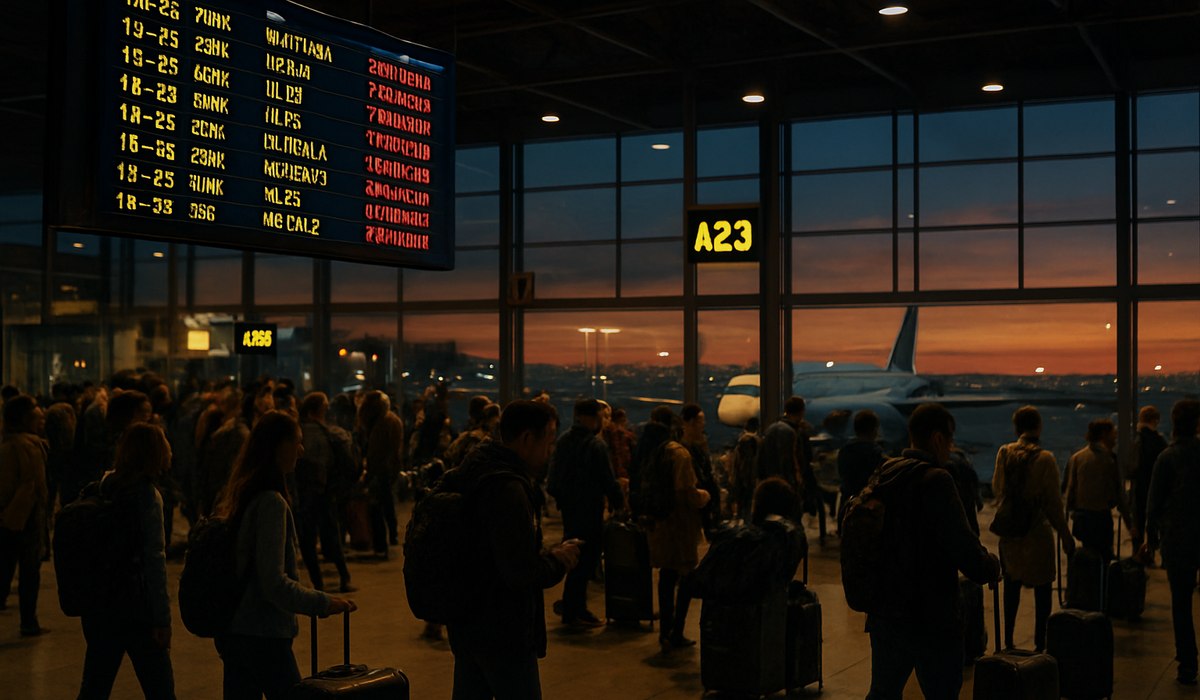
Image generated by AI
Frontier and Delta Ground Six Flights at Phoenix Sky Harbor
Frontier Airlines and Delta Air Lines suspended six flights at Phoenix Sky Harbor International Airport on April 9, 2026, creating cascading delays across major domestic routes connecting Arizona's busiest hub with Salt Lake City, Las Vegas, Cleveland, Albuquerque, and Atlanta. The disruptions reflected a broader pattern of operational strain rippling through U.S. aviation, triggered by regional weather systems and air traffic control (ATC) capacity constraints that compressed available aircraft and crew resources. Travelers faced extended rebooking waits, missed connections, and sudden schedule changes as both carriers trimmed frequencies on key corridors during the afternoon and evening hours.
Targeted Suspensions Hit Key Domestic Routes
Flight-tracking data and official airline notifications for April 9 document a concentrated cluster of cancellations affecting Frontier's leisure-oriented network and Delta's hub-and-spoke system radiating from Phoenix. The hardest-hit routes included Phoenix to Las Vegas, a cornerstone of Frontier's point-to-point strategy, alongside Delta's critical connections to Salt Lake City and Atlanta. Travelers reported watching departure boards shift in real time, with rebooking lines growing throughout the afternoon as agents reassigned passengers to later flights or alternative routings.
The timing proved particularly damaging because both carriers operate lean schedules on these corridors during spring shoulder season. Frontier typically fields only a few daily frequencies on Phoenix-to-Las Vegas service, meaning a single cancellation removes a substantial share of available seats for budget-conscious leisure passengers. Delta's situation mirrors this constraint: its Phoenix-to-Salt Lake City and Phoenix-to-Atlanta departures serve as critical feeder flights into major hub operations, where capacity downstream already runs tight.
Industry observers note that the cascade reflected systemwide stress rather than isolated airport dysfunction. Prior disruptions at Atlanta and Las Vegas over the preceding 24 hours had pushed aircraft and crews into late arrivals at Phoenix, compressing operational windows and forcing carriers to make uncomfortable choices between operating understaffed flights or removing select services entirely.
Ripple Effects from Regional Disruptions
The six frontier delta cancellations at Phoenix did not occur in isolation. Tracking services documented that Salt Lake City, Las Vegas, and Atlanta—the three primary destinations—were themselves struggling with elevated delay and cancellation rates driven by unstable spring weather and persistent ATC workload constraints across multiple sectors.
Salt Lake City, serving as Delta's major Mountain West hub, experienced particular strain. When a feeder flight from Phoenix arrives late or disappears from the schedule entirely, downstream effects compound quickly. Passengers bound for regional destinations like Boise, Spokane, and Billings compete for limited availability on already-full connecting departures, sometimes forcing multi-hour waits or next-day rebooking.
Las Vegas presented a different but equally problematic scenario. Convention traffic combined with leisure demand has kept load factors strong throughout spring 2026. When Frontier removes a Phoenix-to-Las Vegas service, travelers discover that remaining flights are already near capacity, pushing many toward costly same-day reroutes through Denver, Dallas, or Los Angeles—adding hours and expense to journeys.
Atlanta, consistently ranked among the nation's busiest airport hubs, also struggled this week. Phoenix-based passengers connecting through Atlanta faced both the initial shock of a local cancellation and the prospect of further delays upon arrival, effectively forcing some to abandon same-day travel plans entirely.
Impact on Budget and Connecting Passengers
Budget-conscious travelers experienced the sharpest operational pain from the frontier delta cancellations sequence. Frontier passengers, accustomed to lower fares but fewer daily frequencies, found themselves with minimal same-day alternatives. The carrier's selective route structure means that once a Phoenix departure is removed, rebooking options narrow dramatically—often requiring rerouting through distant hubs at significant time cost.
Delta passengers holding connecting itineraries faced dual disruptions: cancellation at Phoenix followed by potential further delays at Salt Lake City, Atlanta, or Las Vegas. A Phoenix-to-Salt Lake City-to-Billings passenger, for instance, might miss their Salt Lake connection entirely, requiring hotel accommodations and rescheduled travel for the next available flight—costs rarely covered under standard airline policy.
Family groups and multi-passenger bookings experienced additional complications. Airlines manage rebooking by available seat inventory, meaning families sometimes faced split-flight assignments before agents could reunite them—a time-consuming problem that played out across hundreds of passenger interactions on April 9.
What Travelers Should Know
Real-time tracking remains your first line of defense. Visit FlightAware or your airline's app to monitor departure status 24 hours before travel. Spring weather can shift rapidly, triggering cascading delays and cancellations across hubs you may not even know feed your flight.
Understand your airline's delay policy versus cancellation rights. Under U.S. Department of Transportation regulations, carriers must offer rebooking on the next available flight at no additional cost if they cancel a flight. Hotel and meal compensation apply in specific circumstances—check your airline's policy and the U.S. DOT consumer rights page before assuming costs fall on the carrier.
Hub connectivity cuts both ways. Flights through Salt Lake City, Atlanta, Las Vegas, and Denver offer schedule flexibility but amplify disruption risk when those hubs experience weather or ATC issues. Direct flights eliminate connection risk but may be less frequent on smaller markets.
Arrive early and pack strategically. During periods of operational stress like April 9, check-in lines and rebooking counters see unprecedented demand. arriving three hours early for domestic flights and preparing for potential rebooking reduces frustration significantly.
Monitor secondary airports. If your destination has multiple nearby airports (Phoenix has limited options, but some routes could divert to Las Vegas or Tucson), ask your airline about alternatives during the rebooking discussion.
Traveler Action Checklist
-
Check your flight status 24 hours before departure using FlightAware or your airline's mobile app.
-
Sign up for push notifications from your airline and flight-tracking services to receive real-time alerts about delays or cancellations.
-
Review your ticket terms to understand whether you booked a basic economy, main cabin, or premium fare (affects rebooking priority).
-
Document all receipts for meals, hotels, or transportation if your flight is cancelled, as you may qualify for DOT compensation.
-
Request rebooking immediately upon notification of cancellation—airlines process rebooking chronologically, and early requests increase odds of same-day alternatives.
-
Ask about routing flexibility with your airline agent—mentioning alternate airports or routing through different hubs may unlock available seats.
-
Contact your credit card issuer if you booked with points or premium cards; many offer travel disruption insurance or reimbursement options.
-
Photograph departure boards showing cancellation times and rebooking queue information as documentation for potential claims.
Key Disruption Data: April 9, 2026
| Metric | Details |
|---|---|
| Flights Cancelled | 6 confirmed (Frontier and Delta combined) |
| Primary Airport | Phoenix Sky Harbor International (PHX) |
| Affected Airlines | Frontier Airlines, Delta Air Lines |
| Hardest-Hit Routes | PHX-LAS, PHX-SLC, PHX-ATL, PHX-CLE, PHX-ABQ |
| Root Causes | Regional weather systems, ATC capacity constraints, aircraft/crew availability |
| Downstream Hub Impacts | Salt Lake City, Las Vegas, Atlanta experienced elevated delays |
| **Passenger Volume Affected |
Disclaimer
This article is for informational and educational purposes only. It does not constitute legal, financial, or professional advice. While we strive to provide accurate and up-to-date information, travel policies, regulations, and conditions change rapidly. Always verify information with official sources before making travel decisions. Nomad Lawyer makes no representations about the accuracy, reliability, completeness, or suitability of the information provided. Readers should consult qualified professionals for advice specific to their circumstances. The views expressed in this article are those of the author and do not necessarily reflect the views of Nomad Lawyer.
Raushan Kumar
Founder & Lead Developer
Full-stack developer with 11+ years of experience and a passionate traveller. Raushan built Nomad Lawyer from the ground up with a vision to create the best travel and law experience on the web.
Learn more about our team →