
Cancellations Delays Snarl Philadelphia Airport Spring Travel
Spring weather and staffing shortages trigger cancellations delays snarl at Philadelphia International Airport on April 9, 2026. Ten flights across Frontier, American Airlines, and Spirit face disruptions affecting Chicago, London, Orlando, and other major destinations during peak travel season.

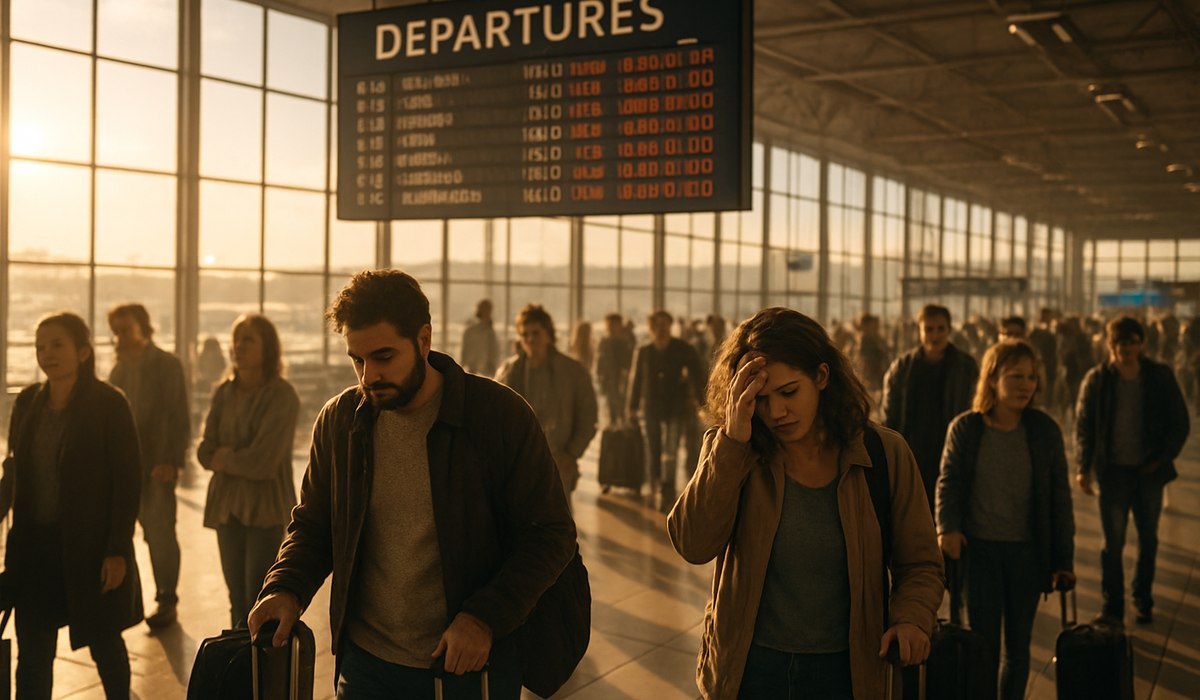
Image generated by AI
Cancellations Delays Snarl Philadelphia Hub During Peak Spring Travel
Philadelphia International Airport faced significant operational disruption on April 9, 2026, when at least 10 flights operated by Frontier Airlines, American Airlines, and Spirit Airlines were cancelled, affecting thousands of travelers during the busy spring travel season. The disruptions cascaded across major domestic and international routes, including services to Chicago, Orlando, Nashville, London, and San Juan, creating widespread connection challenges and rebooking pressures across the Northeast corridor and beyond.
Cluster of Cancellations Hits Key Domestic and International Routes
Flight-tracking data and airport status boards on Thursday documented a concentrated wave of cancellations affecting Philadelphia's three major carriers simultaneously. The disrupted services spanned early-morning and midday operations, with cancellations impacting both departures and arriving flights.
The affected routes included high-demand domestic connections to Chicago, Orlando, and Nashville, alongside long-haul transatlantic service to London and leisure-focused Caribbean routes to San Juan. This simultaneous impact across multiple carriers and route networks compounded existing congestion already affecting U.S. aviation hubs throughout the week.
The removal of 10 flights represents a significant operational shock for a single day, creating cascading squeeze effects on seat availability and forcing passengers onto already-saturated subsequent departures. While Philadelphia continued operating at baseline capacity, the concentration of cancellations among competing carriers eliminated critical redundancy that typically exists in spring schedules.
Delays Ripple Across Frontier, American and Spirit Networks
Beyond cancellations, widespread delays materialized across the same three carriers, with revised departure times ranging from 30 minutes to exceeding two hours. Ultra-low-cost operators like Frontier proved particularly vulnerable to aircraft rotation disruptions, as their operational model depends on minimal turnaround times between segments.
When inbound aircraft arrive late from upstream cities, subsequent Philadelphia departures rapidly fall behind schedule, creating rolling delay cascades along entire route networks. American Airlines, maintaining substantial Philadelphia operations, faced complex operational rebalancing to reassign aircraft and crew across regional and transatlantic services.
Long-haul London flights operate under fixed slot allocations at congested European airports, making even minor disruptions costly to accommodate. Spirit Airlines, expanding its Philadelphia presence in recent seasons, encountered the same operational and staffing pressures affecting its reliability metrics at other major U.S. hubs.
Affected travelers faced crowded gate areas, continuously revised departure estimates, and limited rebooking alternatives as seat inventory tightened across competing carriers.
What's Causing the Disruptions
Spring weather systems sweeping the Northeast and Southeast have triggered hundreds of cancellations and delays across major aviation hubs this week. Ultra-low-cost carriers operate with minimal schedule buffers, leaving insufficient recovery margins when unexpected maintenance, crew unavailability, or weather impacts occur.
Staffing constraints persist at multiple carriers entering the peak spring travel season, when demand surges while hiring and training timelines lag recruitment efforts. Philadelphia's dual role as both origin-destination airport and transatlantic connecting hub amplifies disruption effects—a single cancelled Orlando departure impacts not just point-to-point passengers but also downstream connections to international destinations.
Air traffic control restrictions and congestion at busy Northeast airspace corridors further constrain scheduling flexibility during high-demand periods.
What Travelers Should Know
Passengers affected by cancellations or delays exceeding three hours hold rights under U.S. Department of Transportation regulations. Carriers must offer rebooking on next available flights at no additional charge, meal vouchers for lengthy delays, and potential compensation depending on delay duration.
Check real-time flight status through FlightAware before departing for the airport. Contact your airline immediately if your flight appears on cancellation or delay lists—rebooking options disappear quickly during widespread disruptions.
For comprehensive passenger rights information, review resources from the FAA and U.S. Department of Transportation. Document all expenses incurred due to cancellations for potential reimbursement claims.
Consider trip insurance for future spring travel, particularly when booking through ultra-low-cost carriers with historically variable on-time performance during weather-prone seasons.
Traveler Action Checklist
-
Check FlightAware for real-time status updates before driving to Philadelphia or any major airport during spring travel.
-
Contact your airline immediately if cancellation or delay notices appear—rebooking seats vanish quickly across all carriers.
-
Review your airline's cancellation policy; policies vary significantly between legacy carriers and ultra-low-cost operators.
-
Keep boarding passes, receipts, and documentation of delays exceeding three hours for DOT compensation claims.
-
Explore rebooking options on competing carriers if your airline's next available flight departs more than four hours later.
-
Request meal vouchers for delays exceeding two hours and hotel accommodations for overnight delays, as mandated by airline policies.
-
File complaints with the U.S. Department of Transportation if carriers refuse required compensation or accommodations.
-
Monitor weather alerts affecting your departure city and destination to anticipate potential disruptions.
-
Consider purchasing trip insurance for future spring bookings to offset cancellation and delay costs.
-
Allow extra buffer time for spring travel; build 3-4 hour connection windows at hubs like Philadelphia during April-May peak season.
Disruption Impact Summary
| Factor | Details |
|---|---|
| Date | April 9, 2026 |
| Airport | Philadelphia International (PHL) |
| Cancellations | 10+ flights confirmed |
| Affected Carriers | Frontier Airlines, American Airlines, Spirit Airlines |
| Primary Routes Disrupted | Chicago, Orlando, Nashville, London, San Juan |
| Delay Range | 30 minutes to 2+ hours |
| Root Causes | Spring weather, staffing constraints, tight aircraft utilization |
| Travel Volume | Peak spring season (thousands of passengers) |
| Network Impact | Cascading delays across Northeast and transatlantic networks |
| Recovery Timeline | Ongoing normalization through evening operations |
FAQ
What caused the cancellations and delays at Philadelphia on April 9, 2026? Spring weather systems affecting the Northeast, staffing constraints across carriers, and tight aircraft utilization schedules converged to trigger the disruptions. Ultra-low-cost carriers like Frontier and Spirit operate with minimal schedule buffers, so even minor delays cascade rapidly through their networks.
Which airlines were affected by cancellations delays snarl at Philadelphia? Frontier Airlines, American Airlines, and Spirit Airlines all experienced significant cancellations and delays on April 9. American maintains the largest operational footprint at Philadelphia, while Frontier and Spirit operate high-frequency leisure routes particularly vulnerable to aircraft rotation issues.
What routes experienced the most disruption? Heavily traveled domestic routes to Chicago, Orlando, and Nashville faced the most cancellations. International long-haul service to London and Caribbean leisure flights to San Juan also experienced significant disruption, impacting thousands of spring break and business travelers.
What compensation am I entitled to if my flight was cancelled or delayed? U.S. DOT regulations entitle passengers to rebooking on next available flights at no charge for cancellations. Delays exceeding three hours qualify for meal vouchers, ground transportation, and lodging accommodations. Delays of 3+ hours on domestic flights or 4+ hours internationally may qualify for compensation payments of $250-$750 depending on delay duration and distance.
Related Travel Guides
Explore more resources about managing flight disruptions and spring travel planning:
Disclaimer
This article is for informational and educational purposes only. It does not constitute legal, financial, or professional advice. While we strive to provide accurate and up-to-date information, travel policies, regulations, and conditions change rapidly. Always verify information with official sources before making travel decisions. Nomad Lawyer makes no representations about the accuracy, reliability, completeness, or suitability of the information provided. Readers should consult qualified professionals for advice specific to their circumstances. The views expressed in this article are those of the author and do not necessarily reflect the views of Nomad Lawyer.
Kunal K Choudhary
Co-Founder & Contributor
A passionate traveller and tech enthusiast. Kunal contributes to the vision and growth of Nomad Lawyer, bringing fresh perspectives and driving the community forward.
Learn more about our team →