
Wildfires Disrupt Summer Travel as Climate Risks Threaten Traditional Camping Destinations Across Southwestern France
As wildfires disrupt summer travel, authorities evacuate 1,200 campers near Biscarrosse, forcing France's 7,400 campsites to adapt to climate risks.

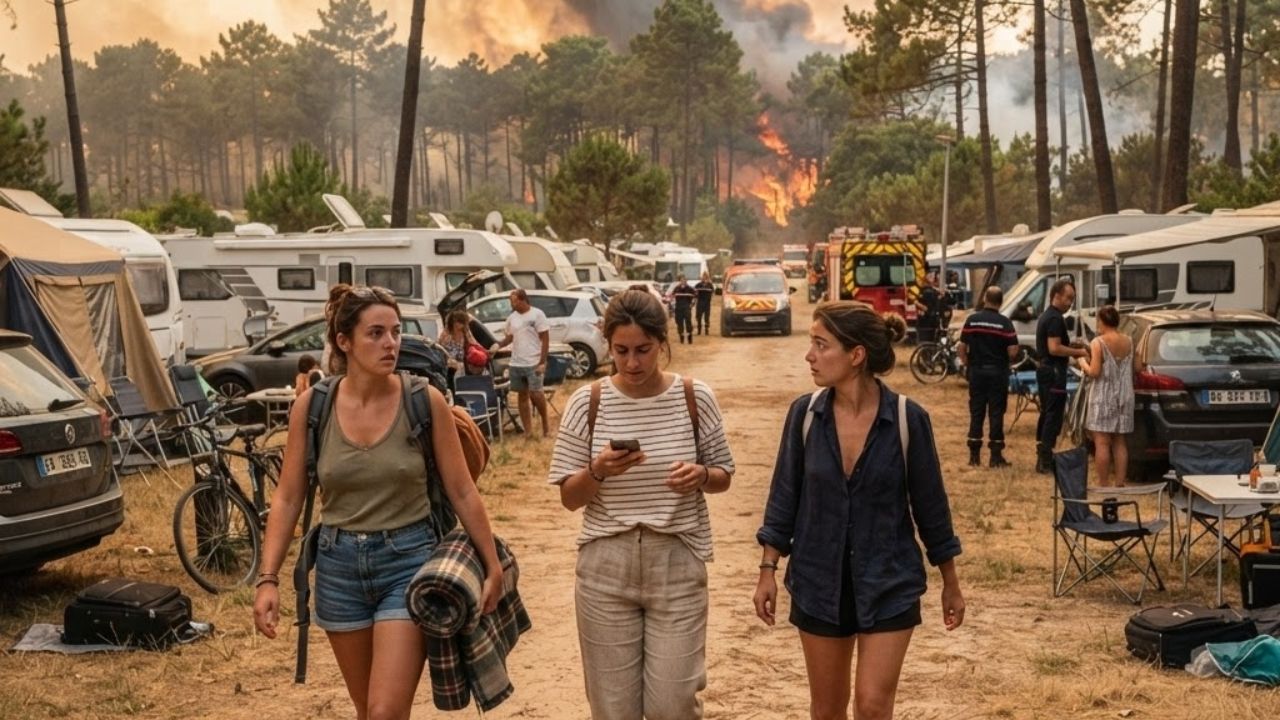
Image generated by AI
A major forest fire near Biscarrosse has forced the immediate evacuation of 1,200 holidaymakers from the Domaine de La Rive campsite. The incident underscores the growing threat that climate-driven droughts and heatwaves pose to France's massive outdoor tourism industry.
Escaping nighttime blazes near Biscarrosse as wildfires disrupt summer travel, 1,200 campers abandoned their meals and belongings at the Domaine de La Rive campsite in southwestern France. The emergency evacuation highlights the vulnerability of the country's 7,400 campsites as record-breaking heatwaves and prolonged droughts transform popular pine forests and Atlantic coastal retreats into high-risk zones. While outdoor tourism remains in high demand, operators are being forced to adapt fire prevention systems to safeguard one of France’s most cherished holiday traditions.
Emergency Services Evacuate Biscarrosse Campsite in Southwestern France
A rapid forest fire broke out near the Domaine de La Rive campsite, situated in the pine-forested coastal area of Biscarrosse in southwestern France. Because the advancing flames posed an immediate danger to the property, emergency responders and park management ordered an immediate nighttime evacuation. Approximately 1,200 visitors were directed to leave their meals, personal gear, and accommodations immediately to seek safety.
The evacuation was completed quickly and without injuries, showcasing the value of established emergency planning. However, the event serves as a warning of the increasing vulnerability of outdoor tourism infrastructure located in natural areas, where changing weather conditions can quickly escalate local fire risks.
Cultural Heritage: Why Camping Remains Important to French Travelers
In France, camping is more than a simple holiday choice; it represents a significant social tradition. The practice became popular following the introduction of paid vacation reforms in the 1930s, which made leisure travel accessible to working-class families. For generations, families have returned to the same coastal, river, and forest campsites year after year, building deep emotional connections to these destinations.
According to the Fédération Nationale de l'Hôtellerie de Plein Air (FNHPA), France is home to approximately 7,400 campsites, representing one of the largest outdoor hospitality networks globally. Because the sector offers an affordable, community-oriented vacation model, any threat to these properties affects the social and cultural travel identity of French families as much as the regional economy.
Environmental Pressures: How Climate Risks Reshape Outdoor Tourism
Meteorological statistics from the World Meteorological Organization (WMO) indicate that Europe is experiencing rising temperatures, longer summer droughts, and more frequent heatwaves. These changing environmental conditions have significantly increased the frequency and severity of forest fires in southern and southwestern France. As a result, campsites situated in natural environments face greater operational risks during the hot summer months.
Because many popular campsites are situated directly inside pine forests or along dry coastal zones, they are highly exposed to fire risks. Tourism analysts note that these threats are changing visitor confidence, operational logistics, and insurance rates across the industry, forcing operators to include disaster preparedness as a core business priority.
Safety Warnings Influence Tourist Booking Patterns and Schedules
Changing weather patterns are beginning to alter how travelers plan their summer vacations in France. Travelers are increasingly asking about fire prevention systems, emergency protocols, and local forest conditions before booking their stays, reflecting a higher awareness of climate risks.
This shift is driving demand for flexible booking policies, allowing travelers to change their dates or destinations if wildfire threats arise. Some visitors are choosing to book stays in northern, lower-risk regions during July and August, while others are shifting their vacations to late spring or early autumn to avoid the peak heatwaves.
French Campsite Operators Invest in Fire Prevention Infrastructure
To adapt to these challenges, park owners across France are investing in safety upgrades to protect their properties and guests. These measures include installing advanced smoke-monitoring sensors, clearing brush to create safety zones around cabins, and upgrading local water supply systems for emergency use.
Additionally, operators are working closely with regional civil protection departments to coordinate evacuation drills and improve visitor communication networks. By integrating these safety protocols into their long-term planning, representatives from the Atout France tourism agency aim to reassure international visitors that the country's outdoor destinations remain safe and prepared.
Future Outlook: Protecting France's Outdoor Tourism Industry
The outdoor hospitality sector has demonstrated resilience during past economic shifts, but managing climate change represents a long-term challenge. To sustain the industry's growth, operators must find a balance between preserving the natural, open atmosphere that campers love and implementing the structural safety measures required to prevent disasters.
The recent evacuation in Biscarrosse serve as a clear reminder that adaptation is essential. Through continued investment in safety systems, environmental monitoring, and regional cooperation, the French camping industry aims to protect its cultural heritage and ensure that future generations can continue to enjoy vacations close to nature.
Why This Matters (Information Gain & Experience)
For the traveler, this sudden evacuation confirms that environmental risks can immediately alter a planned holiday schedule. When emergency sirens sound, visitors must be prepared to follow municipal directions without hesitation, which requires active cooperation and prior knowledge of site layouts.
From a logistical perspective, the concentration of campsites in fire-prone regions like Gascony and the French Riviera suggests that traveler safety depends on public infrastructure investments. As national parks restrict access during extreme weather alerts, tourists may need to build buffer days into their itineraries and purchase comprehensive travel insurance policies that explicitly cover weather-related disruptions.
Data Table
| Indicator | Details / Statistics |
|---|---|
| Location of Recent Fire | Biscarrosse, Southwestern France |
| Campsite Affected | Domaine de La Rive |
| Number of Evacuees | 1,200 holidaymakers |
| Total Campsites in France | Approximately 7,400 properties |
| Key Regions Affected | Coastal, forested, rural, and mountain areas |
| Core Climate Drivers | Heatwaves, prolonged droughts, and high winds |
| Historic Origin of French Camping | 1930s social reforms introducing paid holidays |
Key Takeaways
- Biscarrosse Incident: A major forest fire in southwestern France forced emergency services to evacuate 1,200 holidaymakers from the Domaine de La Rive campsite overnight.
- Cultural Legacy: France hosts 7,400 campsites, serving as a primary holiday tradition established during the 1930s labor reforms.
- Climate Risks: Increasing heatwaves and summer droughts have elevated wildfire hazards in natural settings, particularly inside pine forests and coastal zones.
- Safety Upgrades: Park owners are investing in smoke detection sensors, clearing vegetation, and coordinating emergency procedures with regional civil protection units.
- Consumer Shift: Travelers are seeking flexible booking options and asking for environmental safety details prior to booking stays.
FAQ
Why did authorities evacuate the campsite near Biscarrosse?
Emergency services ordered the evacuation of 1,200 campers as a safety precaution because a forest fire threatened the nearby Domaine de La Rive property.
How many campsites are currently operating in France?
France has approximately 7,400 campsites located across coastal, forested, rural, and mountain areas.
How is climate change impacting outdoor tourism in France?
Prolonged droughts and rising summer temperatures have increased fire hazards, leading to travel disruptions, evacuation orders, and changing booking habits.
What are campsite operators doing to adapt to fire risks?
Operators are clearing dry brush, installing smoke-monitoring sensors, upgrading water supplies, and training staff in emergency communication.
Are travelers still booking camping holidays in France?
Yes, camping remains popular due to its affordability and family-friendly nature, though travelers now seek flexible bookings and check safety standards.
Related Travel Updates and Regional Guides
- Related: Mediterranean Fire Crisis: Wildfires Threaten European Tourism in Greece, France and Spain This Summer
- Related: Ireland Tourism Growth Gathers Momentum as Spain, United States and Germany Drive Inbound Leisure Travel Across Five Months in 2026
- Related: Porto Santo Complements Funchal With Luxair Luxembourg Flights, New Airport Terminal Tender and Integrated Buses to Support Sustainable Tourism
Disclaimer
This article is for informational and educational purposes only. It does not constitute legal, financial, or professional advice. While we strive to provide accurate and up-to-date information, travel policies, regulations, and conditions change rapidly. Always verify information with official sources before making travel decisions. Nomad Lawyer makes no representations about the accuracy, reliability, completeness, or suitability of the information provided. Readers should consult qualified professionals for advice specific to their circumstances. The views expressed in this article are those of the author and do not necessarily reflect the views of Nomad Lawyer.
Kunal K Choudhary
Co-Founder & Contributor
A passionate traveller and tech enthusiast. Kunal contributes to the vision and growth of Nomad Lawyer, bringing fresh perspectives and driving the community forward.
Learn more about our team →