
Four Seasons Resort Seychelles at Desroches Island Expands Turtle Conservation Marine Experiences for Hawksbill and Green Turtle Seasons 2026
Four Seasons Resort Seychelles at Desroches Island launches year-round turtle conservation experiences across 14 kilometres of shoreline, covering Hawksbill nesting, green turtle courtship, and hatchling monitoring.

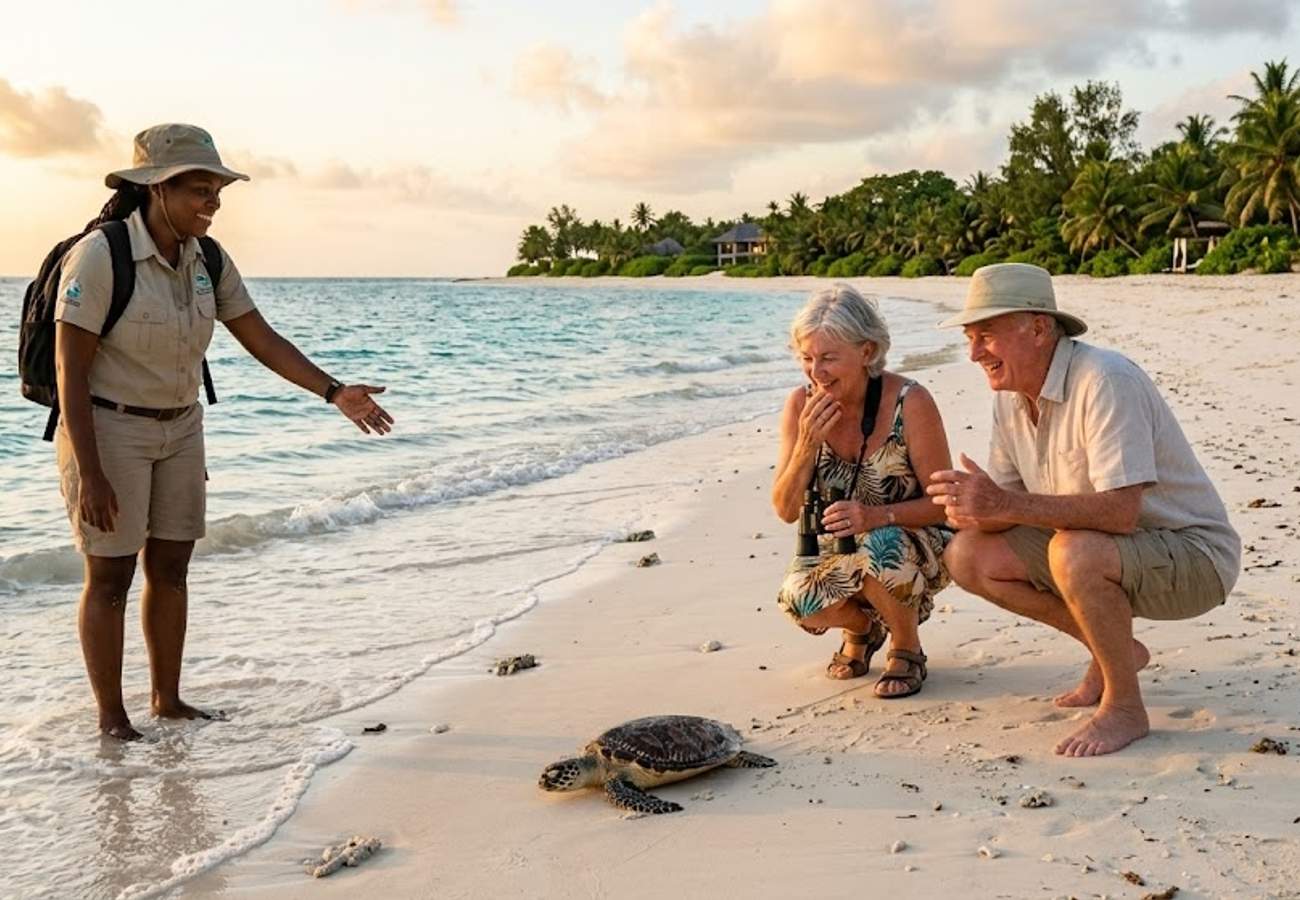
Image generated by AI
Guests at Four Seasons Resort Seychelles at Desroches Island can now observe critically endangered Hawksbill Turtles nesting on daylight beaches and green turtle courtship in surrounding waters, as the resort integrates scientific monitoring into its year-round hospitality programme across 14 kilometres of shoreline.
A rare wildlife experience is being placed at the centre of island hospitality in the Seychelles, where guests at Four Seasons Resort Seychelles at Desroches Island are being invited to observe sea turtle nesting, courtship, and conservation activity throughout the year. Across 14 kilometres of shoreline, encounters with Hawksbill Turtles and green sea turtles are being combined with guided learning and scientific monitoring.
The programme is being delivered as part of the resort's wider conservation approach, with marine research, habitat protection, and visitor education being integrated into the guest experience. Conservation is being woven into daily life on Desroches Island, allowing wildlife encounters to be experienced within a carefully managed hospitality setting.
Seasonal Turtle Activity Calendar at Desroches Island
| Experience | Turtle Species | Season | Activity Type | Key Details |
|---|---|---|---|---|
| Turtle Patrol | Hawksbill Turtles (critically endangered) | October – March | Daylight nesting observation | Beach monitoring, tagging, egg counts, GPS nest recording |
| Turtle Tango Time | Green sea turtles | June – September | Courtship observation | Guided marine biologist sessions on mating behaviour |
| Turtle Tracks and Traces | Green turtles | April – September | Track identification | Interpreting nesting marks without direct animal contact |
| La Passé Therese Excursion | Nesting turtles | By request, night-time | Guided night excursion | Observation under natural darkness |
| Nest Excavation | Hatchlings | ~10 days post-emergence | Scientific assessment | Success rate calculated from egg count vs. emerged hatchlings |
Hawksbill Nesting Season Shapes a Rare Seychelles Stay
Between October and March, the beaches of Desroches Island are used as important nesting grounds by critically endangered Hawksbill Turtles. The Seychelles supports one of the world's largest remaining nesting populations of the species, giving each season considerable conservation importance.
During this period, guests at Four Seasons Resort may join Turtle Patrol activities led by the marine conservation team. Beaches are monitored, nesting signs are recorded, and, on fortunate occasions, a female hawksbill may be seen laying eggs during daylight hours.
When the turtle enters the natural trance-like state associated with nesting, scientific checks may be completed by trained specialists. Tagging, measurements, egg counts, and GPS recording of the nest location may be undertaken while disturbance is kept to a minimum. The information gathered is then used to support long-term monitoring, scientific research, and conservation management.
Green Turtle Courtship Enriches the Marine Experience
From June to September, green sea turtle courtship is highlighted through Turtle Tango Time. During this period, the animals gather in the waters surrounding Desroches Island for their peak mating season.
Guests are accompanied by the resort's marine biologist and island conservationists, while explanations are provided about courtship behaviour, breeding biology, and the importance of protecting sea turtles. Marine education is incorporated into Seychelles hospitality without the animals being removed from their natural environment. Green turtles remain present throughout the year, and their seasonal activity is used to explain how mating, nesting, incubation, and hatching are connected.
Through these guided experiences, Four Seasons Resort provides an activity based on responsible observation rather than staged wildlife interaction.
Turtle Tracks Transform Beaches into Outdoor Classrooms
From April to September, Turtle Tracks and Traces is offered outside the main hawksbill nesting season. Guests are shown how evidence left by green turtles can be identified after the animals have visited the shore at night or during the early morning.
Tracks, nesting marks, and movements across the sand are interpreted by the marine team. Turtle behaviour can therefore be studied without the animals being directly approached.
A more immersive visit to La Passé Therese may also be arranged on request. During these guided night-time excursions, nesting turtles may be observed under natural darkness. The activity is managed by the marine conservation team and provides insight into one of the most remarkable wildlife events experienced on Desroches Island.
Nest Monitoring from Egg Laying to Hatching
Every nest located by the conservation team is recorded and observed throughout incubation. Where seawater infiltration creates a risk, eggs may be moved through a conservation-led nest translocation process. Intervention is undertaken only when a safer location is required.
Incubation generally lasts for approximately 70 days. Around ten days after hatchlings have emerged naturally, a nest excavation is conducted. The number that successfully left the nest is compared with the original egg count, allowing the overall success rate to be assessed.
Guests staying during hatching season may witness young turtles making their first journey towards the ocean. Where hatchlings are discovered elsewhere on the island, the resort team is expected to be notified so the situation can be evaluated and assistance provided where necessary.
Support is also extended to adult turtles. After nesting, mother turtles may occasionally become stranded among coral formations or face difficulty returning to the sea because of changing tides. The conservation team remains available to provide appropriate help.
Traveler Logistics Guide: Planning a Turtle Conservation Trip to Desroches Island
From a ground-level perspective, the best way to navigate this is to align your travel dates precisely with the turtle activity you want to witness. If your primary interest is Hawksbill nesting, book arrivals between October and March, with November through January offering the highest probability of daylight nesting encounters. For green turtle courtship, plan visits between June and September.
Getting There: Desroches Island is accessed via a domestic flight from Mahé to Desroches Airstrip, typically operated by Air Seychelles or charter services. International travellers should book connections through Seychelles International Airport (SEZ) on Mahé. Allow a minimum of three hours between your international arrival and the domestic connection, as baggage transfer between terminals at SEZ requires manual re-checking.
Optimal Stay Duration: To maximise the probability of witnessing nesting or hatching events, a stay of at least five to seven nights is recommended. Turtle activity is tide-dependent and weather-influenced, meaning shorter stays may miss key events.
Entry Requirements: All visitors to Seychelles require a valid passport with minimum six months validity, return ticket, and proof of accommodation booking. No visa is required for most nationalities, but a Visitor's Permit is issued on arrival for stays up to three months. Travel insurance covering medical evacuation from outer islands is strongly recommended, as Desroches has limited medical facilities.
Respecting Conservation Protocols: Guests must follow all instructions from the marine conservation team during turtle encounters. Flash photography is prohibited during night excursions. Red-light torches only are permitted. Maintain a minimum distance of five metres from nesting turtles and never position yourself between a turtle and the ocean.
Infrastructure Impact Assessment
The turtle programme is operated under Four Seasons for Good, the company's global commitment to preserving and regenerating the destinations where it operates. At Four Seasons Resort Seychelles at Desroches Island, this approach is reflected through biodiversity monitoring, marine research, habitat protection, and guest education. Work is also carried out with the Island Conservation Society.
Data collected through nest monitoring, turtle tagging, and beach patrols is contributed to the long-term protection of sea turtle populations across the Seychelles. This conservation-led model positions Desroches Island as a benchmark for how luxury hospitality can actively support endangered species research while providing guests with scientifically grounded wildlife experiences.
The expansion of these marine programmes signals a shift in Seychelles tourism strategy, where outer islands are being developed not through mass visitation but through low-impact, high-value conservation tourism. This approach protects the nesting populations that make the Seychelles one of the most important sea turtle habitats globally, while creating economic incentives for continued habitat preservation.
A form of hospitality is consequently being developed in which guests are encouraged to become informed participants. Hawksbill Turtles may be seen emerging from turquoise waters, green turtle courtship may be observed, fresh tracks may be followed, and hatchlings may be watched as they move towards the sea. These encounters are being positioned as more than memorable holiday moments. At Desroches Island, they are being linked to a shared responsibility for protecting biodiversity.
Through the marine experiences offered by Four Seasons Resort, conservation is being presented as an active part of the stay and a defining element of responsible Seychelles hospitality.
Conservation tourism on Desroches Island proves that luxury hospitality and endangered species protection can share the same shoreline.
Related Travel Guides
Disclaimer
This article is for informational and educational purposes only. It does not constitute legal, financial, or professional advice. While we strive to provide accurate and up-to-date information, travel policies, regulations, and conditions change rapidly. Always verify information with official sources before making travel decisions. Nomad Lawyer makes no representations about the accuracy, reliability, completeness, or suitability of the information provided. Readers should consult qualified professionals for advice specific to their circumstances. The views expressed in this article are those of the author and do not necessarily reflect the views of Nomad Lawyer.
Kunal K Choudhary
Co-Founder & Contributor
A passionate traveller and tech enthusiast. Kunal contributes to the vision and growth of Nomad Lawyer, bringing fresh perspectives and driving the community forward.
Learn more about our team →