
Aviation Updates: Flynas Commits SAR 200 Million to Riyadh Training Centre
Flynas invests over SAR 200 million to build a 13,000-square-meter pilot and cabin crew training facility in Riyadh's Al Rimal district.

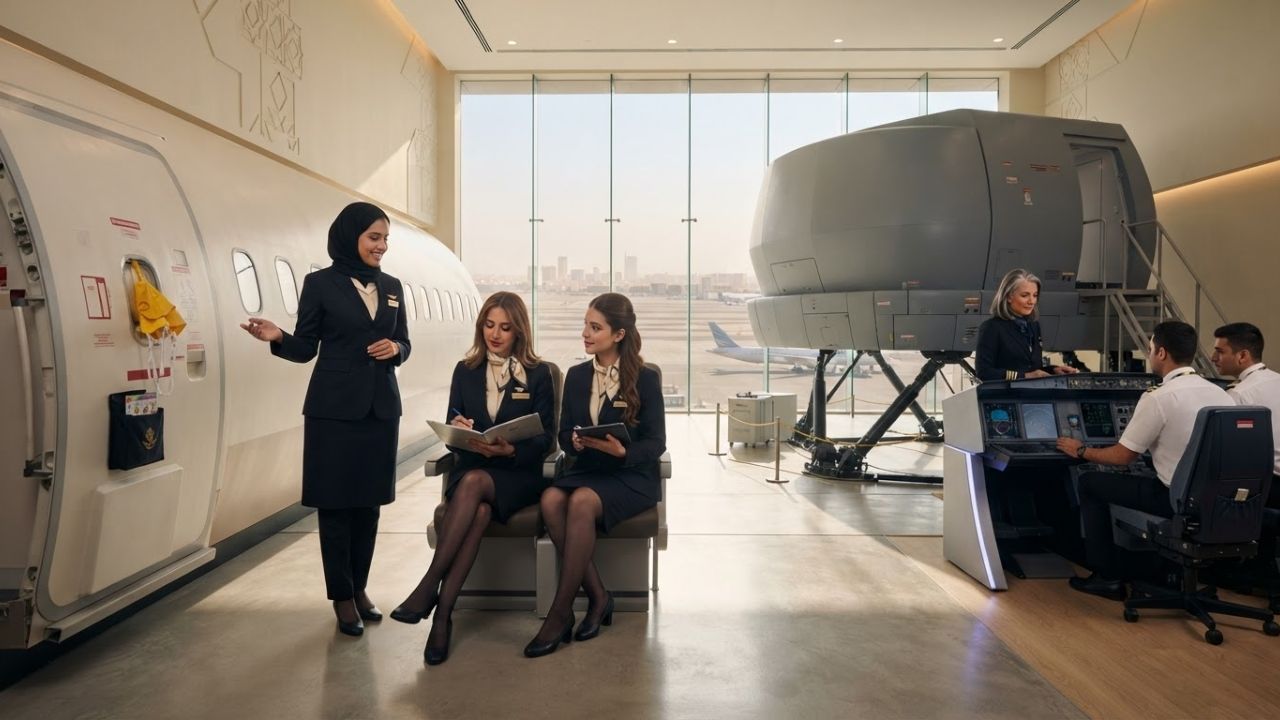
Image generated by AI
Flynas invests over SAR 200 million to build a 13,000-square-meter pilot and cabin crew training facility in Riyadh's Al Rimal district. The General Authority of Civil Aviation (GACA) indicates that developing domestic aviation academies coordinates localization programs, supporting fleet expansion needs across regional transport networks.
The Transition of Crew Instruction to Domestic Aviation Hubs
A notable trend in Middle Eastern aviation planning is the transition of crew instruction into localized domestic aviation hubs. Historically, regional air carriers leased simulator bays from external training academies in Europe, North America, or East Asia, expecting flight deck and cabin crew candidates to travel abroad for recurrent qualifications and initial licensing checks. In 2026, the scale of regional fleet orders, combined with GACA's national capacity objectives and localization mandates, encourages airlines to invest in dedicated facilities, bringing safety simulation, classroom instruction, and cabin service training directly under corporate management.
By coordinating training schedules with regional airport operations, airlines reduce logistics costs. This self-contained operational model coordinates support for domestic training engineers, flight instructors, and municipal hospitality vendors.
Flynas Riyadh Training Centre Project Parameters
The high-tech facility will support the carrier's expanding route network:
- Total Financial Investment: Exceeds SAR 200 million (approximately US$53 million / $53 million).
- Project Site Footprint: Occupies 13,000 square metres (13,000 square meters) in Riyadh's Al Rimal district.
- Airport Proximity: Located less than ten minutes from King Khalid International Airport (RUH).
- Target Opening Date: Scheduled to commence operations in 2028.
- Trainee Capacity: Designed to accommodate approximately 700 trainees daily across classroom, simulation, and practical safety modules.
- Simulation Infrastructure: Starts with three flight simulators in the first phase, with space for eight simulators in the building design, and potential expansion up to 14 (fourteen).
- Technology & Local Partners: Developed in collaboration with Airbus, aviation-training technology provider CAE, and Saudi project firm Restart.
The project supports the training demands of flynas's order book of 160 Airbus aircraft (30 A330neo widebody and 130 A320-family aircraft).
Flynas Corporate Scale and Sourcing Coordinates
The table below breaks down the project sectors, historic revenue metrics, fleet counts, localization rates, partner roles, and coordinating authorities recorded on August 25, 2026:
| Core Project Sector | Historic Revenue Metric | Fleet Count | Localization Rate | Partner Role | Coordinating Authority |
|---|---|---|---|---|---|
| Aviation training | SAR 7.56 billion (2024) | 68 active aircraft | 100% co-pilots (2019) | CAE: Simulator tech | General Authority (GACA) |
| Crew licensing | Gross: SAR 1.468B (2024) | 2,000 weekly flights | Future Engineers check | Airbus: Flight software | Ministry of Investment |
| Flight operations | Operating: SAR 1.045B | 156 flight routes | Cadet Dispatcher batch | Restart: Local builder | King Khalid Airport Board |
| Fleet expansion | EBITDA: SAR 2.18 billion | 80+ destinations | 110M historic pax count | CAE: Maintenance crew | Al Rimal District Admin |
These coordinates outline the sectors, revenues, counts, rates, roles, and authorities established for the domestic training programs.
Resource Stewardship and Eco-Aware Training Operations
For the trainee and operator, the benefit of choosing domestic flight simulation over international travel is the reduction in carbon emissions associated with long-haul passenger flights. Utilizing digital flight deck manuals and electronic scoring applications prevents paper training waste.
Additionally, constructing facilities that meet regional green building standards reduces energy demand. Sourcing catering from municipal businesses that purchase ingredients from local greenhouses coordinates support for community growers.
For comparison, you can explore the changing dynamics of Middle East Aviation Adapts to Market-Driven Sovereign Finance Model to see how airlines manage operating costs. For transit updates, comparing travel scheduling matches other networks, such as Qatar Airways Cargo Launches New Helsinki Freighter Route updates. This trend is similar to the tourism growth seen in other destinations, as detailed in our guide on the Hacienda Heights Bus Fire Transport Safety regulations.
Cadet and Crew Insider Tips: Navigating flynas Training Programs
If you are planning to enter the flynas training pipeline or apply for cadet courses, keep these practical tips in mind:
- Review GACA Medical Requirements Early: Ensure your Class 1 medical certificates are current before applying for the Future Pilots Programme.
- Leverage Airbus MATe suite resources: Utilize the MATe digital learning tools to study flight deck systems before beginning simulator sessions.
- Budget Travel Times in Al Rimal: Plan travel times carefully; although the site is less than ten minutes from the airport, traffic during shift changes can vary.
- Prepare for Evidence-Based Training (EBT): Study operational flight trends, as EBT focuses on data-informed competency assessments rather than static drills.
- Check Dispatcher Cadet Timelines: Ensure you hold a valid GACA flight dispatcher licence before applying for the six-month dispatcher program.
Long-Term Outlook for Saudi Aviation Talent Pipelines
The long-term outlook for transit is focused on deploying solar arrays to power simulator bays, integrating virtual reality headsets for cabin crew safety drills, and using electric shuttles to connect Al Rimal with King Khalid International Airport. As traffic grows toward the Kingdom's goal of 330 million annual passengers, GACA and national training boards will cooperate to maintain passenger standards.
By developing sustainable transit options and protecting educational resources, the aviation sector aims to build a sustainable transport network.
FAQ
When is the flynas training centre scheduled to open?
The advanced facility in Riyadh's Al Rimal district is scheduled to open in 2028.
How much is flynas investing in the training facility?
Flynas has committed over SAR 200 million (approximately $53 million USD) to the development of the centre.
How many simulators will the facility house?
The centre will open with three flight simulators, with space to accommodate eight, and capacity for future expansion to 14.
What is the daily trainee capacity of the centre?
Once fully operational, the integrated centre is designed to handle approximately 700 trainees daily.
Stay updated on regional travel regulations and training campaigns shaping Saudi transit.
Related Travel Guides
Disclaimer
This article is for informational and educational purposes only. It does not constitute legal, financial, or professional advice. While we strive to provide accurate and up-to-date information, travel policies, regulations, and conditions change rapidly. Always verify information with official sources before making travel decisions. Nomad Lawyer makes no representations about the accuracy, reliability, completeness, or suitability of the information provided. Readers should consult qualified professionals for advice specific to their circumstances. The views expressed in this article are those of the author and do not necessarily reflect the views of Nomad Lawyer.
Raushan Kumar
Founder & Lead Developer
Full-stack developer with 11+ years of experience and a passionate traveller. Raushan built Nomad Lawyer from the ground up with a vision to create the best travel and law experience on the web.
Learn more about our team →