
Bypassing Travel Chaos: flynas Launches Massive Al-Qassim Airport Base, Shielding Saudi Travelers from Major Hub Gridlock with Direct International Routes: Airline News
To bypass severe travel chaos at massive international hubs, flynas establishes a new operating base in Al-Qassim, launching direct flights to Turkey, Egypt, and domestic markets.

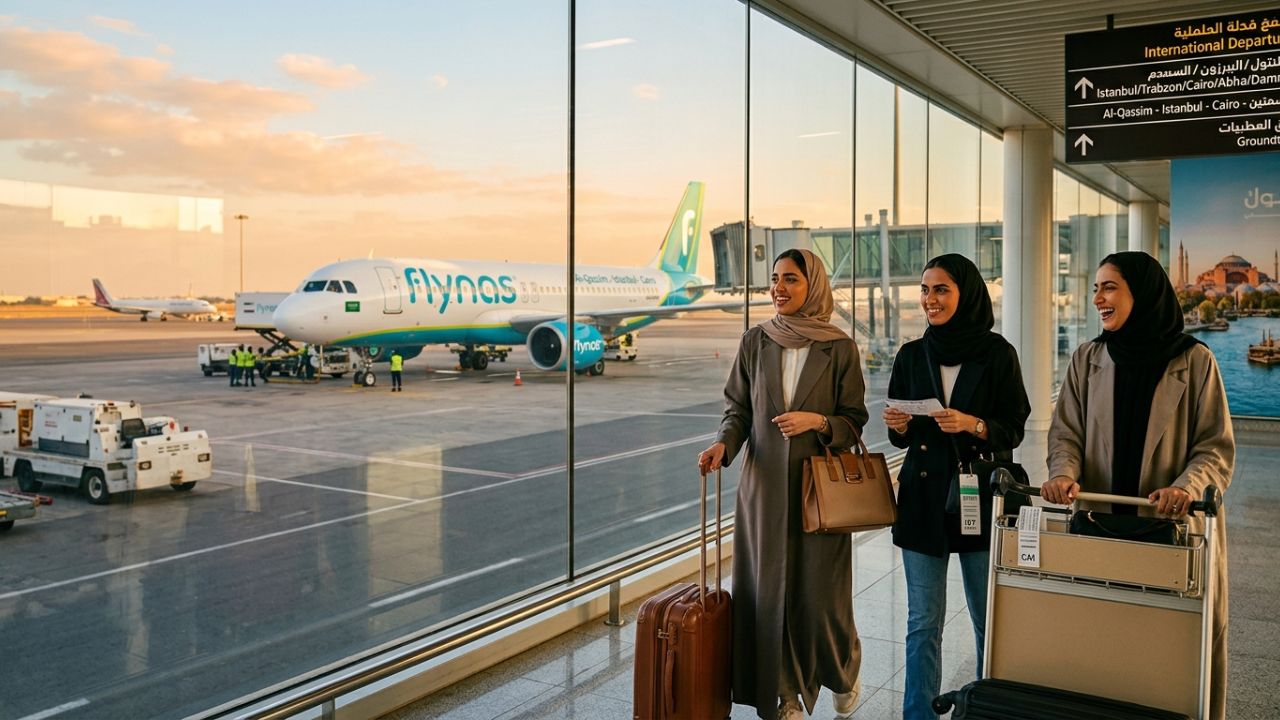
Image generated by AI
In a highly strategic infrastructure pivot designed to completely bypass the travel chaos that routinely chokes major international aviation hubs, Saudi Arabia’s leading low-cost carrier, flynas, is radically expanding its operational footprint. Reported on June 20, 2026, as domestic travelers frantically monitor the latest airline news for alternatives to highly congested mega-airports, flynas announced the establishment of a brand-new operating base at Prince Naif bin Abdulaziz International Airport in Al-Qassim. Scheduled to officially open in July 2026, this massive expansion targets the immediate elimination of airport disruptions by providing regional passengers with direct, non-stop access to five key domestic and international destinations. By allowing travelers to completely avoid connecting flights through massive, bottlenecked terminals in Riyadh or Jeddah, this route expansion secures vital "survival intelligence" against rolling flight cancellations, cementing the Al-Qassim base as today's most crucial headline in breaking aviation updates.
By introducing direct passenger coordination and dynamic scheduling backups, the regional aviation hubs target growing passenger demand across vital commerce sectors. The choice to coordinate flight departures in phases helps to manage gate capacity, supporting the country's broader regional transportation network.
Context: Eradicating Hub-and-Spoke Gridlock
For the rapidly expanding Saudi Arabian tourism sector, decentralizing aviation infrastructure is the absolute ultimate tactical defense against structural transit failure.
Historically, travelers living in the central Al-Qassim region and surrounding provinces were entirely dependent on a flawed hub-and-spoke model. To reach international destinations like Istanbul or Cairo, passengers were forced to endure domestic connecting flights through the massive, high-traffic mega-hubs of Riyadh or Jeddah. When peak-season surges hit these major airports, the resulting congestion instantly triggered a massive ripple effect, subjecting regional travelers to severe delays, missed connections, and stressful terminal navigation. The establishment of this new flynas base permanently bypasses this logistical nightmare. Developed in direct partnership with airport operator Cluster2, the Al-Qassim base allows flynas to support highly efficient aircraft deployment and scheduling flexibility right from the center of the Kingdom. This ensures that regional passengers can fly directly to major international markets without ever stepping foot inside a congested transit hub.
To view live flight schedules, verify the active route availability from the new Al-Qassim base, or to track potential route restorations prior to heading to the airport, travelers must consult official aviation directories. For direct updates regarding how this massive decentralized routing might shield you from current flight cancellations out of major Saudi hubs, travelers should aggressively utilize the official digital portals of their respective airlines. To explore live flight tracking and monitor the exact severity of the cascading bottlenecks paralyzing the broader regional airspace, passengers can consult the official FlightAware tracking service.
Section-Wise Breakdown: The Decentralized Network
The International Escape Routes
The initial flynas route network heavily prioritizes high-demand international markets that are incredibly popular among Saudi travelers, entirely removing the need for a secondary connection.
- Istanbul: Direct flights will connect Al-Qassim passengers to Turkey's cultural and commercial epicenter, bypassing the heavily congested European transit corridors.
- Trabzon: Serving the massive demand for cooler climates and mountain scenery, this direct link to Turkey’s Black Sea region eliminates the exhausting multi-leg journey previously required to reach the popular nature retreat.
- Cairo Sphinx: By targeting the rapidly developing Sphinx International Airport instead of the primary Cairo gateway, flynas is executing a "double bypass," avoiding congestion on both the Saudi departure side and the Egyptian arrival side.
Domestic Connectivity and Distribution
Alongside international services, the Al-Qassim base will radically alter domestic travel patterns within the Kingdom. By introducing direct flights to Abha and Dammam, flynas is supporting the Saudi government's strategy of distributing visitor activity evenly across multiple destinations.
- Abha: As one of Saudi Arabia’s most prominent domestic tourism targets located in the mountainous Asir region, direct access from Al-Qassim prevents northern and central travelers from having to route south through Jeddah.
- Dammam: Connecting Al-Qassim to Dammam instantly strengthens commercial ties between the country’s central and eastern regions, catering heavily to direct business travel and bypassing the capital's airspace entirely.
Existing Base Synergy
The Al-Qassim operation marks a massive milestone in flynas’ aggressive expansion strategy. As the airline already operates highly successful bases in Riyadh, Jeddah, Dammam, Madinah, and Abha, the addition of Al-Qassim perfectly interlocking its domestic footprint. This decentralized model ensures that if one specific base suffers from localized weather or operational disruptions, the airline has the structural flexibility to reroute and manage capacity across the rest of the Kingdom.
Technical Roster: Official Airline Expansion Matrix
To ensure absolute factual accuracy regarding the exact operational timelines, strategic route networks, and existing hub infrastructure defining this massive airport base expansion, the following matrix details the strictly verified aviation data:
Official flynas Al-Qassim Expansion Matrix (July 2026)
| Operational Metric / Strategy | Verified Aviation Data |
|---|---|
| Operating Carrier | flynas (Leading Low-Cost Carrier) |
| New Operating Base | Prince Naif bin Abdulaziz International Airport (Al-Qassim) |
| Airport Operator Partner | Cluster2 |
| Base Launch Date | July 2026 |
| Initial International Routes | Istanbul, Trabzon, Cairo Sphinx |
| Initial Domestic Routes | Abha, Dammam |
| Existing flynas Bases | Riyadh, Jeddah, Dammam, Madinah, Abha |
| Primary Operational Goal | Decentralize traffic, bypass mega-hub congestion |
Data accurately reflects the verified route launches, airport partnerships, and strategic timeline tracking the flynas Al-Qassim base expansion as of June 2026.
Industry Analysis: The Rise of Secondary Hubs
Aviation analysts monitoring the Middle Eastern market note that the flynas Al-Qassim expansion is a textbook execution of point-to-point network scaling designed to capture emerging tourism demands.
Analysts emphasize that air connectivity remains the single most critical factor supporting Saudi Arabia's massive tourism transformation. Mega-projects cannot succeed if passengers are trapped in transit bottlenecks. By aggressively transforming Al-Qassim from a quiet agricultural region into a massive aviation gateway, flynas is proving that the future of low-cost travel relies entirely on secondary airports. These airports offer drastically lower landing fees, faster turnaround times, and less airspace congestion, allowing airlines to maintain competitive fares while guaranteeing higher operational reliability than legacy carriers trapped at primary hubs.
Actionable Advice for Regional Travelers
Because the July 2026 launch of the Al-Qassim base fundamentally alters domestic and international travel patterns, passengers in central Saudi Arabia must execute this strategic booking checklist immediately:
- Abandon the Mega-Hubs: If you live in or near the Al-Qassim region, completely halt booking itineraries that force you to connect through Riyadh or Jeddah for trips to Turkey or Egypt. Secure direct flynas flights out of Prince Naif bin Abdulaziz International Airport.
- Leverage Cairo Sphinx: When traveling to Egypt, heavily prioritize the new Cairo Sphinx route over legacy Cairo International routes to guarantee faster immigration processing and easier access to the Giza plateau, completely bypassing central Cairo traffic.
- Monitor Future Expansions: flynas has explicitly confirmed that additional destinations will be added progressively. Do not book complex, multi-leg international flights for late 2026 without first checking if a direct route out of Al-Qassim has been announced.
FAQ: flynas Al-Qassim Base Launch
When is the new flynas base in Al-Qassim opening?
The new flynas operating base at Prince Naif bin Abdulaziz International Airport is officially scheduled to open in July 2026.
What international routes will flynas operate from Al-Qassim?
Initially, the airline will launch direct, non-stop international flights to Istanbul and Trabzon in Turkey, as well as Cairo Sphinx in Egypt.
How does this expansion prevent travel chaos?
By providing direct flights from Al-Qassim, the expansion allows regional travelers to completely bypass the massive passenger congestion and frequent delays typical of major connecting hubs like Riyadh and Jeddah.
The Reality of Decentralized Aviation
The massive infrastructure investment by flynas proves definitively that decentralizing aviation networks is the ultimate weapon against systemic mega-hub travel chaos. By effectively transforming a regional airport into a bustling international base, the airline has successfully guaranteed that passengers in central Saudi Arabia can escape the terrifying gridlock of legacy transit models. Yet, as eager tourists frantically book direct flights to Trabzon and Cairo Sphinx, they must accept a critical new reality: convenience demands localized infrastructure. Surviving this era of intense aviation demand requires a complete refusal to rely on outdated hub-and-spoke routing, and the tactical discipline to exploit the highly efficient, direct connections emerging from secondary regional airports.
Key Takeaways
- Massive Hub Bypass: The new Al-Qassim base allows central Saudi travelers to completely avoid connecting through congested mega-hubs like Riyadh.
- July 2026 Launch: flynas will officially open operations at Prince Naif bin Abdulaziz International Airport in July.
- International Expansion: Initial direct routes include highly popular destinations: Istanbul, Trabzon, and Cairo Sphinx.
- Domestic Connectivity: The base will simultaneously strengthen the Saudi domestic network with direct flights to Abha and Dammam.
- Strategic Growth: Developed with airport operator Cluster2, the base is designed to support long-term, progressive route expansion.
Related Travel Guides
Massive Travel Chaos Paralyzes Chicago O'Hare with 1,425 Disruptions
Disclaimer
This article is for informational and educational purposes only. It does not constitute legal, financial, or professional advice. While we strive to provide accurate and up-to-date information, travel policies, regulations, and conditions change rapidly. Always verify information with official sources before making travel decisions. Nomad Lawyer makes no representations about the accuracy, reliability, completeness, or suitability of the information provided. Readers should consult qualified professionals for advice specific to their circumstances. The views expressed in this article are those of the author and do not necessarily reflect the views of Nomad Lawyer.
Kunal K Choudhary
Co-Founder & Contributor
A passionate traveller and tech enthusiast. Kunal contributes to the vision and growth of Nomad Lawyer, bringing fresh perspectives and driving the community forward.
Learn more about our team →