
Florida Wildfire Strands Amtrak Riders for Over 24 Hours in 2026
A 2,700-acre wildfire in northeast Florida forced Amtrak to halt its Miami-to-New York corridor in April 2026, leaving hundreds of passengers stranded on board for more than 24 hours and disrupting rail service across the state.

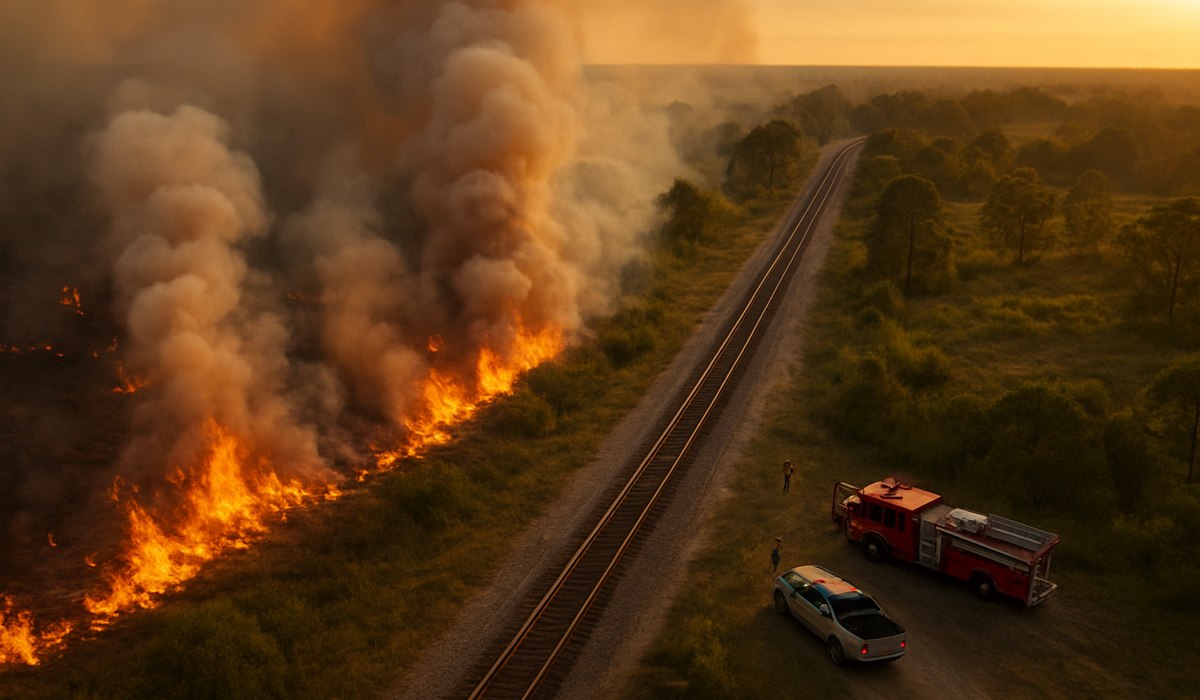
Image generated by AI
Fast-Moving Wildfire Forces Florida Wildfire Strands on Amtrak Network
A 2,700-acre wildfire burning across the Clay and Putnam County line in northeast Florida this week forced Amtrak to suspend its busy Miami-to-New York corridor, leaving over 200 passengers stranded aboard the northbound Silver Meteor for more than 24 hours. The rapidly spreading blaze moved dangerously close to rail infrastructure south of Jacksonville, prompting dispatchers to halt all passenger and freight traffic through the affected stretch. Heavy smoke and active fire danger made it unsafe for any trains to proceed, triggering a cascading series of service suspensions, cancellations, and route modifications that rippled throughout Florida's rail network during peak spring travel season.
Wildfire Forces Major Rail Corridor Closure
The wildfire ignited in a region where Amtrak's long-distance routes depend on shared freight-owned corridors with limited alternative routing options. State forestry officials documented challenging firefighting conditions, including dry vegetation and unpredictable wind patterns that accelerated the blaze's advance toward the rail right-of-way. Dispatchers made the critical decision to close this crucial stretch of track after determining that smoke and fire activity posed an unacceptable safety risk to onboard passengers and crew members.
This corridor typically handles several of Amtrak's most heavily trafficked routes, including the Miami-New York and Miami-Chicago services that serve thousands of passengers monthly. The closure disrupted not only passenger operations but also created bottlenecks for freight traffic, further complicating recovery efforts. Transportation analysts note that long-distance rail in the United States faces inherent vulnerabilities when relying on narrow corridor corridors with few alternatives—a limitation highlighted sharply by this incident.
Silver Meteor Passengers Stranded for Over 24 Hours
The northbound Silver Meteor, scheduled to depart Miami and arrive in New York, came to an abrupt halt north of DeLand, Florida, late Sunday evening when wildfire threats forced track closures ahead. More than 200 passengers found themselves unable to proceed northward or safely disembark as crews awaited clearance from fire management officials. The immobilized train remained parked on the siding for roughly 24 hours or longer while passengers experienced extended periods with limited information and restricted movement options.
Travelers reported frustration over slow communication from Amtrak staff regarding the timeline for resuming service. Intermediate stops including Orlando and Fayetteville, North Carolina, were ultimately canceled as the journey stretched well beyond the typical 18-hour travel window. Some passengers were eventually transported southbound by rail or bus after northbound progress proved impossible. Others remained aboard for extended periods, creating discomfort and uncertainty for families and business travelers caught by the unexpected disruption.
Cascading Disruptions Across Florida's Rail Network
Beyond the stranded Silver Meteor, Amtrak implemented widespread schedule adjustments affecting multiple long-distance services. The Auto Train connecting Sanford (near Orlando) to Lorton, Virginia, was canceled for at least one full day. The Floridian, Amtrak's recently launched Miami-Chicago service, suspended its usual southern Florida stops and operated only between Savannah, Georgia, and northern points until conditions stabilized.
Amtrak arranged limited bus transportation to bridge certain disrupted segments, particularly between Jacksonville and Miami, but the scale of the wildfire meant that not all stranded passengers could be accommodated immediately. Some travelers faced lengthy rebookings, overnight holds on parked trains, or multi-hour bus substitutions. The disruption coincided with busy spring travel patterns, amplifying the cascading impact across the entire Florida rail network and affecting connections to regional and national routes. Recovery efforts extended over multiple days as crews cleared debris, verified track integrity, and obtained clearance from fire management officials before resuming normal operations.
Safety Operations and Recovery Timeline
Fire management crews worked continuously to contain the 2,700-acre blaze while prioritizing the security of railroad infrastructure. State agencies coordinated with Amtrak operations to establish clear safety protocols before any train movement could resume through the affected corridor. Monitoring systems tracked wind patterns, fire progression, and smoke density to determine when passenger service could safely restart.
Amtrak's network operations center fielded thousands of passenger inquiries and rebooking requests as the closure extended beyond initial estimates. The railroad issued periodic service advisories updating passengers on estimated resumption times and available alternative transportation. Once fire officials confirmed the immediate area was secure and smoke had cleared sufficiently from the right-of-way, dispatchers authorized a phased restart of service, beginning with freight operations and gradually reintroducing passenger trains as full infrastructure safety checks were completed.
| Metric | Details |
|---|---|
| Wildfire Size | Approximately 2,700 acres across Clay and Putnam County line |
| Affected Corridor | Miami-to-New York/Chicago long-distance rail route south of Jacksonville |
| Stranded Passengers | Over 200 aboard northbound Silver Meteor |
| Stranding Duration | More than 24 hours near DeLand, Florida |
| Services Suspended | Silver Meteor, Floridian, Auto Train service changes |
| Canceled Routes | Auto Train (Sanford-Lorton) suspended for one+ day; Floridian rerouted to Savannah |
| Alternative Transport | Limited bus service between Jacksonville and Miami |
| Closure Duration | Multiple days until safety clearance obtained |
What This Means for Travelers
If you're planning rail travel through Florida or booking long-distance routes via the Miami-New York-Chicago corridor, here are critical actions:
-
Monitor Amtrak service advisories before departure and sign up for email alerts on your booked route to catch disruptions immediately.
-
Book refundable or flexible tickets when traveling during wildfire season (typically March–May in northeast Florida) to protect yourself if route disruptions occur.
-
Purchase travel insurance that covers rail delays and cancellations to offset costs if you're stranded or rebooked on longer itineraries.
-
Allow extra buffer time between connections, particularly when transferring from Amtrak to flights or other transportation modes in Florida.
-
Contact Amtrak directly at 1-800-USA-RAIL if your train experiences unexpected delays exceeding 2–3 hours; staff can discuss rebooking options, meal vouchers, or compensation eligibility.
-
Verify alternative routes before traveling; if the Miami-Jacksonville-New York corridor is compromised, Amtrak may reroute you via longer paths through Georgia or other states.
FAQ
Q: Can I get a refund if my Amtrak train is delayed due to wildfire?
A: Amtrak typically provides meal vouchers and hotel accommodations for delays exceeding certain thresholds. Refunds depend on your ticket type and the duration of delay. Contact Amtrak customer service immediately if stranded for more than 12 hours to discuss your options.
Q: What's the best way to book a train ticket through Florida in 2026?
A: Use Trainline to compare Amtrak fares and check real-time service status, or visit Amtrak's official site directly to review current route advisories and book with flexible fare options.
Q: How often do wildfires disrupt Florida's rail corridors?
A: While not daily, wildfire threats to Florida's rail infrastructure occur seasonally during dry months. April through May sees elevated wildfire activity. Monitor state forestry updates and Amtrak service notices
Disclaimer
This article is for informational and educational purposes only. It does not constitute legal, financial, or professional advice. While we strive to provide accurate and up-to-date information, travel policies, regulations, and conditions change rapidly. Always verify information with official sources before making travel decisions. Nomad Lawyer makes no representations about the accuracy, reliability, completeness, or suitability of the information provided. Readers should consult qualified professionals for advice specific to their circumstances. The views expressed in this article are those of the author and do not necessarily reflect the views of Nomad Lawyer.
Raushan Kumar
Founder & Lead Developer
Full-stack developer with 11+ years of experience and a passionate traveller. Raushan built Nomad Lawyer from the ground up with a vision to create the best travel and law experience on the web.
Learn more about our team →