
Florida's Siesta Beach Named World's Most Valuable Beach With €1.08 Billion Theoretical Valuation
Siesta Beach in Florida has surpassed European luxury icons to become the world's most valuable beach, carrying a theoretical land value of €1.08 billion.

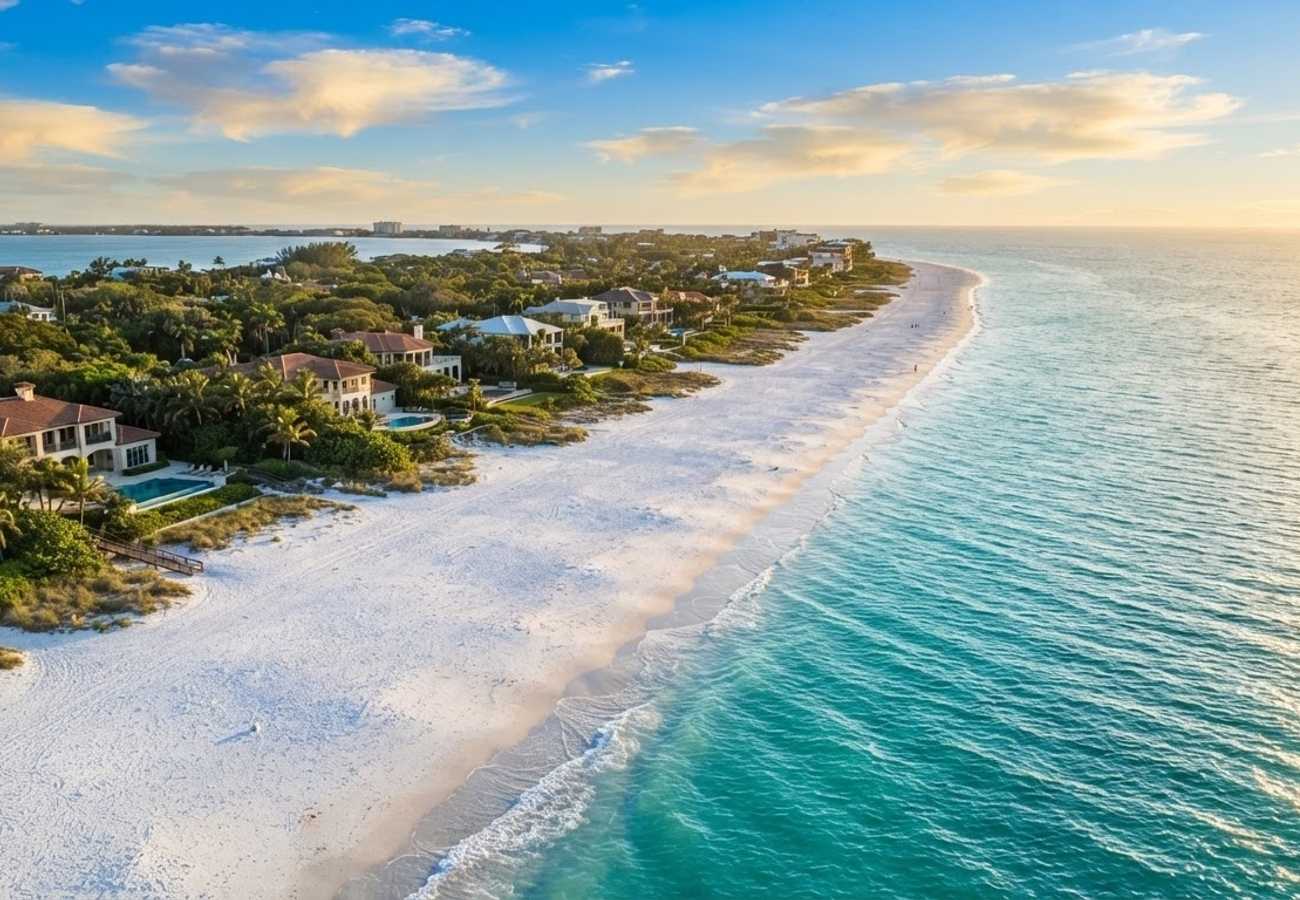
Image generated by AI
A Florida shoreline has officially eclipsed the most exclusive coasts of Europe to claim the title of the world's most valuable beach, reaching a theoretical valuation of €1.08 billion.
Recent data analysis conducted by luxury villa specialists CV Villas reveals that Siesta Beach, located on Florida's Siesta Key, now leads global rankings in terms of hypothetical land value. This valuation places the American destination ahead of legendary European hotspots, including the celebrity-laden shores of the French Riviera and the dramatic cliffs of Portugal.
Economic Valuation of Global Coastlines
It is important to clarify that these figures do not represent actual listing prices or market sale values, as most of these shorelines are protected public spaces. Instead, the research utilizes a theoretical model that applies current local coastal land values to the total area of the beach.
By calculating the intersection of beach size and the cost of adjacent real estate, the study provides a unique economic lens through which to view destination appeal. The results demonstrate how a combination of natural beauty, global brand recognition, and intense property demand can transform a stretch of sand into a multi-billion euro economic asset.
Siesta Beach Dominates Global Rankings
The ascent of Siesta Beach to the top spot is attributed to its world-renowned quartz sand, which is prized for its brilliant white color and cool temperature. This natural allure, paired with the high-value real estate market of Siesta Key, resulted in the staggering €1.08 billion valuation.
For the broader tourism ecosystem, this ranking underscores the role of "anchor destinations." When a specific beach achieves this level of global recognition, it creates a massive ripple effect of economic activity. Local hotels, high-end restaurant groups, transport providers, and short-term rental operators all see increased demand as the beach itself becomes the primary driver for travel decisions.
European Coastal Assets and the Influence of Glamour
While Florida takes the global crown, Europe maintains a strong presence in the high-value bracket, led by France's Pampelonne Beach. Located near Ramatuelle on the Côte d’Azur, Pampelonne is valued at €843 million.
The valuation of Pampelonne is less about the physical size of the sand and more about the "glamour economy." The beach is synonymous with Saint-Tropez, luxury beach clubs, and yachting culture. In this instance, the theoretical value is heavily inflated by the prestige and celebrity association of the region, proving that destination identity is as valuable as the land itself.
Iberian Peninsula's Strong Economic Showing
Portugal and Spain feature prominently in the valuation list, highlighting the scale and infrastructure of their tourism sectors. Portugal's Praia da Falésia ranks as the second most valuable beach in Europe and third globally, with an estimated value of €573.2 million. Its five-kilometer stretch and iconic red-gold cliffs provide a massive physical footprint that contributes significantly to its total valuation.
Spain also demonstrates significant coastal wealth, securing three spots within the top 15. Playa Bolonia in Andalucía leads the Spanish contingent with a value of €364.9 million, bolstered by its unique dunes and the proximity of the Baelo Claudia archaeological site.
Comparative Valuations of Europe's Top 15 Beaches
The following table details the theoretical land values of the most expensive vacation beaches across the European continent.
| Rank | Beach | Town / Region | Country | Estimated Land Value |
|---|---|---|---|---|
| 1 | Pampelonne Beach | Ramatuelle, Côte d’Azur | France | €843 million |
| 2 | Praia da Falésia | Albufeira, Algarve | Portugal | €573.2 million |
| 3 | Playa Bolonia | Tarifa, Andalucía | Spain | €364.9 million |
| 4 | Ölüdeniz | Fethiye, Muğla | Turkey | €113.2 million |
| 5 | Alzada Beach | La Oliva, Fuerteventura | Spain | €104.4 million |
| 6 | Palombaggia | Porto-Vecchio, Corsica | France | €64.9 million |
| 7 | Jaz Beach | Budva | Montenegro | €64.1 million |
| 8 | Cala Brandinchi | San Teodoro, Sardinia | Italy | €50.6 million |
| 9 | Positano Beach (Spiaggia Grande) | Positano, Amalfi Coast | Italy | €49.3 million |
| 10 | Lotu Beach | Saint-Florent, Corsica | France | €40.1 million |
| 11 | Ses Illetes | Formentera, Balearics | Spain | €39.3 million |
| 12 | Zlatni Rat | Bol, Brač | Croatia | €33.8 million |
| 13 | Elafonissi Beach | Kissamos, Crete | Greece | €26 million |
| 14 | Plavi Horizonti | Tivat, Boka Bay | Montenegro | €22 million |
| 15 | Cala dei Gabbiani | La Maddalena, Sardinia | Italy | €17.6 million |
Tourism Implications and Market Dynamics
The vast disparity in valuations—ranging from the nearly billion-euro valuation of Pampelonne to the €17.6 million of Cala dei Gabbiani—does not necessarily reflect the aesthetic quality of the beaches. Instead, it reflects the surrounding economic environment.
Factors such as accessibility, the density of luxury accommodations, and the "brand" of the region play a decisive role. For tourism professionals, these figures serve as a reminder that the value of a natural asset is amplified by the infrastructure built around it. A beach is not just a destination; it is a catalyst for a wider economy involving food service, transport, and hospitality.
Why This Matters: The Intersection of Luxury and Law
For the luxury traveler and the real estate investor, these valuations highlight a critical trend: the "commodification of nature." When a beach like Siesta Beach reaches a theoretical value of €1.08 billion, the pressure on surrounding land increases. This often leads to stricter zoning laws, higher property taxes, and increased environmental regulations to prevent the degradation of the very asset that creates the value.
From a logistical standpoint, this means that "high-value" beaches are likely to become more regulated. Travelers can expect higher costs for nearby accommodations and a more curated, luxury-focused experience. The economic power of these coastlines ensures they remain primary drivers of global travel, but it also necessitates a balance between commercial exploitation and sustainable preservation.
The true wealth of these shores lies not in their theoretical price tag, but in their ability to drive global tourism and create lifelong memories.
Related Travel Guides
Disclaimer
This article is for informational and educational purposes only. It does not constitute legal, financial, or professional advice. While we strive to provide accurate and up-to-date information, travel policies, regulations, and conditions change rapidly. Always verify information with official sources before making travel decisions. Nomad Lawyer makes no representations about the accuracy, reliability, completeness, or suitability of the information provided. Readers should consult qualified professionals for advice specific to their circumstances. The views expressed in this article are those of the author and do not necessarily reflect the views of Nomad Lawyer.
Kunal K Choudhary
Co-Founder & Contributor
A passionate traveller and tech enthusiast. Kunal contributes to the vision and growth of Nomad Lawyer, bringing fresh perspectives and driving the community forward.
Learn more about our team →