
Florida Joins Tennessee and More in a Strong Role in Fueling US Tourism as Great Smoky Mountains National Park Heads Towards Another Record-Breaking Year With Strong Visitor Demand in 2026
Florida Joins Tennessee and More in a Strong Role in Fueling US Tourism as Great Smoky Mountains National Park Heads Towards Another Record-Breaking Year With S

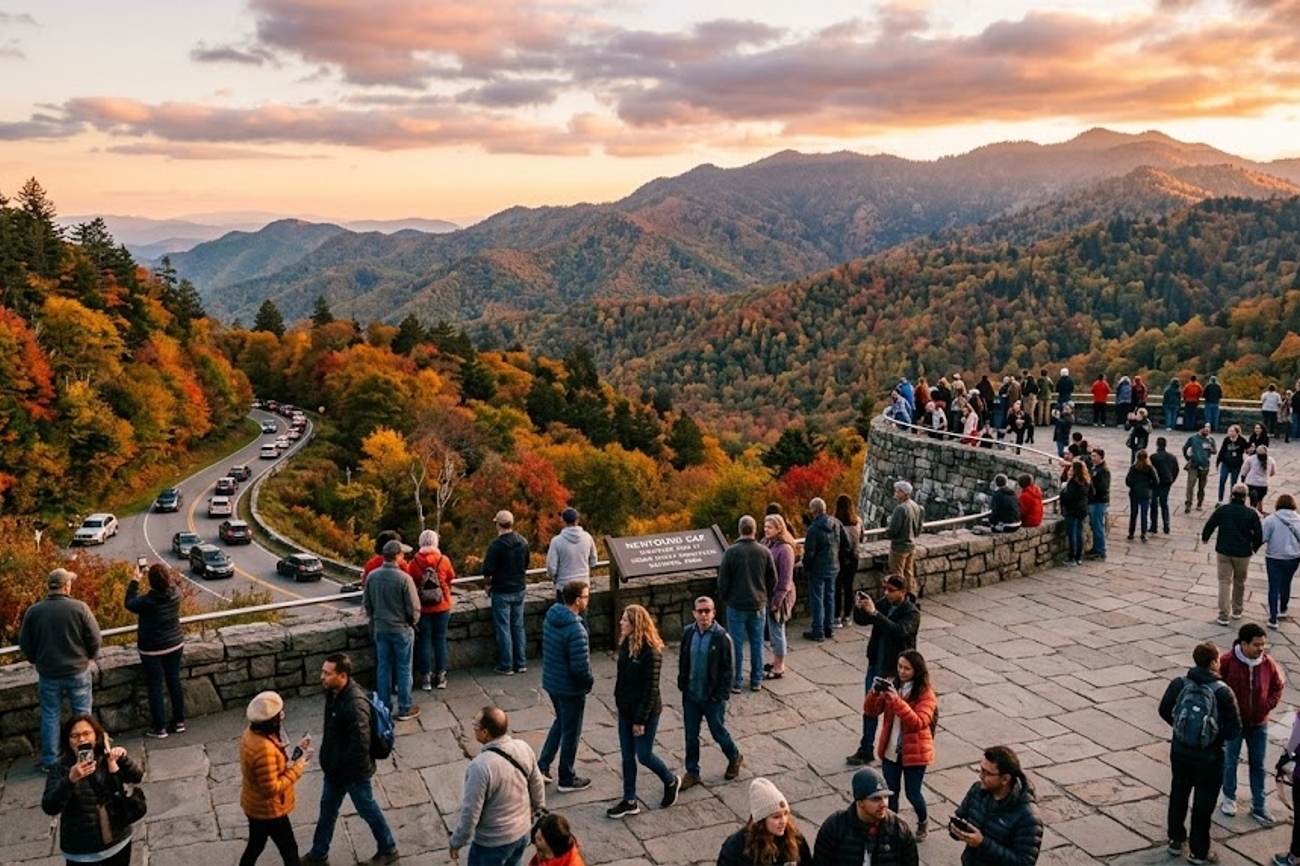
Image generated by AI
[Washington, D.C., November 2026] — The United States travel sector has entered a phase of aggressive structural expansion, with Florida and Tennessee emerging as the primary engines driving national tourism growth. Official data from the National Travel and Tourism Office (NTTO) and the U.S. Department of Commerce confirm a resilient surge in both domestic and international arrivals, characterized by a decisive shift toward experience-based spending and outdoor recreation.
The current growth trajectory is fueled by a combination of massive infrastructure investments and a consumer pivot toward natural heritage sites. While Florida leverages its high-capacity aviation hubs and resort infrastructure, Tennessee is capitalizing on its role as the gateway to the Southern Appalachian mountains. This regional dominance is creating a polarized travel market where specific "powerhouse" destinations are seeing record-breaking volumes while other traditional sites experience a relative decline in market share.
Infrastructure and Investment Triggers
The current surge is not accidental but the result of coordinated public and private investments in transportation and recreation. State-level governments in Tennessee and Florida have aggressively expanded highway capacities and aviation infrastructure to handle unprecedented passenger loads. In Florida, the focus has remained on scaling international gateway capacity and coastal management to support a diversified resort model.
Simultaneously, Tennessee has integrated its urban music corridors in Nashville and Memphis with expanded access to the Southern Appalachian range. This synergy between urban centers and wilderness areas has created a compounding economic effect, driving up state and local sales tax receipts. According to the U.S. Bureau of Economic Analysis (BEA), the outdoor recreation sector now contributes over 2% of the total U.S. GDP, generating hundreds of billions of dollars annually and outperforming several traditional retail sectors in 2026.
Markets and Hubs Under Pressure
The concentration of travel into these two states has placed immense pressure on specific aviation gateways and protected lands. Data from the Federal Aviation Administration (FAA) and the TSA indicate that throughput figures have consistently shattered daily and monthly records through the first three quarters of 2026.
The following hubs and destinations are currently experiencing the highest impact:
- Florida Aviation Gateways:
- Orlando International Airport (MCO): Record-breaking passenger throughput.
- Miami International Airport (MIA): Surge in international inbound arrivals.
- Tampa International Airport (TPA): Increased domestic pass-throughs.
- Tennessee Aviation Gateways:
- Nashville International Airport (BNA): Sustained growth in urban-to-nature transit.
- Protected Lands:
- Great Smoky Mountains National Park: Currently tracking toward historical records with over 13 million annualized visits.
The National Park Service (NPS) reports that Great Smoky Mountains National Park is once again the most visited national park in the country for 2026, reflecting a broader national trend toward nature-based tourism.
What This Means for Travelers
For the average traveler, this surge in popularity translates to a "high-demand, high-friction" environment in the Southeast. The shift toward experience-based expenditure means that the most popular destinations are operating at or near maximum capacity.
Flight and Airport Logistics Passengers flying into MCO, MIA, TPA, or BNA should expect record-level crowds. While infrastructure has expanded, the sheer volume of passengers breaking daily records suggests longer security wait times and increased competition for airport amenities. Booking flights well in advance is no longer a suggestion but a necessity to avoid price spikes.
National Park Access Visiting the Great Smoky Mountains National Park now requires a data-driven approach. With visitation projecting to exceed 13.5 million people, the "drive-in" market is saturated. Travelers should anticipate strict visitor management protocols, including formalized parking fees and potential entry restrictions during peak windows to prevent environmental degradation.
Accommodation and Costs The sustained gain in tourism tax receipts in Tennessee and Florida indicates a high-demand market. Travelers should expect premium pricing for hotels and short-term rentals in Nashville, Memphis, and Florida's coastal corridors. The "resort model" in Florida and the "heritage model" in Tennessee are driving up the cost of local services as these states prioritize high-yield tourism.
The Evolution of Visitation Patterns
The current state of American travel is the result of a transformative six-year cycle. Between 2020 and 2025, the U.S. witnessed a fundamental shift in how citizens interact with public lands. The "outdoor shift" that began during the pandemic has evolved from a temporary trend into a permanent structural preference.
In the Great Smoky Mountains specifically, the progression is stark:
- Pre-2020: Visitation remained steady between 11.5 and 12.5 million, characterized by traditional summer peaks.
- 2020–2022: A surge to between 12.0 and 14.1 million occurred as travelers adopted digital tools and favored drive-in destinations.
- 2023–2025: Numbers stabilized between 13.0 and 13.3 million as the park implemented corridor infrastructure upgrades and formalized parking fees.
- 2026: The park is now on a trajectory to surpass 13.5 million visits, utilizing data-driven management to balance year-round crowds.
This evolution shows that the American traveler is no longer seasonal; the demand for outdoor recreation is now a year-round economic driver.
Future Projections and Policy Shifts
The federal government is now using these tourism metrics to redefine economic development policies. Because tourism is a cornerstone of the national economy, the current data is being used to prioritize where future conservation efforts and recreational projects will be funded.
The primary challenge for 2027 and beyond will be "over-tourism" management. As Florida and Tennessee continue to dominate the travel landscape, the federal government must balance the economic gains of high visitation with the need to protect endangered ecosystems. We expect to see a move toward more aggressive "de-marketing" of saturated sites and the promotion of under-visited national parks to distribute the economic and environmental load.
Furthermore, the continued expansion of aviation hubs in the Southeast suggests that the Transportation Security Administration (TSA) will likely implement more advanced biometric screening and automated throughput technologies to manage the record-breaking volumes seen at MCO and BNA.
FAQ: US Travel Trends 2026
Which US state is currently leading in tourism growth? Florida and Tennessee are the primary drivers. Florida leads in resort and international gateway volume, while Tennessee leads in outdoor recreation and cultural heritage tourism, specifically via the Great Smoky Mountains.
How crowded is Great Smoky Mountains National Park? It is currently the most visited national park in the US, projecting over 13.5 million visits in 2026. Travelers should expect heavy traffic and should utilize NPS digital tools for visitor management.
Are flight prices increasing for Southeast US hubs? Yes. With record-breaking passenger throughput at airports like MCO, MIA, and BNA, demand is outpacing capacity, leading to higher fares and a need for earlier bookings.
What is the economic impact of outdoor recreation in 2026? Outdoor recreation now accounts for over 2% of the total US GDP, according to the BEA, showing greater stability than many traditional retail sectors.
The American traveler has traded the shopping mall for the mountain trail, and the economy is following suit.
Tags: Florida-Tourism-2026, Tennessee-Tourism-2026, Great-Smoky-Mountains-NPS, MCO-Airport-Traffic, BNA-Airport-Growth, US-Outdoor-Recreation-GDP
Related Travel Guides
- UK Holiday Costs 2027: Navigating Airline Fuel Surcharges, European Fares, and Summer Getaway Strategies
- Trichy Airport Upgrades Passenger Experience: Modern Terminals Meet Ancient Temples in Tamil Nadu 2026
- Penang Eyes Direct Flights to Northern China: Malaysia's Cultural Island Expands Air Corridors in 2026
Disclaimer
This article is for informational and educational purposes only. It does not constitute legal, financial, or professional advice. While we strive to provide accurate and up-to-date information, travel policies, regulations, and conditions change rapidly. Always verify information with official sources before making travel decisions. Nomad Lawyer makes no representations about the accuracy, reliability, completeness, or suitability of the information provided. Readers should consult qualified professionals for advice specific to their circumstances. The views expressed in this article are those of the author and do not necessarily reflect the views of Nomad Lawyer.
Preeti Gunjan
Contributor & Community Manager
A passionate traveller and community builder. Preeti helps grow the Nomad Lawyer community, fostering engagement and bringing the reader experience to life.
Learn more about our team →