
Flights Delayed Europe: 1,600+ Disruptions Hit Major Hubs
Over 1,619 flights delayed across Europe's major hubs in April 2026 as spring storms and staffing shortages create cascading disruptions affecting millions of travelers on Lufthansa, Ryanair, and British Airways routes.

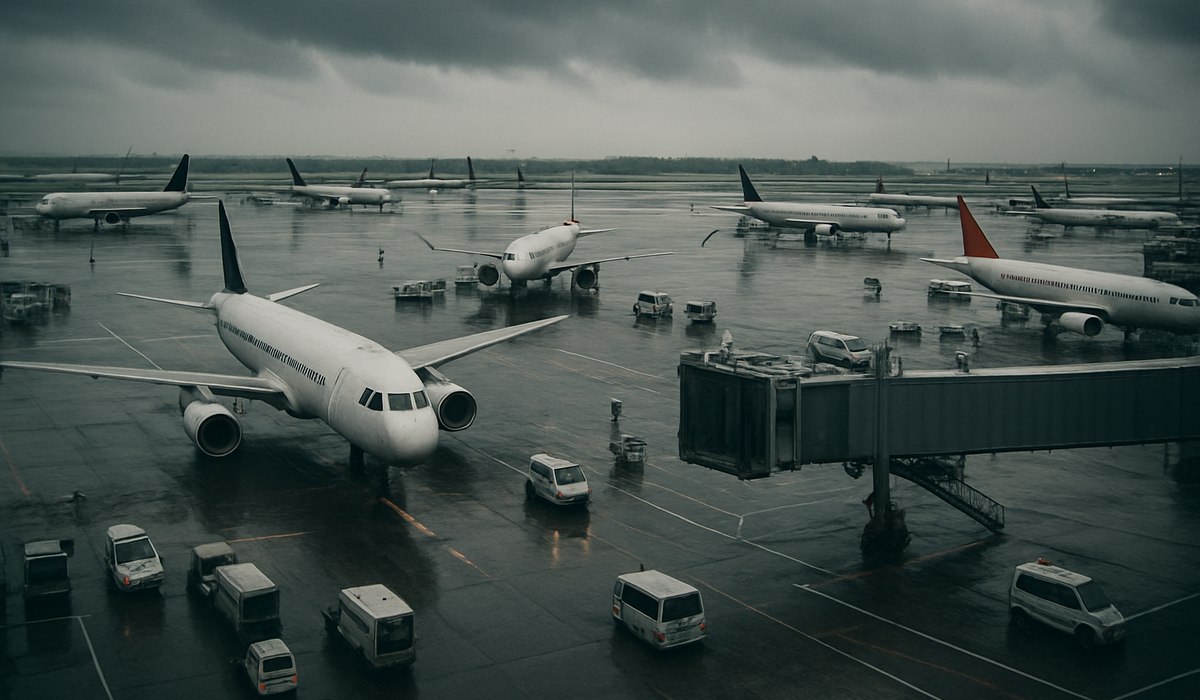
Image generated by AI
Europe's Aviation Network Buckles Under Spring Disruption
Over 1,600 flights delayed across Europe's major hubs as spring storms and staffing shortages trigger widespread cancellations and cascading schedule chaos. On April 8, 2026, airports in Spain, Germany, England, Denmark, Turkey, and the Netherlands reported a combined 1,619 delayed flights and 39 cancellations, affecting millions of passengers on Lufthansa, Ryanair, British Airways, KLM, Turkish Airlines, and Vueling services. Key European transfer points including Madrid-Barajas, Berlin, Copenhagen, and Istanbul are experiencing acute operational strain. The disruption reveals how modern aviation networks, operating near maximum capacity during peak season, remain vulnerable to compounding weather events and labor challenges that ripple across borders and airline alliances within hours.
Which European Hubs Are Most Affected
The current aviation snarl concentrates pressure on Europe's busiest transfer hubs. Madrid's Adolfo Suárez Madrid-Barajas Airport has recorded sustained delays affecting over 200 daily services as regional storms and airspace constraints squeeze runway capacity. Berlin's international terminals, connecting northern Europe and UK-bound passengers, face significant knock-on delays from earlier disruptions compounding throughout the day.
Copenhagen Airport has become a critical focal point, with operational challenges combined with adverse wind conditions pushing affected flights into triple digits daily. The airport's role as a Scandinavian hub means delays propagate quickly across northern European networks.
Istanbul Airport amplifies disruption severity due to its position bridging Europe, the Middle East, and Asia. Even modest local cancellations trigger missed connections and extended layovers for passengers traveling onward across multiple continents.
Frankfurt, Munich, and Amsterdam hubs have similarly contributed to elevated regional delay totals, creating a widespread European aviation bottleneck during the crucial spring tourism season.
Weather And Staffing Combine To Create Ripple Effects
Named spring storm systems sweeping northern and western Europe bring high winds and heavy rain, reducing runway capacity at multiple major hubs simultaneously. Flights delayed Europe now reflect a predictable pattern: initial weather impacts force temporary flow restrictions, which then cascade into rolling delays extending hours after the worst conditions pass.
When European airspace operates near maximum capacity—as occurs during spring and summer peak seasons—even short-lived storms trigger significant disruption. Aircraft and crew fall out of position. Turnaround times lengthen. Subsequent departures from Berlin, Copenhagen, Madrid, and Amsterdam accumulate delays exponentially.
Concurrent staffing shortages at ground operations, air traffic control facilities, and cabin crew bases amplify the problem. Airlines operating with limited flexibility cannot quickly adjust schedules or reroute capacity. Low-cost carriers like Ryanair and Vueling, designed with minimal scheduling slack to maximize aircraft utilization, suffer disproportionately when first-wave delays occur.
Industry observers note that winter and early spring weather patterns have already strained European carrier operations for months. Entering peak season with reduced buffer capacity and ambitious 2026 growth plans has eliminated error margins that previously absorbed disruption.
Why Spring Storms Cause Cascading Delays
European spring weather patterns create perfect conditions for aviation disruption. Storm systems form rapidly over the Atlantic, intensify crossing UK and northern France, and maintain strength through Germany, Scandinavia, and toward Turkey. Major hubs positioned along this storm track face simultaneous weather impacts.
Modern airports operate aircraft turnarounds on 45-90 minute schedules. A single delayed arrival means the next scheduled departure slips. If multiple aircraft fall behind—as happens when 200+ services experience delays—the compounding effect becomes exponential within hours.
Hub-and-spoke operations amplify this cascading problem. Passenger banks arriving from 50+ incoming flights must connect to 40+ outbound flights within tight windows. One delayed inbound flight means passengers miss connections, creating rebooking demands that further strain ground staff and ticketing systems.
Air traffic control capacity becomes the bottleneck. Controllers cannot safely accelerate traffic flow when weather reduces visibility or wind shear threatens runway safety. Declared flow restrictions—mandatory reductions in departure rates—mean airlines must hold aircraft at gates, pushing delays deeper into the day.
Recovery requires not just clearing weather, but repositioning dozens of aircraft and crew back to their intended bases. This repositioning traffic competes for limited airport capacity with regular scheduled flights, extending disruption for 24-36 hours after weather clears.
What Travelers Should Know Now
Monitor your flight status continuously using FlightAware, which provides real-time delay information and historical patterns for specific routes and airports. The FAA and regional aviation authorities publish ground stop announcements and flow restriction details.
Contact your airline directly before heading to the airport. Some carriers proactively rebook passengers on earlier flights or alternative routing when delays exceed three hours. Email confirmations or app notifications may not reach you immediately.
Know your passenger rights. EU261 regulations entitle passengers to compensation for delays exceeding three hours on EU flights, regardless of cause (weather exceptions apply in some jurisdictions). Document all delays with boarding passes and airline communications.
Expect crowded airport terminals. When 1,600+ flights delay across seven countries simultaneously, airport lounges, restaurants, and customer service desks become overwhelmed. Arrive with entertainment, phone chargers, and patience.
Consider travel insurance for future spring trips to European hubs. Coverage for flight disruptions, hotels, and meals provides financial protection when airlines' liability limitations apply.
Traveler Action Checklist
-
Check your flight status immediately on FlightAware or your airline's app before leaving for the airport.
-
Call or email your airline to confirm you remain on the scheduled flight and ask about alternative routings if delays exceed three hours.
-
Screenshot or photograph your boarding pass, flight confirmation, and any delays displayed on airport screens for compensation documentation.
-
Request written confirmation of the delay from airline representatives—take photos of the departure board timestamp as evidence.
-
Keep receipts for food, hotels, and transport expenses incurred due to the delay; EU261 may require reimbursement.
-
Identify standby flight alternatives on competing airlines before speaking with gate agents; some may volunteer rebooking.
-
Register your flight disruption with your country's aviation consumer protection authority (UK CAA, DGAC France, Luftfahrt-Bundesamt Germany) if compensation is denied.
-
Set phone alerts for gate changes, departure updates, and airline announcements throughout your airport time.
FAQ
Q: Will my flight definitely be delayed if I'm traveling through Madrid or Copenhagen today?
A: Not necessarily, but probability is significantly elevated. Approximately 20-25% of flights experience delays exceeding 15 minutes at affected hubs today. Later afternoon and evening flights have accumulated more delay potential as morning disruptions cascade. Check your specific flight on FlightAware for real-time updates rather than assuming delays based on airport status alone.
Q: Am I entitled to compensation if my flight is delayed due to weather?
A: EU261 regulations exempt weather as an "extraordinary circumstance," meaning airlines typically avoid compensation obligations for pure weather delays. However, if you experienced over three hours' delay and incurred expenses (meals, hotels, transport), document everything and contact your airline's customer relations team. Some carriers offer goodwill gestures beyond legal requirements.
Q: How long will these delays continue affecting European flights?
A: Weather systems typically pass within 24-48 hours, but aviation recovery extends 2-3 days as airlines reposition aircraft and crew. Staffing shortages may persist longer if ground or cabin crew illness spikes during disruption periods. Monitor US DOT aviation alerts and regional authority announcements for recovery timelines.
**Q: Should I cancel my European trip
Disclaimer
This article is for informational and educational purposes only. It does not constitute legal, financial, or professional advice. While we strive to provide accurate and up-to-date information, travel policies, regulations, and conditions change rapidly. Always verify information with official sources before making travel decisions. Nomad Lawyer makes no representations about the accuracy, reliability, completeness, or suitability of the information provided. Readers should consult qualified professionals for advice specific to their circumstances. The views expressed in this article are those of the author and do not necessarily reflect the views of Nomad Lawyer.
Preeti Gunjan
Contributor & Community Manager
A passionate traveller and community builder. Preeti helps grow the Nomad Lawyer community, fostering engagement and bringing the reader experience to life.
Learn more about our team →