
Asia Flight Delays Expose Razor-Thin Airline Margins in April 2026
Asia flight delays surge across major hubs in April 2026 as fuel costs and airport congestion collide with razor-thin airline margins. Hundreds of cancellations and thousands of delays reveal structural vulnerabilities in regional carrier economics.

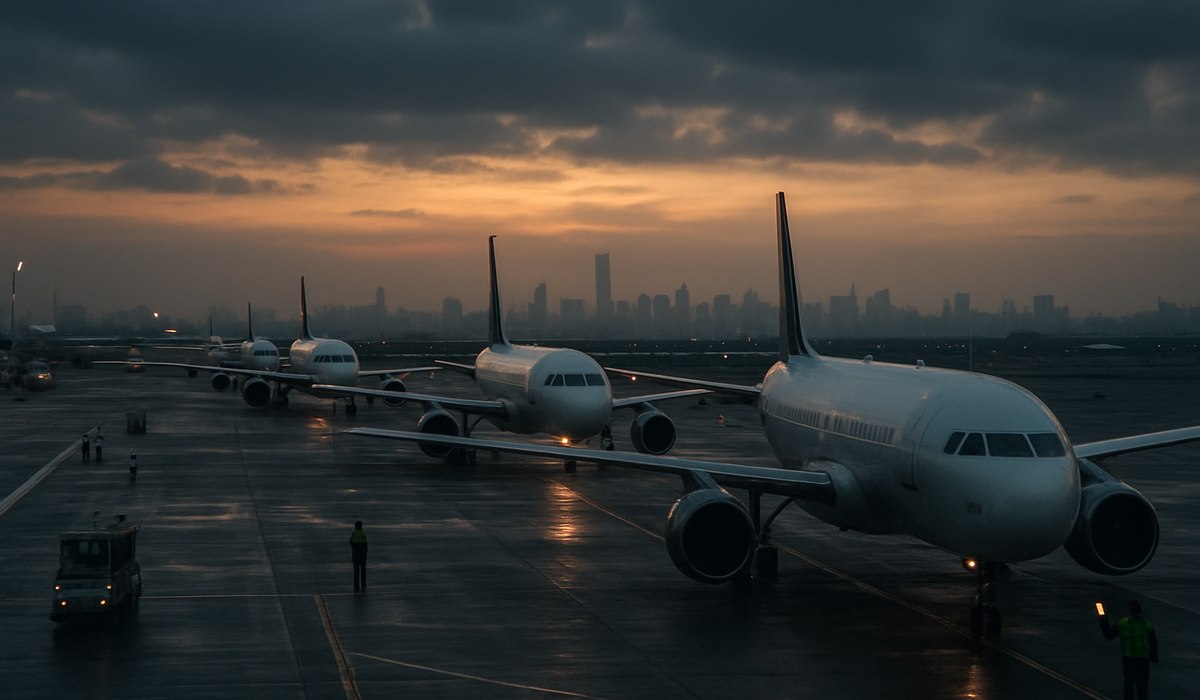
Image generated by AI
Hundreds of Cancellations and Thousands of Delays Rock Asian Aviation Network
Widespread disruptions swept across major Asian aviation hubs during early April 2026, with operational data revealing nearly 400 flight cancellations and over 5,000 delays affecting passengers traveling through Beijing, Shanghai, Jakarta, Tokyo, and Southeast Asian gateways. The cascading disruptions expose how razor-thin profit margins leave Asian carriers vulnerable to operational shocks. Airlines operating high-density networks across Bangkok, Kuala Lumpur, and Singapore faced compounding delays as aircraft and crew positioning failures rippled through consecutive flight rotations.
The Asia flight delays crisis reflects mounting structural pressures that have been building since late March. Low-cost carriers and hybrid operators dependent on rapid turnaround times struggled most acutely, as minor weather disruptions or air traffic control restrictions quickly snowballed into network-wide irregularities. Real-time tracking through FlightAware documented persistent delay spikes on April 5–7 across multiple regions, confirming that operational strain persisted well into the second week of April as airlines simultaneously rebuilt capacity for northern summer schedules.
Late March Spike Cascades Into Early April Disruptions
The transition from March into April revealed how fragile airline operations become when margins compress. Operational figures from March 31 showed the disruption pattern had already established momentum, leaving aircraft and crews distributed across the network in ways that conflicted with April's fresh schedule. For carriers operating dense intra-Asian networks with minimal slack between flights, this positional imbalance proved impossible to resolve quickly.
By April 5–7, the secondary wave of delays indicated that the system had not absorbed the initial shock. Bangkok's Suvarnabhumi Airport, Kuala Lumpur International, and multiple Shanghai facilities repeatedly appeared as hotspots on real-time delay tracking platforms. The timing compounded operational vulnerability: airlines were simultaneously attempting to expand summer schedules while managing residual disruptions from the preceding week. Each missed departure slot reduced the ability to recover within the day, as the compressed schedules offered virtually no buffer time.
Transparency in tracking Asia flight delays improved through publicly available aviation data, yet many passengers experienced delays with minimal explanation or compensation clarity. The cascading nature of the disruptions—where a single delayed aircraft departure triggers downstream cancellations across its scheduled rotations—exposed how interconnected regional networks amplify small operational failures into systemic stress.
Southeast Asian Hubs Bear the Brunt of Operational Strain
Southeast Asia's fastest-growing aviation gateways absorbed the most severe impacts during the April 2026 disruptions. Bangkok, Kuala Lumpur, Singapore, and Jakarta handle some of Asia's highest passenger volumes while operating infrastructure and staffing levels that approach saturation during peak periods. When unexpected disruptions occur, these hubs lack the operational cushion to absorb delays without triggering widespread cancellations.
The rerouting of Europe-Asia long-haul traffic through Southeast Asian hubs intensified local congestion. Recent geopolitical developments prompted carriers to shift some intercontinental services away from traditional Middle Eastern routing, concentrating additional widebody arrivals and departures into already constrained schedules. This overlay of extra traffic on top of organic passenger growth created bottlenecks that ground crews, maintenance teams, and air traffic controllers struggled to manage.
Passenger support platforms noted that Southeast Asian passengers faced the longest average delays and highest cancellation rates during the crisis window. Limited gate availability and runway congestion at key airports meant that delayed aircraft had nowhere to park or position for subsequent flights. The consequence was a domino effect where single-digit percentage schedule disruptions translated into double-digit percentage delay propagation across the network.
Low-Cost Carriers Face Critical Capacity Crunch
Asia's low-cost carrier segment operates on business models that assume near-perfect operational execution. Profit margins typically range from 2-4 percent annually, leaving virtually no financial buffer when unexpected costs arise. The April 2026 Asia flight delays crisis exposed how razor-thin these margins truly are when operational challenges coincide with fuel cost spikes.
Low-cost operators across the region depend on rapid aircraft turnarounds—often 25-30 minutes between arrival and departure. When a single flight experiences a 45-minute delay, the entire subsequent rotation collapses. Crew duty time limitations mean that crews cannot simply extend their workday to recover lost time; instead, the flight must be cancelled, cascading the disruption to passengers and downstream schedules.
During the April crisis, multiple low-cost carriers implemented emergency capacity reductions, cancelling flights on marginal routes to preserve operational reliability on core markets. This strategic retreat reduced overall network capacity precisely when demand remained strong, forcing passengers onto alternative carriers or different travel dates. The compounding effect of fleet-wide disruptions across the low-cost sector reduced available seats across the entire region by an estimated 8-12 percent during peak disruption days.
Summer Schedule Rebuilding Collides With Structural Cost Pressures
The April 2026 disruptions occurred at a particularly vulnerable moment: airlines were simultaneously expanding schedules for northern summer peak travel while managing unprecedented fuel cost pressures. Industry projections had anticipated average net margins of approximately 4 percent across the global airline sector for 2026. Many Asian carriers faced actual margins substantially lower than this forecast as fuel surcharges failed to fully offset refined jet fuel cost increases.
Airlines with sophisticated fuel hedging programs experienced some insulation from spot price volatility. However, even hedged carriers faced margin compression as refining spreads widened and supply constraints persisted. Smaller operators without comprehensive hedging exposure bore the full brunt of fuel price increases, passing costs to passengers through emergency surcharges while simultaneously cutting frequencies on unprofitable routes.
The timing created a triple squeeze: demand was climbing toward pre-pandemic levels, unit costs were rising faster than revenue, and operational reliability was deteriorating precisely when schedule expansion demanded flawless execution. A single 40-minute ground delay on a morning rotation burned extra fuel while disrupting aircraft utilization for the entire subsequent day. For carriers operating on 4 percent net margins, unplanned costs of this magnitude could consume a day's profit across multiple aircraft rotations.
Jet Fuel Shock Pushes Costs Higher
Refined jet fuel prices surged sharply in the weeks preceding the April 2026 Asia flight delays crisis, forcing carriers to implement emergency measures. Airlines introduced temporary fuel surcharges, increased base fares, or reduced frequencies on marginal routes to preserve profitability. The shock arrived precisely as airlines were rebuilding capacity, creating a disconnect between planned economics and actual operating costs.
Carriers with comprehensive fuel hedging had partially locked in lower prices, yet exposure to spot market fluctuations and refining supply bottlenecks remained substantial. Comments from industry analysts on larger network carriers suggested hedging programs were easing immediate impacts, but financial protection remained incomplete. Smaller operators lacked comparable hedging depth and confronted spot market fuel costs directly.
The cascading operational disruptions amplified fuel cost pressures. A single 40-minute delay on a narrow-body aircraft burns approximately 300-400 additional liters of jet fuel. Multiply this across hundreds of delayed departures across the Asia-Pacific region, and the cumulative additional fuel expense approached millions of dollars daily during peak disruption periods. These unplanned costs directly eroded the razor-thin margins that airlines depended on for quarterly profitability.
| Metric | Late March | Early April | Impact |
|---|---|---|---|
| Cancellations (Asian hubs) | ~400 | ~250 | 65% decline week-over-week |
| Delays (24+ hours) | >5,000 | ~3,200 | Residual strain from March spike |
| Affected passengers | 600,000+ | 450,000+ | Reduced traffic as airlines cut capacity |
| Average delay (affected flights) | 2.5 hours | 1.8 hours | Partial recovery of |
Disclaimer
This article is for informational and educational purposes only. It does not constitute legal, financial, or professional advice. While we strive to provide accurate and up-to-date information, travel policies, regulations, and conditions change rapidly. Always verify information with official sources before making travel decisions. Nomad Lawyer makes no representations about the accuracy, reliability, completeness, or suitability of the information provided. Readers should consult qualified professionals for advice specific to their circumstances. The views expressed in this article are those of the author and do not necessarily reflect the views of Nomad Lawyer.
Kunal K Choudhary
Co-Founder & Contributor
A passionate traveller and tech enthusiast. Kunal contributes to the vision and growth of Nomad Lawyer, bringing fresh perspectives and driving the community forward.
Learn more about our team →