
Flight Disruptions Strip $30-34 Billion From U.S. Economy Annually
New research confirms flight disruptions cost the U.S. economy $30-34 billion annually in 2026, with cascading effects on productivity, tourism, and corporate operations far exceeding direct airline losses.

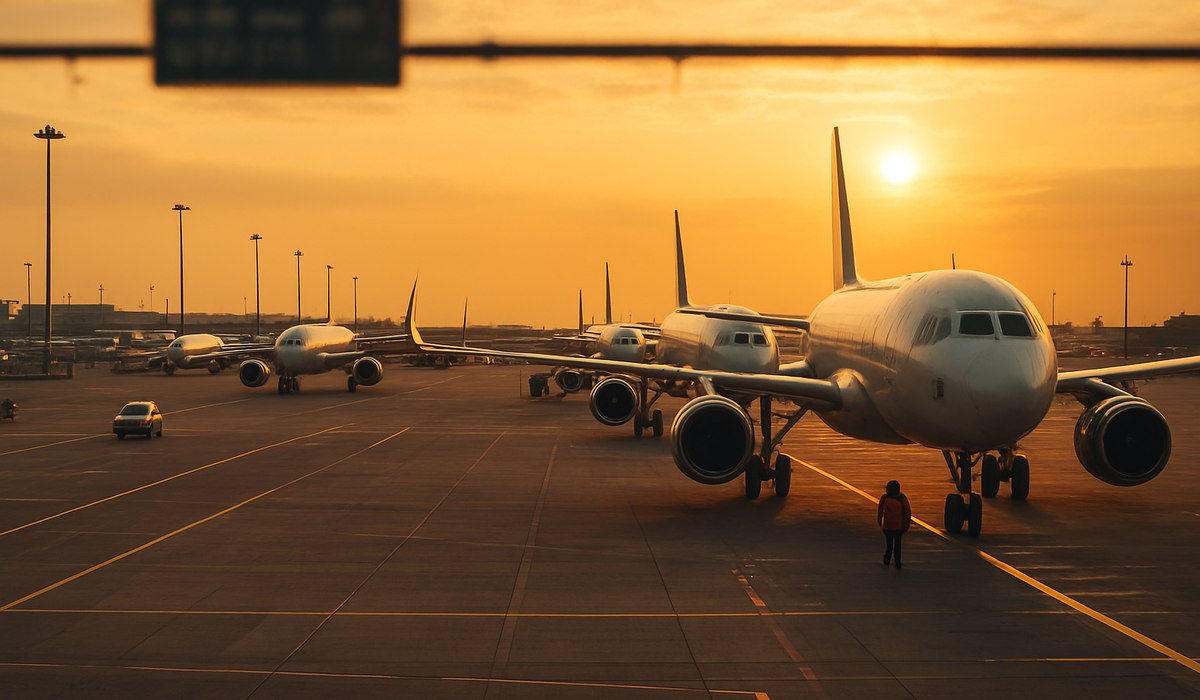
Image generated by AI
Flight Disruptions Strip $30-34 Billion Annually From U.S. Economy
Persistent flight delays and cancellations drain an estimated $30 billion to $34 billion from the U.S. economy each year, according to updated aviation research synthesizing federal datasets and industry analysis. The scope of this economic hemorrhage extends far beyond airport terminals into lost worker productivity, stranded passenger expenses, hotel revenue shortfalls, and deflated tourism spending across regional economies. Unlike isolated operational incidents, these flight disruptions represent a chronic structural challenge that erodes airline margins, disrupts supply chains, and compounds travel costs for millions of Americans seeking reliable air transportation.
The $30-34 Billion Economic Drag of Flight Disruptions
The $30-34 billion annual cost figure reflects comprehensive analysis spanning multiple data sources. The Federal Aviation Administration's research partners established a 2019 baseline estimate of approximately $33 billion in disruption costs during a pre-pandemic year. Contemporary synthesis of disruption data, including findings from a 2025 aviation resilience study, confirms that total U.S. disruption expenses remain within that $30-34 billion range annually, despite recovered schedules and rebounded travel demand post-pandemic.
These figures encompass far more than visible passenger inconvenience. The costs include fuel burn from aircraft holding patterns, crew repositioning expenses, aircraft maintenance delays, passenger compensation obligations, accommodation for stranded travelers, and quantified economic value of lost passenger time. When analysts incorporate secondary ripple effects to business activity and tourism spending, the ultimate economic drag substantially exceeds what appears in airline balance sheets alone. This multiplier effect demonstrates how aviation disruption functions as an invisible tax on national economic efficiency.
Check real-time flight status and disruption patterns on FlightAware to understand current operational conditions across the network.
Beyond Airports: Hidden Costs in Productivity and Tourism
Corporate America absorbs a substantial portion of disruption-related expenses. According to a 2025 business travel disruption survey by an AI-enabled travel management platform, U.S. companies spend more than $17 billion annually managing fallout from flight cancellations and severe delays. These costs encompass emergency rebooking, unplanned overnight accommodation, ground transportation surcharges, employee overtime, and staff time diverted from revenue-generating work.
Business travelers report that flight disruptions extend trips by an average of six hours domestically, significantly exceeding global averages. Frequent schedule disruptions correlate with elevated stress levels, compromised work-life balance, and increased employee burnout risk—factors translating into measurable productivity losses and higher turnover. Corporate travel managers increasingly embed disruption risk into procurement strategies, favoring non-stop routes, morning departures, and airlines demonstrating superior on-time records even at premium fares, treating reliability as essential insurance.
Hotel chains and regional tourism economies experience direct revenue impact from flight disruptions. During the late 2025 federal government shutdown linked to air traffic control staffing shortfalls, nationwide flight cuts reduced traffic to major hubs and tourist destinations. Hotel industry analysis estimated the shutdown period cost the U.S. economy tens of millions daily in lost hospitality revenue alone. Tourism-dependent communities face rapid cascading effects: fewer arrivals translate to empty rooms, quieter restaurants, reduced attraction spending, and weakened local transportation demand.
Thin Margins Make Airlines Vulnerable to Disruption Shocks
International airline groups report net profit margins of just a few percentage points globally, rendering the industry structurally vulnerable to disruption-related cost shocks. Tens of billions in annual disruption expenses can rapidly erase expected margins, constrain capital investment, and leave carriers dangerously exposed to external shocks including fuel-price volatility or geopolitical instability.
Airlines absorb multiple disruption cost categories: crew scheduling inefficiencies, fuel waste from holding patterns and reroutes, aircraft unavailability, regulatory compliance obligations, and passenger compensation mandates. These expenses compound when cascading delays trigger crew duty-time violations, forcing schedule cancellations across subsequent flights. The operational amplification effect transforms single-point disruptions into network-wide performance degradation. Limited margin cushions mean disruption seasons can swing profitable quarters into losses, constraining fleet modernization, safety investments, and employee compensation enhancements.
What the Data Reveals About U.S. Aviation Resilience
Current data paints a sobering picture of aviation system resilience despite technological advancement. While the FAA and industry operators have implemented weather prediction improvements and congestion management technologies, systemic disruption costs remain stubbornly anchored in the $30-34 billion annual range. This persistence indicates that capacity constraints, staffing limitations, aging infrastructure, and weather-driven irregularities continue outpacing modernization investments.
The resilience challenge extends beyond weather events. Summer peak-season congestion, winter storm seasons, and unexpected staffing shortages (as evidenced by the 2025 government shutdown) reveal structural vulnerabilities requiring capital-intensive solutions: additional runway capacity, modernized air traffic control systems, enhanced weather forecasting integration, and improved crew scheduling flexibility. Until these systemic improvements scale across the network, flight disruptions will continue stripping billions from economic output.
Consult the FAA's official resources for updates on system-wide disruptions and air traffic control advisories affecting your travel plans.
Traveler Action Checklist
-
Monitor flight status 24 hours pre-departure using FlightAware or airline apps to identify emerging disruption patterns affecting your route.
-
Book morning flights and non-stop routes when possible, as these schedules demonstrate statistically lower disruption rates and reduced cascade effects.
-
Choose airlines with superior on-time performance records available on U.S. DOT's consumer database, even at marginally higher fares.
-
Purchase travel delay insurance covering accommodation, meals, and ground transportation when booking multi-leg itineraries vulnerable to cascade disruptions.
-
Keep credit cards and payment methods accessible for last-minute rebooking, accommodation, and meal expenses when disruptions occur without airline compensation coverage.
-
Document all disruption-related expenses with receipts and airline communications to support compensation claims under DOT regulations.
-
Understand your passenger rights by reviewing DOT regulations on compensation, rebooking, and care obligations at U.S. DOT's passenger rights page.
Key Disruption Impact Data
| Metric | Annual Cost/Impact | Source |
|---|---|---|
| Total U.S. Disruption Economic Drag | $30-34 billion | FAA Research/2025 Aviation Resilience Study |
| Corporate Business Travel Disruption Costs | $17+ billion | 2025 AI Travel Management Platform Survey |
| Average Domestic Trip Extension (Delays) | 6 hours | Business Travel Disruption Survey 2025 |
| Hotel Industry Losses During Major Disruption Events | $10s of millions daily | Hotel Industry Association Analysis |
| Global Airline Average Net Profit Margin | 2-4% | International Airline Group Forecasts |
| FAA 2019 Baseline Annual Disruption Cost Estimate | $33 billion | Federal Aviation Administration Research |
What This Means for Travelers
Flight disruption costs function as a structural economic inefficiency that ultimately transfers to travelers through higher fares, reduced service quality, and unreliable schedules. Understanding the $30-34 billion annual economic drag helps travelers contextualize why airlines maintain high prices despite reporting thin margins—disruption-related operational costs consume substantial revenue.
For business travelers, treating flight reliability as an insurance variable rather than an afterthought can reduce disruption exposure significantly. Prioritizing airlines and routes with demonstrated on-time records, avoiding tight connection windows, and building schedule flexibility into multi-day
Disclaimer
This article is for informational and educational purposes only. It does not constitute legal, financial, or professional advice. While we strive to provide accurate and up-to-date information, travel policies, regulations, and conditions change rapidly. Always verify information with official sources before making travel decisions. Nomad Lawyer makes no representations about the accuracy, reliability, completeness, or suitability of the information provided. Readers should consult qualified professionals for advice specific to their circumstances. The views expressed in this article are those of the author and do not necessarily reflect the views of Nomad Lawyer.
Preeti Gunjan
Contributor & Community Manager
A passionate traveller and community builder. Preeti helps grow the Nomad Lawyer community, fostering engagement and bringing the reader experience to life.
Learn more about our team →