
Flight Disruptions Drain $30-34 Billion From U.S. Economy Annually
New research reveals U.S. flight disruptions cost the economy $30-34 billion annually in 2026, far exceeding seasonal inconvenience to become a structural economic drag on productivity and consumer spending.

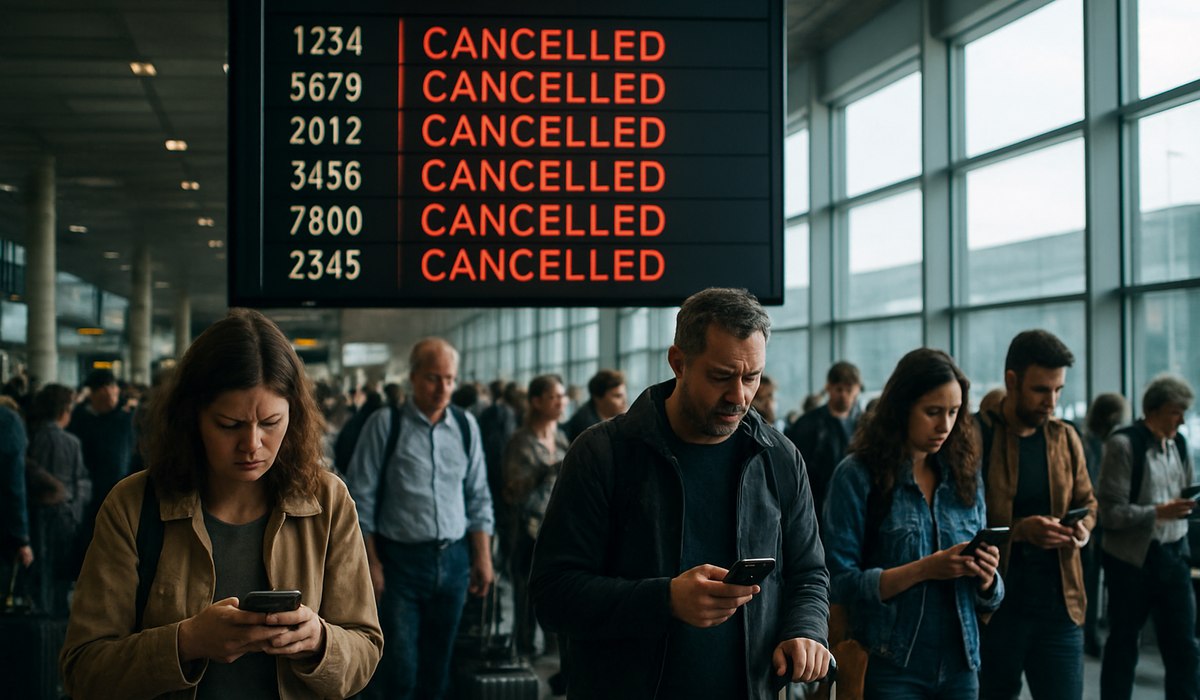
Image generated by AI
Flight Disruptions Drain Record Billions From America's Economy
Chronic flight disruptions across U.S. airports are stripping an estimated $30 billion to $34 billion annually from the national economy, transforming what many travelers consider minor inconveniences into a structural economic drag. Late and canceled departures ripple far beyond airport terminals, destroying lost productivity, inflating business costs, and weakening consumer spending patterns. Recent comprehensive analyses synthesize publicly available research to quantify the true scope of aviation system failures affecting millions of passengers yearly.
The Full $30-34 Billion Price Tag of Flight Disruptions
Research syntheses and federal aviation analyses converge on a startling economic reality: disruption costs have climbed into the $30 billion to $34 billion annual range. This figure captures more than direct airline operating expenses. It encompasses the value of passenger time, missed connections, additional crew staffing, fuel burn from holding patterns, and cascading effects for tourism and trade-dependent sectors nationwide.
A 2022 assessment cited in aviation resilience studies placed total U.S. disruption costs above $30 billion based on approximately 1.2 million to 1.5 million affected flights. Translating operational chaos into per-flight economic impact reveals tens of thousands of dollars once aircraft, crew, passenger delay, and missed-spending effects combine.
Airlines for America, working with Federal Aviation Administration and Nextor modeling, reported total delay costs of approximately $33 billion in the final pre-pandemic year. More recent private-sector data platforms and academic papers suggest this benchmark has remained broadly comparable despite record travel demand in 2026. While methodologies differ across research organizations, the convergence near the $30-34 billion mark underscores how disruptions function as persistent structural drags rather than seasonal inconveniences.
Visit the FAA's official aviation data portal for real-time system performance metrics and delay reporting.
How Delays Ripple Beyond the Airport Terminal
Flight disruptions trigger economic shockwaves extending far into supply chains, business operations, and consumer behavior. When a single aircraft experiences mechanical delays, cascading effects multiply across subsequent flights using the same equipment. Gate congestion at major hubs amplifies problems exponentially during peak travel windows.
Business travelers face compounding costs as missed meetings translate into delayed deals, lost contracts, and productivity gaps. Supply chain disruptions hit manufacturers and distributors particularly hard when time-sensitive shipments arrive late. Tourism-dependent regions experience revenue losses when flight cancellations force vacation postponements or trigger rebooking complications.
The transportation ecosystem absorbs these impacts through infrastructure strain. Air traffic control staffing gaps, aging technology systems, and runway congestion at congested facilities like Atlanta, Chicago, and Dallas-Fort Worth contribute to National Aviation System delays. Research organizations estimate that system-related factors account for approximately one-fifth of all delay minutes nationally.
Check real-time flight status and delay information through FlightAware's tracking platform before and during travel.
Passengers and Businesses Absorb the Hidden Costs
Individual travelers now absorb tens of billions of dollars in disruption-related costs annually—expenses rarely reflected in headline ticket prices or official economic measures. Bureau of Transportation Statistics data reveals U.S. travelers lost well over one million hours to delays in the first three quarters of 2025 alone.
Valuing passenger waiting time at typical hourly wage and productivity rates, annual passenger time losses reach into the tens of billions nationally. Consumer spending analyses suggest U.S. passengers personally shoulder approximately $18 billion yearly in out-of-pocket disruption expenses. These include unexpected meals, emergency hotel bookings, ground transportation costs, and rebooking fees when airlines fail to provide adequate solutions.
Corporate travel management platforms document parallel patterns. Recent business disruption reports estimate U.S. companies spend more than $17 billion annually mitigating disruption fallout—from replacement flight purchases to overtime compensation and lost working hours. When combined with leisure travel impacts, the system functions as a persistent hidden tax on mobility affecting virtually all travelers.
What's Driving Chronic Disruptions in U.S. Aviation
Multiple structural factors combine to create vulnerability across America's aviation network. Airlines face direct costs including crew overtime, fuel for holding patterns, aircraft repositioning, and customer care expenses that cascade during storms, system outages, or staffing shortages.
U.S. carriers encounter tens of billions in annual delay-related operating costs. Recent estimates indicate airline-side delay expenses exceed $30 billion globally, with U.S. operations carrying a substantial share given domestic market size and prevalence of high-frequency short-haul routes vulnerable to congestion. Infrastructure constraints add critical vulnerability layers.
Department of Transportation analyses and independent research highlight how air traffic control staffing gaps, aging technology infrastructure, and runway congestion at major metropolitan airports contribute significantly to system delays. These structural issues represent persistent challenges requiring coordinated policy responses and infrastructure investment. Many airports lack sufficient gate capacity to accommodate peak demand, forcing aircraft to circle and burn fuel while awaiting ground positions.
For official guidance on passenger rights during disruptions, consult the U.S. Department of Transportation's aviation consumer protection resources.
Traveler Action Checklist
Follow these numbered steps to protect yourself and your travel plans during flight disruptions:
-
Monitor real-time status: Check FlightAware 24 hours before departure and continuously during travel to detect emerging delays.
-
Know your airline's policy: Review specific rebooking, meal, and hotel compensation policies before disruptions occur.
-
Document everything: Retain boarding passes, receipt photos, and communications proving delay times and out-of-pocket expenses for potential compensation claims.
-
Request written delay confirmation: Ask ground staff for written delay notices stating specific reasons and estimated departure times.
-
Understand DOT compensation rights: Review U.S. DOT passenger rights regarding meal vouchers, hotel accommodations, and rebooking options.
-
File compensation claims promptly: Submit detailed claims to airlines within specified timeframes, including receipts and delay documentation.
-
Consider travel insurance: Purchase disruption coverage for future trips to offset out-of-pocket costs airlines refuse to reimburse.
-
Report systemic issues: File complaints with the DOT when airlines fail to meet passenger care obligations.
Key Data Table
| Metric | Value | Year | Source |
|---|---|---|---|
| Annual Economic Cost | $30-34 billion | 2026 | Aviation Research Synthesis |
| Affected Flights Annually | 1.2-1.5 million | 2022-2026 | FAA/Nextor Analysis |
| Passenger Time Lost (Q1-Q3) | 1+ million hours | 2025 | Bureau of Transportation Statistics |
| Consumer Out-of-Pocket Costs | $18 billion | 2026 | Industry Analysts |
| Corporate Mitigation Spending | $17 billion | 2026 | Business Travel Reports |
| Airline Operating Costs | $30+ billion | 2026 | Global Aviation Statistics |
| System Delay Attribution | ~20% | 2026 | DOT Research |
| Per-Flight Economic Impact | Tens of thousands | 2022-2026 | Aviation Resilience Studies |
What This Means for Travelers
The $30-34 billion annual economic drain from flight disruptions directly affects your travel experiences and wallet. Understanding this landscape helps you plan strategically and protect your interests when complications arise.
First, expect disruptions as endemic to U.S. aviation rather than exceptional occurrences. Major airports and routes experience chronic delays during peak periods, making buffer time essential. Second, recognize that airlines build disruption costs into pricing indirectly. Your ticket price reflects historical delay expenses
Disclaimer
This article is for informational and educational purposes only. It does not constitute legal, financial, or professional advice. While we strive to provide accurate and up-to-date information, travel policies, regulations, and conditions change rapidly. Always verify information with official sources before making travel decisions. Nomad Lawyer makes no representations about the accuracy, reliability, completeness, or suitability of the information provided. Readers should consult qualified professionals for advice specific to their circumstances. The views expressed in this article are those of the author and do not necessarily reflect the views of Nomad Lawyer.
Preeti Gunjan
Contributor & Community Manager
A passionate traveller and community builder. Preeti helps grow the Nomad Lawyer community, fostering engagement and bringing the reader experience to life.
Learn more about our team →