
Flight Disruptions Expose $34 Billion Structural Crisis in Global Aviation
Early 2026 flight disruptions reveal a $34 billion structural crisis in global aviation. Cascading cancellations across Asia Pacific and the Americas expose systemic constraints as operational fragility meets infrastructure bottlenecks.

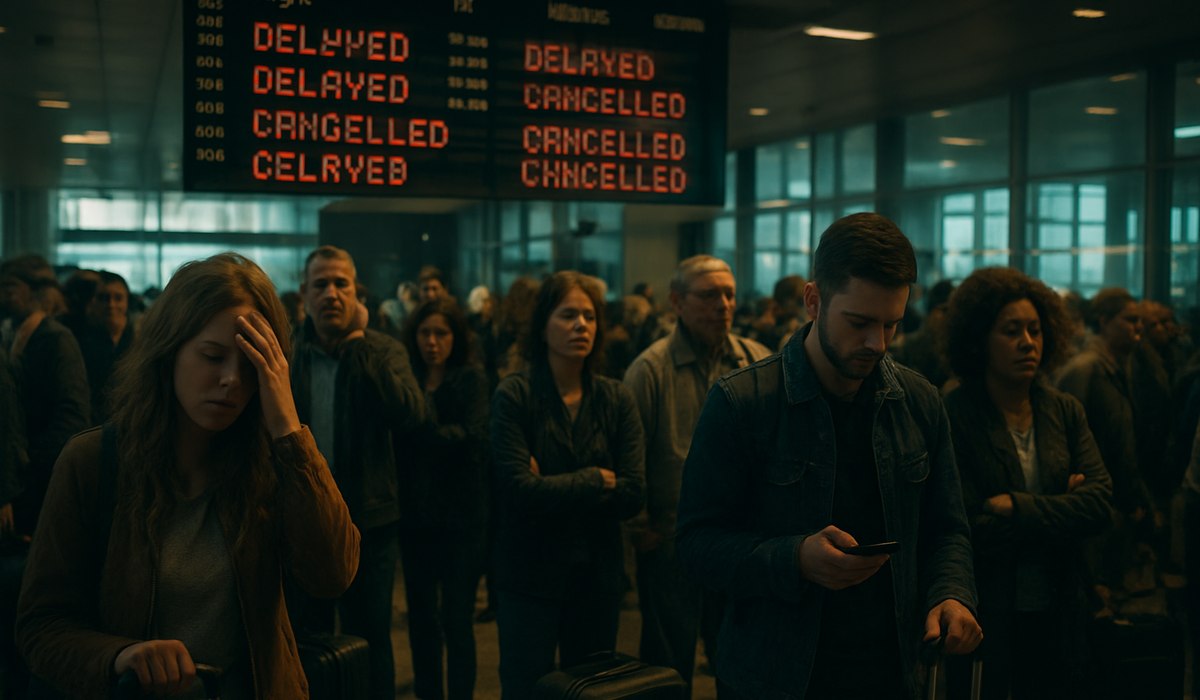
Image generated by AI
Cascading Flight Cancellations Expose Aviation's $34 Billion Structural Crisis
Flight disruptions sweeping the globe in early 2026 are no longer isolated incidents—they reveal a chronic $34 billion structural crisis reshaping global aviation. Between March and April 2026, cascading cancellations and delays across Asia Pacific, the Americas, and Europe have exposed operational fragility at the core of the aviation industry. Major hubs including Tokyo, Dubai, Atlanta, and Mexico City experienced hundreds of simultaneous cancellations and thousands of delays. Data compiled from flight-tracking networks showed over 31,000 combined disruptions in North and South America alone during March. Unlike previous meltdowns blamed on single causes, this crisis stems from converging pressures: aging aircraft infrastructure, labor shortages, mounting maintenance backlogs, and operational models built for efficiency rather than resilience.
From Isolated Meltdowns to Chronic System Failure
The aviation sector spent years treating disruptions as anomalies—weather events, technical glitches, or once-in-a-generation IT failures. That narrative no longer holds. Historical data from 2022 and 2023 pegged annual flight disruption costs at $30 to $34 billion across the United States and Europe alone, factoring in lost productivity, rebooking expenses, accommodation costs, and cascading economic damage to tourism and business travel sectors. Industry projections through 2025 suggested these figures might improve as demand recovered. Instead, 2026 has revealed they represent an annual floor.
Analysts now describe aviation as a system operating perpetually near maximum capacity. Aircraft availability remains constrained. Labor markets are tight at critical hubs. Infrastructure—gates, runways, air traffic control staffing—operates at stretched limits. Fuel and financing costs remain elevated. This means any localized shock triggers regionwide disruption. Geopolitical tensions affecting airspace, seasonal weather, or equipment failures no longer cause isolated problems; they cascade through interconnected global networks, multiplying financial damage far beyond the original trigger event. Airlines are reporting stronger headline profits, yet those earnings mask growing costs absorbed by irregular operations, passenger compensation, aircraft wet leases, and contingency capacity reserves.
The $34 Billion Price Tag: What's Driving Aviation's Crisis
The $34 billion annual disruption cost encompasses multiple layers. Direct airline operating costs—fuel burn during delays, crew overtime, repositioning deadhead flights—account for roughly one-third. Passenger compensation, rebooking to alternative flights, and hotel accommodations consume another significant share. Lost productivity from stranded business travelers, cancelled meetings, and tourism revenue losses round out the tally. What makes 2026 different is the permanence of these pressures.
Engine reliability issues represent a critical bottleneck. Geared turbofan engine problems have grounded over 800 aircraft worldwide as of late 2025. Manufacturers report that repair campaigns rival the complexity of previous maintenance crises, requiring extended shop visits and component replacements due to material defects. Airlines operating single-aisle fleets have lost substantial capacity precisely when demand is strongest. Maintenance backlogs stretch into 2027. Aircraft lessors face revenue losses. Manufacturers absorb repair costs. The entire supply chain feels the impact.
Labor shortages at major hubs compound hardware constraints. Pilots, flight attendants, and ground crews remain in short supply at key airports. New crew duty regulations in markets like India have reshaped scheduling models, tightening already-thin operational buffers. When weather or technical issues force flight cancellations, airlines cannot quickly rebook passengers or reposition crews because staffing gaps leave no flexibility. Aircraft sit idle longer. Recovery takes days instead of hours.
Infrastructure Bottlenecks and Labor Shortages Collide with Demand
Global air traffic demand has rebounded aggressively post-pandemic. Yet airports and air traffic control systems have not kept pace with capacity upgrades. Major hubs including Tokyo, Dubai, Atlanta, and Mexico City operate near or at maximum daily throughput. Adding flights means accepting higher delay risks. Removing flights means leaving revenue on the table during peak season.
This dynamic played out starkly in March 2026. Monsoon rains and typhoon activity collided with Middle East tensions affecting fuel supplies and airspace routing across Asia Pacific. Hundreds of cancellations rippled from Tokyo to Dubai as aircraft rotation suffered and crew duty limits prevented same-day schedule recovery. Simultaneously, severe North American winter storms triggered over 31,000 disruptions across the United States, Canada, Mexico, and the Caribbean. Weather was the primary trigger, but the persistence of knock-on effects revealed operational buffers had evaporated.
The interconnected nature of modern airline alliances and code-sharing networks amplifies these impacts. A disruption in Tokyo strands aircraft and crew needed in Singapore. Delays in Miami cascade through Miami-based hub operations into the Caribbean and South America. A cancelled flight between two cities removes slots, aircraft, and crew from service across an entire network. The domino effect multiplies economic damage exponentially.
Critical Factors Behind the 2026 Aviation Crisis
| Factor | 2026 Impact | Recovery Timeline |
|---|---|---|
| Engine maintenance backlog | 800+ aircraft grounded globally | Extends through 2027 |
| Labor shortages at hub airports | Crew duty limits prevent schedule recovery | 18-24 months to normalize |
| Infrastructure capacity constraints | Major airports operating at 95%+ utilization | 3-5 years for expansions |
| Disruption cost per occurrence | $34 billion annually across US/Europe | Persistent baseline |
| Aircraft availability (single-aisle fleet) | 15-20% reduction from normal | Depends on maintenance completion |
| Passenger compensation expenses | Rising share of airline operating costs | Structural increase expected |
| Geopolitical airspace impacts | Middle East tensions affecting routing | Ongoing volatility |
What This Means for Travelers
Flight disruptions in 2026 signal that delays and cancellations are now features of the system, not bugs. As a traveler, you must adapt your planning and expectations.
Traveler Action Checklist:
-
Book flights with 2+ hour layovers minimum to absorb delays without missing connections. International flights should allow 3+ hours between legs.
-
Purchase trip insurance covering flight cancellations and delays. Standard airline policies offer minimal compensation; third-party coverage protects your financial investment.
-
Monitor your flight status 72 hours before departure using FlightAware, which provides real-time tracking and delay prediction. Sign up for airline alerts via email or app.
-
Understand your passenger rights under US DOT regulations (if traveling domestically) or EU261 (if flying within Europe). Airlines must provide rebooking, accommodation, and meal reimbursement for operational disruptions.
-
Avoid peak travel windows (weekends, holidays, peak summer months) when possible. Midweek, shoulder-season travel experiences fewer cascading disruptions.
-
Pack essentials in carry-on luggage to manage missing baggage during chaotic rebooking scenarios. Checked bags are frequently delayed when aircraft are substituted.
-
Arrive 30+ minutes earlier than standard guidance recommends, as airport congestion has increased alongside operational stress.
-
Keep digital copies of receipts, itineraries, and confirmations. Prove your expenses to airlines and credit card companies when seeking compensation.
FAQ: Flight Disruptions and Passenger Rights in 2026
Q: Why are flight disruptions increasing if airlines are making record profits?
A: Airlines' headline profits mask growing operational costs. Compensation payments, irregular-operations expenses, wet leases, and contingency capacity reserves consume larger profit shares. The sector generates cash in normal conditions but suffers outs
Disclaimer
This article is for informational and educational purposes only. It does not constitute legal, financial, or professional advice. While we strive to provide accurate and up-to-date information, travel policies, regulations, and conditions change rapidly. Always verify information with official sources before making travel decisions. Nomad Lawyer makes no representations about the accuracy, reliability, completeness, or suitability of the information provided. Readers should consult qualified professionals for advice specific to their circumstances. The views expressed in this article are those of the author and do not necessarily reflect the views of Nomad Lawyer.
Raushan Kumar
Founder & Lead Developer
Full-stack developer with 11+ years of experience and a passionate traveller. Raushan built Nomad Lawyer from the ground up with a vision to create the best travel and law experience on the web.
Learn more about our team →