
Flight Disruptions Persist in UAE: Emirates, Flydubai Routes Axed Through March 2026
Flight disruptions persist across Dubai and Abu Dhabi as Emirates, Etihad, Flydubai and Air Arabia cancel or reduce services on major European, Asian and African routes through March 2026. Geopolitical tensions and airspace restrictions continue affecting global connectivity.

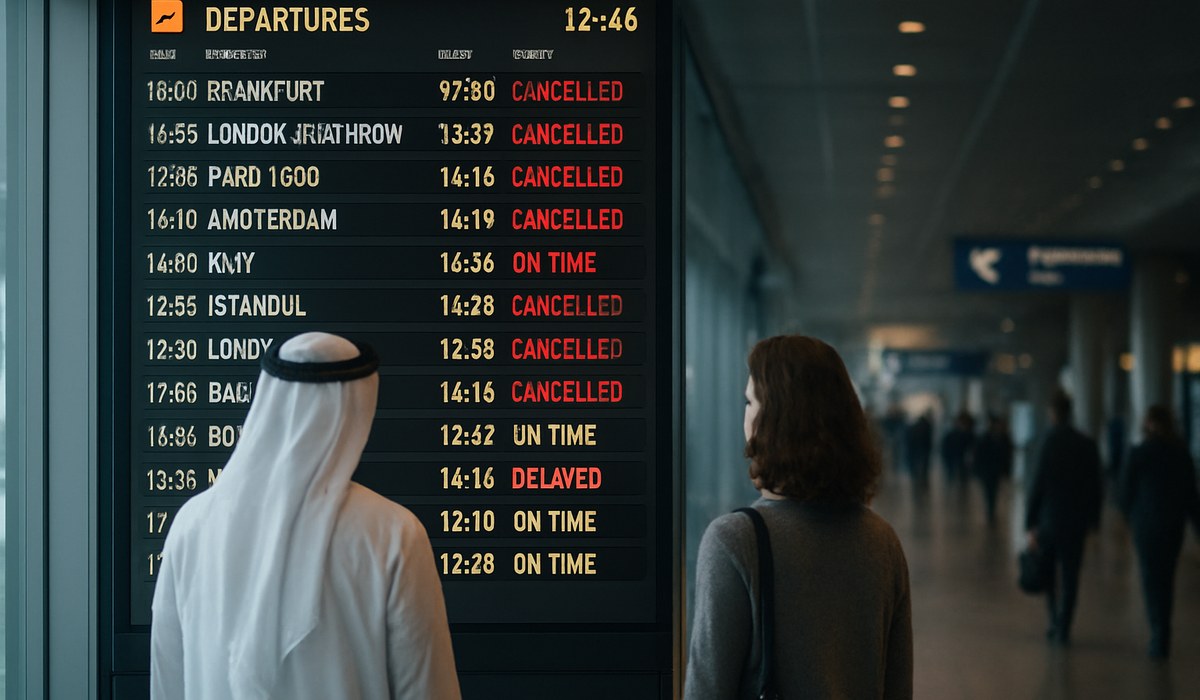
Image generated by AI
Flight Disruptions Persist Across UAE Hub as Regional Security Crisis Extends Into Late March
Flight disruptions persist across the United Arab Emirates as major carriers including Emirates, Etihad, Flydubai and Air Arabia continue cancelling and rerouting flights on critical intercontinental routes. Dubai International Airport (DXB) and Abu Dhabi International Airport (AUH) are operating below normal capacity through March 31, 2026, with cascading delays affecting connections to Europe, Asia, Africa and Oceania. Geopolitical tensions and temporary airspace restrictions have forced airlines to implement reduced schedules, consolidate services and suspend operations on secondary markets.
What Triggered the Ongoing UAE Network Crisis
The regional security situation triggered the initial wave of disruptions in late February 2026. Multiple missile and drone incidents in the Gulf region forced temporary closures of critical airspace corridors and prompted precautionary shutdowns at major aviation hubs. Dubai International Airport suspended commercial operations entirely during the most intense period, forcing airlines to ground flights and divert aircraft to alternate hubs in the region and beyond.
According to FAA tracking data and regional aviation authorities, the first major incident on February 28 brought flight frequencies at UAE carriers close to zero. Emirates, Etihad, Flydubai and Air Arabia shifted to emergency-only repatriation services and crew repositioning flights. Even as operations resumed in early March, airlines remained constrained by tighter airspace routing, increased fuel consumption and reduced slot allocations at key international hubs.
Emirates and Etihad Resume Selective Long-Haul Services
Emirates has gradually restored commercial schedules on flagship international routes since early March. Current timetables show the carrier operating to major European gateways including Amsterdam and London, Asian hubs like Hong Kong and Tokyo, and African destinations such as Cairo and Johannesburg. However, capacity remains 15–25% below pre-crisis levels on many corridors, with consolidation of flights serving secondary markets.
Etihad Airways is following a similar recovery trajectory from Abu Dhabi. The carrier has reopened bookings to priority destinations including Amsterdam, Cairo, Colombo, Lahore and Hong Kong but continues operating with adjusted frequencies. Both full-service carriers are prioritizing high-yield point-to-point and connecting traffic while maintaining caution on leisure-focused routes. Industry observers expect gradual schedule normalization through April if regional conditions stabilize. More details on real-time flight status are available through FlightAware.
Flydubai and Air Arabia Implement Severe Capacity Cuts
Flydubai, the low-cost subsidiary of Emirates, reported over 100 delays in a single operational day during mid-March. The carrier has axed multiple daily rotations on secondary European routes including Budapest, Frankfurt and Venice. Similarly, services to Middle Eastern and North African points remain sporadic, with only intermittent operations on scheduled links.
Air Arabia, based in Sharjah, continues publishing schedule change advisories across its network. The carrier operates reduced frequencies to regional destinations while gradually restoring leisure routes. Overflight permission complexity and coordination issues with neighboring states have created operational bottlenecks, causing further uncertainty for passengers. Check current IATA airline status alerts for real-time updates on these carriers' operations.
Which Routes Face the Deepest Cuts and Longest Delays
Flight disruptions persist most severely on routes connecting the UAE to secondary European cities. Budapest, Frankfurt, Venice and Larnaca see minimal weekly service or complete cancellations. Meanwhile, primary Asian corridors to Islamabad, Karachi, Lahore, Shanghai, Beijing and Manila experience reduced frequencies but remain operational with potential delays of 4–8 hours.
African connections to Alexandria, Tunis and Entebbe face intermittent scheduling, with passengers frequently rebooked across multiple days. Caribbean and North American routes through hubs like New York continue with near-normal frequency but carry elevated misconnection risk due to upstream delays originating in the UAE. Smaller leisure destinations across the Mediterranean, Caribbean and Southeast Asia remain suspended pending airspace normalization and demand recovery.
Impact on Global Connectivity: Cascade Effects From Dubai and Abu Dhabi Hub Disruptions
Because Dubai and Abu Dhabi function as major global transfer points, every cancelled or delayed UAE sector triggers missed connections worldwide. Passengers booked through DXB to Auckland, Hong Kong, Manchester, Johannesburg and New York regularly experience 24–48 hour rebooking delays. Airlines are struggling to accommodate stranded passengers on competing carriers due to widespread capacity constraints across the entire network.
The cumulative effect has degraded regional and global air connectivity for over four weeks. Travelers report lengthy waiting times at airports, frequent last-minute cancellations and limited rebooking options on alternative itineraries. Many passengers have experienced two or more cancellations on single bookings. Recovery to normal operations is now projected for mid-April at the earliest, pending stabilization of regional airspace access and security conditions.
| Metric | Current Status | Pre-Crisis Level | Affected Passengers (Weekly) | Estimated Recovery |
|---|---|---|---|---|
| DXB Daily Departures | ~320 flights | ~420 flights | 45,000+ | Mid-April 2026 |
| AUH Daily Departures | ~180 flights | ~240 flights | 28,000+ | Mid-April 2026 |
| Emirates Long-Haul Routes Active | 68 of 95 | 95 of 95 | 18,000 daily | Late April 2026 |
| Flydubai Destinations Served | 42 of 68 | 68 of 68 | 12,000 daily | Early May 2026 |
| Average Connection Delay (DXB) | 6–8 hours | <2 hours | 12,000 per day | Mid-April 2026 |
| Route Suspensions (All Carriers) | 47 temporary cancellations | 0 | N/A | Rolling recovery |
What This Means for Travelers: Concrete Actions You Must Take Now
The extended disruption window demands immediate, proactive steps from anyone with UAE bookings through April 2026:
-
Contact your airline immediately if your booking involves Emirates, Etihad, Flydubai or Air Arabia. Request rebooking on alternative dates or routings before additional cancellations occur. Check the U.S. Department of Transportation website for passenger rights information regarding compensation and rebooking obligations.
-
Monitor real-time flight status daily using FlightAware or your airline's mobile app. Schedule changes are announced with minimal advance notice due to fluid airspace restrictions.
-
Avoid tight connection windows through DXB and AUH. Book 4+ hour layovers if you must connect through UAE hubs during March and April 2026.
-
Document all cancellations and delays with booking references, airline confirmations and gate information. Required for compensation claims under EU Regulation 261/2004 or equivalent regulations in other jurisdictions.
-
Consider alternative routing via European, Middle Eastern or Asian airlines if your destination permits. Many travelers have found success rerouting through Istanbul, Qatar or Saudi hubs with comparable total journey times.
-
Purchase travel insurance immediately if rebooking to new dates. Standard policies now exclude coverage for the UAE security situation, but some
Disclaimer
This article is for informational and educational purposes only. It does not constitute legal, financial, or professional advice. While we strive to provide accurate and up-to-date information, travel policies, regulations, and conditions change rapidly. Always verify information with official sources before making travel decisions. Nomad Lawyer makes no representations about the accuracy, reliability, completeness, or suitability of the information provided. Readers should consult qualified professionals for advice specific to their circumstances. The views expressed in this article are those of the author and do not necessarily reflect the views of Nomad Lawyer.
Raushan Kumar
Founder & Lead Developer
Full-stack developer with 11+ years of experience and a passionate traveller. Raushan built Nomad Lawyer from the ground up with a vision to create the best travel and law experience on the web.
Learn more about our team →