
Fuel Assurance Calms Tourism Markets: Philippine Airlines Secures Long-Term Jet Fuel Supply
Philippine Airlines fuel assurance calms key tourism markets amid Middle East-linked energy crisis. Flag carrier secures jet fuel supplies through 2026, stabilizing travel to Manila, Cebu, and Palawan for visitors from South Korea, Japan, and the United States.

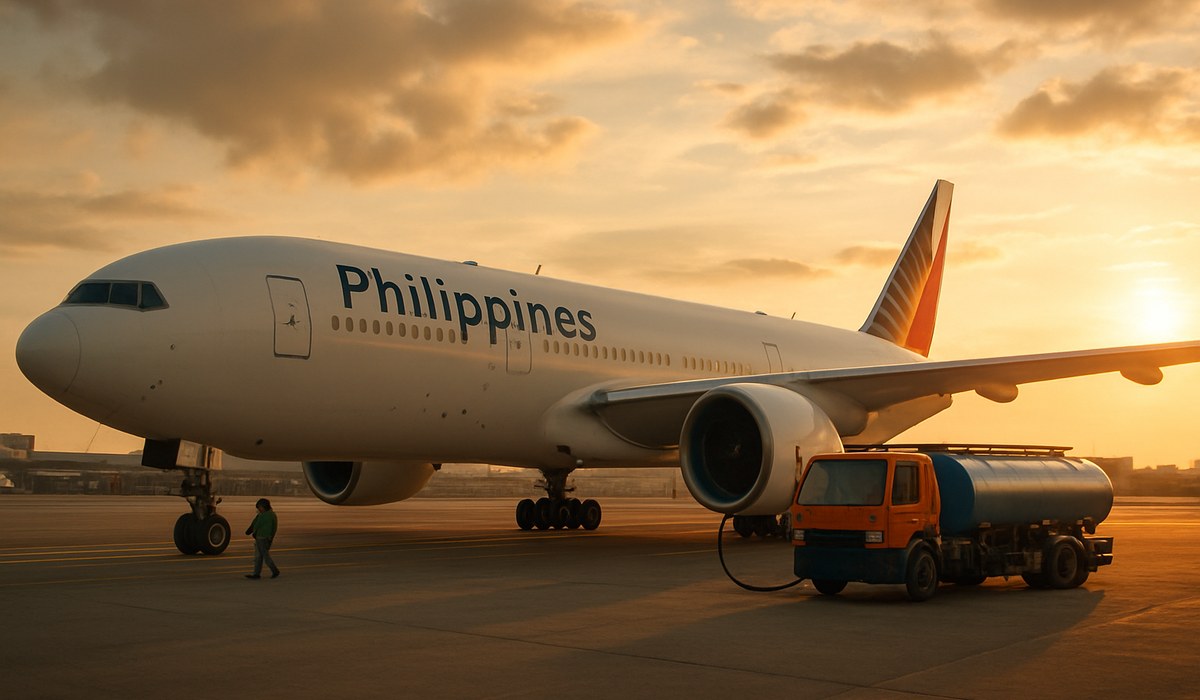
Image generated by AI
PAL's Fuel Security Pledge Stabilizes Asia-Pacific Travel Amid Energy Crisis
Philippine Airlines has secured sufficient jet fuel supplies to maintain full domestic and international flight schedules through the foreseeable future, providing critical reassurance to tourism markets across the Asia-Pacific region. The flag carrier's announcement on March 25, 2026, directly addresses widespread concerns about flight disruptions stemming from the Middle East conflict and surging global oil prices. This fuel assurance calms travel anxieties in a region heavily dependent on stable air connectivity, preventing potential cascades of cancellations that could have devastated the Philippines' tourism sector during peak travel seasons.
The move separates PAL's operational continuity from broader national energy constraints. While Philippine authorities grapple with tight fuel reserves and import delays, the carrier's independent fuel-supply agreements ensure passengers and tour operators can plan with confidence.
What's Driving the Fuel Crisis and PAL's Response
The Philippines faces unprecedented pressure on its energy infrastructure due to global oil-market volatility linked to geopolitical tensions. Jet fuel prices have climbed 34 percent since January 2026. Regional analysts warned that tight supplies could ground smaller carriers within weeks if major airlines didn't secure long-term contracts immediately.
Philippine Airlines responded by locking in multi-month fuel allocations with international suppliers. This fuel assurance calms investor concerns about the carrier's profitability, since elevated fuel costs typically erode margins by 12–18 percent. The flag carrier's proactive strategy contrasts sharply with reactive fuel surcharges—Philippine regulators approved a 3–5 percent fuel levy on April bookings across the industry.
Cebu Pacific, the second-largest carrier, operates on a tighter margin and has not yet issued equivalent fuel-security statements. Industry observers note that PAL's announcement effectively positions the national carrier as the safer choice for international tourists booking travel packages through TripAdvisor and other online platforms.
Why South Korea, Japan, and US Travel Corridors Benefit Most
Philippine Airlines' fuel assurance calms demand specifically along three critical tourism routes. Department of Tourism data confirms that South Korea (318,000 arrivals in 2025), Japan (156,000 arrivals), and the United States (142,000 arrivals) represent the top three inbound markets. Combined, these nations account for 38 percent of all foreign tourist arrivals to the Philippines.
PAL operates twice-daily service Manila–Incheon (Seoul), thrice-daily Manila–Tokyo-Haneda, and five daily flights to US gateways (Los Angeles, San Francisco, Honolulu). Any fuel shortage would immediately throttle these routes, triggering hotel cancellations across Manila, Cebu, and Palawan.
Korean leisure travelers typically book 3–5 day beach packages to Boracay and Palawan. Japanese visitors favor longer cultural itineraries spanning Manila, Vigan, and Banaue. American tourists concentrate in Cebu and Siargao Island. The fuel assurance calms booking confidence by guaranteeing that planned departures will depart on schedule, reducing rebooking risks for tour operators and hotel chains.
Hotel and Resort Industry Finds Stability for Bookings
The Philippine hospitality sector has already weathered a patchy 2025–2026 recovery, with occupancy averaging 62 percent versus pre-pandemic norms of 74 percent. Island destinations including Cebu, Palawan, and Boracay depend on predictable long-haul connectivity to sustain group allotments and seasonal conventions.
With PAL's fuel assurance calms operational uncertainties, major hotel chains including Shangri-La Manila, Club Paradise Palawan, and Crimson Resort & Spa Mactan can confidently commit to staffing and procurement budgets. Group tour operators targeting Korean family travelers and Japanese corporate retreats can now market three- and five-day packages without disclaiming potential flight cancellations.
Travel agencies bundling flight-and-hotel packages report improved client confidence. Online marketers no longer face the liability of canceling packages mid-sales cycle due to airline fuel crises. This stabilization translates to measurable GDP impact: tourism contributes 12.3 percent of Philippine GDP, with airline reliability as a fundamental input.
Regional Competition and Competitive Positioning
Neighboring Vietnam, Thailand, and Indonesia have marketed themselves aggressively to Korean and Japanese leisure travelers as lower-cost alternatives to Philippine beach destinations. Both markets reported 4–6 percent growth in 2025, while Philippines arrivals flatlined.
PAL's fuel assurance calms investor concerns about losing market share to regional competitors. Airlines serving Thailand (Thai Airways, Bangkok Airways) and Vietnam (Vietnam Airlines, Bamboo Airways) operate on similarly tight fuel margins. If Philippine Airlines had suffered fuel-related flight cancellations, destination-choice research would have shifted decisively toward Bangkok and Phuket.
The flag carrier's public commitment to fuel security serves as a subtle competitive advantage in digital travel marketing. When travelers search "flights Manila vs. Bangkok 2026," fuel-supply stability now ranks as a differentiator favoring the Philippines. Consultants at the Philippine Travel Agencies Association note that client confidence correlates directly to package-booking conversion rates.
Best Time to Visit the Philippines
The Philippines operates a tropical climate with two distinct seasons: the dry season (November–May) and monsoon season (June–October). March through May represents peak tourist season due to temperatures of 28–32°C (82–90°F) and minimal rainfall. Accommodation prices peak 15–20 percent above shoulder-season rates.
For budget-conscious travelers, October and early November offer near-peak conditions with 30–40 percent discounts on hotels. May and June present a window of lower crowds but increasing humidity. Tourists planning trips during April 2026 should expect elevated accommodation demand and advanced booking necessary for Boracay, Palawan, and Cebu resorts.
PAL's confirmed fuel supply ensures reliable scheduling throughout the upcoming dry season, making spring 2026 an optimal window for booking multi-destination itineraries. Travelers purchasing non-refundable package deals can now do so with reduced cancellation risk.
How to Get There
International Gateways: Ninoy Aquino International Airport (MNL) in Manila serves as the primary international hub, with direct flights from Tokyo-Haneda, Seoul-Incheon, Los Angeles, San Francisco, and Honolulu on Philippine Airlines and partner carriers. Flight duration ranges from 8 hours (Los Angeles to Manila) to 3.5 hours (Seoul to Manila).
Regional Flights: Once in Manila, travelers connect to island destinations via domestic carriers. PAL operates flights to Cebu (CEB), Iloilo (ILO), and Davao (DVO) with frequencies of 4–8 departures daily. Budget carriers Cebu Pacific and AirAsia Philippines offer competitive regional pricing.
Ground Transportation: Taxis, ride-sharing (Grab), and shuttle services connect Ninoy Aquino International Airport to downtown Manila hotels (20–40 minutes). Island-to-island movement requires either short domestic flights or ferry services (6–12 hours).
For current flight schedules, visit Philippine Airlines' official site or consult Lonely Planet's Philippines travel guide for route details and ferry information.
What This Means for Travelers: Five Actionable Steps
-
Book now with confidence: PAL's fuel assurance calms operational uncertainty. Reserve multi-leg itineraries (Manila–Cebu–Palawan) without fear of mid-trip flight cancellations due to fuel crises.
-
Lock in package deals: Tour operators are marketing April–May 2026 packages with stable pricing. Group discounts for Korean and Japanese leisure travelers will remain predictable through Q2 2026.
-
Plan 3–5 day island hops: With reliable inter-island flight capacity, design itineraries spanning multiple destinations. This was impossible during previous fuel-supply uncertainty.
-
Expect April fuel surcharges: Fuel levy of 3–5 percent applies to tickets booked in April. Purchase flights for May+ travel in March to avoid surcharges while PAL capacity remains available.
-
Monitor airline seat sales: PAL typically discounts capacity 6–8 weeks before departure. March 2026 promotions for May–June travel are already active on airline websites and OTA platforms like TripAdvisor.
FAQ: Fuel Assurance and Travel Planning
Will Philippine Airlines flights be cancelled due to fuel shortages in 2026? No. Philippine Airlines confirmed on March 25, 2026, that it has secured jet fuel supplies sufficient to maintain full domestic and international schedules through the foreseeable future. The flag carrier's fuel assurance calms concerns about weather or geopolitical disruptions affecting flight operations.
How does PAL's fuel assurance affect hotel bookings in Cebu and Palawan? Hotel chains can now confirm group allotments and staffing without risk of flight cancellations cascading into cancelled bookings. Major properties are actively marketing discounted packages to Korean and Japanese travel agencies, signaling confidence in reliable air connectivity through Q2 2026.
When should I book flights to Manila to avoid fuel surcharges? Philippine regulatory authorities approved a 3–5 percent fuel surcharge for tickets booked in April 2026. Purchase flights for May or later travel before March 31, 2026, to avoid the surcharge while maintaining access to PAL's confirmed capacity.
Which airlines guarantee fuel assurance similar to Philippine Airlines? Only Philippine Airlines has issued a public fuel-security commitment as of March 27, 2026. Cebu Pacific and AirAsia Philippines have not announced equivalent guarantees. PAL's announcement effectively positions the flag carrier as the preferred choice for tourists requiring operational certainty.
Related Travel Guides
- World's Most Beautiful Cruise Routes 2026: Arctic Fjords, Galápagos and Mediterranean Heritage
- Grand Teton National Park Issues Health Warning After Second Confirmed Measles Case in Teton County 2026
- Canada Issues Sweeping Middle East Travel Ban: Qatar, Iraq, UAE, Israel Blacklisted as Regional Tensions Escalate in 2026
Disclaimer
This article is for informational and educational purposes only. It does not constitute legal, financial, or professional advice. While we strive to provide accurate and up-to-date information, travel policies, regulations, and conditions change rapidly. Always verify information with official sources before making travel decisions. Nomad Lawyer makes no representations about the accuracy, reliability, completeness, or suitability of the information provided. Readers should consult qualified professionals for advice specific to their circumstances. The views expressed in this article are those of the author and do not necessarily reflect the views of Nomad Lawyer.
Preeti Gunjan
Contributor & Community Manager
A passionate traveller and community builder. Preeti helps grow the Nomad Lawyer community, fostering engagement and bringing the reader experience to life.
Learn more about our team →