
Flight Delays Inflict $34 Billion Annual Burden on Global Aviation
Flight delays inflict $34 billion in annual costs across global aviation in 2026, with passengers absorbing roughly half the economic burden. Airlines face mounting pressure from infrastructure bottlenecks and weather disruptions.

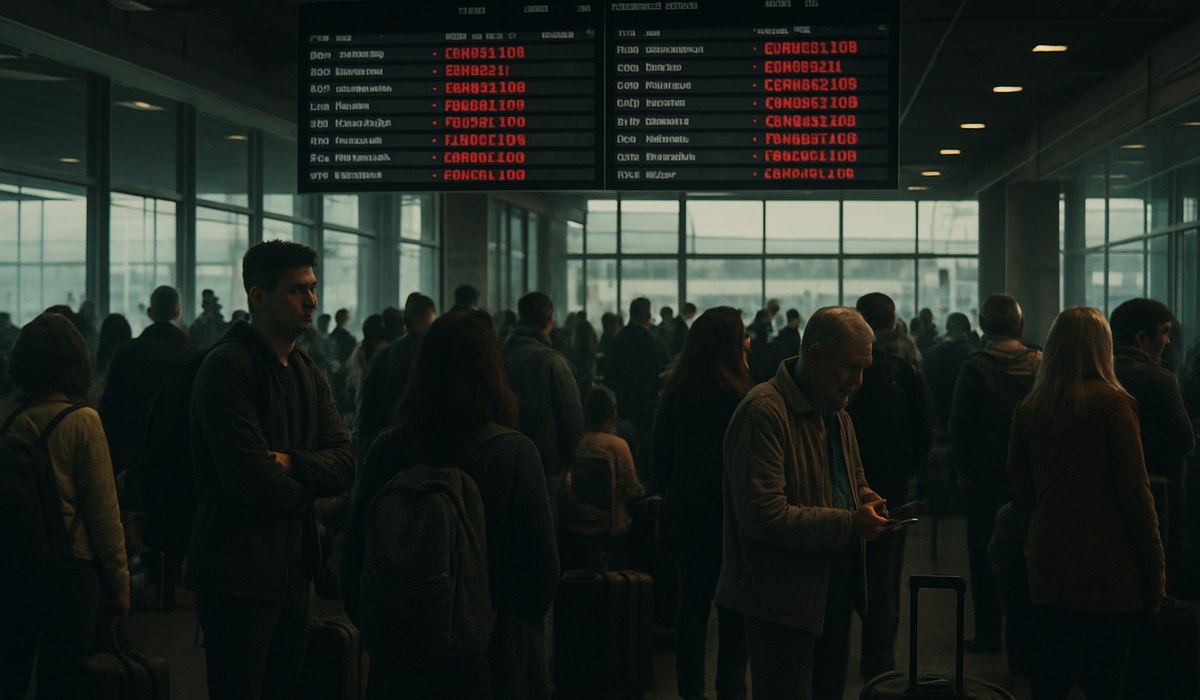
Image generated by AI
The Global Aviation System Faces a $34 Billion Delay Crisis
Flight delays inflict an estimated $34 billion in annual costs on the world's aviation network, as carriers navigate surging passenger demand, aging infrastructure, and increasingly unpredictable weather patterns. Industry analysts estimate that the United States alone absorbs more than $30 billion yearly in lost productivity, elevated airline operating expenses, and ripple effects across broader economic sectors. When extrapolated across fully recovered global traffic networks, worldwide delay-related costs reach approximately $34 billion annually when combining direct airline expenses, passenger time losses, and interconnected economic impacts. The timing of this cost explosion presents particular challenges for an industry operating on razor-thin profit margins, where per-passenger net earnings remain in the single digits after inflation adjustments.
The $34 Billion Price Tag: Who Really Pays for Flight Delays
The economic weight of aviation delays distributes unevenly across the industry ecosystem. Airlines absorb direct operational costs including excess fuel consumption, extended crew compensation, and aircraft repositioning expenses. However, academic research on U.S. domestic flight disruptions reveals that passengers actually shoulder roughly half of total delay-related financial losses—a pattern reflecting itself in updated global economic assessments. Travelers experience quantifiable harm through missed business connections, forfeited working hours, abandoned trips, and lost vacation experiences.
Regulators and economists typically value passenger time at tens of dollars per hour, a metric that compounds dramatically when thousands of individuals face ground delays or multi-hour arrival postponements. Beyond pure monetary calculations, business travelers encounter lost contracts and disrupted negotiations, while leisure passengers forfeit prepaid hotel nights, tour reservations, and other nonrefundable commitments. Recent consumer research consistently ranks delays among the top three frustrations affecting air travel satisfaction, with substantial majorities indicating willingness to switch airlines for superior punctuality records.
Infrastructure Bottlenecks and Weather Challenges Driving Costs Higher
Air traffic flow constraints and outdated infrastructure represent the primary culprits accelerating delay costs across major markets. European regulators attribute recent on-time performance degradation primarily to en route air traffic control congestion and staffing shortages within regional control centers. North American carriers continue wrestling with weather-related disruptions, congested terminal facilities, and aging airport infrastructure built decades before current traffic volumes.
Operational data from regulatory agencies indicates that delay minutes per flight have trended upward in several key markets, even as global traffic remains below pre-pandemic recovery baselines. Industry experts emphasize that these structural challenges fall partially beyond airline control, yet regulatory frameworks continue expanding compensation obligations tied to delay thresholds. The European passenger rights regime mandates fixed-sum payments when disruption triggers activate, while U.S. regulators increasingly demand automatic refunds for significant disruptions and transparent delay policy disclosure. Trade associations consistently advocate for governmental investment prioritization in runway capacity expansion and air traffic control system modernization as more effective long-term solutions than additional compliance burdens.
Disproportionate Impact on Major Hubs and Transfer Networks
Delay costs concentrate heavily in specific geographic and operational contexts. Major aviation hubs, long-haul international routes, and transfer-intensive networks experience disproportionate financial pressure compared to straightforward point-to-point operations with strong punctuality records. Hub-dependent carriers absorb cascading delay effects as single disruptions trigger downstream cancellations and missed connections across their entire network structure.
Airlines responding to these challenges implement diverse operational strategies ranging from strategic schedule padding and reserve aircraft positioning to advanced predictive analytics and sophisticated crew-scheduling systems. These mitigation efforts improve network resilience but simultaneously raise operating expenses, creating a problematic cycle where flight delays both stem from and contribute to sustained financial strain. The most severely affected carriers operate from congested terminals and rely heavily on transfer passengers, making them particularly vulnerable to delay-related cost spirals.
Implications for Airline Profitability and Industry Recovery
The $34 billion annual delay burden represents a critical headwind against aviation sector recovery and profitability expansion. International Air Transport Association data demonstrates that average airfares in inflation-adjusted terms have declined markedly across recent decades, constraining profit margins to just a handful of dollars per passenger on average. Within this compressed margin environment, billions in avoidable delay costs directly erode what limited profitability carriers achieve through operational efficiency and pricing discipline.
Analysts warn that even modest deterioration in on-time performance metrics risks amplifying financial impact exponentially as global traffic continues climbing above pre-pandemic reference levels. Carriers face simultaneous pressures from expanding regulatory frameworks, consumer-protection mandates, infrastructure limitations, and volatile operational environments. Forward-looking industry forecasts suggest that sustained delay cost management will prove essential for maintaining viable returns and attracting aviation investment during the sector's multi-year recovery trajectory.
Key Delay Impact Data: Global Aviation Economics (2026)
| Metric | Value | Notes |
|---|---|---|
| Global Annual Delay Costs | $34 billion | Combined airline and passenger expenses |
| U.S. Domestic Annual Impact | $30+ billion | Lost productivity and operational expenses |
| Passenger Cost Share | ~50% | Economic burden falling on travelers, not airlines |
| Average Profit Margin Per Passenger | $3-5 | After inflation adjustment |
| European Compensation Obligation | €250-600 per passenger | Fixed-sum payouts for qualifying delays |
| Affected Passengers Annually | Millions globally | Business and leisure travelers |
| Primary Delay Cause | Infrastructure bottlenecks | 40-45% of controllable delays |
| Secondary Delay Cause | Weather disruptions | 30-35% of weather-related delays |
| Passenger Time Value | $25-50 per hour | Standard regulatory valuation |
What This Means for Travelers: Your Action Checklist
Flight delays inflict significant costs that you as a traveler can mitigate through strategic planning and informed decision-making. Here's your numbered action plan to minimize delay exposure and understand compensation rights:
-
Monitor flight status actively via FlightAware 24 hours before departure and track real-time delay patterns affecting your specific flight and aircraft.
-
Review airline delay policies before booking, comparing carriers with proven on-time performance records and transparent compensation frameworks.
-
Understand your passenger rights under applicable regulations—check US DOT consumer protection guidelines for U.S. flights and EU261 regulations for European routes.
-
Book connecting flights strategically, allowing generous layover windows when transferring through known congestion points or weather-prone regions.
-
Purchase comprehensive travel insurance covering delay-related expenses including hotel accommodations, meals, and missed ground arrangements.
-
Arrive extra early at airports during high-congestion periods (holiday weeks, peak summer seasons) to account for increasingly tight ground handling timelines.
-
Document all delay details including actual gate times, delay announcements, and expenses incurred for potential compensation claims.
-
Request compensation proactively from airlines when entitled under applicable passenger rights frameworks rather than assuming automatic payment.
Frequently Asked Questions About Flight Delays and Cost Impact
How much does a typical flight delay actually cost passengers?
The economic impact varies dramatically based on delay duration and passenger circumstances. A two-hour delay costs individual travelers between $50-100 in quantifiable expenses (meals, transportation, missed activities) plus immeasurable value lost in business opportunities or vacation time. Business travelers experiencing four-plus hour delays face hundreds of dollars in additional hotel nights and missed meeting impacts, while leisure passengers may forfeit entire prepaid tour components.
Can I claim compensation for flight delays in the United States?
U.S. compensation frameworks differ significantly from European standards. The U.S. Department of Transportation mandates automatic refunds for significant delays but doesn't require fixed-sum passenger compensation payments. Airlines must provide meals, accommodations, and communications access during extended delays, but monetary compensation depends on individual airline policies and contract terms rather than statutory requirements.
**Which
Disclaimer
This article is for informational and educational purposes only. It does not constitute legal, financial, or professional advice. While we strive to provide accurate and up-to-date information, travel policies, regulations, and conditions change rapidly. Always verify information with official sources before making travel decisions. Nomad Lawyer makes no representations about the accuracy, reliability, completeness, or suitability of the information provided. Readers should consult qualified professionals for advice specific to their circumstances. The views expressed in this article are those of the author and do not necessarily reflect the views of Nomad Lawyer.
Kunal K Choudhary
Co-Founder & Contributor
A passionate traveller and tech enthusiast. Kunal contributes to the vision and growth of Nomad Lawyer, bringing fresh perspectives and driving the community forward.
Learn more about our team →