
Flight Delays Inflict $34 Billion Yearly on Global Aviation Industry
Flight delays inflict $34 billion annually on global aviation, matching sector-wide profits and exposing systemic capacity management failures. The crisis affects airlines, travelers, and economies worldwide in 2026.

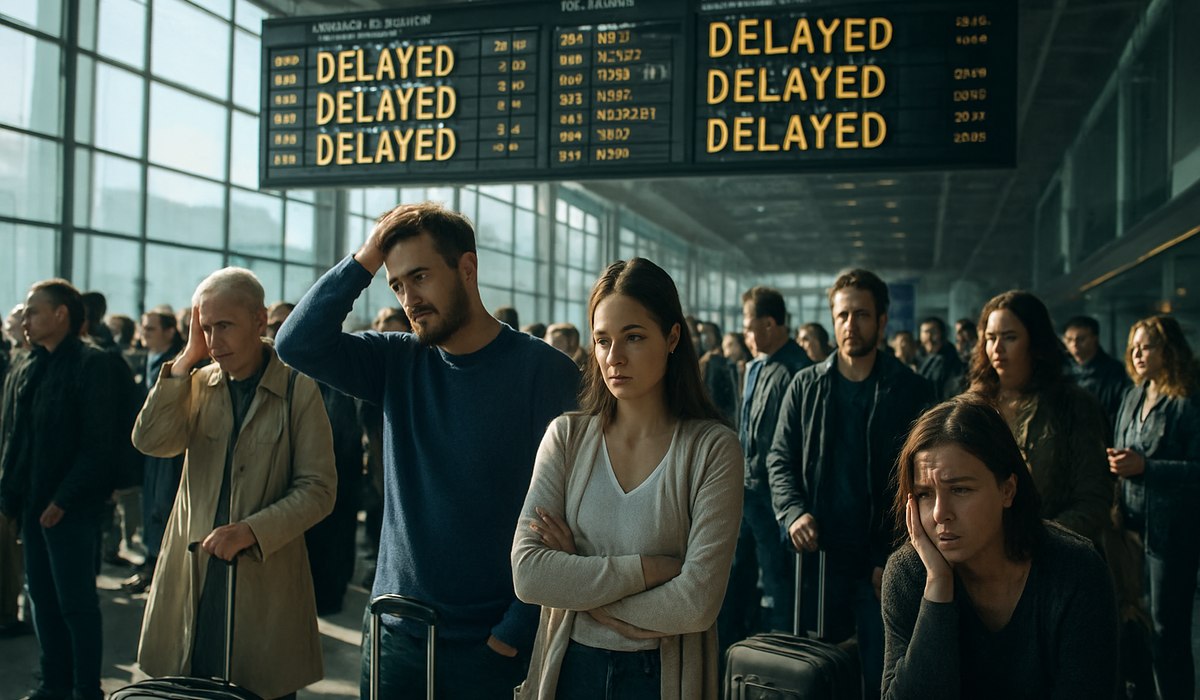
Image generated by AI
The $34 Billion Annual Crisis Reshaping Global Aviation
Flight delays now inflict $34 billion yearly on the aviation industry, exposing deep structural weaknesses in how airlines, airports, and air traffic control systems manage capacity during peak travel periods. This staggering economic toll rivals the entire sector's annual profitability, forcing carriers and governments to confront a systemic crisis that shows no signs of abating. The financial burden extends far beyond airline operations—it encompasses lost passenger productivity, missed business opportunities, and cascading disruptions across global travel networks.
Data compiled from regulatory filings, industry analyses, and Department of Transportation assessments reveals that the United States alone accounts for $30–34 billion in annual losses from delayed and cancelled flights. When combined with European, Asian-Pacific, and Middle Eastern disruptions, the global cost of aviation delays creates an industry-wide pressure that threatens profitability and customer satisfaction simultaneously.
The $34 Billion Annual Economic Toll on Aviation
The true scope of flight delays inflict devastating financial consequences across multiple sectors. Airlines bear direct costs through increased fuel consumption during extended taxi times, mandatory crew overtime payments, aircraft repositioning, and passenger accommodation expenses. A single major airline operating on margins of 5–8% cannot absorb delays of this magnitude without operational restructuring.
Beyond direct airline expenses, the economic impact ripples through hospitality, ground transportation, and business services. Stranded passengers require hotel accommodations, meal vouchers, ground transportation, and alternative flight rebooking. Major hub disruptions cascade across networks, creating secondary delays that multiply the initial financial impact exponentially.
Research from the International Air Transport Association indicates that capacity constraints at major European hubs generate nearly 30 million minutes of delay annually. Similarly congested U.S. airports create network-wide bottlenecks affecting connecting passengers across multiple carriers and regions.
Who Bears the Cost: Airlines vs. Travelers
The burden of flight delays inflict financial strain falls unevenly across stakeholders. Airlines absorb operational costs including crew expenses, fuel surcharges, and maintenance scheduling adjustments, while passengers shoulder equally substantial out-of-pocket expenses that often exceed $500 per disruption when accommodation, meals, and alternative transportation are included.
Travelers experience hidden economic losses through lost work hours, missed business meetings, and cancelled personal events. Economic models used by regulators assign monetary values to passenger time, typically ranging from $25–100 per hour depending on income levels and employment circumstances. These valuations compound across millions of annual disruptions, creating a silent tax on business productivity and family economics.
Airlines increasingly pass disruption costs to consumers through dynamic pricing, baggage fees, and seat selection charges. This creates a vicious cycle where delay-related revenue recovery measures further increase passenger costs while damaging brand loyalty and market share.
Global Disruption Beyond US Markets
While the United States dominates delay statistics with major hub congestion at Atlanta, Dallas, and Chicago, international aviation faces equally severe systemic challenges. European airspace experiences record congestion levels, with air traffic control staffing shortages creating bottlenecks across Frankfurt, Amsterdam, and London hubs.
Asia-Pacific aviation confronts unprecedented passenger growth alongside infrastructure constraints. Indian and Southeast Asian airports operate near maximum capacity during peak seasons, creating vulnerability to weather disruptions and equipment failures. Middle Eastern carriers face cascading delays from European connection hubs, affecting routes to Asia and Africa.
Australia and New Zealand experience seasonal summer disruptions compounded by limited alternative routing options. These regional constraints demonstrate that flight delays inflict global consequences requiring coordinated international responses beyond individual country regulations.
Structural Strains on an Already Thin-Margin Industry
Aviation operates on notoriously thin profit margins—typically 2–5% for legacy carriers and 8–12% for low-cost operators. The $34 billion annual disruption burden represents a structural threat to industry sustainability when combined with post-pandemic debt burdens, fuel price volatility, and labor cost inflation.
Air traffic control staffing shortages plague developed nations despite high compensation levels. The FAA and Eurocontrol face recruitment challenges amid retirements and burnout, creating bottlenecks that no amount of investment can immediately resolve. Pilot and maintenance technician shortages create cascading scheduling constraints that reduce operational flexibility.
Airport infrastructure investments, while necessary, require 5–10 year lead times and billions in capital expenditure. Runway expansions at major hubs face environmental opposition and community resistance, limiting near-term capacity expansion options. Airlines must therefore work within existing infrastructure constraints, accepting delay-driven losses as structural overhead.
Key Aviation Delay Impact Data (2026)
| Metric | Value | Impact |
|---|---|---|
| Annual Global Delay Cost | $34 billion | Equals airline sector annual profit margin |
| U.S. Delay Share | $30–34 billion | 88–100% of global total |
| European ATM Delays | 30 million minutes | 50,000 hours of airtime annually |
| Average Passenger Cost per Delay | $500–800 | Out-of-pocket expenses only |
| Time Value of Delays | $15–20 billion | Lost passenger productivity globally |
| Capacity Utilization at Major Hubs | 85–95% | Minimal buffer for disruptions |
Real-Time Delay Tracking and Monitoring
Passengers seeking transparency on flight performance should consult FlightAware for real-time delay tracking across global networks. The platform provides historical delay patterns, current airport conditions, and predictive analytics for specific routes and time periods.
The FAA publishes official U.S. aviation delay statistics, airport congestion reports, and air traffic control performance metrics. Accessing these official sources provides passengers with regulatory-verified information independent of airline communications.
European Union Aviation Safety Agency platforms and Eurocontrol data offer comparable transparency for international routes. Passengers planning European connections should review airport-specific congestion forecasts during peak summer travel periods.
What This Means for Travelers: Your Action Checklist
Flight delays inflict significant hardship on modern travelers, but proactive strategies minimize disruption impact:
-
Book early morning or off-peak flights – Routes departing 6–8 a.m. experience 30% fewer delays than midday alternatives; evening flights after 8 p.m. show improved reliability due to reduced hub congestion.
-
Verify airline delay statistics – Check historical on-time performance for your specific airline and route combination before booking; carriers vary significantly in reliability metrics.
-
Allow extended connection times – Add 90–120 minutes minimum for domestic connections and 120–150 minutes for international connections at major hub airports.
-
Monitor weather forecasts – Check aviation-specific weather services 48 hours before departure; severe weather creates predictable delay cascades.
-
Document all expenses – Keep receipts for meals, accommodation, ground transportation, and alternate flight costs; U.S. Department of Transportation regulations entitle passengers to reimbursement from airlines under specific conditions.
-
Know your rights – Review U.S. Department of Transportation guidance on airline compensation requirements; European passengers should understand EU261 protections.
-
Purchase travel insurance – Delay insurance covers accommodation, meals, and ground transportation when airlines cannot provide accommodation; comprehensive policies cost $15–40 per ticket.
-
Communicate with airline representatives – Request meal vouchers, hotel accommodations, and rebooking assistance immediately upon delay announcement; don't wait for automatic offers.
Frequently Asked Questions About Aviation Delays
How do flight delays inflict costs on airlines versus passengers? Airlines face fuel surcharges, crew overtime, aircraft repositioning, and accommodation costs averaging $5,000–15,000 per flight delay. Passengers bear out-of-pocket expenses for meals, hotels, and ground transportation typically ranging $500–1,200 per disruption event, plus lost work productivity
Disclaimer
This article is for informational and educational purposes only. It does not constitute legal, financial, or professional advice. While we strive to provide accurate and up-to-date information, travel policies, regulations, and conditions change rapidly. Always verify information with official sources before making travel decisions. Nomad Lawyer makes no representations about the accuracy, reliability, completeness, or suitability of the information provided. Readers should consult qualified professionals for advice specific to their circumstances. The views expressed in this article are those of the author and do not necessarily reflect the views of Nomad Lawyer.
Raushan Kumar
Founder & Lead Developer
Full-stack developer with 11+ years of experience and a passionate traveller. Raushan built Nomad Lawyer from the ground up with a vision to create the best travel and law experience on the web.
Learn more about our team →