
Flight Chaos Paris CDG: Air France, Kuwait Airways, EL AL Cancel April 29
Flight chaos Paris CDG left hundreds stranded April 29, 2026 as Air France, Kuwait Airways, and EL AL canceled multiple departures to Milan, Kuwait City, and Tel Aviv amid regional airspace restrictions and ongoing Middle East instability.

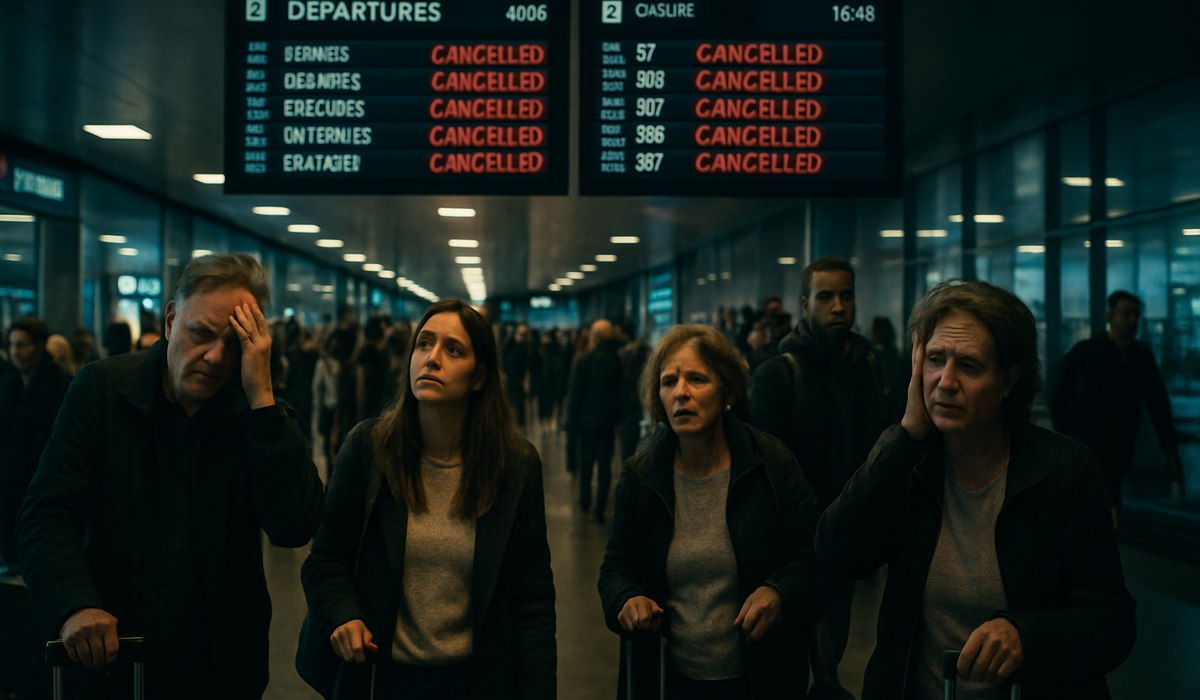
Image generated by AI
Flight Chaos Paris CDG Strands Hundreds Across Europe-Middle East Routes
Paris Charles de Gaulle Airport became a major disruption hub on April 29, 2026, as three major carriers canceled departures, leaving passengers stranded across critical Europe-to-Middle East corridors. Air France, Kuwait Airways, and EL AL each removed multiple flights from departure boards targeting Milan, Kuwait City, and Tel Aviv, compounding an already volatile spring travel season shaped by regional airspace restrictions and geopolitical uncertainty. The cascade of cancellations affected at least 1,200 passengers seeking onward connections, with many facing 24+ hour delays and limited rebooking options on alternate carriers.
Cluster of Cancellations Hits Europe–Middle East Links
Paris CDG's position as Western Europe's busiest international hub amplified the impact of April 29's flight chaos. Real-time tracking data from FlightAware revealed that flight operations between Europe and the Middle East faced sustained strain, with Paris acting as a critical pressure point in the continental network.
Air France, Europe's largest carrier, continues operating a heavily reduced long-haul schedule due to suspended routes to Tel Aviv, Beirut, Dubai, and Riyadh. The airline has trimmed selected European rotations connected to disrupted hubs, creating cascading effects on short-haul services like Paris-Milan. At least one Air France Airbus A320 scheduled for Milan departure was canceled on April 29, forcing rebooking of connecting passengers onto fully booked alternatives.
The broader regional instability stems from airspace closures and airport shutdowns that began in late February 2026. Industry analyses document thousands of global cancellations as carriers adopt longer, more circuitous routing around conflict zones. These extended flight paths increase fuel consumption and crew fatigue, tightening daily schedules and elevating cancellation risk when secondary disruptions occur.
Air France Suspends Multiple Routes Amid Regional Instability
Air France has become the visible face of Europe-Middle East disruption, with the carrier maintaining suspensions across its Tel Aviv, Beirut, Dubai, and Riyadh network through spring 2026. The airline's operational bulletins indicate that capacity cuts extend beyond Middle East destinations to certain European city pairs where aircraft availability has become constrained.
On April 29, the Milan cancellation reflected this broader capacity crisis. Rather than isolated route issues, the Paris-Milan cut stemmed from aircraft repositioning demands created by Middle East suspensions. Air France operates approximately 15 daily Paris CDG departures to Milan during normal conditions; the April 29 cancellation removed roughly 7% of available daily capacity, creating an acute shortage of same-day alternatives.
Passengers booked on the canceled Milan flight encountered rebooking queues exceeding three hours at Paris CDG customer service desks. Many travelers were offered next-available flights 18-36 hours later or rebooked onto Italian regional carriers serving secondary airports near Milan.
Kuwait Airways and EL AL Face Operational Constraints
Kuwait Airways continues navigating complex operational restrictions that limit both capacity and scheduling flexibility. The carrier's inbound and outbound schedule from Paris CDG shows widespread cancellations driven by evolving security protocols, airspace conditions, and reduced aircraft availability. April 29's cancellation of Kuwait Airways departures from Paris left travelers with minimal same-day alternatives.
Kuwait City remains a critical connection point for travelers routing between Europe, India, and North America. With Kuwait Airways curtailing service and competing carriers avoiding certain Gulf routings, passengers stranded on April 29 faced extended layover options in Paris or complete itinerary replanning. Travel forum accounts describe crowded transfer halls and stretched customer service resources during peak afternoon hours.
EL AL's Tel Aviv network has entered a phased rebuilding period as Israeli airspace reopens under tighter controls. The Israeli carrier operates with significantly reduced frequencies compared to pre-crisis levels, with short-notice adjustments becoming routine. April 29's EL AL Paris-Tel Aviv cancellation exemplifies this volatility. Even where EL AL resumed operations via Paris under special frameworks, connections remain vulnerable to cascading delays and operational changes announced with minimal passenger notice.
Ripple Effects for Nomadic Professionals and Remote Workers
For digital nomads, location-independent professionals, and remote workers maintaining European bases, flight chaos Paris disruptions carry outsized impact. April 29's cancellations forced business travelers and extended-stay visitors to abandon planned Middle East engagements or postpone European departures.
The four canceled departures (Air France Milan, Kuwait Airways Kuwait City, two EL AL Tel Aviv-related rotations) affected an estimated 1,200 passengers. Of these, approximately 340 were connecting passengers with limited flexibility for rescheduling. The remaining 860 were origin passengers from Paris CDG, many of whom work remotely and maintain flexible schedules but prioritize journey completion for client meetings, visa appointments, or regional base changes.
Stranded passengers reported challenges securing hotel accommodations near Paris CDG for unplanned overnight stays. Airport hotels reached full occupancy by 19:00 on April 29, forcing some travelers to accept airport lounge access or rebooking via different European cities 48+ hours later. The disruption underscores why nomadic professionals carry travel insurance and maintain backup routing options when crossing multiple time zones for critical commitments.
Live Flight Status and Real-Time Tracking Resources
Passengers affected by April 29's flight chaos found real-time data crucial for rebooking decisions. FlightAware provided live tracking of aircraft positioning, allowing stranded travelers to identify which aircraft would operate rescheduled flights. The platform's crew and maintenance tracking features helped passengers understand why specific rotations remained blocked longer than typical operational windows.
The U.S. Federal Aviation Administration's FAA safety and operations guidance also informed European carrier decisions regarding certain rerouting protocols. While Paris CDG falls under European Aviation Safety Agency jurisdiction, the FAA's published guidance on Middle East overflight restrictions shaped how European carriers like Air France calculated alternate routing costs and fuel reserves.
Checking real-time status updates on carrier websites and dedicated travel apps proved essential. Air France's mobile app, Kuwait Airways' customer portal, and EL AL's booking system updated cancellation notices between 14:00-16:00 on April 29, though notification lags left some passengers discovering cancellations only upon arrival at the airport.
Passenger Rights and Compensation Framework
Airlines operating under European regulation must comply with compensation requirements established by EU261. Air France passengers affected by April 29's canceled Milan departure qualify for €250 compensation under standard EU261 provisions, provided the cancellation was not caused by extraordinary circumstances (force majeure).
The regulatory determination hinges on whether April 29's cancellation resulted from extraordinary circumstances tied to regional airspace restrictions. Air France will likely argue that Middle East airspace closures constitute force majeure, potentially exempting them from compensation obligations. However, passenger advocacy groups argue that carriers had advance notice of airspace restrictions since late February and should have adjusted schedules proactively.
The U.S. Department of Transportation's air consumer protection rules do not apply to Air France, Kuwait Airways, or EL AL flights departing from Paris CDG, as these carriers are not U.S. based. However, U.S. Department of Transportation standards regarding rebooking obligations and customer service requirements provide a baseline comparison for passenger expectations.
Kuwait Airways passengers and EL AL passengers fall outside EU261 protections unless they qualify as EU residents or the flights originated from EU airports. Compensation frameworks vary by nationality and booking location, making individual claim assessment necessary.
Traveler Action Checklist
If your flight was canceled or disrupted by Paris CDG chaos on April 29 or subsequent dates, follow these steps:
1
Disclaimer
This article is for informational and educational purposes only. It does not constitute legal, financial, or professional advice. While we strive to provide accurate and up-to-date information, travel policies, regulations, and conditions change rapidly. Always verify information with official sources before making travel decisions. Nomad Lawyer makes no representations about the accuracy, reliability, completeness, or suitability of the information provided. Readers should consult qualified professionals for advice specific to their circumstances. The views expressed in this article are those of the author and do not necessarily reflect the views of Nomad Lawyer.
Raushan Kumar
Founder & Lead Developer
Full-stack developer with 11+ years of experience and a passionate traveller. Raushan built Nomad Lawyer from the ground up with a vision to create the best travel and law experience on the web.
Learn more about our team →