
Airline Cancellations Leave Hundreds Stranded Across UK Hubs
Airline cancellations leave hundreds of passengers stranded worldwide in April 2026 after British Airways and Qatar Airways scrapped six major flights from London Heathrow, Gatwick and regional UK airports, disrupting transatlantic and Gulf connections.

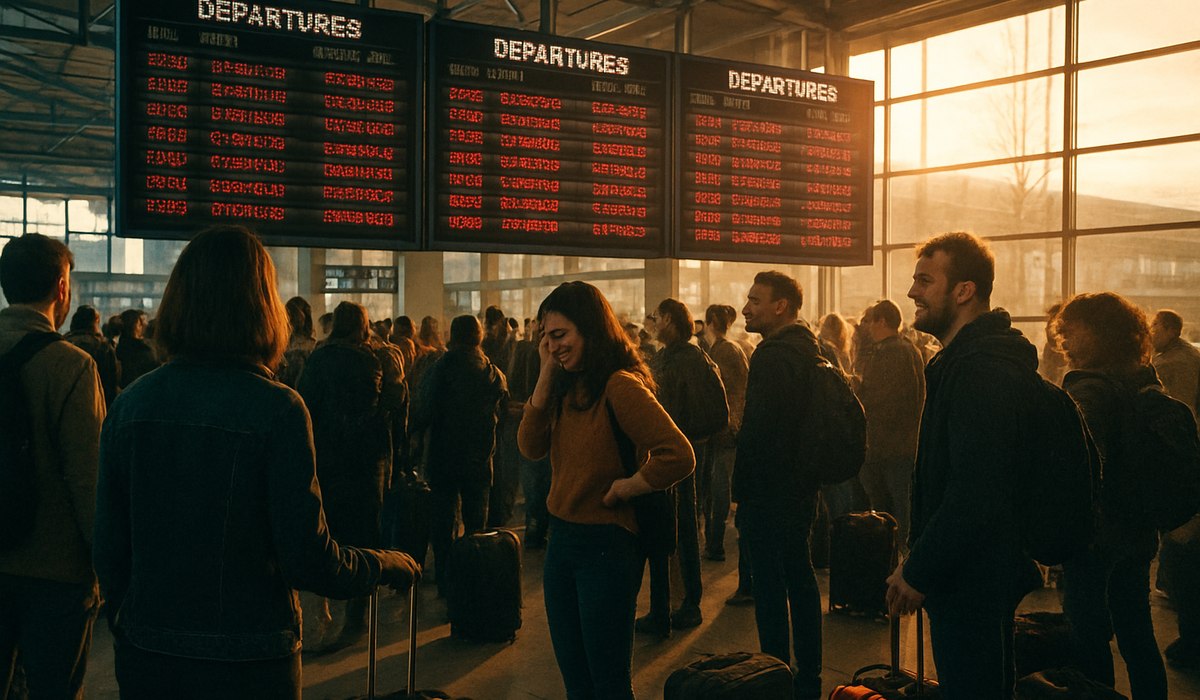
Image generated by AI
Hundreds Stranded as Major Carriers Axe Transatlantic and Gulf Flights
Hundreds of travelers faced overnight delays and cascading connection failures across the globe on April 27, 2026, after British Airways and Qatar Airways cancelled six heavily booked international flights from UK airports. The disruptions struck routes connecting London Heathrow, London Gatwick, and regional UK hubs to New York, Houston, Washington, Doha, and Dublin, leaving passengers scrambling for alternative solutions in crowded terminals. This wave of airline cancellations leave families separated across continents, with many confronting missed connections to North American and Asian destinations that compound the initial flight loss into multi-day travel interruptions.
The cancellations underscore how fragile modern aviation networks have become when major carriers reduce capacity simultaneously. Unlike isolated weather delays or mechanical failures, these orchestrated schedule adjustments trigger systematic failure across connected itineraries, particularly for passengers routing through congested hubs.
Six Key Flights Scrapped Across Transatlantic and Gulf Networks
Flight-tracking data from FlightAware and live airport departure boards on April 27 documented at least six major services that failed to depart as scheduled from UK gateways. The affected flights comprised a mix of transatlantic services on British Airways' dense New York, Houston, and Washington network, alongside Qatar Airways routes to Doha that funnel passengers toward Middle Eastern, Asian, and Australasian destinations.
British Airways operates multiple daily departures from London to major US East Coast and Gulf Coast hubs. When even a handful of these flights vanish from published schedules, the knock-on effect ripples across the entire transatlantic network within hours. Passengers booked on connecting flights originating in New York or Houston faced abandoned onward segments as their initial UK-to-US legs evaporated.
Qatar Airways' Doha hub functions as a critical junction for UK passengers traveling to Australia, New Zealand, and Southeast Asia. The latest round of airline cancellations leave travelers locked out of same-day onward connections through Doha, forcing complete itinerary restructuring across multiple airlines and jurisdictions. The airline continues adapting its schedule following recent airspace restrictions, yet recovery remains incomplete across its European network.
Dublin short-haul routes, historically reliable for regional UK-Ireland traffic, also experienced scattered cancellations on April 27. While most UK-Ireland flights operated normally, removal of select rotations during peak travel periods forced affected passengers onto overbooked later departures or forced hotel stays in airport vicinity.
Cascading Delays Hit North American and Asian Connections
The true impact of these airline cancellations leave a path of disruption extending far beyond UK airports. Passengers stranded at Heathrow with missed New York connections discovered that subsequent transatlantic availability had evaporated, pushing rebooking timelines into following days. Travelers locked out of Doha connections faced weeks-long delays completing Australian journeys, with alternative routing options involving multiple airline partnerships that often lacked transparent seat availability.
Industry observers tracking network effects via flight-data aggregators noted that cancellations on UK-originating flights created secondary disruptions affecting US airline operations. Flight crews stationed in New York or Houston for subsequent British Airways rotations had nowhere to position, triggering cascading cancellations on purely American domestic segments. Asian carriers dependent on connecting passengers through Doha similarly cancelled or oversold regional flights as connection sources dried up.
The timing proved particularly damaging. April 27 falls within European school holiday periods, maximizing load factors and minimizing rebooking flexibility. Families planning spring vacations encountered choice between accepting week-long delays or abandoning bookings entirely without compensation prospects.
Short-Haul Routes to Dublin Also Affected
Dublin maintains status as one of the busiest short-hop international destinations from British airports, with multiple daily British Airways and regional carrier frequencies. However, the April 27 disruptions extended beyond transatlantic and Gulf routes to impact these historically stable European services.
Scattered cancellations and schedule changes forced Dublin-bound passengers into crowded later departures, often arriving past midnight. Travelers unable to accommodate revised timings faced overnight accommodation costs that airlines typically refuse reimbursing under current UK regulations. Some passengers reported being involuntarily rebooked on competing carriers' flights, introducing uncertainty around baggage handling and connection reliability.
The ripple effect continued across Irish domestic and onward European networks, as Dublin-connecting passengers missed secondary flights to Cork, Shannon, and continental European cities. Tour operators managing group bookings to Ireland found their consolidated loads impossible to reconstitute on alternate aircraft, forcing partial group cancellations.
Ongoing Fallout From Qatar Airspace Restrictions Compounds Disruption
The April 27 disruptions represent an aftershock from more severe systemic failures in March 2026. Qatar Airways and Hamad International Airport navigated a near-total suspension of all flight operations during temporary Qatari airspace closure, prompting large-scale flight rerouting and stranding of thousands of passengers throughout the Gulf region.
Although Qatar Airways has since restored dozens of daily departures from Doha, published timetables through mid-April revealed substantially reduced capacity compared to pre-closure operations. The airline continues grounding larger aircraft types, including A380s through May 2026, constraining available seats on Europe-Asia routes. This capacity shortfall means any subsequent cancellation creates disproportionate passenger impact, as rebooking options have already been consumed by earlier disruptions.
Passenger accounts shared across travel forums describe multi-day Doha layovers after Qatar Airways cancellations, with travelers receiving minimal rebooking assistance and unclear information regarding onward travel prospects. These experiences illustrate how vulnerable long-haul itineraries become when regional airspace restrictions starve central hubs of capacity.
British Airways Network Adjustments Hit US and European Links
Beyond these acute disruptions, British Airways appears implementing broader 2026 schedule restructuring affecting US and European capacity. Publicly available timetables show permanent route withdrawals alongside frequency reductions and temporary tactical cancellations on specific days. The airline frames these adjustments as operational streamlining efforts, though their cumulative effect introduces chronic cancellation risk throughout peak travel periods.
Historical analysis of British Airways disruption patterns reveals that US East Coast adverse weather and seasonal staffing pressures trigger waves of short-notice cancellations. When this overlaps with structural schedule reductions, passengers experience what appears isolated but actually reflects systematic capacity trimming on routes like New York and major European hubs.
The April 27 cancellations likely represent intersection of these multiple factors: residual Qatar airspace recovery disruption, British Airways capacity optimization, and potential weather or operational constraints. Passengers booking these carriers face elevated cancellation risk through summer 2026, particularly on transatlantic and Gulf routes where schedule restructuring remains ongoing.
Live Flight Tracking and Real-Time Updates
Travelers monitoring April 27 disruptions could access real-time departure board updates through major airport websites for London Heathrow, London Gatwick, and regional UK hubs. FlightAware provided detailed tracking of cancellation status, while airline website notifications sent SMS and email alerts to booked passengers.
Passengers should bookmark airline notification systems and activate real-time alerts when booking long-haul flights. Modern aviation experiences frequent tactical schedule changes, particularly during peak periods, and staying informed hours before departure provides precious rebooking windows before airline accommodation runs out.
What Passengers Should Know: Recovery and Rebooking Options
Airlines operating under UK jurisdiction must comply with US Department of Transportation passenger protection standards when flights originate from US airports or fall under US carrier rules. However, UK-originating transatlantic flights generally invoke European regulations requiring airline compensation for cancellations exceeding three hours delay at destination.
British Airways and Qatar Airways must offer affected passengers choice between refund or rebooking on alternate flights within reasonable
Disclaimer
This article is for informational and educational purposes only. It does not constitute legal, financial, or professional advice. While we strive to provide accurate and up-to-date information, travel policies, regulations, and conditions change rapidly. Always verify information with official sources before making travel decisions. Nomad Lawyer makes no representations about the accuracy, reliability, completeness, or suitability of the information provided. Readers should consult qualified professionals for advice specific to their circumstances. The views expressed in this article are those of the author and do not necessarily reflect the views of Nomad Lawyer.
Raushan Kumar
Founder & Lead Developer
Full-stack developer with 11+ years of experience and a passionate traveller. Raushan built Nomad Lawyer from the ground up with a vision to create the best travel and law experience on the web.
Learn more about our team →