
Flight Chaos Grounds Thousands Across Australia's Major Hubs
Over 20 flights cancelled and 100+ delayed as flight chaos grounds travellers across Australia in 2026. Sydney and Melbourne airports paralyzed by weather and ATC restrictions affecting Qantas, Virgin Australia, and Jetstar passengers.

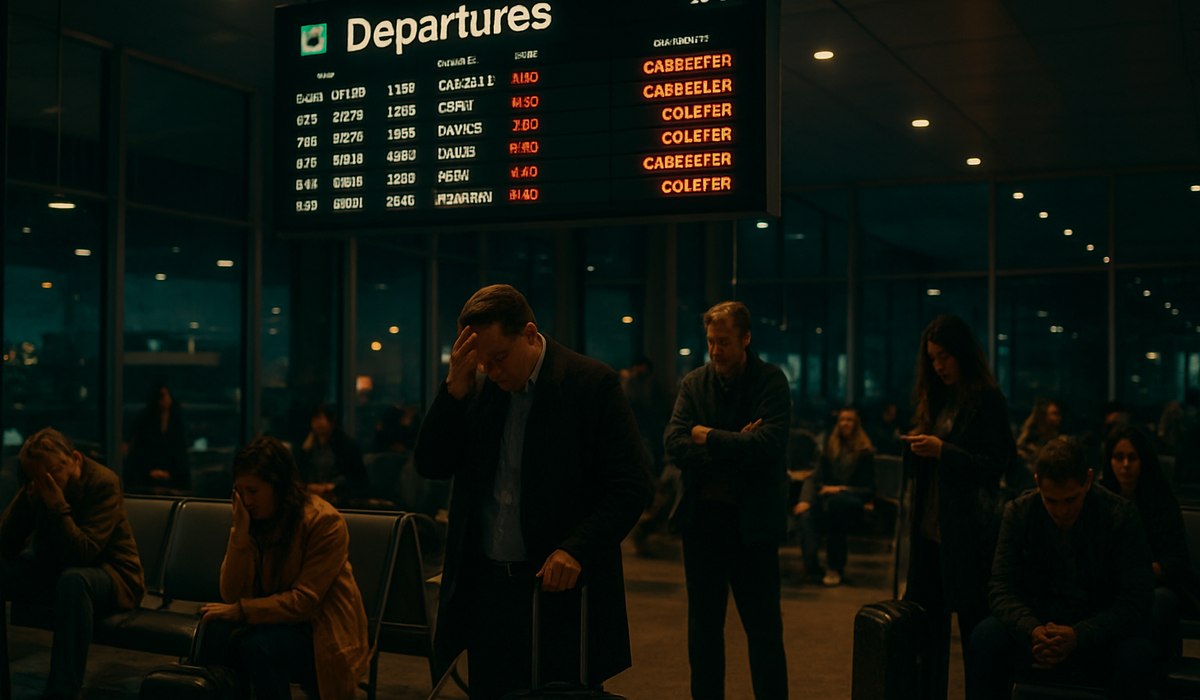
Image generated by AI
Breaking News: Flight Chaos Grounds Thousands at Australia's Busiest Airports
Flight chaos grounds travel plans for thousands across Australia as Sydney and Melbourne airports face unprecedented disruptions. More than 23 flight cancellations and over 100 delays cascaded through domestic and international services on April 12-13, 2026, leaving passengers stranded and connections severed. Qantas, Virgin Australia, and Jetstar suspended multiple services on the critical Sydney–Melbourne trunk route, compounding delays for onward connections beyond Australia's borders. The disruption stems from a toxic combination of adverse weather, air traffic control flow restrictions, and holiday-season congestion that stripped flexibility from airline schedules during peak travel periods.
Major Disruptions at Sydney and Melbourne Airports
Australia's two busiest aviation hubs became epicenters of operational chaos as weather systems and capacity constraints aligned catastrophically. Flight-tracking data reveals that Sydney Airport bore the brunt of disruptions, with strong winds and poor visibility reducing runway throughput and forcing air traffic controllers to implement tightened separation standards between aircraft.
Melbourne experienced secondary cascading effects as aircraft scheduled to depart faced flow-restriction holds, trapping crews and passengers on the ground for extended periods. The Sydney–Melbourne corridor, Australia's densest domestic air corridor, proved particularly vulnerable due to its high traffic density and minimal scheduling slack. When weather reduces capacity at Sydney, ripple effects radiate outward to Melbourne, Brisbane, Adelaide, and regional centers. Post-Easter travel surges left virtually no margin for error—any extended ground stop produced backlogs requiring hours or days to fully unwind.
Passengers on evening departures reported multiple delays, missed connections, and difficulty securing same-day alternatives on already saturated alternative flights. Late-evening cancellations forced travelers to wait until the following morning for replacement seats.
Which Airlines Were Most Affected
Qantas, Virgin Australia, and Jetstar dominated disruption statistics due to their combined market share on short-haul domestic flights between Sydney, Melbourne, and Brisbane. These three carriers operate the majority of available capacity on the affected corridor, meaning any reduction in hub capacity disproportionately impacts their schedules.
Jetstar, operating as a low-cost carrier with dense point-to-point schedules and tight aircraft turnarounds, proved especially vulnerable when delays cascaded throughout the day. Budget operators maintain fewer spare aircraft and crew reserves, increasing the likelihood that initial weather or technical issues trigger subsequent cancellations. One delayed departure quickly becomes two, then three, as crew duty-time limits prevent redeployment to alternative routes.
Virgin Australia and Qantas both published standard disruption policies emphasizing rebooking on the next available flight, travel credits, or refund processing. However, concentrated events affecting multiple carriers simultaneously constrain even these remedies through capacity limits on alternative services. When 100+ flights face delays system-wide, booking available seats on alternatives becomes mathematically impossible.
International carriers relying on domestic Australian connections for onward flights beyond the continent experienced compounded delays. A passenger connecting from Sydney to an international departure faced cascading impacts across their entire journey.
Causes Behind the Chaos: Weather and ATC Restrictions
Unsettled autumn weather patterns struck Australia's east coast during peak holiday travel periods, creating a perfect storm for operational disruption. Strong winds and poor visibility around Sydney and the New South Wales coast quickly reduced runway throughput, forcing air traffic managers to implement flow restrictions that rippled outward across Australia's entire domestic network.
When weather reduces capacity at a hub like Sydney, air traffic control doesn't simply accept longer delays. Instead, controllers introduce flow-restriction holds—essentially asking departing airports to ground aircraft before they burn fuel in airborne holding patterns. This approach minimizes fuel waste and environmental impact while preventing dangerous congestion in Sydney's controlled airspace.
The timing coincided with Easter holiday travel surges, leaving Australia's aviation network with minimal spare capacity. Peak-time utilization of aircraft, crews, and gates approached theoretical maximums, meaning any disruption couldn't be absorbed through existing buffers. The industry operates on knife-edge margins during holiday periods, prioritizing revenue over operational resilience.
Recent analysis of domestic on-time performance has documented continuing pressures on reliability, with Sydney–Melbourne and Melbourne–Brisbane routes recording elevated cancellation and delay rates throughout 2026. Infrastructure bottlenecks at key airports, staffing constraints among ground handlers and cabin crew, and weather vulnerability have created systemic fragility.
What Travellers Should Know Now
Passengers affected by flight disruptions deserve clarity on immediate options and longer-term implications. Airlines must provide rebooking, travel credits, or refunds according to published policies, though capacity constraints may limit available alternatives during system-wide events.
Traveler Action Checklist:
-
Contact your airline immediately via phone or their official app—don't rely on email, which may take 24+ hours to receive responses during crises.
-
Request rebooking on the next available flight to your destination, even if it requires a different airline or involves schedule changes.
-
Ask about meal vouchers, accommodation, and ground transportation reimbursement if your flight is cancelled overnight.
-
Document all communications, receipts, and delay notifications for potential compensation claims under Australian consumer protection regulations.
-
Check real-time flight status on FlightAware before heading to the airport—departure boards can mislead during active disruptions.
-
Contact your accommodation provider and onward travel partners immediately to advise of potential late arrival.
-
Review your travel insurance policy for coverage of airline-caused disruptions and missed connections.
-
Monitor your airline's website and social media channels for recovery information and rebooking updates.
Key Data: Flight Disruption Impact Summary
| Metric | Details |
|---|---|
| Total Cancellations | 23+ flights across April 12-13, 2026 |
| Total Delays | 100+ flights experiencing delays of 30 minutes or more |
| Primary Airports | Sydney Airport (SYD), Melbourne Airport (MEL) |
| Most Affected Route | Sydney–Melbourne corridor (domestic trunk route) |
| Airlines Most Impacted | Qantas, Virgin Australia, Jetstar |
| Primary Cause | Adverse weather combined with ATC flow restrictions |
| Secondary Causes | Post-Easter holiday congestion, staffing pressures |
| Peak Disruption Period | Evening departures April 12-13 |
| Passenger Impact | Thousands stranded, connections severed |
FAQ: Flight Chaos Grounds—Common Questions
Q: What should I do if my flight was cancelled? Contact your airline immediately via phone to request rebooking on the next available flight. Airlines are obligated to provide alternatives at no extra cost. If no flights are available same-day, request accommodation and meal vouchers. Document all communications and keep receipts for potential compensation claims.
Q: Am I entitled to compensation for disruption caused by weather? Weather events are typically classified as "extraordinary circumstances" beyond airline control under Australian consumer law. However, airlines must still provide rebooking, meals, and accommodation. Check your airline's disruption policy and travel insurance coverage for additional compensation options.
Q: How can I track my flight status during active disruptions? Monitor your airline's official app and website for real-time updates. Use independent tracking platforms like FlightAware to verify departure boards. Call your airline's customer service line directly—departure boards can display outdated information during system-wide events.
Q: Will this disruption affect my connection to international flights? Likely yes. Domestic flight delays cascade into missed international connections. Contact your international airline immediately if you're connecting through Sydney or Melbourne. Request rebooking on the next available connection or alternative routing to your final destination
Disclaimer
This article is for informational and educational purposes only. It does not constitute legal, financial, or professional advice. While we strive to provide accurate and up-to-date information, travel policies, regulations, and conditions change rapidly. Always verify information with official sources before making travel decisions. Nomad Lawyer makes no representations about the accuracy, reliability, completeness, or suitability of the information provided. Readers should consult qualified professionals for advice specific to their circumstances. The views expressed in this article are those of the author and do not necessarily reflect the views of Nomad Lawyer.
Kunal K Choudhary
Co-Founder & Contributor
A passionate traveller and tech enthusiast. Kunal contributes to the vision and growth of Nomad Lawyer, bringing fresh perspectives and driving the community forward.
Learn more about our team →