
Flight chaos exposes $34 billion crisis in global aviation infrastructure
New analysis reveals flight disruptions cost the global economy up to $34 billion annually in 2026, exposing systemic weaknesses in modern aviation infrastructure and threatening economic recovery.

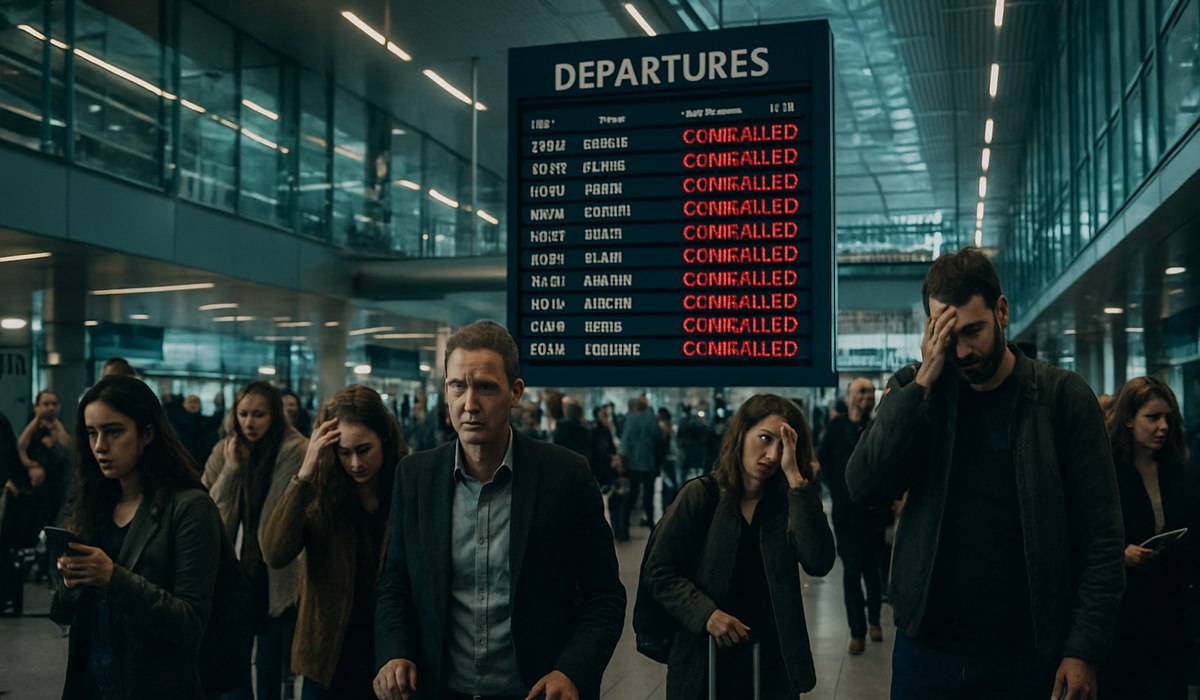
Image generated by AI
Flight Chaos Exposes a Staggering $34 Billion Annual Toll on Global Aviation
Flight disruptions are now costing the global economy up to $34 billion annually, according to new economic analysis examining cascading failures across international aviation networks. Recent operational meltdowns spanning North America, Europe, and Asia reveal an infrastructure system operating at maximum capacity with virtually no margin for error. When systems fail—whether through technology breakdowns, staffing shortages, or supply chain disruptions—the impact ripples across entire continents, leaving passengers stranded and airlines facing massive financial losses.
This figure encompasses far more than airline profits. The $34 billion annual cost includes lost passenger productivity, missed business opportunities, emergency rebooking expenses, hotel accommodations, and foregone future bookings. Industry economists warn that the true global figure likely exceeds this estimate when factoring in similar disruption patterns across Latin America, Africa, and the Pacific region.
A Year of Cascading Meltdowns Across Global Aviation
The past 24 months have delivered a brutal education in modern aviation's fragility. In 2024, a global information technology outage triggered by a third-party software update paralyzed one of North America's largest carriers, resulting in over 7,000 canceled flights and losses estimated in the hundreds of millions of dollars. That single incident exemplified a dangerous pattern: one point of failure cascades instantly across entire networks.
Similar disruptions have crippled major aviation hubs worldwide. Flight chaos exposes vulnerabilities at Newark, London Gatwick, Singapore Changi, and Tokyo Haneda, where systems breakdowns and staffing shortages forced mass cancellations. These weren't isolated incidents during peak travel seasons. They represent structural problems baked into an industry operating without adequate redundancy or buffer capacity.
Industry researchers and investor briefings increasingly describe these episodes as symptoms of systemic fragility rather than bad luck. Airlines, airports, and air traffic control facilities across multiple continents are functioning at the absolute edge of capacity. Any unexpected shock—whether technology failure, weather event, or personnel shortage—instantly overwhelms the system.
The $34 Billion Cost of Flight Chaos
Breaking down where the $34 billion annual cost originates reveals the true scope of aviation disruption's economic impact. Recent regulatory submissions to U.S. transportation authorities specifically estimated that flight disruptions cost the American economy between $30 billion and $34 billion annually when comprehensive economic losses are calculated.
Lost passenger productivity represents a substantial portion. When flights cancel or delay significantly, business travelers miss meetings, conferences, and client deadlines. Remote workers lose productivity hours. Leisure travelers reschedule vacations, disrupting their own economic plans and downstream tourism spending.
Emergency rebooking and accommodation expenses add billions to the total. Airlines must rebook stranded passengers on alternative flights, often at premium rates. Hotels, ground transportation, and meal costs for overnight delays accumulate across millions of annual passengers. The U.S. airline industry alone processes rebooking and compensation costs estimated in the billions annually.
Supply chain disruptions account for another substantial slice. The International Air Transport Association documented an $11 billion hit from supply chain problems in 2025 alone. Delayed aircraft deliveries, engine maintenance backlogs, and scarce spare parts force older jets to remain in service longer, burning more fuel and requiring more frequent maintenance.
Fuel efficiency losses compound the damage. Airlines expecting to retire aging aircraft and deploy modern, fuel-efficient replacements instead watch delivery timelines slip months or years. Every delayed engine swap or aircraft retirement means burning thousands of gallons of extra fuel across that aircraft's remaining service life.
When examining flight chaos exposes the full economic chain reaction, the $34 billion figure becomes conservative rather than alarmist.
Single Points of Failure Bring Networks Down
Modern aviation networks share a critical vulnerability: they depend on centralized technology systems, hub-and-spoke logistics, and highly specialized personnel. When any single component fails, the entire network destabilizes.
Technology failures pose the most obvious risk. A software update from a third-party vendor can instantly disable reservation systems, flight operations platforms, or crew scheduling software across an entire airline. In an industry operating at 95%+ capacity utilization, losing even one critical system for hours creates cascading cancellations lasting days or weeks.
Staffing shortages at air traffic control centers trigger capacity caps at busy airports without any weather-related cause. Early retirements during the pandemic, combined with slow training pipelines for new controllers, have created dangerous staffing gaps. When a facility operates with only the minimum required staffing, any unexpected absence or illness forces traffic reductions.
Maintenance bottlenecks propagate disruptions quickly. Engine maintenance backlogs mean aircraft spend longer in shops, reducing available fleet capacity. Airlines operating with 2-3% buffer capacity cannot absorb unexpected maintenance without canceling flights. One unscheduled engine removal from a major carrier instantly eliminates flights across multiple routes.
Hub infrastructure failures amplify impact. When a major connecting airport experiences operational problems—whether baggage system failures, runway closures, or facility disruptions—it affects not just that airport but the entire network of airlines using that hub for connections.
The absence of redundancy means aviation networks now operate with structural fragility. Industry observers increasingly warn that the current system cannot sustain another major shock without substantial passenger disruption and economic damage.
What Airlines and Regulators Are Doing to Address the Crisis
The aviation industry and government regulators have begun responding to the crisis, though meaningful solutions remain months or years away.
Airlines are stockpiling spare parts to reduce maintenance-related disruptions. This strategy ties up billions in capital and warehouse space but still fails to fully shield operations. Major carriers have added staff reserves and implemented more frequent crew training to improve resilience against unexpected absences.
Regulatory bodies have increased oversight of technology vendors and required enhanced testing protocols before system updates deploy to carrier networks. The Federal Aviation Administration and European Union Aviation Safety Agency have issued guidance on operational redundancy, though enforcement remains inconsistent. [Visit the FAA website](https://www.faa.gov) for current aviation safety protocols.
Investment in air traffic control modernization has accelerated. The NextGen system in the United States and similar modernization projects in Europe aim to increase airport capacity and reduce weather-related delays. However, implementation timelines stretch across multiple years, meaning near-term relief remains limited.
Labor negotiations are addressing staffing shortages through increased pilot and flight attendant compensation, expedited training programs, and retention bonuses. The U.S. Department of Transportation has encouraged accelerated hiring at understaffed air traffic control facilities through Congressional initiatives.
Supply chain diversification efforts are underway to reduce single-source dependencies on aircraft and engine manufacturers. However, the global aviation supply base remains relatively concentrated, limiting immediate alternatives.
Despite these efforts, industry analysts estimate meaningful improvements in disruption resilience remain 18-24 months away at minimum. The current system continues operating under structural stress.
What This Means for Travelers
Flight chaos exposes real risks for air travelers in 2026. Understanding how disruptions occur and your rights when they happen is essential for protecting your travel plans and finances.
Flexible booking strategies matter more than ever. When purchasing tickets, prioritize airlines with better operational reliability records. Choose flights with longer connection times when possible, reducing the impact of minor delays. Consider purchasing flexible fare options that allow date changes without penalties.
Know your passenger rights. Under U.S. Department of Transportation rules, carriers must compensate passengers for airline-caused delays and cancellations. European regulations offer even stronger protections. Visit the U.S. DOT consumer protection page to understand your specific entitlements.
Monitor your flight status actively. Use flight tracking services like FlightAware to receive real-time alerts about delays, cancellations, or schedule changes. Download airline apps to receive direct notifications from your carrier.
Travel insurance with comprehensive coverage provides financial protection against major disruptions
Disclaimer
This article is for informational and educational purposes only. It does not constitute legal, financial, or professional advice. While we strive to provide accurate and up-to-date information, travel policies, regulations, and conditions change rapidly. Always verify information with official sources before making travel decisions. Nomad Lawyer makes no representations about the accuracy, reliability, completeness, or suitability of the information provided. Readers should consult qualified professionals for advice specific to their circumstances. The views expressed in this article are those of the author and do not necessarily reflect the views of Nomad Lawyer.
Preeti Gunjan
Contributor & Community Manager
A passionate traveller and community builder. Preeti helps grow the Nomad Lawyer community, fostering engagement and bringing the reader experience to life.
Learn more about our team →