
Flight Chaos Cancellations: 34 Flights Axed, 272 Delayed Across Australia and New Zealand
Flight chaos cancellations disrupted hundreds of travelers across Australia and New Zealand on Sunday, April 27, 2026, with 34 cancellations and 272 delays triggered by operational and weather challenges.

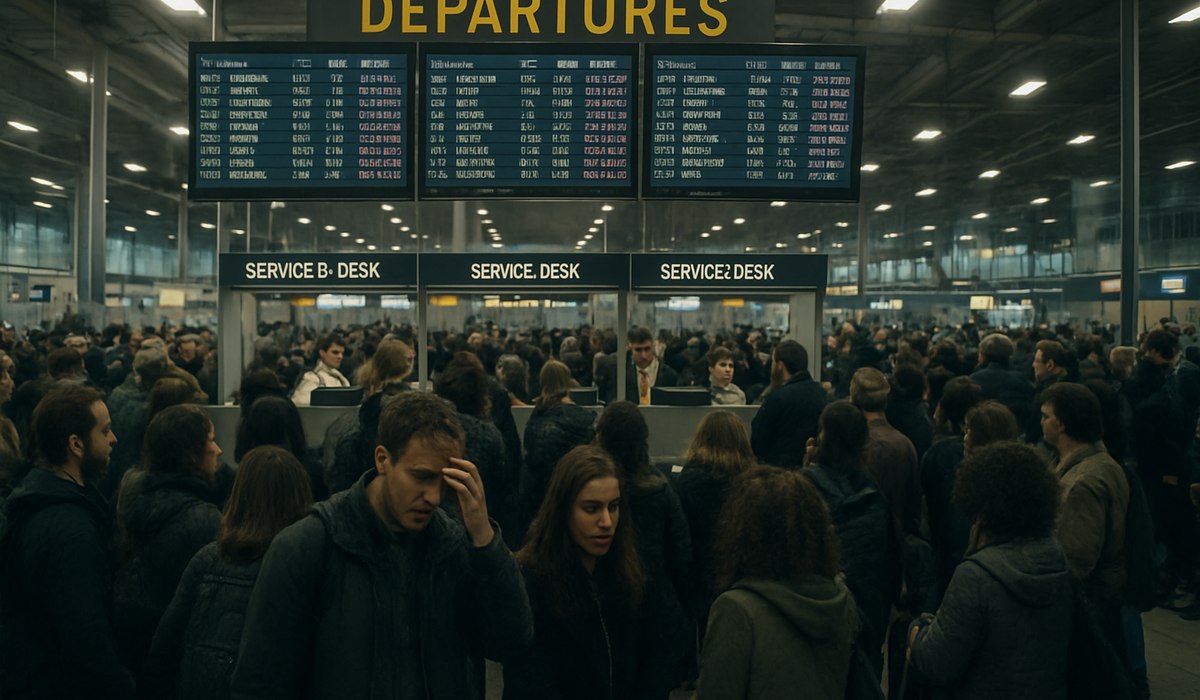
Image generated by AI
Major Flight Chaos Cancellations Leave Hundreds Stranded
Hundreds of travelers faced severe disruption across Australia and New Zealand on Sunday, April 27, 2026, as 34 flight cancellations and 272 delays rippled through major airport hubs. The cascade of flight chaos cancellations left passengers stranded in crowded terminals, struggling to rebook connections and navigate limited accommodation options. The widespread disruption affected both domestic routes and trans-Tasman services, with delays extending from morning peaks into the evening, compounding the strain on already stretched airline networks and passenger services.
Widespread Disruption Across Australia and New Zealand
Flight tracking data from aviation monitoring platforms documented the scope of Sunday's disruption in unprecedented detail. Major airports in Sydney, Melbourne, Brisbane, and Auckland experienced the bulk of cancellations and delays, though the effects rippled across secondary hubs as well. The combination of timing—Sunday travel typically coincides with high leisure and business demand—magnified the operational impact.
Morning cancellations triggered a domino effect throughout the day. When 34 flights were removed from schedules, aircraft and crew rotations fell out of sync, forcing subsequent services to wait for repositioned assets. Delays cascaded across routes that had no direct operational issues, stretching from under one hour to six-plus hours by evening. Passengers tracking their flights on FlightAware witnessed real-time deterioration of network reliability as the day progressed, with departure boards continuously updating revised times.
Multiple Factors Trigger Network-Wide Delays
No single cause explained the flight chaos cancellations. Instead, a confluence of operational and environmental challenges created a perfect storm. Ground handling delays at major hubs, weather constraints affecting certain regional routes, and tight aircraft rotations all contributed to network fragility. Aviation analysts noted that during peak travel periods, margins for absorbing disruption virtually disappear when scheduling efficiency prioritizes utilization over resilience.
Staffing constraints in ground and cabin crew roles—remnants of pandemic-era labor market shifts—added complexity to recovery operations. Maintenance demands competed with packed flight schedules, leaving minimal buffer time for unexpected technical inspections or repairs. When one rotation fell behind due to these compounding pressures, the downstream cascade became inevitable, transforming isolated issues into systemwide flight chaos cancellations.
Passengers Face Long Queues and Limited Rebooking Options
Terminal scenes reflected the mounting passenger frustration. Service desks saw hours-long queues as travelers sought rebooking assistance for the 34 cancellations and hundreds of affected delayed flights. Many passengers reported limited alternative departure options, particularly on popular weekend leisure routes where remaining capacity filled rapidly.
Social media documented the human cost: families with children waiting on terminal floors, elderly passengers navigating extended waits without clear information, business travelers missing critical meetings. Late-night cancellations created additional hardship, with travelers scrambling to secure nearby accommodation after airline-provided options became fully booked. Some passengers pursued independent hotel searches, adding unexpected costs to their journeys. Rebooking through connecting hubs in different cities became common workarounds, extending total journey times by half a day or more.
What Caused the Disruption
Industry observers highlighted the structural vulnerability of modern airline networks operating at near-capacity during peak demand periods. Short-haul routes between major Australian cities and New Zealand hubs depend on rapid turnaround times—often 45 minutes to 90 minutes—between arriving and departing flights. When ground operations fall even 30 minutes behind, subsequent services face cascading delays.
Weather patterns affecting regional routes contributed to initial delays, while ground handling congestion at Sydney and Melbourne airports amplified the problem. No single airline bore responsibility for all 34 cancellations and 272 delays; instead, multiple carriers experienced staggered disruptions throughout the day, creating a fragmented pattern of service interruptions across the wider network.
Traveler Action Checklist
If you're flying across Australia and New Zealand during periods of potential disruption, follow these steps to protect your travel plans:
-
Monitor your flight status through airline apps and FlightAware before departing home or your hotel.
-
Check the airline's rebooking policy on their website—most carriers allow online rescheduling without requiring terminal visits.
-
Document delays exceeding two hours, as this may qualify you for compensation under local consumer protection regulations.
-
Contact your airline immediately if cancellation occurs; rebooking options narrow rapidly during systemwide disruptions.
-
Book accommodation independently if the airline cannot provide hotel arrangements within two hours of a late-night cancellation.
-
Review your travel insurance policy for disruption coverage, particularly for international connections.
-
Stay connected via airline notifications by enabling push alerts on your smartphone.
Key Disruption Data
| Metric | Value | Impact |
|---|---|---|
| Total Cancellations | 34 flights | Direct strand of passengers |
| Total Delays | 272 flights | Secondary cascade effects |
| Maximum Delay Duration | 6+ hours | Evening peak service collapse |
| Airports Primarily Affected | Sydney, Melbourne, Brisbane, Auckland | Major hub congestion |
| Affected Routes | Domestic and trans-Tasman services | Regional connectivity disruption |
| Passenger Count Impacted | 500+ travelers | Terminal crowding and rebooking strain |
| Recovery Timeline | 24+ hours | Spillover into Monday operations |
What This Means for Travelers
The Sunday disruption underscores the fragility of modern airline networks during peak demand periods. Several actionable insights emerge for frequent travelers:
First, build flexibility into your itinerary. If your journey includes tight connections or time-sensitive appointments, consider arriving the day before or booking through intermediate hubs to reduce strand risk during disruptions.
Second, purchase travel insurance that explicitly covers airline-related disruptions and accommodation expenses. Third-party policies often provide better coverage than airline-specific programs.
Third, maintain direct contact with your airline. During systemwide flight chaos cancellations, those who proactively contact customer service often secure better rebooking options than those who wait in terminal queues.
Finally, monitor flight tracking apps in real time. Early awareness of developing delays—often visible 2-3 hours before airline official announcements—allows you to contact the airline before call centers become overwhelmed.
Frequently Asked Questions
What compensation am I entitled to if my flight was delayed or cancelled?
Australian and New Zealand consumer regulations typically require compensation for cancellations and delays exceeding defined thresholds, usually AU$200–$1,400 depending on distance and fault attribution. Review your airline's specific policy and consider contacting your national aviation authority if compensation is declined.
How do I check if my flight is affected by current disruptions?
Visit FlightAware or your airline's official app. These sources provide real-time delay and cancellation data. Don't rely solely on social media reports, as information spreads quickly but often inaccurately during disruptions.
Can I claim damages for missed connections or hotel expenses?
Liability depends on whether the airline or weather was responsible. Airlines typically cover accommodation for their-caused disruptions but not weather-related cancellations. Consult your travel insurance or an aviation law specialist for specific situations.
What should I do if my airline offers a voucher instead of cash refund?
Vouchers often expire and carry restrictions. If you prefer cash, formally request a refund in writing to your airline's customer relations department. Include booking references and documentation of the disruption.
Related Travel Guides
Disclaimer
This article is for informational and educational purposes only. It does not constitute legal, financial, or professional advice. While we strive to provide accurate and up-to-date information, travel policies, regulations, and conditions change rapidly. Always verify information with official sources before making travel decisions. Nomad Lawyer makes no representations about the accuracy, reliability, completeness, or suitability of the information provided. Readers should consult qualified professionals for advice specific to their circumstances. The views expressed in this article are those of the author and do not necessarily reflect the views of Nomad Lawyer.
Raushan Kumar
Founder & Lead Developer
Full-stack developer with 11+ years of experience and a passionate traveller. Raushan built Nomad Lawyer from the ground up with a vision to create the best travel and law experience on the web.
Learn more about our team →