
Flight Chaos Builds at Cairo Airport in April 2026: What You Need to Know
Flight chaos builds at Cairo International Airport as over 150 daily disruptions ripple through early April 2026. Regional airspace closures and operational strain affect EgyptAir, Emirates, Lufthansa, and major carriers across Europe, the Gulf, and North America.

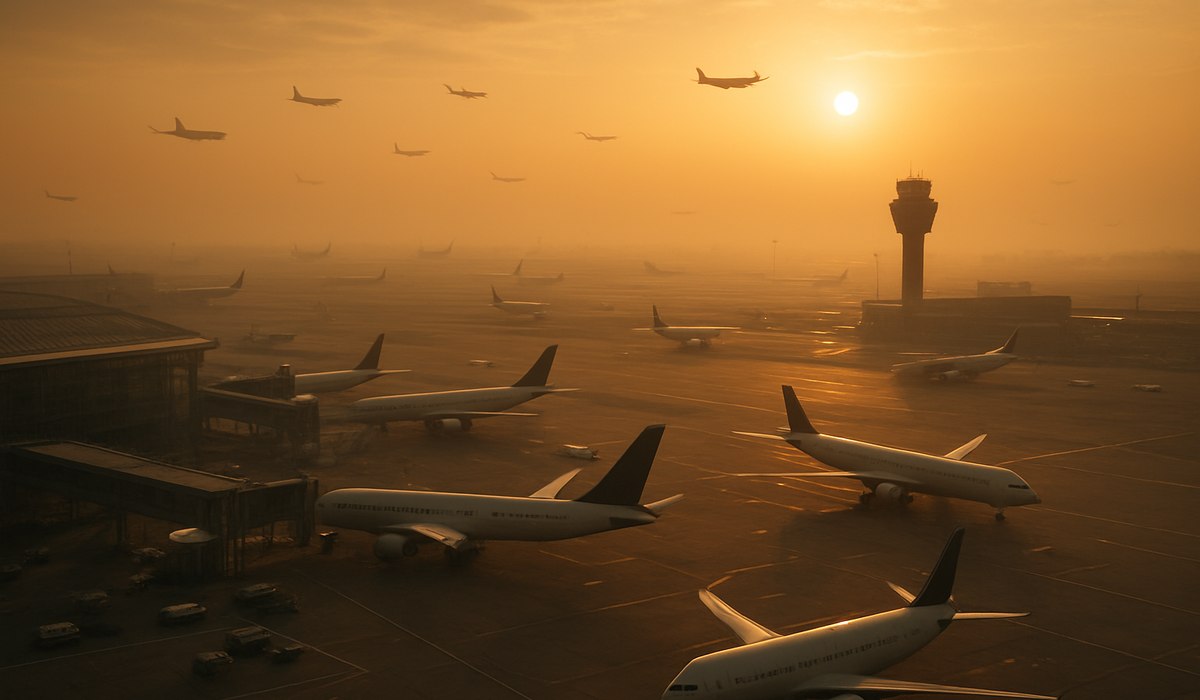
Image generated by AI
Breaking: Flight Chaos Builds Across Cairo's Busiest Hub
Cairo International Airport is experiencing cascading operational disruptions throughout early April 2026, with over 150 flights facing delays daily as regional airspace restrictions compound staffing and infrastructure constraints. The mounting crisis has affected major carriers including EgyptAir, Emirates, Lufthansa, Qatar Airways, and Air France, while long-haul routes to London, Frankfurt, Dubai, Doha, and Istanbul absorb the worst impact. What began as isolated delays in the opening days of April has escalated into rolling disruptions affecting both connecting passengers and destination-bound travelers across Europe, the Gulf, and North America.
Understanding the Disruption Timeline: Rolling Delays Across Early April
The disruption pattern at Cairo emerged with notable intensity on April 6, when flight-tracking platforms documented approximately 150 simultaneous flight delays across the airport's departure and arrival banks. Rather than a single triggering event, aviation observers describe a cascading pattern where initial delays create knock-on effects throughout subsequent flight waves.
Operational pressure mounted steadily from April 1 through April 9, with each busy window generating fresh rounds of ground holds and missed turnaround slots. Connecting passengers faced particular hardship, with reports of missed onward connections forcing unplanned overnight stays despite original flights eventually departing Cairo.
Flight status monitoring via FlightAware confirms the pattern intensified through April 8 and 9, suggesting recovery remains incomplete. The rhythm of disruption—rather than continuous gridlock—makes prediction challenging for travelers, as some departures operate normally while adjacent flight waves experience extended delays.
Affected Carriers and Critical Routes Impacted
EgyptAir has absorbed the largest operational burden, with internal notices from late March documenting schedule suspensions and modifications extending from February 28 through late April. The flag carrier's network restructuring across North Africa, the Middle East, and Europe has generated dozens of daily delays as aircraft positioning, crew scheduling, and slot availability fall misaligned.
International carriers have equally suffered strain. Emirates, Qatar Airways, Lufthansa, and Air France all operate complex hub-connecting systems dependent on Dubai, Doha, and Frankfurt—facilities themselves strained by regional rerouting. These airlines rely on tight turnaround windows and predictable slot availability, both compromised at Cairo currently.
The most disrupted corridors include Cairo-London, Cairo-Frankfurt, Cairo-Dubai, and Cairo-Doha routes, which typically accommodate premium-fare passengers and connecting banks worth millions in daily revenue. Extended flight times on rerouted paths compress available windows between consecutive departures and arrivals.
Regional Airspace Closures: The Root Driver of Cairo's Strain
The fundamental pressure on Cairo stems from wider Middle Eastern aviation disruption. Since late February 2026, multiple nations have closed or restricted airspace, including Iran, Israel, Iraq, Qatar, Bahrain, Kuwait, Syria, and the United Arab Emirates, according to regional aviation authorities and international reporting.
These closures have eliminated several major European-to-Asia flight corridors, forcing carriers to redesign networks around affected zones. Cairo has emerged as a strategic alternative corridor, positioned as a bridge between Africa, Europe, and Asia. This role shifts enormous traffic volume toward Egypt's primary international airport over compressed timeframes.
While this strategic repositioning offers long-term commercial opportunity for Cairo and Egyptian aviation, the immediate operational reality is severe. Airport infrastructure—runway capacity, apron parking, ground-handling crew, refueling systems, and terminal processing—was not engineered for such rapid, sustained traffic increases combined with longer flight times and tighter connections.
Passenger Impact and Travel Consequences
Travelers transiting Cairo face several concrete disruptions:
Extended journey times: Rerouted flights add 2-4 hours to typical journey lengths, even when delays don't occur.
Missed connections: Tight turnaround windows and unpredictable ground holds create cascading missed connections, particularly for passengers with 2-3 hour connection windows.
Unplanned overnight stays: Some passengers have endured forced overnights when connections break, generating accommodation and meal costs not originally budgeted.
Schedule uncertainty: Flight time updates are frequent and unpredictable, making ground transportation coordination difficult.
Luggage handling delays: Congestion may affect baggage processing speed, with some passengers experiencing delayed baggage delivery even when flight delays resolve.
The most vulnerable travelers include budget-conscious passengers with tight connections, families with young children, and passengers with tight business schedules where hour-long delays translate to missed meetings or events.
What Travelers Should Know Now: Essential Information
Flight chaos continues building at Cairo, making proactive planning essential. The situation remains dynamic, with recovery expected gradually rather than suddenly. Updated flight information should be verified 24-48 hours before departure, as schedule adjustments remain frequent.
Passengers booked through Cairo should contact their airline directly for real-time status rather than relying on automated notifications. Major carriers have established dedicated disruption support lines. Passengers entitled to rebooking, meal vouchers, or hotel accommodation under applicable regulations should request these immediately when delays exceed specific thresholds.
Travel insurance policies covering flight disruption provide financial protection if delays cascade beyond acceptable parameters. Travelers considering rerouting to alternative Middle Eastern hubs (though some themselves face constraints) should consult directly with booking agents, as alternate routing availability varies hourly.
Regional airspace conditions may improve gradually through April and into May, suggesting disruptions may ease over time. However, no firm recovery timeline is publicly available, and new regional developments could extend pressure further.
Traveler Action Checklist: Immediate Steps to Take
-
Verify your booking status directly with your airline using your confirmation number and booking reference within 24 hours of departure.
-
Monitor flight status on FlightAware starting 48 hours before your departure, checking for pattern changes or schedule adjustments.
-
Review your ticket's rebooking options in your airline's booking portal or contact their customer service to understand alternative routing eligibility.
-
Confirm ground transportation and connections 48 hours before departure, accounting for potential 1-3 hour delays in your timing assumptions.
-
Document any missed connections or delays exceeding 3 hours with boarding passes and receipts for potential compensation claims under applicable air travel regulations.
-
Contact your hotel or onward transportation provider if delays threaten your connection or reservation timing, securing flexibility before disruptions force reactive changes.
-
Review baggage coverage policies if traveling with checked luggage, as congestion may occasionally cause baggage processing delays.
-
Keep airline contact information accessible throughout your journey, including customer service phone numbers and email addresses for your specific carrier.
Key Data Table: Cairo Disruption Snapshot
| Metric | Value | Status |
|---|---|---|
| Peak daily delays (April 6) | 150+ flights | Confirmed |
| Affected international carriers | 5+ major airlines | Active |
| Most disrupted routes | Cairo-London, Cairo-Frankfurt, Cairo-Dubai, Cairo-Doha | Ongoing |
| Primary root cause | Regional airspace closures (Iran, Israel, Iraq, Qatar, Bahrain, Kuwait, Syria, UAE) | Continuing |
| Typical delay duration | 2-4 hours | Variable |
| Cancellation rate | Low (single digits daily) | Minimal |
| Recovery timeline | Gradual improvement through April-May | Uncertain |
| Peak disruption period | April 1-9, 2026 | Current |
Frequently Asked Questions About Cairo Flight Disruptions
Q: Will my flight from Cairo be cancelled?
A: Cancellation rates remain low at approximately 1-3% of scheduled
Disclaimer
This article is for informational and educational purposes only. It does not constitute legal, financial, or professional advice. While we strive to provide accurate and up-to-date information, travel policies, regulations, and conditions change rapidly. Always verify information with official sources before making travel decisions. Nomad Lawyer makes no representations about the accuracy, reliability, completeness, or suitability of the information provided. Readers should consult qualified professionals for advice specific to their circumstances. The views expressed in this article are those of the author and do not necessarily reflect the views of Nomad Lawyer.
Preeti Gunjan
Contributor & Community Manager
A passionate traveller and community builder. Preeti helps grow the Nomad Lawyer community, fostering engagement and bringing the reader experience to life.
Learn more about our team →