
Flight chaos hits Asian hubs as 3,800+ delays cascade in April 2026
Flight chaos hits major Asian airports on April 7, 2026, with over 3,800 delayed flights and 260 cancellations in a single day. Easter and Qingming holidays compound disruptions affecting thousands of nomadic professionals.

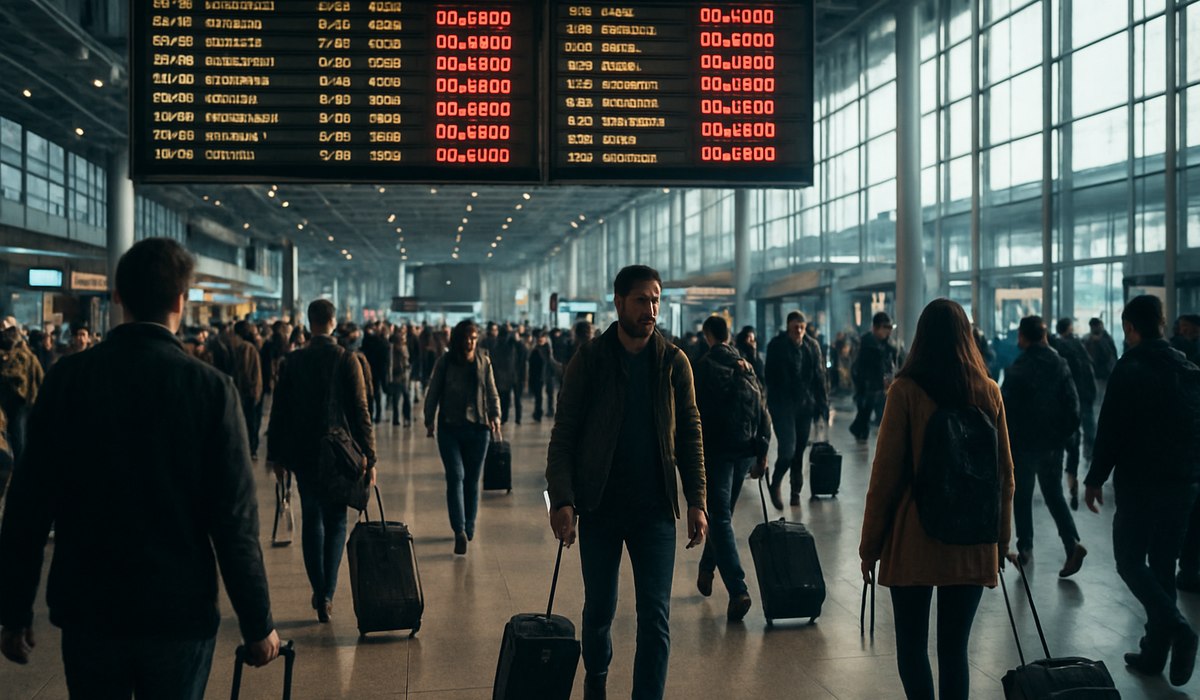
Image generated by AI
Flight Chaos Hits Asian Hubs Amid Spring Travel Peak
Over 3,800 flights faced delays and 260 were cancelled across Asia's busiest airports on April 7, 2026, creating massive disruptions at Tokyo Haneda, Hong Kong, Singapore Changi, Guangzhou, Shanghai, and eight other major regional hubs. The cascading disruptions coincided with the Easter holiday and Qingming Festival—two of Asia's most significant travel periods—leaving thousands of passengers stranded, missing connections, and facing unexpected overnight stays. Full-service and budget carriers operating both domestic and international routes reported knock-on effects as congested hubs struggled to clear backlogs, aircraft remained out of position, and crew scheduling became increasingly chaotic. For remote workers, digital nomads, and traveling professionals, the disruptions represent a critical reminder of how quickly regional air networks can become overwhelmed when multiple stress factors converge simultaneously.
Thousands of Flights Disrupted Across Key Gateways
Recent operational data compiled from aviation tracking platforms reveals the extraordinary scale of disruption unfolding across Asia's premier aviation centers. On April 7 alone, aviation monitoring systems documented more than 3,800 delayed flights and over 260 cancellations concentrated at nine major hubs including Tokyo Narita, Hong Kong International, Singapore Changi, Guangzhou Baiyun, Shenzhen Bao'an, Incheon, Beijing Capital, Manila Ninoy Aquino, and New Chitose in Sapporo. Individual airports reported triple-digit delay counts, with some facilities processing between 200 and 600 delayed departures within a single operational day. The disruption pattern extended across East Asia, Southeast Asia, and South Asia simultaneously, demonstrating how interconnected modern aviation networks have become. When a single major hub experiences weather delays or congestion, the ripple effects immediately impact connecting passengers across dozens of cities and touch thousands of individual travelers within hours.
Weather, Congestion and Infrastructure Strain Converge
Flight chaos hits when multiple disruption factors activate simultaneously, and April 2026 provided a textbook example. Thunderstorms, reduced visibility, and strong winds across the East China Sea and Bay of Bengal triggered rapid air traffic control reductions at hub airports including Tokyo, Shanghai, and Jakarta. These weather delays cascaded throughout entire route networks within hours. Industry reports indicate that on April 3 alone, weather constraints and air traffic control restrictions contributed to nearly 4,000 delayed flights and 300 cancellations at just six major Asian and Middle Eastern hubs.
Simultaneously, passenger volumes surged dramatically during the Easter and Qingming holiday overlap. Immigration data from Hong Kong showed over one million cross-border movements on the first holiday day, with tens of thousands of air travelers departing during peak morning hours. Similar demand spikes materialized at Bangkok, Singapore, Seoul, and Manila, where airport capacity, ground handling resources, and security screening infrastructure operated at maximum stretch. Terminal congestion at Seoul's Incheon Terminal 2 intensified following airline relocations earlier in the year, while maintenance work at Singapore Changi's cargo apron reduced operational flexibility precisely when airports needed maximum maneuverability to absorb irregular operations.
Geopolitical Tensions and Fuel Supply Disruptions
Beyond weather and congestion, geopolitical instability and energy-market pressures increasingly shape Asia-Pacific aviation. Regional business media reported on April 7 that ongoing Middle East conflicts and maritime chokepoint closures have tightened jet fuel supplies, prompting Asian carriers to trim schedules, load extra fuel from home bases, and add refueling stops on certain routes. Airlines across the region adjusted long-haul operations by introducing intermediate stops and temporarily reducing frequencies to affected destinations—measures that increase operating costs while limiting recovery capacity during demand surges or disruption events.
Middle East airspace restrictions forced widespread rerouting and, in some cases, outright service suspensions. Publicly available airline notices confirmed that flights linking Singapore and Hong Kong with Gulf destinations faced cancellations or frequency reductions, with suspensions extended into late April and May. Passengers traveling between Southeast Asia and the Middle East increasingly require alternative routings through European hubs, Central Asian airports, or African gateways—adding 6 to 14 hours to typical journey times.
Impact on Nomadic Professionals and Remote Workers
For location-independent workers, digital nomads, and traveling professionals, flight chaos hits hardest when it disrupts predictable travel windows. The April 2026 disruptions occurred precisely when many remote workers plan quarterly moves between Asian hubs, create seasonal visa-runs, or coordinate team meetings across time zones. Missed connections force unplanned hotel stays, drain accommodation budgets, and disrupt carefully scheduled client calls and collaborative work sessions.
Nomadic professionals depending on Asia's budget carrier networks—AirAsia, Cebu Pacific, Lion Air, SpiceJet—faced particular challenges, as these carriers operate densely connected point-to-point networks that amplify the impact of single-point delays. A four-hour delay departing Manila cascades into missed Bangkok connections, subsequently affecting Chiang Mai arrivals and downstream Hanoi movements. For visa-conscious travelers, missed connections can trigger unintended overstays, visa violations, or mandatory border runs that weren't part of the original itinerary. Remote workers relying on stable internet connectivity and accommodation reservations face exponential complications when flight disruptions compound across multiple consecutive days.
Affected Airlines and Route Impact Summary
| Airline | Region of Operations | Primary Impact | Status as of April 7 |
|---|---|---|---|
| Japan Airlines (JAL) | Domestic Japan + East Asia | Tokyo Haneda hub delays, 150+ flights | Ongoing disruption |
| All Nippon Airways (ANA) | International + Domestic Japan | Narita/Haneda congestion backlog | Cascading delays |
| Cathay Pacific | Hong Kong hub connecting flights | 200+ delays at HKG | Extended waits |
| Singapore Airlines | Singapore Changi + regional | Terminal constraints limiting flexibility | Recovery mode |
| China Eastern/Southern | Guangzhou/Shanghai hubs | Weather delays + congestion compounds | Severe delays |
| AirAsia/AirAsia X | Budget network across Asia | Point-to-point network failures amplify delays | High disruption |
| Korean Air/Asiana | Incheon hub operations | Terminal 2 constraints, rerouting delays | Moderate-to-severe |
| Thai Airways/Thai Lion | Bangkok + Southeast Asia | Connection hub delays affecting regional flights | Ongoing issues |
What Travelers Should Know Now
The April 2026 flight chaos hits reveal several critical realities for anyone traveling across Asia during peak seasons. First, when weather disrupts major hub airports, expect cascading delays throughout connecting networks—not just at the weather-affected airport. A Tokyo thunderstorm immediately impacts flights departing Singapore six hours later. Second, holiday travel periods amplify every operational constraint: weather becomes more disruptive, congestion becomes severe, and airline recovery capacity becomes exhausted.
Real-time flight tracking remains essential. Check FlightAware every 2-3 hours before travel and every 30 minutes once at the airport. Understand your passenger rights under regional aviation regulations. The US DOT Air Consumer Protection Division provides comprehensive guidance applicable to US carriers, while IATA regulations govern many international flights. Review your specific airline's disruption policies: refund eligibility, meal/hotel reimbursement terms, and rebooking procedures vary significantly. Consider travel insurance covering flight disruptions, particularly during peak season travel.
Traveler Action Checklist
- Check FlightAware real-time flight status 24
Disclaimer
This article is for informational and educational purposes only. It does not constitute legal, financial, or professional advice. While we strive to provide accurate and up-to-date information, travel policies, regulations, and conditions change rapidly. Always verify information with official sources before making travel decisions. Nomad Lawyer makes no representations about the accuracy, reliability, completeness, or suitability of the information provided. Readers should consult qualified professionals for advice specific to their circumstances. The views expressed in this article are those of the author and do not necessarily reflect the views of Nomad Lawyer.
Preeti Gunjan
Contributor & Community Manager
A passionate traveller and community builder. Preeti helps grow the Nomad Lawyer community, fostering engagement and bringing the reader experience to life.
Learn more about our team →