
Flight Chaos Hits Asia-Gulf Routes as 54 Services Cancelled
Flight chaos hits Asia-Gulf air corridors as Chinese and Hong Kong carriers cancel 54 flights due to Middle East military escalation. Airspace closures force major reroutes and passenger disruptions in 2026.

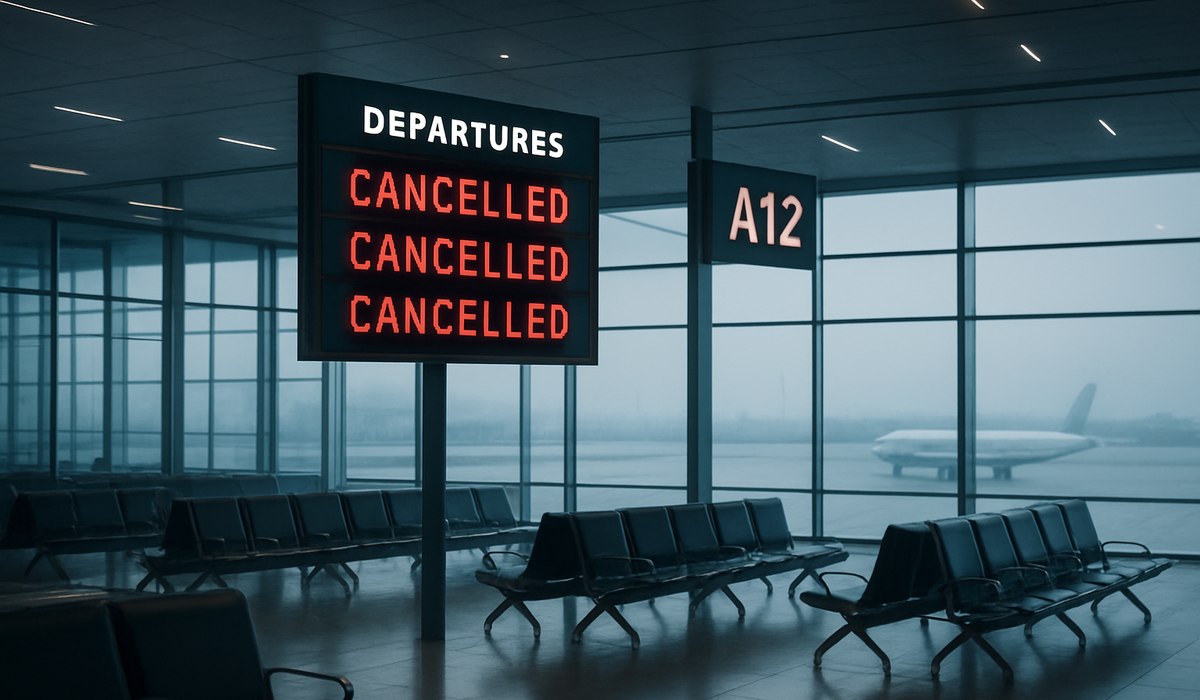
Image generated by AI
Fifty-Four Flights Cancelled as Middle East Military Crisis Disrupts Asia-Gulf Connectivity
Flight chaos hits Asia-Gulf routes as 54 services between China, Hong Kong and Middle Eastern hubs face immediate cancellations. The disruptions stem from escalating military activity across the Middle East, which has triggered unprecedented airspace closures affecting critical global aviation corridors. Chinese carriers including Air China, China Eastern Airlines, China Southern Airlines and Sichuan Airlines have borne the brunt of cancellations, with Hong Kong-Dubai routes experiencing particularly severe disruption. The bottleneck affects both passenger and cargo operations at a moment when Asia-Gulf connectivity underpins billions in regional trade and labor mobility.
Airspace Closures Force Immediate Flight Cancellations
Recent military escalation involving multiple regional powers has created a patchwork of airspace restrictions across Iran, Iraq, Israel, Kuwait, Qatar and Bahrain. These closures have effectively compressed the primary corridor connecting East Asia to Gulf commercial hubs, forcing airlines to choose between costly diversions and service suspensions.
Flight chaos hits operations management systems as carriers scramble to reroute aircraft through alternative pathways. Northern routes via Turkey and southern detours via Egypt now carry significantly longer flight times, increasing fuel consumption and operational costs. Industry monitors via FlightAware confirm that dozens of daily flights have been grounded or significantly delayed. The heightened operational risk means even where limited airspace has reopened, airlines remain cautious about restoring full schedules. Regulatory advisories from national aviation authorities continue evolving, preventing carriers from committing to firm timetables.
Chinese and Hong Kong Carriers Bear Brunt of Disruption
Hong Kong-based carriers operate the majority of the 54 cancelled flights, with at least 27 services on the Hong Kong-Dubai route alone. This pairing—historically one of Asia's busiest long-haul connections—has seen both widebody passenger aircraft and cargo freighters removed from schedules.
Additional cancellations affect Gulf gateways including Doha and Abu Dhabi, where Chinese carriers traditionally compete fiercely for market share. Flight chaos extends into cargo networks that move electronics, textiles and perishables between Asia and European markets. Mainland Chinese airlines account for significant cancellation volumes on broader China-Middle East sectors, reflecting their dominant position in this region. Travelers relying on these carriers face extended waits for rebooking, with customer service hotlines in Hong Kong and mainland China reporting unprecedented call volumes.
Rising Costs and Route Viability Questions
Extended diversions have pushed operational costs to unsustainable levels for many carriers. Fuel surcharges for longer routing options now exceed $1,500 per flight segment, rendering some schedules commercially unviable.
Industry analysts question whether Asia-Gulf routes will recover pre-conflict frequency once airspace reopens. Airlines' capital-intensive investments in regular service patterns face uncertainty that extends visibility to quarters ahead. Cargo forwarders report that freight rates have doubled on alternative routing options, squeezing margins for time-sensitive shipments. Some carriers have permanently restructured networks rather than maintain costly holding patterns. The longer-term question remains whether passenger demand and freight volumes will justify rapid service restoration.
Uncertain Timeline for Service Restoration
Flight chaos persists with no firm recovery date announced by major carriers. Airlines have cited ongoing diplomatic uncertainty and evolving regulatory guidance as reasons for maintaining suspended schedules. Day-by-day schedule adjustments prevent travelers from finalizing firm itineraries, creating cascading disruption across dependent connections.
Gulf-based hubs temporarily scaled back operations during the height of recent military activity, adding indirect disruption beyond airspace closures alone. Some carriers have issued travel waivers extending through May, indicating expectation that full normalization may require weeks. Regional business media coverage emphasizes that repeated short-term suspensions erode confidence among corporate travel managers and freight forwarders who depend on consistent Asia-Gulf connectivity.
What This Means for Travelers: Your Action Checklist
If your journey involves Asia-Gulf-Europe routings or connections through Middle Eastern hubs, immediate action steps will help minimize disruption:
-
Contact your airline directly via phone or airline website to confirm flight status before heading to the airport; do not rely solely on automated email notifications.
-
Check alternative routing options involving Turkey, Egypt or Gulf coast diversions, understanding that detours may add 4-8 hours to total journey time.
-
Request meal and accommodation vouchers if cancellations force overnight delays; review airline policies via the US DOT consumer protection guidelines.
-
Document all cancellation and rebooking communications including confirmation numbers, agent names and timestamps for potential compensation claims.
-
Consult your travel insurance policy regarding coverage for airline-caused disruptions versus force majeure exclusions related to military activity.
-
Track real-time flight operations using FlightAware to identify which specific flights remain operational versus those repeatedly cancelled.
-
Allow 48-72 hours buffer time when rebooking connections, as secondary routing options face their own capacity constraints and potential delays.
Key Data: Flight Disruption Overview
| Metric | Details |
|---|---|
| Total Cancellations | 54 flights on Asia-Gulf routes |
| Primary Route | Hong Kong to Dubai (27 flights) |
| Secondary Hubs | Doha, Abu Dhabi, other Gulf cities |
| Affected Carriers | Air China, China Eastern, China Southern, Sichuan Airlines, Hong Kong-based operators |
| Closure Scope | Iran, Iraq, Israel, Kuwait, Qatar, Bahrain airspace restrictions |
| Cargo Impact | Widebody freighters and bellyhold capacity both affected |
| Estimated Duration | At least through May 2026 based on airline waivers |
| Alternative Routes | Turkey or Egypt diversions add 4-8 hours flight time |
| Fuel Cost Increase | Diversions exceed $1,500 per segment in additional costs |
| Timeline Recovery | Uncertain; depends on diplomatic resolution and regulatory reopening |
FAQ: Flight Chaos Asia-Gulf Routes
Q: Will my flight between Asia and the Gulf definitely be cancelled?
A: Not necessarily. While 54 flights have been cancelled, many carriers continue selective operations. Check directly with your airline and monitor FlightAware for real-time status. Some airlines maintain limited schedules via alternative routing.
Q: Am I entitled to compensation if my Asia-Gulf flight is cancelled due to military conflict?
A: Airlines may invoke force majeure clauses for military-related disruptions, limiting liability. However, review US DOT regulations regarding airline obligations for rebooking and care. International travel may be covered under different national rules.
Q: How much longer will flights take if rerouted via Turkey or Egypt?
A: Northern routes via Istanbul or southern paths via Cairo typically add 4-8 hours to total journey duration compared to direct Middle East corridor transits. Fuel consumption and airfare increases reflect these extended distances.
Q: When will normal Asia-Gulf service resume?
A: No firm date has been announced. Airlines have issued waivers extending through May 2026, suggesting cautious optimism. Full normalization likely requires diplomatic resolution and regulatory reopening of currently restricted airspace.
Related Travel Guides
Disclaimer
This article is for informational and educational purposes only. It does not constitute legal, financial, or professional advice. While we strive to provide accurate and up-to-date information, travel policies, regulations, and conditions change rapidly. Always verify information with official sources before making travel decisions. Nomad Lawyer makes no representations about the accuracy, reliability, completeness, or suitability of the information provided. Readers should consult qualified professionals for advice specific to their circumstances. The views expressed in this article are those of the author and do not necessarily reflect the views of Nomad Lawyer.
Preeti Gunjan
Contributor & Community Manager
A passionate traveller and community builder. Preeti helps grow the Nomad Lawyer community, fostering engagement and bringing the reader experience to life.
Learn more about our team →