
Flight Cancellations Leave Passengers Stranded Across Oman's Key Corridor
Oman Air, Air Arabia, and Flydubai cancel multiple flights on the Muscat–Salalah route in May 2026, stranding passengers and disrupting connecting journeys across the Middle East's busiest travel hubs.

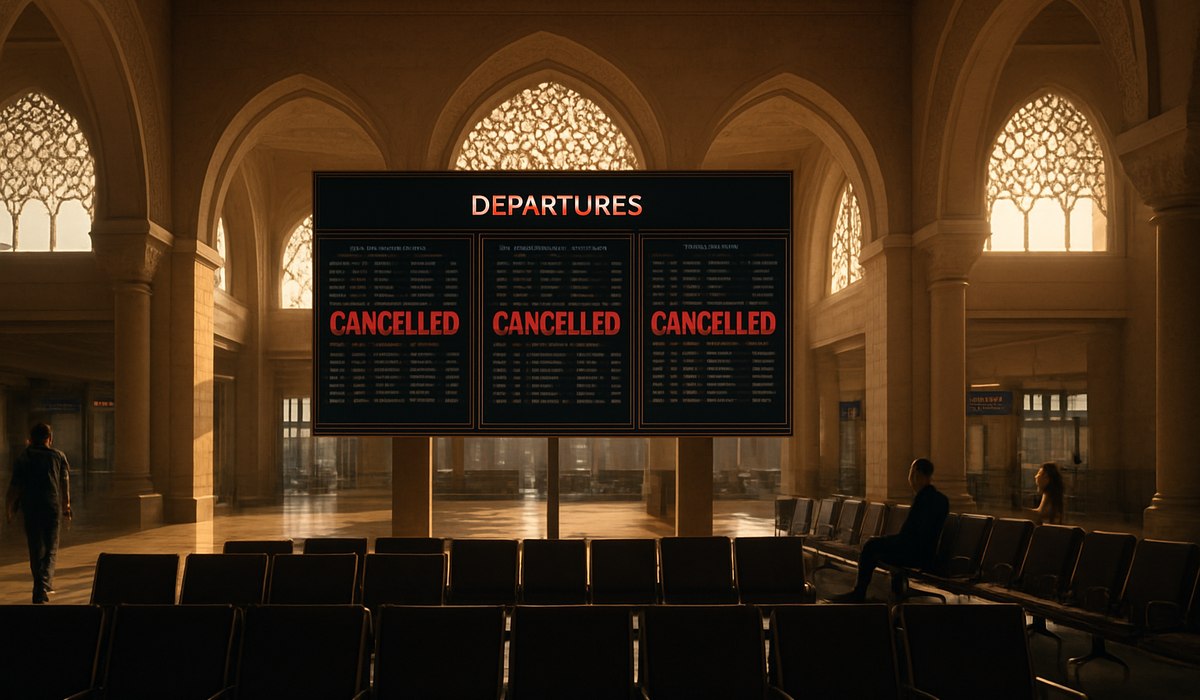
Image generated by AI
Flight Cancellations Leave Hundreds Stranded on Oman's Busiest Domestic Corridor
Regional carriers including Oman Air, Air Arabia, and Flydubai have cancelled at least five scheduled flights on the critical Muscat–Salalah route during early May 2026, creating cascading disruptions for hundreds of connecting passengers. The cancellations come as airlines prioritize international routes while trimming domestic capacity, leaving travelers scrambling to reach onward UAE hubs and beyond. This latest wave of disruptions compounds existing Middle East connectivity challenges affecting business and leisure travelers throughout the Gulf region.
New Wave of Cancellations Hits Muscat–Salalah Corridor
The Muscat–Salalah domestic route represents one of Oman's most essential travel arteries, connecting the capital city with the southern port city of Salalah. Recent airport operational data confirms multiple schedule reductions and last-minute flight cancellations affecting this key corridor during early May. Airlines have removed previously filed flights from booking systems with minimal passenger notification, forcing travelers to accept later departures, seek alternative routings, or request refunds.
The timing proves particularly disruptive because flight cancellations leave passengers vulnerable when connecting onward to Dubai, Sharjah, and other UAE gateways. Muscat has emerged as a critical hub for through-traffic between Asia, Africa, and Europe, making domestic capacity reductions disproportionately impactful. According to FlightAware tracking data, reduced service frequency on this rotation has created bottlenecks affecting downstream international connections. Regional travel advisories confirm Salalah Airport remains operational but faces mounting knock-on effects from broader Middle East capacity constraints.
Ripple Effects on Regional Connections and International Gateways
Flight cancellations leave regional connectivity hanging in the balance as airlines manage broader operational challenges across Gulf airspace. Earlier in April 2026, Flydubai and Air Arabia cancelled over 30 flights in a single day at UAE airports, triggering cascading rebooking chaos that persisted for days. These earlier disruptions intersect directly with current Muscat–Salalah cancellations, creating a complex web of unavailable seats and broken connections.
Passengers previously relying on straightforward Salalah–Muscat–Dubai or Salalah–Muscat–Sharjah itineraries now face elaborate workarounds involving indirect routings, extended layovers, or multi-day delays. Some travelers report rebooking via alternative Gulf hubs like Doha or Abu Dhabi, while others receive refund offers when airline inventory proves exhausted. The layering effect of multiple airline cancellations across the region demonstrates how domestic disruption propagates through interconnected international networks.
Oman Air has extended suspensions on multiple regional routes including Dubai service while maintaining long-haul operations through Muscat. This strategic prioritization of international routes over domestic services reflects industry-wide patterns where airlines protect high-yield international segments while cutting shorter regional legs. For business travelers connecting to Europe or Asia, the resulting delays can jeopardize meetings and time-sensitive commitments.
Airlines Prioritize International Routes Over Domestic Services
Regional carriers operating across the Middle East face mounting operational pressures that explain the prioritization of long-haul international flights over shorter domestic rotations. Flight cancellations leave domestic networks vulnerable because airlines can absorb capacity reductions on these routes while protecting premium international services generating higher revenue yields. Oman Air, Air Arabia, and Flydubai all maintain contingency scheduling protocols allowing rapid timetable adjustments as airspace conditions evolve throughout May 2026.
Industry analysts tracking Middle East aviation note that UAE hub operations continue functioning below normal schedule resilience. This constrained capacity environment forces airlines to make difficult choices between maintaining unprofitable domestic routes and preserving international network integrity. Feeder routes from secondary cities like Salalah face particular exposure since carriers typically protect trunk routes linking major cities first.
The strategic logic behind these cancellations reveals tension between operational sustainability and traveler convenience. Flight cancellations leave routes with lower load factors vulnerable to suspension, even when those routes serve essential connectivity functions. According to FAA standards and international airline regulations, carriers must balance commercial viability with service continuity commitments. The current May 2026 disruptions demonstrate how regional operational pressures override connectivity considerations.
What Passengers Can Do: Traveler Action Checklist
Passengers affected by flight cancellations leave situations should take immediate, documented action to protect their rights and secure alternative arrangements:
-
Contact Your Airline Immediately: Call the airline's customer service line directly within two hours of receiving cancellation notice. Request written confirmation of the cancellation and your rebooking options in email format for documentation purposes.
-
Document Everything: Photograph or screenshot booking confirmations, cancellation notices, boarding passes, and receipts. Save all airline communications, including emails and chat transcripts, to support potential compensation claims.
-
Know Your Rights: Check US DOT consumer protection guidelines and relevant Gulf aviation authority regulations applicable to your ticket origin. UAE rules typically mandate meals and accommodation for significant delays; Oman and other jurisdictions maintain separate passenger protection frameworks.
-
Explore Rebooking Options: Request rebooking on the next available flight operated by your airline or partner carriers. If no same-day alternative exists, ask for written confirmation that accommodation and meals will be provided until your rebooked flight departs.
-
Collect Receipts: Retain all expense receipts for meals, transportation, accommodation, and other disruption-related costs. These documents support reimbursement claims under airline and regulatory passenger protection provisions.
-
File a Formal Complaint: Submit written complaints to your airline and relevant aviation regulators including Oman's General Authority of Civil Aviation and the UAE General Civil Aviation Authority, including all supporting documentation.
-
Consider Compensation Claims: Research airline compensation requirements for your specific route and ticket type. Some jurisdictions mandate compensation for cancelled flights, while others restrict claims to refunds or rebooking costs.
Current Flight Status Tracking and Monitoring
Real-time flight tracking platforms provide essential information for passengers managing Muscat–Salalah disruptions and monitoring alternative routing options. FlightAware offers live tracking for all commercial flights operating through Oman and UAE airports, displaying current delays, cancellations, and equipment changes. Passengers should monitor these platforms continuously during May disruptions to identify emerging cancellation patterns and catch alternative flight opportunities.
Airline mobile applications and the official Muscat International Airport website provide official schedule information, though cancellation notices sometimes appear hours after passenger notification begins. Independent tracking platforms often detect disruptions faster than official channels, making real-time monitoring essential for travelers holding same-day connections. Regional aviation news sources also publish breaking updates on corridor-specific disruptions affecting Muscat, Salalah, Dubai, and other major hubs.
Compensation, Rights, and Regulatory Guidance
Passengers affected by flight cancellations leave situations possess protection rights varying by jurisdiction, ticket type, and specific circumstances. UAE aviation law typically requires airlines to provide meals, accommodation, and communication services for significant delays or overnight disruptions when departing from Emirates airports. Oman maintains separate passenger protection regulations through the General Authority of Civil Aviation and Ports, while European Union regulations apply to passengers holding EU-issued tickets or traveling with EU carriers.
Documentation proves essential for pursuing compensation claims. Passengers should retain boarding passes, booking confirmations, cancellation notices, and expense receipts demonstrating disruption-related costs. Many carriers offer future travel credits or refunds as initial remedies, though additional compensation may apply under specific regulatory frameworks. Corporate travel managers should cons
Disclaimer
This article is for informational and educational purposes only. It does not constitute legal, financial, or professional advice. While we strive to provide accurate and up-to-date information, travel policies, regulations, and conditions change rapidly. Always verify information with official sources before making travel decisions. Nomad Lawyer makes no representations about the accuracy, reliability, completeness, or suitability of the information provided. Readers should consult qualified professionals for advice specific to their circumstances. The views expressed in this article are those of the author and do not necessarily reflect the views of Nomad Lawyer.
Kunal K Choudhary
Co-Founder & Contributor
A passionate traveller and tech enthusiast. Kunal contributes to the vision and growth of Nomad Lawyer, bringing fresh perspectives and driving the community forward.
Learn more about our team →