
Flash Flood Warnings Disrupt US Travel Across Northeast, Southwest, and Interior West in 2026
Intense late-summer storm systems and monsoon moisture trigger widespread flash flood warnings across the US, disrupting road networks, aviation hubs, and tourism in 2026.

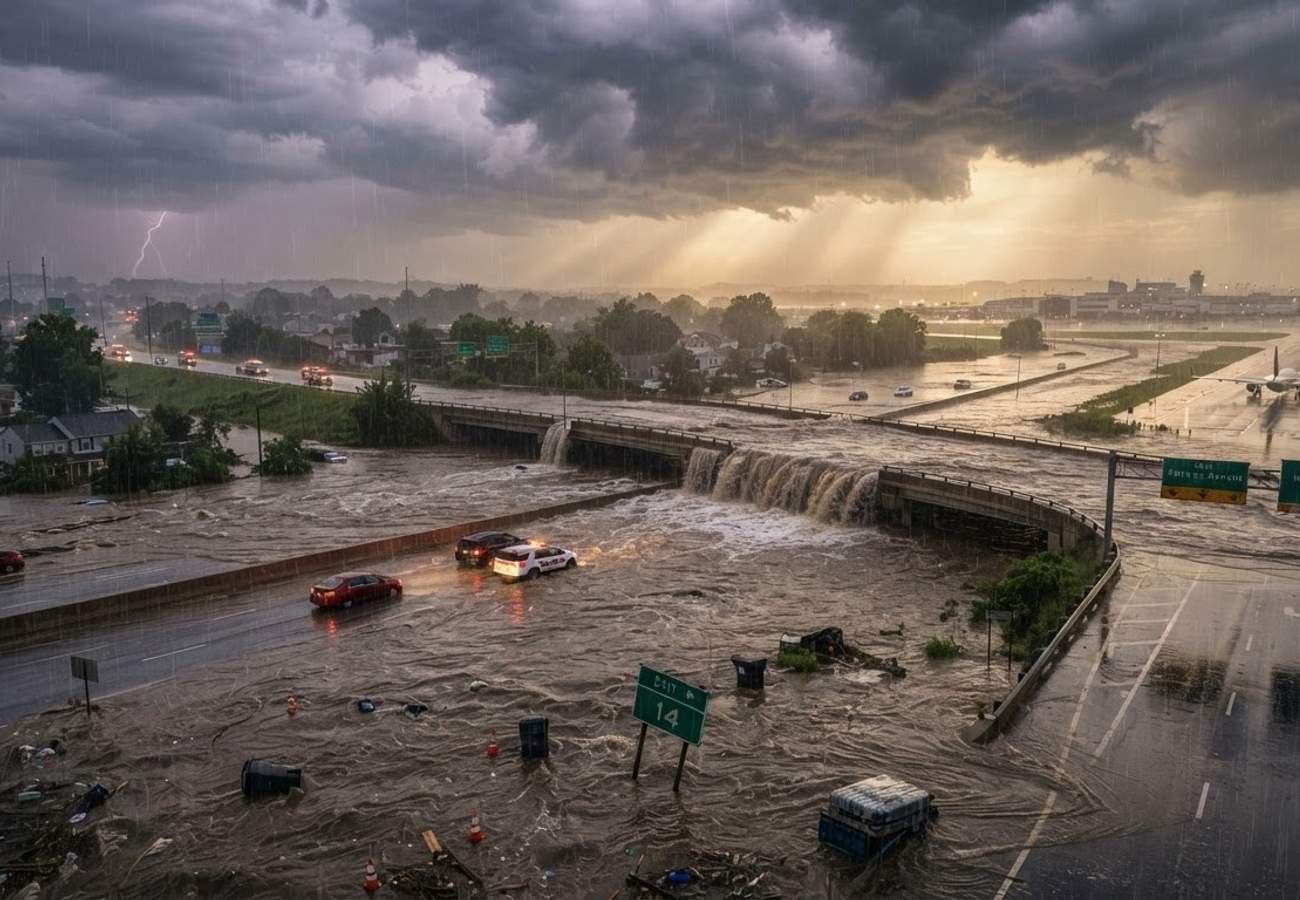
Image generated by AI
Widespread flash flood warnings are currently destabilizing road transportation and aviation networks across multiple US regions. Intense downpours are overwhelming drainage systems, stranding motorists and triggering emergency evacuations in high-risk zones.
Regional Disruption Analysis
Current meteorological data indicates a multi-front weather crisis affecting late-summer tourism and transit. The disruptions are categorized by regional triggers and specific geographic vulnerabilities.
Northeast and Mid-Atlantic
Powerful storm cells moving along the coast have caused significant inundation. Our analysis of recent reports confirms:
- New Jersey: Flooded roadways and damaged beach infrastructure have stranded motorists.
- Urban Centers: Rapid flooding of city streets and coastal access roads has disrupted commuting and airport transfers.
- Infrastructure: Low-level hotel parking and waterfront lots are reporting rapid inundation.
Interior West and Southwest
The risk profile in these regions is exacerbated by terrain and previous environmental damage:
- Colorado: Specific flash flood warnings are active for the Aspen Acres burn scar near Beulah and low-lying areas in east central Douglas County.
- Arizona and California: Monsoon-driven moisture surges are creating hazardous conditions in slot canyons, dry washes, and urban roadways.
- Environmental Factors: Wildfire burn scars are increasing runoff rates, leading to fast-rising creeks and arroyos.
Southern Plains and Texas
Following severe July floods in the Guadalupe River basin, the region remains hypersensitive. Saturated ground conditions mean that any new tropical or frontal rainfall may trigger immediate flash flood emergencies.
Flight and Airport Impact Breakdown
While primary runways are engineered for drainage, the ripple effects of these storms impact the broader aviation ecosystem:
- Ground Operations: Heavy runoff is causing ponding on taxiways and airport access roads, slowing vehicle movements.
- Visibility: Intense rain cells are reducing visibility, leading to arrival and departure metering.
- Network Effects: Delays at major Mid-Atlantic and Northeast hubs are creating cascading connection failures for domestic flights nationwide.
- Transit Access: Flooded urban corridors are delaying passengers attempting to reach terminals via ride-share or public transit.
Passenger Rights & Advisory
For the affected traveler, weather-related disruptions often lead to confusion regarding compensation. Our analysis of current aviation policies and DOT guidelines suggests the following:
Flight Cancellations and Delays Under US Department of Transportation (DOT) guidelines, airlines are generally not required to provide monetary compensation for delays caused by "acts of God" or weather. However, for the affected passenger, this means:
- Rebooking: You are entitled to be rebooked on the next available flight to your destination at no additional cost.
- Refunds: If the airline cancels your flight due to weather and you choose not to travel, you are entitled to a full refund of the unused portion of your ticket, regardless of the fare type.
- Duty of Care: While not as stringent as EU261, many carriers provide meal or hotel vouchers if the delay is extended, though this is often at the airline's discretion during weather events.
Road and Rental Vehicle Liability Travelers using rental cars in flood-prone areas should be aware that "driving through floodwaters" is often categorized as negligence. This may void standard insurance coverage or CDW (Collision Damage Waiver) policies.
Emergency Action Steps
- Wireless Emergency Alerts (WEA): Ensure these are enabled on smartphones to receive location-specific warnings.
- Route Validation: Use real-time traffic data to avoid low-water crossings and highway dips.
- Accommodation Audit: Verify if your rental or hotel is located within a designated floodplain or near bayous.
Industry Analyst View
The increasing frequency of "flash flood emergencies"—a tier above standard warnings—indicates a shift in late-summer weather patterns. The convergence of wildfire burn scars in the West and saturated urban drainage in the East creates a volatile environment for the travel industry.
We are seeing a trend where "familiar" infrastructure is failing under unprecedented rainfall volumes. For the travel sector, this necessitates a move toward more dynamic, real-time communication between National Weather Service (NWS) data feeds and consumer-facing travel apps to prevent passengers from entering high-risk corridors.
Stay vigilant and prioritize safety over itinerary adherence during active flash flood warnings.
Related Travel Guides
Disclaimer
This article is for informational and educational purposes only. It does not constitute legal, financial, or professional advice. While we strive to provide accurate and up-to-date information, travel policies, regulations, and conditions change rapidly. Always verify information with official sources before making travel decisions. Nomad Lawyer makes no representations about the accuracy, reliability, completeness, or suitability of the information provided. Readers should consult qualified professionals for advice specific to their circumstances. The views expressed in this article are those of the author and do not necessarily reflect the views of Nomad Lawyer.
Preeti Gunjan
Contributor & Community Manager
A passionate traveller and community builder. Preeti helps grow the Nomad Lawyer community, fostering engagement and bringing the reader experience to life.
Learn more about our team →