Finnair Tokyo Japan Flights Summer Expansion Guide 2027

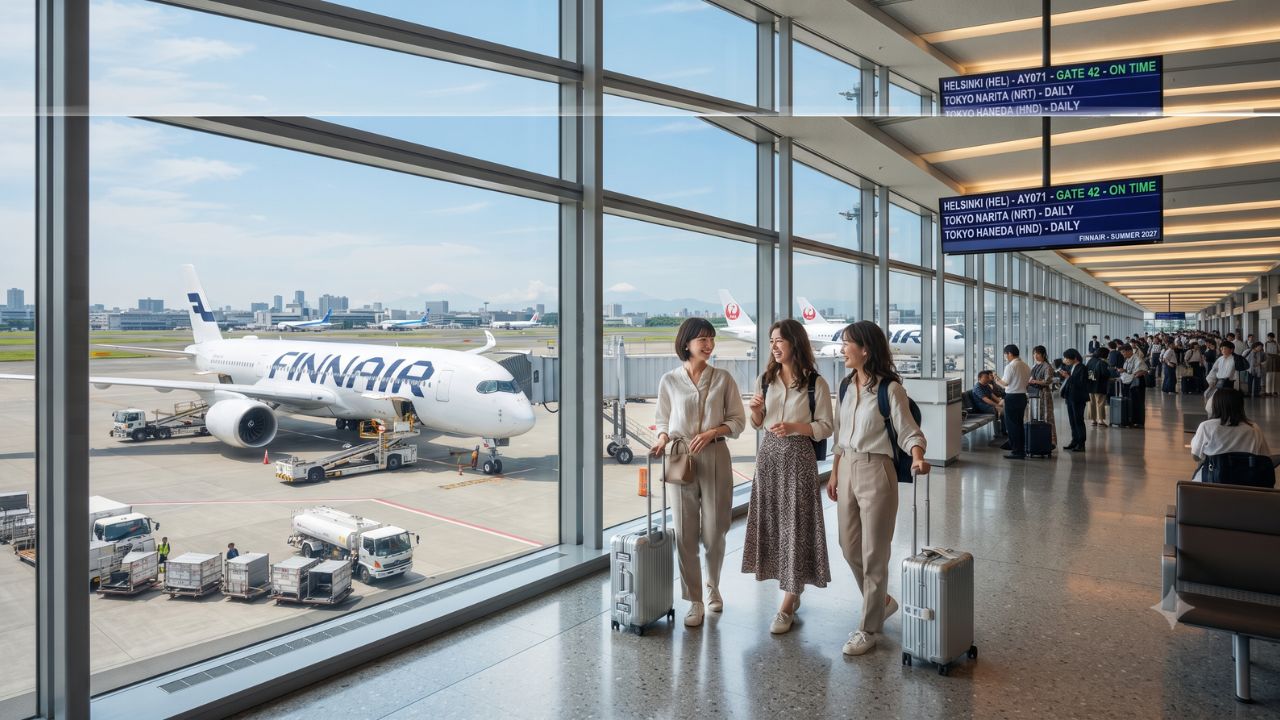
Connecting northern Europe directly with two separate Tokyo airports simultaneously, Finnair is scaling its Japanese flight schedule to a historic peak of 32 weekly frequencies for summer 2027. Operating double-daily rotations on its flagship Helsinki to Tokyo Narita corridor between May 12 and August 14, 2027, alongside daily services to Tokyo Haneda, the Nordic flag carrier stands as the only European airline providing direct seasonal links into central Japan’s industrial and craft heartland of Nagoya.
The operational expansion represents a strategic leap from the 28 weekly Japanese flights scheduled during summer 2026. By staging departures through Helsinki Airport’s streamlined compact transfer hub, Finnair delivers seamless sub-hour European connections for travelers heading into Tokyo, Osaka Kansai, and the historic Tokai region during Japan’s energetic summer festival season.
Dual-Airport Tokyo Access: Narita and Haneda Network Strategy
Deploying dual-hub schedules into both Tokyo Narita (NRT) and Tokyo Haneda (HND) provides international travelers with distinct operational advantages. While Tokyo Haneda sits just 15 kilometers south of central Tokyo—ideal for business travelers targeting Marunouchi or Ginza—Tokyo Narita serves as the premier gateway for travelers connecting to regional Japanese airports or venturing east toward the Boso Peninsula and Chiba coastline.
The temporary addition of a second daily Narita rotation between May 12 and August 14, 2027, captures the surge in European summer vacationers, student exchanges, and cultural tours. Passengers traveling on Finnair’s Airbus A350-900 widebody fleet benefit from non-reclining AirLounge business suites, Nordic-inspired dining, and synchronized arrival banks that link into Japan’s high-speed Shinkansen bullet train grid.
Beyond the Tokyo megalopolis, the airline’s broader network anchors year-round services to Osaka Kansai (KIX) and seasonal summer flights to Chubu Centrair International Airport in Nagoya (NGO). As the sole European carrier serving Nagoya during the summer months, Finnair provides a direct conduit to the UNESCO-inscribed timber villages of Shirakawa-go and the historic pottery towns of Aichi Prefecture, bypassing crowded transit corridors in Tokyo.
What Makes Tokyo and Central Japan Different
Tokyo operates as a masterclass in urban equilibrium, where ultra-modern robotic convenience coexists harmoniously with centuries-old Shinto traditions. Rather than existing as a single centralized downtown, Tokyo functions as a constellation of distinct urban villages, each maintaining its own architectural identity, local dialect nuances, and culinary specialties.
Wandering the historic alleys of Yanaka and Nezu reveals wooden machiya houses, family-run tea shops, and quiet residential shrines that survived wartime destruction. In contrast, districts like Shibuya, Shinjuku, and Akihabara deliver dizzying neon vistas, multi-level electronic arcades, and underground depachika food halls showcasing seasonal white peaches, artisan wagashi sweets, and hand-rolled sushi.
Central Japan, accessible via Nagoya and Osaka, offers a dramatically different cultural rhythm. The Tokai and Chubu regions represent the cradle of Japanese craftsmanship and samurai history. Here, travelers can explore feudal castles like Inuyama and Matsumoto, walk the preserved post towns of the historic Nakasendo trail in the Kiso Valley, and experience traditional cormorant fishing along the pristine Nagara River.
Visitor Insider Tips
Maximizing a summer expedition to Japan requires tactical planning regarding airport arrivals, heat management, and seasonal festivals. Consider these local recommendations:
- Airport Transfer Tactics (Narita vs. Haneda): If landing at Tokyo Haneda, take the Tokyo Monorail to Hamamatsucho Station (13 minutes) or the Keikyu Airport Line straight into Asakusa and Ginza. If landing at Tokyo Narita, board the Keisei Skyliner to reach Nippori and Ueno in 36 minutes, or take the JR Narita Express for direct access to Shinjuku and Shibuya.
- Beating the Summer Humidity: Japanese midsummer (July and August) is intensely hot and humid. Follow local habits: carry a small tenugui hand towel, purchase cooling body wipes (hiyashi sheets) and frozen green tea bottles from ubiquitous convenience stores, and plan temple visits for early morning before 8:30 AM.
- Navigating Matsuri Festivals: Summer in Tokyo is marked by spectacular neighborhood matsuri (festivals) and fireworks displays (hanabi taikai), including the historic Sumidagawa Fireworks Festival. Arrive at viewing locations along riverbanks at least three hours early with a blue plastic picnic tarp, and wear a breathable cotton yukata robe rented from local neighborhood shops.
- Digital Transit and Cash Etiquette: Add a digital Suica or Pasmo transit card to your Apple Wallet or Google Wallet before departure for tap-and-go travel on all subways, buses, and convenience store purchases. While digital payments are widespread, always carry 5,000 to 10,000 yen in physical cash for neighborhood shrine donation boxes and family-run ramen stalls.
- Official Travel Portals and Rail Passes: For regional train itineraries and festival schedules, consult the official Japan National Tourism Organization and Tokyo Metropolitan Government Tourism platforms before booking individual excursion tickets.
Cultural and Environmental Context
The deepening air route connections between Finland and Japan build on deep cultural affinities shared between Nordic and Japanese societies. Both cultures share a profound reverence for raw nature, seasonal food transitions, minimalist design aesthetics, and bathhouse rituals—exemplified in Finnish sauna culture and Japanese onsen traditions.
From an environmental standpoint, Finnair has adapted its long-haul operations following airspace closures over Eurasia, optimizing polar and southern flight corridors to minimize fuel consumption. At its home base in Helsinki Airport (HEL), the airline collaborates with Neste to integrate sustainable aviation fuel (SAF), supporting industry-wide decarbonization goals.
On the ground in Japan, tourism authorities are actively directing international visitors beyond the heavily trafficked "Golden Route" (Tokyo-Kyoto-Osaka) to reduce urban congestion. Encouraging arrivals into secondary gateways like Nagoya supports regional economic revitalization across rural prefectures. Visitors are encouraged to support local artisans, stay in community-run minshuku farm stays, and visit cultural landmarks protected under the UNESCO World Heritage Centre, ensuring tourism revenue sustains traditional timber crafts and regional farming heritage.
FAQ: Visiting Tokyo with Finnair 2027
How many weekly flights will Finnair operate to Japan in summer 2027?
Finnair will operate up to 32 weekly flights to Japan during summer 2027, including double-daily flights to Tokyo Narita, daily flights to Tokyo Haneda, and services to Osaka and Nagoya.
What are the dates for the double-daily Tokyo Narita service?
The additional daily frequency on the Helsinki–Tokyo Narita route operates during the peak summer window from May 12 to August 14, 2027.
Which European airline flies directly to Nagoya during summer?
Finnair is the only European airline offering direct scheduled flights to Nagoya Chubu Centrair Airport during the summer season.
Do European and North American travelers need a visa for tourist trips to Japan?
No. Citizens of most European countries, the United States, Canada, and Australia can enter Japan visa-free for tourism stays of up to 90 days.
Related Travel Guides
- Minister Bartlett Heads to Antigua for Caribbean Travel Marketplace 2026, Advocates Regional Tourism Resilience and Integration
- Ministry of Culture and KTO Launch 2026 Autumn Travel Month Offering Rail Passes and Accommodation Subsidies Across South Korea
- Arizona Haboob Dust Storm Slams Phoenix Casa Grande Pinal on July 4 Weekend 2026 Travel Chaos
This article is for informational purposes. Flight routes, passenger regulations, visa rules, and transit advisories are subject to change by airlines and aviation authorities. Readers are advised to verify schedules and travel documentation with relevant carriers and border agencies before departure.
Related Stories

Copenhagen and Reykjavik Lead 2026 Global Safest Cities Rankings for Holiday Tourism
Etihad EY800 Abu Dhabi to Tokyo Narita Delays: Logistics Guide for 2026 Travelers