
FIFA World Cup 2026 Travel Surge: Host City Flight Bookings, FIFA PASS Visas, and Transit Logistics

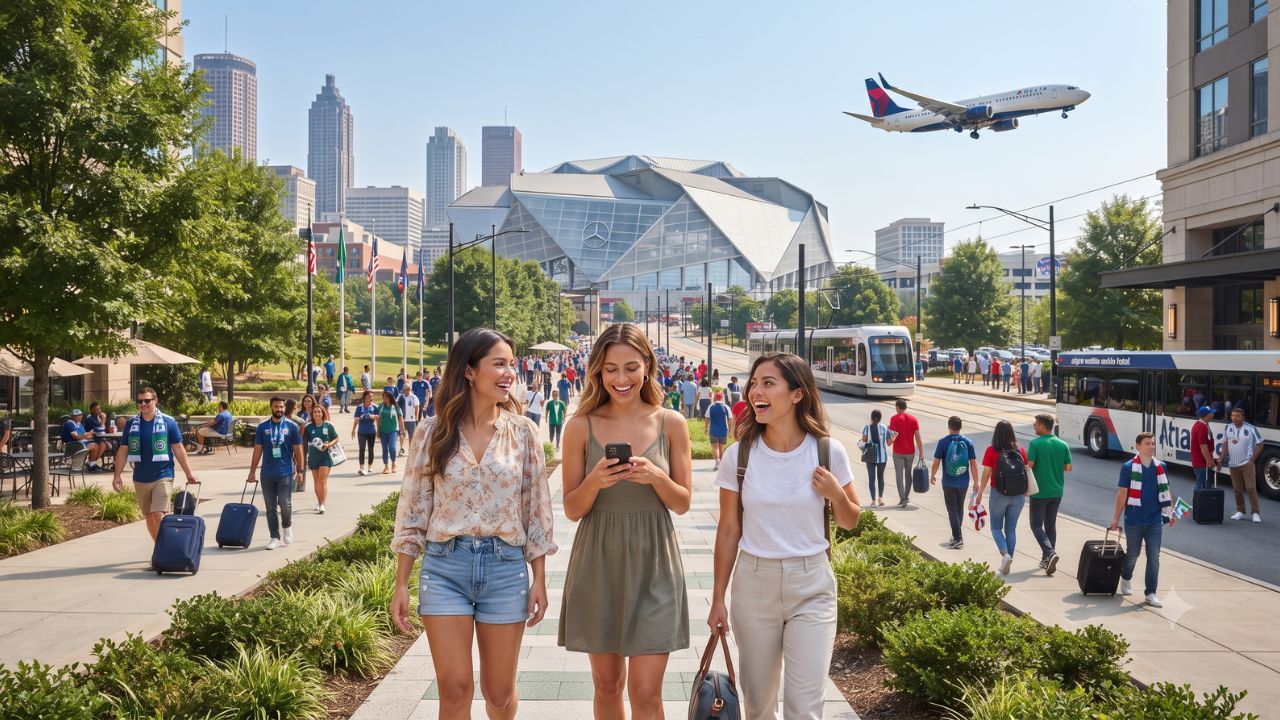
A 67% surge in advance international flight bookings for Monterrey and a 42% spike in Dallas confirm that the 2026 FIFA World Cup is driving an unprecedented cross-border aviation migration across North America. According to advance reservation analytics compiled by travel intelligence platform Sojern, international supporters are securing flight itineraries months ahead of traditional leisure booking curves. With the tournament expanding to 48 national teams and 104 matches across 16 metropolitan regions in the United States, Canada, and Mexico, federal authorities and airport operators are deploying expedited clearance programs to manage millions of arriving spectators.
To resolve historic consular backlogs that threatened international attendance, the U.S. Department of State and soccer's governing body launched the FIFA Priority Appointment Scheduling System (FIFA PASS). By granting verified match ticket holders expedited access to non-immigrant B-1/B-2 visa interview slots at American embassies worldwide, federal authorities seek to balance border security with passenger mobility. As host markets from Kansas City to Toronto modernize terminal corridors and rail infrastructure, the tournament serves as a stress test for North American transit integration.
Macro Logistics: Inside the 48-Team Tri-Nation Tournament Footprint
The 23rd edition of the FIFA World Cup represents the largest operational undertaking in global sports administration. Expanding from the 32-nation format maintained since 1998 to 48 teams, the tournament distributes 104 fixtures across three sovereign nations:
- United States (11 Host Venues): Atlanta (Mercedes-Benz Stadium), Boston (Gillette Stadium), Dallas (AT&T Stadium), Houston (NRG Stadium), Kansas City (Arrowhead Stadium), Los Angeles (SoFi Stadium), Miami/Fort Lauderdale (Hard Rock Stadium), New York/New Jersey (MetLife Stadium, host of the Final), Philadelphia (Lincoln Financial Field), San Francisco Bay Area (Levi's Stadium), and Seattle (Lumen Field).
- Canada (2 Host Venues): Toronto (BMO Field) and Vancouver (BC Place).
- Mexico (3 Host Venues): Guadalajara (Estadio Akron), Mexico City (Estadio Azteca), and Monterrey (Estadio BBVA).
Coordinating transit across three federal customs systems requires extensive synchronization. Joint assessments by the U.S. Travel Association and the International Air Transport Association (IATA) confirm that multi-venue tournaments generate distinct passenger profiles: 65% of international attendees plan extended itineraries spanning 6 to 12 or more days, while 48% of early flight reservations represent solo travelers who distribute discretionary spending across regional hotels, independent dining, and transit networks.
Host City Aviation Performance: Dissecting Advance Booking Velocity
Early reservation metrics indicate that secondary and tertiary aviation gateways are outperforming established coastal megalopolises in percentage growth:
| Host Market & Venue | YoY Advance Flight Booking Growth | Strategic Regional Transport & Infrastructure Focus | Long-Haul Origin Drivers & Booking Characteristics |
|---|---|---|---|
| Monterrey, Mexico (Estadio BBVA) | +67% | Airport terminal capacity expansion & cross-border feeder shuttles | Top overall North American performer; regional Latin American air transit |
| Dallas, Texas (AT&T Stadium) | +42% | Regional rail capacity enhancements & Arlington stadium express lanes | Leading US host market; high transpacific and European long-haul traffic |
| Houston, Texas (NRG Stadium) | +38% | IAH international terminal modernization & METRORail connector corridors | Heavy Central and South American passenger transfers |
| Kansas City, Missouri (Arrowhead) | +27% | Zero-emission Bus Rapid Transit (BRT) linking MCI Airport to Downtown | Strong domestic and transatlantic fan influx into midwestern hub |
| Boston, Massachusetts (Gillette Stadium) | +17% | MBTA commuter rail event specials linking South Station to Foxborough | Strong UK, Irish, and western European transatlantic arrivals |
| Philadelphia, Pennsylvania (Lincoln Field) | +16% | SEPTA Regional Rail high-frequency express runs from PHL Airport | Steady European bookings paired with Center City hotel clustering |
| Miami/Ft. Lauderdale, Florida (Hard Rock) | +15% | Brightline intercity rail connections linking Orlando, Miami, and Fort Lauderdale | Latin American gateway; strong South American flight searches |
| Atlanta, Georgia (Mercedes-Benz) | +14% | MARTA rail station infrastructure expansions serving stadium gates | High-volume domestic connections via Hartsfield-Jackson (ATL) |
| Toronto, Canada (BMO Field) | +12% | UP Express airport-to-downtown rail expansion & TTC transit boosts | Major Commonwealth source markets led by United Kingdom supporters |
| New York / New Jersey (MetLife Stadium) | +9% | Port Authority bus terminal and NJ Transit Meadowlands Rail Line upgrades | Highest baseline international hotel search volume globally |
| Los Angeles, California (SoFi Stadium) | +8% | LAX Automated People Mover integration & Metro K/C Line transit shuttles | High-yield Asia-Pacific (APAC) long-haul arrivals from Japan and Korea |
| Vancouver, Canada (BC Place) | +8% | TransLink SkyTrain frequency enhancements serving Downtown core | Transpacific gateways; high Canadian transborder travel |
| San Francisco, California (Levi's) | +5% | VTA light rail and Caltrain service expansions to Santa Clara | High corporate hospitality and tech-sector ticket conversions |
| Mexico City, Mexico (Estadio Azteca) | 0% (Flat pacing) | Comprehensive renovations at historic Azteca & Metro Line connections | Extremely high baseline domestic and international passenger volume |
| Guadalajara, Mexico (Estadio Akron) | −9% | Regional highway network upgrades and intercity coach corridors | Early contraction offset by anticipated regional overland transit |
| Seattle, Washington (Lumen Field) | −16% | Sound Transit 1 Line light rail capacity expansions serving Sea-Tac Airport | Early dip expected to reverse via domestic West Coast short-haul demand |
The data confirms that sports travelers demonstrate lower price sensitivity and longer planning horizons than routine holidaymakers. The United Kingdom represents the largest long-haul origin market, commanding 19.5% of total international flight bookings into US host cities—more than double its baseline share of hotel reservations (8.5%). Canada accounts for 18.4% of US host city flights, followed by South Korea (4.1%), Japan (3.9%), France (3.1%), Spain (2.1%), and Italy (2.0%).
Significantly, Latin American demand exhibits massive latent potential. Defending champion Argentina generates 8.2% of global flight searches for tournament dates, yet accounts for only 1.3% of confirmed bookings. This conversion gap indicates that thousands of supporters are awaiting match draw confirmations, consular interview dates, and charter flight schedules before finalizing tickets.
Border Protocols: The Mechanics of FIFA PASS and the ESTA Framework
To prevent consular backlogs from disrupting tournament attendance, federal agencies deployed targeted visa processing pathways through the U.S. Department of State:
- The FIFA PASS Framework: Designed specifically for non-immigrant B-1/B-2 visitor visa applicants holding valid match tickets purchased directly from FIFA, the system allows eligible fans to bypass regular consular appointment queues. After verifying ticket credentials on the FIFA portal and submitting Form DS-160, applicants access reserved, expedited interview slots at US embassies and consulates globally. The benefit extends to spouses and unmarried children under 21. While the system guarantees accelerated interview scheduling, standard biometric screening and statutory eligibility standards under the Immigration and Nationality Act remain strictly enforced.
- The Visa Waiver Program (VWP) & ESTA: Citizens from 42 designated Visa Waiver countries—including the United Kingdom, France, Germany, Japan, Australia, and South Korea—do not require a visa or FIFA PASS. Instead, travelers must obtain an approved Electronic System for Travel Authorization (ESTA) prior to boarding. Valid for two years or until passport expiration, ESTA permits multiple entries of up to 90 days. Federal authorities advise travelers to apply at least 72 hours before flight departure.
Expert Analysis: Airfare Compression, Transit Friction, and Hotel Curves
The operational reality of moving millions of international visitors across North America creates profound pricing and logistical pressures.
For travelers booking this route, the direct consequence is extreme airline seat compression across secondary hub routes. Unlike primary coastal gateways like New York (JFK) or Los Angeles (LAX) that absorb hundreds of wide-body flights daily, markets such as Kansas City (MCI) and Dallas-Fort Worth (DFW) face unprecedented spikes in international arrivals. Transatlantic and transpacific carriers cannot easily reposition additional long-haul wide-body aircraft to secondary airports without disrupting global networks. As a result, long-haul travelers who hesitate to book flights six to eight months in advance face multi-segment domestic connections and inflated economy fares.
The pricing pressure this creates means that hotel inventory follows a compressed, high-yield booking curve. While flight bookings lock in early, historical mega-event data indicates that major hotel reservations solidify within 6 to 10 weeks of kickoff. In primary markets like New York, Dallas, and Miami, hotel operators implement non-refundable reservation policies, mandatory four-night minimum stays, and elevated room-rate multipliers. Travelers who attempt to secure accommodations near stadium districts without confirmed match tickets risk paying three to four times standard seasonal rates.
Furthermore, cross-border multi-match itineraries introduce border-control friction. Supporters following national teams across group-stage matches in Mexico, the United States, and Canada will navigate three distinct border jurisdictions within ten days. Each border crossing requires verified entry credentials, biometric checks, and customs declarations. Travelers who fail to confirm multi-entry visa permissions or ESTA validity risk transit refusal between tournament host nations.
Actionable Traveler Guidance: Coordinating Tournament Itineraries
Navigating North American host cities during the 2026 World Cup requires disciplined logistical preparation:
- Initiate Consular Processing Immediately: Match ticket holders requiring a US visitor visa must initiate their FIFA PASS registration immediately upon ticket confirmation. Ensure Form DS-160 details match ticket identity credentials exactly to prevent consular processing rejections.
- Audit Multi-Nation Entry Requirements: If your itinerary spans matches in Toronto, Vancouver, Mexico City, or Guadalajara, confirm independent entry rules. Traveling between the US and Canada requires an Electronic Travel Authorization (eTA) for visa-exempt travelers, while entering Mexico requires valid immigration documentation.
- Utilize Dedicated Rail and Transit Expresses: Avoid renting vehicles in congested metroplexes like Dallas, New York/New Jersey, and Los Angeles. Utilize dedicated transit links—including SEPTA Regional Rail in Philadelphia, MARTA in Atlanta, and the Meadowlands Rail Line in New Jersey—which drop spectators directly at stadium security perimeters.
- Lock in Intercity Air Links Early: Intercity domestic flights between host venues (such as Houston to Kansas City or Atlanta to Boston) will experience rapid inventory exhaustion. Book regional connecting flights alongside transatlantic tickets to avoid sold-out domestic sectors.
Key Takeaways
- Aviation Demand Spikes: Advance flight bookings surged 67% in Monterrey, 42% in Dallas, 38% in Houston, and 27% in Kansas City, demonstrating dramatic travel concentration in secondary sports hubs.
- FIFA PASS Implementation: The US Department of State and FIFA established an expedited B-1/B-2 visa interview scheduling system for verified ticket holders, extending priority access to accompanying spouses and children under 21.
- Dominant Source Markets: The United Kingdom commands 19.5% of total international flight bookings into US host cities, followed by Canada (18.4%), South Korea (4.1%), and Japan (3.9%).
- Massive Latent Latin American Demand: Argentina accounts for 8.2% of global flight searches but only 1.3% of confirmed bookings, indicating a substantial conversion wave closer to match dates.
- Extended Stay Profiles: Approximately 65% of international World Cup visitors plan stays between 6 and 12+ days, generating significant secondary spending across regional lodging and dining sectors.
FAQ: FIFA World Cup 2026 Travel and Border Protocols
What is FIFA PASS and who is eligible to use it?
FIFA PASS is an expedited visa interview scheduling system created by the US Department of State and FIFA. It allows international travelers who purchased valid match tickets through FIFA to secure priority interview appointments for US B-1/B-2 visitor visas.
Do citizens of Visa Waiver Program countries need to use FIFA PASS?
No. Citizens from the 42 Visa Waiver Program nations (including the UK, France, Germany, Japan, and Australia) do not require a visa. They must obtain an approved Electronic System for Travel Authorization (ESTA) online before traveling.
Which host cities are experiencing the highest advance flight booking growth?
Monterrey leads North America with a 67% increase in advance flight reservations, while Dallas (+42%), Houston (+38%), and Kansas City (+27%) lead growth across United States host cities.
How does the 2026 tournament format affect intercity travel?
With 48 teams playing 104 matches across 16 cities in the US, Canada, and Mexico, supporters will travel extensive distances between matches, making early booking of regional flights and rail links essential.
[In a tournament spanning three nations and 104 matches, the ultimate victory belongs to the traveler who masters the logistics before kickoff.]
Related Travel Guides
Disclaimer
This article is for informational and educational purposes only. It does not constitute legal, financial, or professional advice. While we strive to provide accurate and up-to-date information, travel policies, regulations, and conditions change rapidly. Always verify information with official sources before making travel decisions. Nomad Lawyer makes no representations about the accuracy, reliability, completeness, or suitability of the information provided. Readers should consult qualified professionals for advice specific to their circumstances. The views expressed in this article are those of the author and do not necessarily reflect the views of Nomad Lawyer.
Kunal K Choudhary
Co-Founder & Contributor
A passionate traveller and tech enthusiast. Kunal contributes to the vision and growth of Nomad Lawyer, bringing fresh perspectives and driving the community forward.
Learn more about our team →