
Washington DC Targets 2027 NFL Draft to Re-Energize Visitor Growth: The Economics of Sports City Breaks

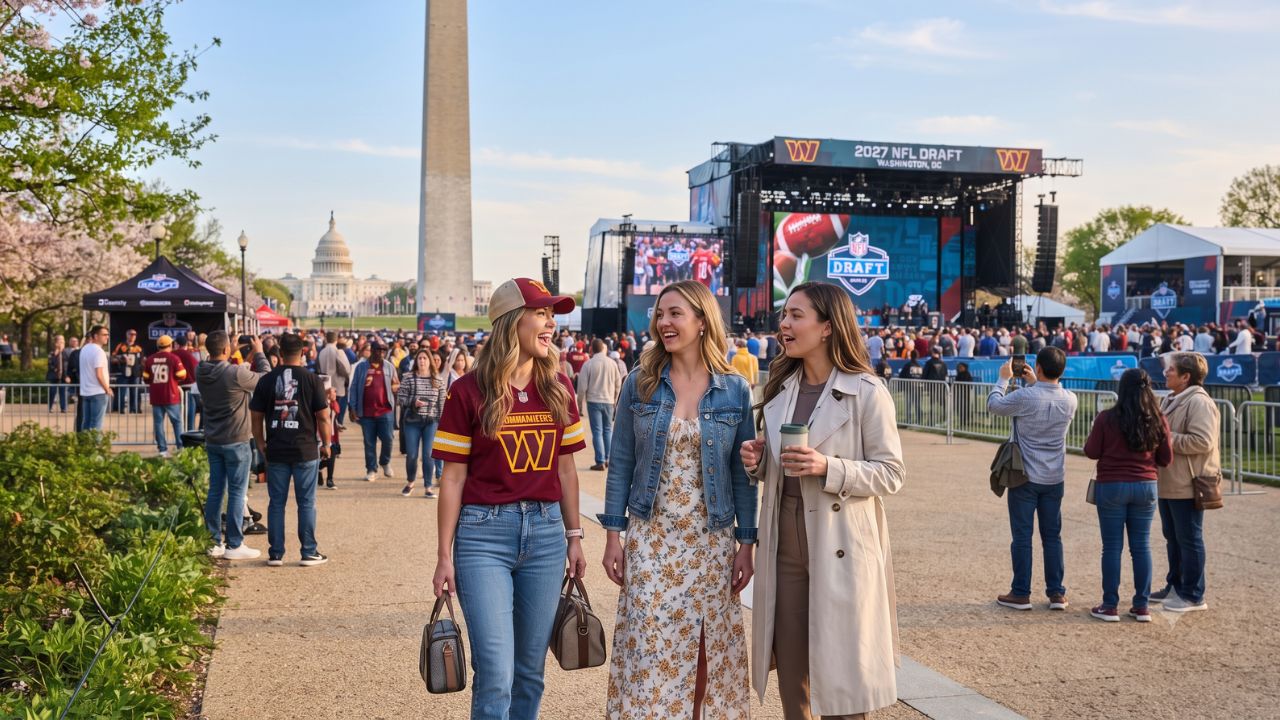
Facing a sharp deceleration in annual visitor growth that added just 20,000 travelers in 2025 alongside a 4 percent decline in overseas international arrivals, Washington, DC has scheduled the 2027 NFL Draft from 29 April to 1 May 2027 to convert event footfall into sustained overnight hotel bookings. Announcing its return to the nation’s capital for the first time since 1941, the National Football League (NFL) will erect its main Draft Theatre on the National Mall near the US Capitol, while the interactive NFL Draft Experience will span Pennsylvania Avenue NW between Third and Seventh Streets. While Destination DC celebrated record top-line metrics in 2025—generating US$11.9 billion in visitor spending, US$2.4 billion in tax revenue, and supporting 114,013 jobs across 27.2 million total visitors (25.1 million domestic and 2.1 million international)—the flattening growth curve demonstrates why major sports spectacles must yield multi-night hotel stays rather than unmonetized day crowds.
The logistical test confronting the District extends far beyond managing the sheer volume of traveling football fans. Following Pittsburgh's record-setting 2026 NFL Draft, which drew more than 805,000 attendees over three days, municipal planners must ensure that mega-event infrastructure does not displace ordinary leisure travelers or paralyze federal transit networks. By analyzing comparative sports tourism frameworks across London, Melbourne, and Toronto, destination managers can assess whether temporary spectator spectacles generate genuine incremental economic stimulus or merely shuffle pre-existing regional travelers across crowded transit stations.
Global Benchmarks: How London, Melbourne, and Toronto Monetize Sports Travel
To evaluate Washington’s conversion potential, destination economists point to distinct event-hosting models across major international gateway cities. London exemplifies the recurring, multi-sport calendar approach. According to the Greater London Authority, six featured international events in 2024—including the UEFA Champions League Final, the MLB London Series, the London E-Prix, the London Athletics Meet, and NFL regular-season fixtures—generated £230 million in direct economic impact from approximately 480,000 live attendees while reaching 202 million global television viewers. The MLB London Series alone injected £56.5 million into the local economy, while the 58,000 spectators at the London Athletics Meet spent £5.5 million, proving that repeatable fixtures cultivate sustainable repeat visitation.
Melbourne, by contrast, provides a blueprint for meticulous accommodation and bed-night measurement through the Australian Open. The 2026 tournament recorded 1,368,043 attendances across its three-week schedule, generating 705,239 hotel bed nights across the state of Victoria—a 59.2 percent surge compared with the prior year. Significantly, tournament data isolated visitor origin: while local Melbourne residents accounted for 62.6 percent of ticket holders, interstate travelers represented 18.6 percent, regional Victorians made up 10.9 percent, and international visitors comprised 7.9 percent, driving average daily individual expenditure to A$247.80 and producing A$722.32 million in total economic stimulus.
| Host City & Benchmark Event | Live Attendance Metric | Primary Tourism Economic Indicator | Strategic Measurement & Additionality Focus |
|---|---|---|---|
| Washington, DC: NFL Draft 2027 | Target baseline (~805k in Pittsburgh 2026) | 27.2M annual visitors (US$11.9B spend) | Converting free National Mall access into multi-night hotel stays |
| London: 6 Featured Events (2024) | 480,000 total live spectators | £230 million direct economic impact | Driving international repeat-travel across diverse sporting codes |
| Melbourne: Australian Open (2026) | 1,368,043 tournament attendances | 705,239 hotel bed nights (+59.2% YoY) | A$722.32M stimulus; isolating 37.4% non-local accommodation users |
| Toronto: FIFA World Cup (2026) | 250,000 stadium / 350,000+ festival fans | 90% stated two-year return intention | Assessing whether public fan zones create lasting cultural return trips |
In North America, Toronto’s execution during the FIFA World Cup 2026 demonstrated the power of public festival integration. Across six stadium matches drawing 250,000 fans, the city activated a 23-day FIFA Fan Festival that welcomed more than 350,000 attendees, alongside 60,600 viewers at Nathan Phillips Square public broadcasts. By featuring 86 cultural performers (including 80 Canadian and 75 local artists), Toronto integrated sports with municipal dining and performing arts, resulting in post-event research by Destination Toronto indicating that nine out of ten visitors intended to return for leisure within two years.
Washington’s Challenge: Accommodation Displacement and Transit Realities
For Washington, DC, the central tourism dilemma is avoiding "crowding out"—where mega-event spikes inflate hotel rates to the point of driving away traditional spring cultural travelers. Destination DC data highlights that March through June and September through October represent the city's highest seasonal demand windows, when government conferences, school trips, and cherry blossom tourism already push hotel occupancy and average daily rates to their annual ceilings.
Inserting an 800,000-person event into late April creates acute pricing pressure across the Downtown and Capitol Hill lodging clusters. If hotel room rates spike excessively, non-event travelers seeking access to the Smithsonian museums or federal monuments will cancel their trips, resulting in revenue cannibalization rather than net economic growth. To mitigate this friction, the Washington Metropolitan Area Transit Authority (WMATA) must leverage its Metrorail network to disperse lodging demand into secondary neighborhoods across Northern Virginia (Arlington, Alexandria) and suburban Maryland (Bethesda, Silver Spring), allowing budget-conscious travelers to access the National Mall without paying exorbitant downtown premiums.
Expert Analysis: The ROI of Sports Mega-Events and Yield Conversion
The strategy of leveraging the NFL Draft highlights a fundamental shift in how global capitals evaluate event return on investment. Free, non-ticketed urban sports spectacles generate enormous civic pride and media impressions, but their true municipal value depends strictly on lodging conversion and incremental retail capture.
For travelers booking this route, the direct consequence is an operational environment where early lodging reservations and transit proximity dictate overall trip affordability. Because downtown hotel room inventory within walking distance of the National Mall and Pennsylvania Avenue will see immediate rate surges, travelers who fail to book accommodations six to nine months in advance will face prohibitive room costs. However, by leveraging WMATA Metrorail lines that connect directly to the Archives-Navy Memorial-Penn Quarter, Federal Triangle, and Smithsonian stations, agile travelers can secure significantly more affordable hotel rooms along suburban transit arteries while retaining rapid access to the Draft Theatre.
The pricing pressure this creates means that full-service downtown hotel operators will attempt to enforce strict three-night minimum stay requirements and non-refundable cancellation terms during the 29 April to 1 May weekend. If hoteliers overreach on pricing, they risk alienating both traveling NFL fanbases and corporate transient business. For municipal leaders, the goal is not merely matching Pittsburgh's 805,000 attendee record, but ensuring that out-of-state visitors remain in the District for three to four days, dining in neighborhood commercial corridors like Dupont Circle, Georgetown, and the Navy Yard. Only through sustained bed-night generation can the city reverse its recent stagnation and justify the municipal security and road-closure investments required to host the NFL Draft.
Key Takeaways
- DC Hosts 2027 NFL Draft: Washington will host the NFL Draft from 29 April to 1 May 2027 along the National Mall and Pennsylvania Avenue NW, its first time hosting since 1941.
- Countering Stagnation: Destination DC records 27.2 million visitors and US$11.9 billion in 2025 spending, but annual visitation grew by only 20,000 while international arrivals fell 4%.
- Attendance vs Bed Nights: While Pittsburgh drew over 805,000 attendees in 2026, Melbourne’s model proves that tracking non-local hotel bed nights (705,239 at the 2026 Australian Open) is the true test of event ROI.
- Displacement Risks: Late April falls within Washington's peak spring travel season, creating risks of room rate inflation displacing ordinary cultural travelers.
- Transit Dispersal Strategy: Leveraging WMATA Metrorail lines to spread hotel demand into Virginia and Maryland suburbs is essential to maintaining regional affordability.
FAQ: Washington DC 2027 NFL Draft Travel
When and where will the 2027 NFL Draft take place in Washington, DC?
The 2027 NFL Draft will take place from 29 April to 1 May 2027 on the National Mall near the US Capitol and along Pennsylvania Avenue NW.
Is the NFL Draft free for the public to attend?
Yes. The NFL Draft Experience and viewing areas on the National Mall are free public events featuring interactive football games, player appearances, and entertainment.
How can travelers avoid high hotel prices during the 2027 Draft?
Book accommodations several months in advance in Metro-connected neighborhoods in Northern Virginia or suburban Maryland to avoid premium downtown room rates.
How did the 2026 NFL Draft in Pittsburgh perform?
The 2026 NFL Draft in Pittsburgh established an all-time attendance record, welcoming more than 805,000 fans over its three-day schedule.
[By prioritizing overnight bed nights over mere turnstile numbers, Washington can turn three days of football excitement into a permanent engine for urban tourism recovery.]
Related Travel Guides
Disclaimer
This article is for informational and educational purposes only. It does not constitute legal, financial, or professional advice. While we strive to provide accurate and up-to-date information, travel policies, regulations, and conditions change rapidly. Always verify information with official sources before making travel decisions. Nomad Lawyer makes no representations about the accuracy, reliability, completeness, or suitability of the information provided. Readers should consult qualified professionals for advice specific to their circumstances. The views expressed in this article are those of the author and do not necessarily reflect the views of Nomad Lawyer.
Raushan Kumar
Founder & Lead Developer
Full-stack developer with 11+ years of experience and a passionate traveller. Raushan built Nomad Lawyer from the ground up with a vision to create the best travel and law experience on the web.
Learn more about our team →