
F-47 NGAD Stealth Fighter: How Next-Gen Air Dominance Affects Global Travel Routes
The U.S. Air Force's F-47 NGAD sixth generation fighter achieves unprecedented stealth and AI integration in 2026, reshaping airspace security protocols and international aviation corridors that travelers depend on daily.

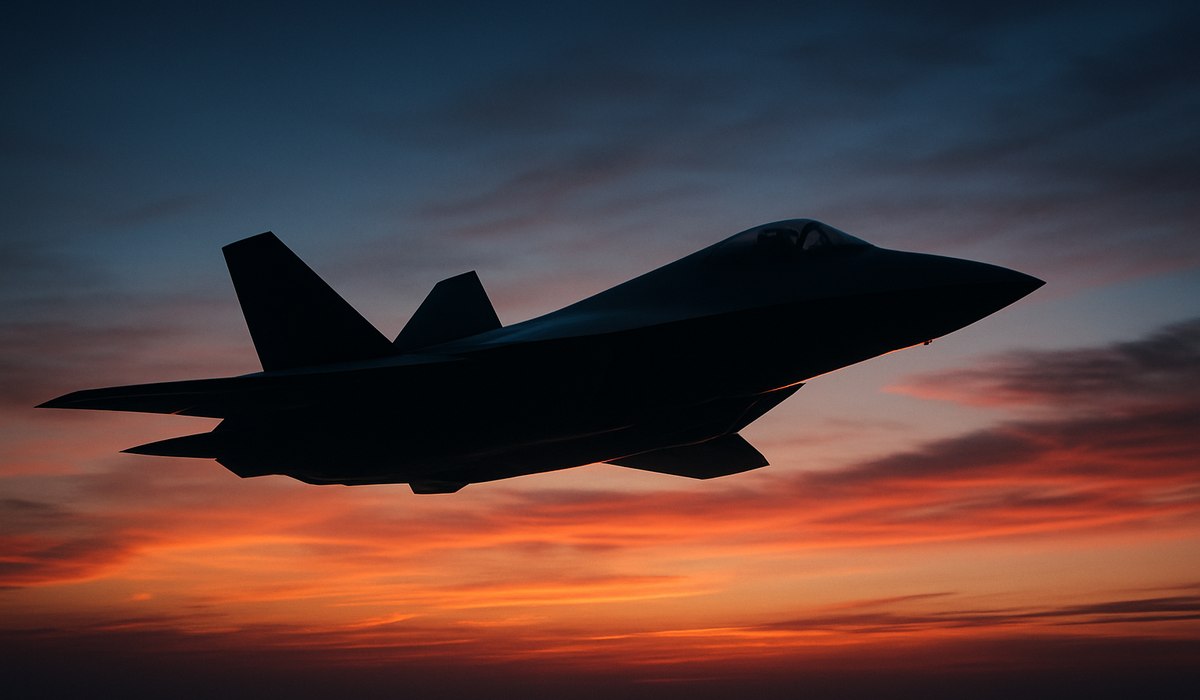
Image generated by AI
The F-47 NGAD Stealth Fighter Transforms Global Airspace Security
The U.S. Air Force F-47 NGAD stealth fighter represents a watershed moment in military aviation that carries direct implications for international travel infrastructure. Officially designated as the sixth generation fighter platform, the F-47 achieved initial airworthiness milestones in early 2026, integrating AI-enabled autonomous systems, hypersonic missile compatibility, and electromagnetic stealth technologies that fundamentally alter how military aircraft operate. This breakthrough development signals a pivotal shift in air dominance architecture—one that will reshape military operations corridors, international airspace agreements, and ultimately influence the security protocols affecting civilian aviation networks across contested regions.
What makes this technological leap significant for travelers involves geopolitical stabilization. Advanced stealth capabilities reduce conventional conflict escalation risks in critical transit zones. Understanding these developments helps nomadic professionals and frequent flyers anticipate potential airspace modifications, military exercise schedules, and security procedure enhancements affecting international routes.
The F-47 NGAD: Redefining Air Superiority Architecture
The F-47 NGAD stealth fighter combines revolutionary aerodynamic principles with computational intelligence in ways previous generation platforms could not achieve. Unlike the F-35, which relies heavily on software modernization to remain relevant through the 2070s, the F-47 introduces entirely new stealth geometries—smooth, predominantly horizontal designs that scatter electromagnetic radar signals more effectively than angled structures. These breakthrough aeronautical innovations enable simultaneous achievement of optimal stealth characteristics and superior maneuverability previously thought mutually exclusive.
The fighter's semi-autonomous architecture means the aircraft gathers, analyzes, and transmits targeting intelligence across vast geographical areas within milliseconds. AI systems process electronic warfare data, space-based intelligence, cyber threat indicators, and sensor fusion information in real-time, allowing pilots to operate with dramatically reduced cognitive burden. This intelligence advantage matters for civilian aviation because military aircraft operating with superior situational awareness create more predictable flight patterns and safer airspace management overall. The F-47 will network seamlessly with ground command centers, naval vessels, satellite systems, and adjacent fighter squadrons—creating integrated air defense environments that actually enhance civilian traffic flow management through improved coordination protocols.
Next-Generation Capabilities: AI, Hypersonic Speed, and Stealth Integration
The sixth generation fighter technology embedded in the F-47 pushes beyond previous performance boundaries in three critical dimensions. First, AI-enabled autonomous systems analyze sensor data from multiple platforms simultaneously, making targeting recommendations and tactical decisions at machine speed. This computational advantage translates into faster threat identification and resolution—reducing the duration and intensity of potential conflicts.
Second, the F-47 incorporates hypersonic missile systems capable of achieving velocities exceeding Mach 5. These weapons systems enable standoff engagement at ranges previously impossible, fundamentally changing military operational mathematics. Adversaries face engagement timelines measured in minutes rather than hours, compressing conventional conflict windows. For travelers, this capability paradoxically increases stability because military overwhelming superiority reduces incentives for adversarial risk-taking.
Third, the stealth architecture achieves near-invisibility across radar, infrared, and electronic warfare detection bands. Electromagnetic shaping eliminates protruding structures that traditionally scatter radar returns. The F-47's smooth, low-observable profile—resembling the B-2 strategic bomber's design philosophy—enables operations deep within contested airspace while evading traditional air defense systems. This stealth superiority means U.S. military operations can be conducted with minimal escalatory messaging, reducing international tensions that often spike when military movements become visible to multiple nations simultaneously.
For business travelers and digital nomads navigating geopolitically sensitive regions, these capabilities suggest stabilized conflict dynamics. Nations facing overwhelming military disadvantage typically choose negotiation over confrontation, creating more predictable security environments.
Beyond the F-35: Why the F-47 Platform Becomes Operationally Essential
The F-35 Lightning II remains formidable through continuous software evolution and mission system upgrades. Its fundamental airframe architecture, however, reaches inherent limitations that software alone cannot overcome. The F-35 relies on internal weapons carriage, legacy stealth geometries, and computational capabilities designed around 2010s-era processing power. As adversaries develop advanced radar, infrared detection, and electronic countermeasures, the F-35 requires increasingly complex software patches—each adding weight, power consumption, and thermal signature that gradually degrade stealth effectiveness.
The F-47 NGAD stealth fighter introduces new stealth generations that incorporate materials science breakthroughs, geometries optimized for hypersonic missile employment, and computational architectures designed around quantum-grade processing. This new platform bridges the technological gap emerging between the F-35's aging design envelope and mid-2040s threat environments. The F-47 also offers superior range characteristics—particularly critical for Pacific operations spanning the "tyranny of distance" characterizing that theater.
Variant designs specifically engineered for extended-range Pacific operations suggest military planners anticipate F-47 deployments to forward bases in Japan, South Korea, Australia, and potentially allied Indian Ocean locations. Travelers utilizing airports in these regions may experience temporary flight suspensions during F-47 deployment exercises or operational shakedown periods. Advance awareness of these developments enables better trip planning and contingency scheduling.
China's Strategic Challenge in the Modern Airspace
China's fighter aircraft programs—particularly the J-20 stealth fighter and developmental J-35 platform—represent substantial technological advancement. These systems incorporate indigenous stealth shaping, supercruise capability, and integration with advanced surface-to-air missile networks. However, the F-47 NGAD introduces capabilities that existing Chinese systems cannot effectively counter.
First-generation stealth aircraft like the J-20 employ angled, faceted designs optimized for radar bands common when the aircraft's design commenced (mid-2000s). As radar technology evolved to higher frequencies and advanced imaging techniques, these angled surfaces became progressively more detectable. The F-47's smooth, curved geometries represent a generational stealth advance, particularly against the sophisticated radar systems likely deployed throughout China's coastal defense architecture.
More significantly, the F-47's AI integration and sensor fusion networks create an intelligence advantage China struggles to replicate. The fighter's ability to operate semi-autonomously, process multi-source targeting intelligence, and coordinate with distributed force elements across continental distances requires software maturity and networking reliability that American systems possess but Chinese systems have not yet demonstrated at comparable scale.
This capability gap matters for regional stability. When one nation achieves decisive military superiority, conventional conflict becomes less likely because cost-benefit calculations favor negotiation. A Pacific theater dominated by F-47 squadrons would create a security environment where military escalation becomes demonstrably irrational for any potential adversary. This technological stabilization directly benefits travelers through reduced geopolitical tension in critical international transit zones.
Key Data: F-47 NGAD Specifications and Operational Context
| Specification | F-35 Lightning II | F-47 NGAD Fighter | Military Significance |
|---|---|---|---|
| Stealth Generation | 5th Generation | 6th Generation | F-47 incorporates new materials and geometry reducing detectability across all frequencies |
| Primary Propulsion | Single Engine, Subsonic Cruise | Dual/Hybrid Hypersonic-Capable | F-47 achieves sustained supersonic velocity with reduced fuel consumption |
| AI Integration Level | Mission Systems Software | Autonomous Decision-Making Architecture | F-47 processes targeting data and makes tactical recommendations without pilot intervention |
| Operational Range | ~1,200 nautical miles (internal weapons) | ~2,000+ nautical miles (extended variants) | F-47 reaches distant theaters without requiring forward air bases |
| Weapon Systems Integration | Internal carriage (JSF-compatible) | Hypersonic missiles, directed |
Raushan Kumar
Founder & Lead Developer
Full-stack developer with 11+ years of experience and a passionate traveller. Raushan built Nomad Lawyer from the ground up with a vision to create the best travel and law experience on the web.
Learn more about our team →