
China Missiles Aimed at 1,700+ U.S. Pacific Bases: Defense Gap Widens in 2026
China's arsenal of 1,700+ missiles now poses an unprecedented threat to U.S. military installations across the Indo-Pacific in 2026. Experts warn defensive capabilities lag dangerously behind, jeopardizing regional stability and travelers' safety across key Pacific routes.

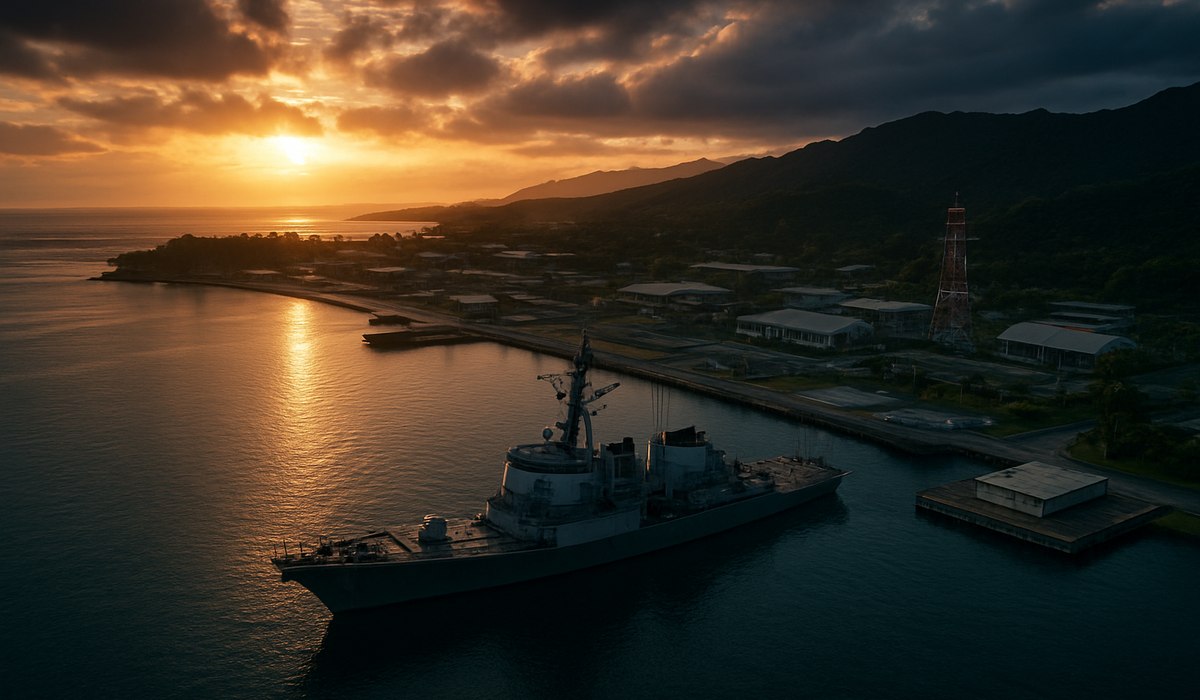
Image generated by AI
China's Expanding Missile Arsenal Now Threatens Regional Stability
China's military capacity has escalated dramatically, with defense analysts confirming the People's Liberation Army (PLA) now operates more than 1,700 ballistic and cruise missile systems targeting U.S. military installations throughout the Indo-Pacific region. This massive arsenal—comprising over 1,300 intermediate-range ballistic missiles (IRBMs) and approximately 400 ground-launched cruise missiles (GLCMs)—fundamentally reshapes regional security dynamics as of 2026. The strategic threat extends across Japan, South Korea, the Philippines, Guam, and beyond, creating cascading implications for civilian air traffic, commercial shipping routes, and millions of travelers who depend on Pacific corridors annually. Military experts universally acknowledge that current U.S. defensive systems cannot adequately counter the scale and sophistication of these China missiles aimed at forward-deployed American forces.
The Scale of China's Missile Threat Today
The PLA's missile modernization program represents the world's most active weapons development initiative. Beyond conventional ballistic systems, China missiles aimed at Pacific targets now include hypersonic platforms capable of traveling at speeds exceeding Mach 5—nearly impossible to intercept with existing air defense infrastructure. The DF-17 glide vehicle, DF-ZF hypersonic missile, and YJ-21 anti-ship platforms exemplify this technological leap. These weapons travel at unprecedented velocities while maintaining advanced maneuverability specifically engineered to defeat current American defense matrices.
Critically, these systems operate at remarkably low production costs relative to their destructive capabilities. The cost-asymmetry problem means the PLA can manufacture offensive systems far faster than the U.S. can deploy defensive countermeasures. Defense analysts from allied NATO nations have stressed that PLA capabilities have expanded exponentially over the past decade, while American defensive posture has remained largely static in the region.
Why U.S. Defenses Are Inadequate
Current American missile defense architectures—including Patriot air defense systems and existing anti-ballistic missile assets—face fundamental limitations against overwhelming first-strike scenarios. Military studies reveal that coordinated PLA attacks involving hundreds of simultaneous missiles would exceed the interception capacity of available U.S. systems. The RAND Corporation, the U.S. Air Force's principal research institute, documented this vulnerability in foundational analyses that remain disturbingly relevant.
China missiles aimed at forward bases would target runways, taxiways, fuel depots, and ammunition storage facilities simultaneously. This coordinated destruction strategy seeks to render U.S. air bases non-operational within hours of conflict initiation. The critical operational window—those first 72 hours when American forces attempt to recover and mount counteroffensives—remains the most vulnerable period. Present dispersal techniques, runway repair capabilities, and defensive missile batteries lack the redundancy necessary to maintain sustained flight operations under such intensive bombardment.
The gap widens annually as hypersonic technologies proliferate faster than defensive innovations mature. Existing radar systems struggle to track hypersonic warheads effectively, and current interceptor missiles lack sufficient velocity to reliably engage these targets before impact.
Strategic Implications for Regional Security
The implications extend far beyond military installations. China missiles aimed at Pacific bases destabilize commercial aviation networks, shipping lanes, and the movement of millions of civilians annually. Allied nations throughout the region—Japan, South Korea, the Philippines, Australia—face heightened uncertainty regarding American defense commitments and force projection capabilities.
This strategic imbalance creates potential incentives for miscalculation during diplomatic crises. If Chinese leadership perceives U.S. forward defenses as ineffective, confidence in American security guarantees erodes. Regional partners may recalculate their geopolitical alignments, potentially triggering cascading realignments throughout Southeast Asia and the Western Pacific.
Civilian infrastructure in allied nations faces indirect vulnerability. Commercial airports hosting American military aircraft potentially become secondary targets. Shipping terminals, power grids, and telecommunications networks supporting military operations risk collateral damage during large-scale missile exchanges.
Defensive Countermeasures and Solutions
Military strategists propose multi-layered responses to address the China missiles aimed threat across the Pacific. Dispersed basing strategies distribute aircraft across numerous smaller airfields, reducing concentration of high-value targets. Enhanced runway repair capabilities and pre-positioned engineering equipment enable rapid restoration of damaged facilities. Hardened aircraft shelters constructed with reinforced concrete protect parked planes from nearby explosions.
Advanced air defense systems require urgent deployment, including next-generation radar platforms capable of tracking hypersonic threats and interceptor missiles with adequate velocity for reliable engagement. The U.S. military is developing hypersonic defense systems, though deployment timelines remain extended.
Operational concept reforms—including increased sortie generation from dispersed locations and refined anti-access strategies—enhance resilience. Enhanced intelligence gathering and early-warning systems provide critical seconds of additional response time. International cooperation with allied air forces creates redundancy in defensive capabilities.
However, military analysts acknowledge no single countermeasure provides adequate mitigation. Only comprehensive integration of all defensive approaches—dispersal, hardening, enhanced missile defenses, and operational innovations—addresses the multifaceted threat landscape. Current resources allocated to these programs remain insufficient relative to the accelerating threat.
What This Means for Travelers
Regional instability stemming from military imbalances directly affects civilian travelers throughout the Pacific:
-
Flight Route Disruptions: Commercial airlines operating between North America and Asia may face route modifications or service suspensions if military tensions escalate. Check with your carrier regularly regarding contingency procedures.
-
Airport Access Limitations: Civilian airports in Japan, Guam, and the Philippines may experience restricted access during heightened alert levels, affecting ground transportation and terminal operations.
-
Travel Insurance Considerations: Standard travel insurance may exclude coverage for geopolitical conflicts. Consider comprehensive policies addressing military tensions and force majeure events.
-
Booking Flexibility: Reserve tickets on airlines offering flexible rebooking policies. Military tensions can shift rapidly, requiring rapid itinerary adjustments.
-
Embassy Communication: Register with your embassy before traveling to Pacific destinations. Maintain contact with embassy emergency services in case rapid evacuation becomes necessary.
-
Regional Port Operations: International shipping delays may affect availability of goods and services at destination ports, particularly in disputed areas near military installations.
-
Insurance Verification: Before departure, confirm that your coverage includes geopolitical events and clarify exact exclusions regarding military conflict zones.
FAQ
How many missiles does China currently possess that target U.S. Pacific bases? The PLA maintains approximately 1,700 operational ballistic and cruise missile systems. This inventory includes over 1,300 intermediate-range ballistic missiles and roughly 400 ground-launched cruise missiles, according to recent Department of Defense assessments and independent defense analysts monitoring PLA capabilities continuously throughout 2026.
Can U.S. missile defense systems intercept the majority of incoming Chinese missiles? Military analyses indicate current American air defense systems cannot defeat coordinated multi-hundred missile attacks. Patriot systems and existing anti-ballistic platforms lack sufficient numbers, firing rates, and interceptor supplies to counter the scale of potential PLA strikes on forward bases throughout the region.
What are hypersonic missiles and why do they pose unique problems for defense? Hypersonic missiles travel at speeds exceeding Mach 5, reaching targets in minutes rather than hours. Their extreme velocity, advanced maneuverability, and atmospheric flight patterns challenge conventional radar tracking and interception systems. Existing American air defense frameworks require fundamental redesign to address this technological advancement.
Should travelers avoid the Pacific region due to military tensions? Current geopolitical tensions don't warrant blanket travel avoidance, though heightened awareness remains prudent. Monitor State Department travel advisories, maintain flexible booking arrangements, and register with your embassy. Commercial aviation operates safely despite military developments, though instability creates risks requiring careful travel planning and insurance verification.
Related
Preeti Gunjan
Contributor & Community Manager
A passionate traveller and community builder. Preeti helps grow the Nomad Lawyer community, fostering engagement and bringing the reader experience to life.
Learn more about our team →