
Extreme Heat Bakes Las Vegas Harry Reid Airport Forcing Flight Delays Weight Cutbacks and 50 Passenger Deplaning on American Airlines 2026
Extreme heat at Las Vegas Harry Reid International Airport triggers flight delays and weight restrictions, forcing American Airlines to seek 50 volunteers to deplane in 114-degree conditions.

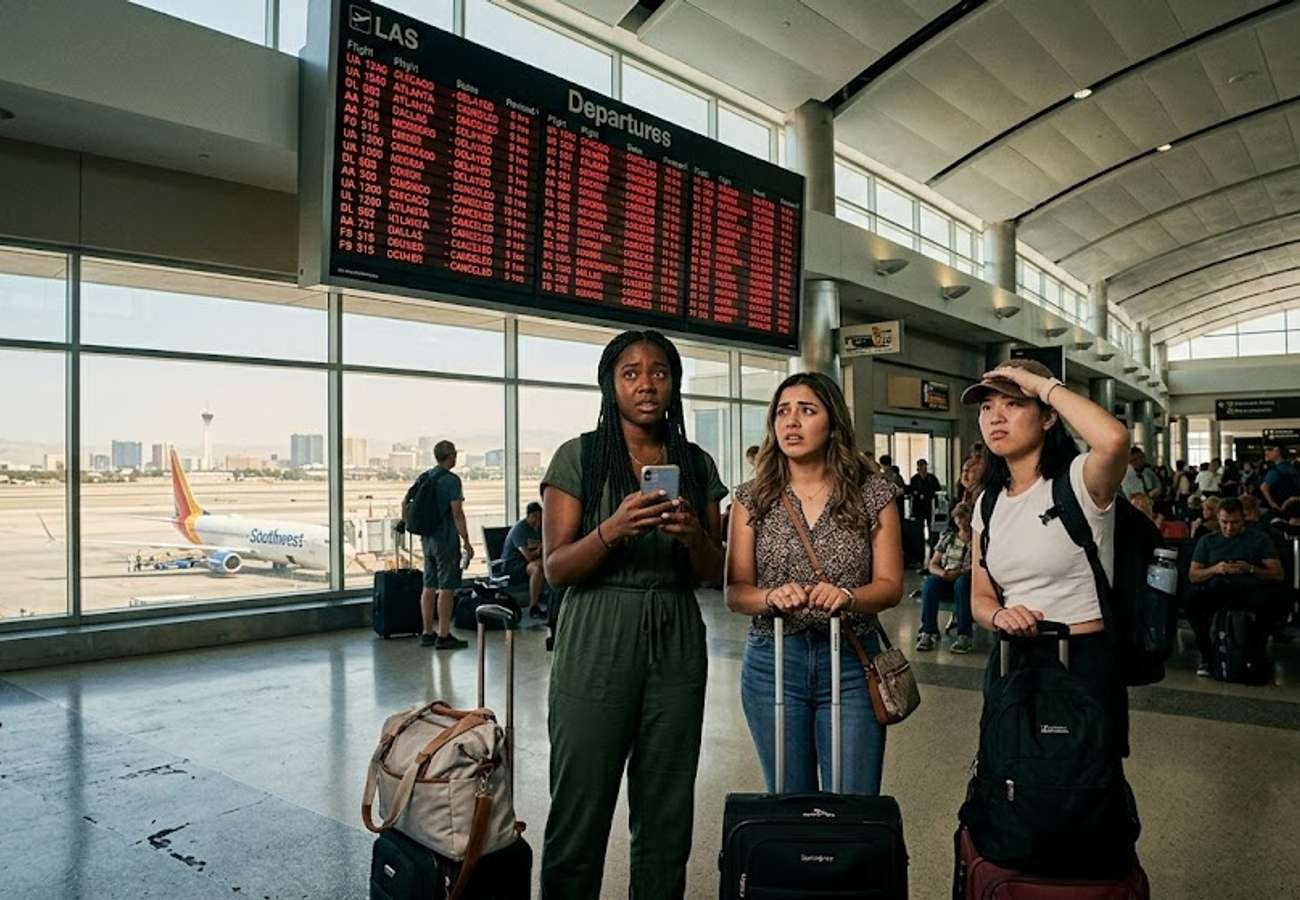
Image generated by AI
An extreme heat wave slamming Las Vegas is pushing Harry Reid International Airport to its operational breaking point, triggering widespread flight delays and forcing airlines to offload passengers to meet weight-and-balance safety limits.
Temperatures at Harry Reid International Airport are hitting near or above 109 degrees Fahrenheit, prompting the National Weather Service to issue an extreme heat warning for the Las Vegas Valley. The blast furnace conditions coincide with peak summer travel, compounding disruptions for passengers moving through one of the busiest hubs in the Southwest.
Aviation tracking reports indicate hundreds of delayed departures and arrivals over the weekend and into this week. Several flights faced added constraints when attempting to depart during the hottest afternoon hours, when aircraft performance calculations shift dramatically.
One incident involving an American Airlines departure from Las Vegas drew sharp attention from travelers and aviation watchers. The aircraft, departing Harry Reid during 114-degree heat, could not safely take off at its planned weight. Crew members requested approximately 50 volunteers to deplane so the flight could depart within safety margins.
Passengers who agreed to leave the aircraft were rebooked on later services and offered compensation consistent with the airline's overbooking and delay policies—a standard practice across major United States carriers when weight limitations or schedule disruptions occur.
Key Facts Breakdown
- Airport: Harry Reid International Airport, Las Vegas
- Temperature highs: Near or above 109 degrees Fahrenheit
- American Airlines incident temperature: 114 degrees Fahrenheit
- Volunteers requested to deplane: Approximately 50
- Airport elevation: More than 2,000 feet above sea level
- Weather alert: National Weather Service extreme heat warning for Las Vegas Valley
- Disruption scope: Hundreds of delayed departures and arrivals
- Regulatory framework: FAA guidance confirms airlines—not regulators—make final decisions on heat-related delays and weight restrictions
The Physics Behind Heat-Related Ground Stops
Basic aerodynamics explain why a desert heat wave can transform a routine departure into a weight-restricted operation. As temperatures climb, air becomes less dense. This reduces the amount of lift an aircraft's wings can generate at a given speed. Pilots may need a longer takeoff roll, a lighter aircraft, or both—particularly at high-elevation airports or those surrounded by terrain and airspace constraints.
Federal Aviation Administration guidance cited in prior public materials notes that airlines rather than regulators make the final decisions on whether to delay or weight-restrict flights for heat. Those decisions must follow performance charts specific to each aircraft type. When density altitude—a measure that blends elevation and temperature—climbs, the maximum allowable takeoff weight can drop sharply.
In Las Vegas, these performance challenges are magnified by the desert climate and the airport's elevation of more than 2,000 feet above sea level. On triple-digit days, density altitude can rise to levels more commonly associated with much higher mountain airports. This effect peaks in late afternoon when runways and surrounding pavement radiate stored heat back into the air.
For airlines, passenger weight reductions often become the most practical lever for meeting constraints on fully booked flights. Reconfiguring cargo loads is time-consuming. Fuel offloads may not be feasible on longer routes where reserve requirements are tightly defined. Voluntary deplaning requests become a familiar tactic during heat events across the Southwest and other hot-weather hubs.
A Summer Already Strained
These heat-related disruptions arrive on top of a summer where Las Vegas travelers have already faced operational stress at Harry Reid. Recent aviation analyses highlight how staffing limitations among airline ground crews and air traffic personnel, combined with heavy schedules, have created longer-than-usual delays and tighter turnaround windows.
Earlier reporting on the 2026 summer season pointed to instances where inbound staffing shortages or traffic management initiatives elsewhere in the national airspace system cascaded into downstream impacts in Las Vegas. When an incoming flight is delayed, the aircraft and crew arrive late for their next leg. This compresses the time available for boarding, fueling, and baggage loading, increasing the likelihood of departure holds.
The extreme heat warning complicates these dynamics further. When aircraft must wait for more favorable temperatures, or when last-minute weight adjustments require additional gate time, schedules fall out of alignment. Toward the end of the day, these disruptions compound, leaving evening departures particularly vulnerable to rolling delays.
Travel data services monitoring on-time performance have flagged Las Vegas as a risk-prone origin and connecting point on peak travel days this summer. Travelers are advised to build extra buffer time into their plans.
What Passengers Face When Asked to Leave a Flight
The experience of being asked to leave a flight after boarding often comes as an unwelcome surprise. In the American Airlines departure from Harry Reid, crew members requested approximately 50 volunteers to deplane to meet revised weight limits and allow the aircraft to depart safely in the heat.
Calls for volunteers typically begin at the gate or on board. Staff offer travel credits, rebooking on later flights, and in some cases meal or hotel vouchers, depending on expected delay length. Compensation amounts can escalate quickly if not enough people initially step forward—particularly on routes with limited same-day alternatives.
While the circumstances may feel similar to traditional overbooking, operational experts emphasize that heat-related weight restrictions are distinct from selling more tickets than seats. They arise from real-time calculations based on temperature, runway length, wind, and aircraft configuration. Once those calculations show an aircraft cannot depart at its planned weight, reducing the number of people on board becomes a safety requirement—not a discretionary choice.
Passengers who do volunteer retain certain protections under federal consumer regulations when involuntarily bumped. Voluntary agreements can vary by airline and situation. Consumer advocates encourage travelers to carefully review any written documentation regarding credits or vouchers. Cash compensation may be an option on some carriers and itineraries.
Operational Data Snapshot
| Metric | Detail |
|---|---|
| Airport | Harry Reid International Airport (LAS) |
| NWS Alert Type | Extreme Heat Warning |
| Daytime Highs | Near or above 109°F |
| American Airlines Incident Temp | 114°F |
| Volunteers Requested | Approximately 50 |
| Airport Elevation | 2,000+ feet above sea level |
| Disruption Scope | Hundreds of delayed departures and arrivals |
| Season | Summer 2026 peak travel |
Why This Matters
From a logistical perspective, this means that Harry Reid International Airport is becoming a structural weak point in the domestic network during heat events. Our analysis of the route map suggests that connecting passengers routing through Las Vegas during afternoon hours face the highest risk of missed connections and involuntary schedule changes. The airport's elevation of more than 2,000 feet, combined with desert pavement radiating stored heat, creates density altitude readings that mimic mountain airports—conditions that aircraft performance charts handle poorly at maximum loads.
For travelers on routes through Las Vegas, the real impact is twofold. First, afternoon departures on smaller aircraft or fully booked narrowbody jets are the most vulnerable to weight restrictions. Second, the compounding effect of existing staffing shortages means that even minor heat-related delays can cascade into multi-hour rolling disruptions by evening. Passengers booking travel through Harry Reid in the coming days should prioritize morning departures and build layover buffers of three hours or more for connections.
The American Airlines incident—asking 50 passengers to deplane in 114-degree heat—also signals that airlines are increasingly relying on voluntary deplaning as a primary heat mitigation tool rather than canceling flights outright. This shifts the burden of operational disruption directly onto passengers, who must weigh the value of compensation credits against the cost of delayed arrivals and missed plans.
Forward Outlook
Forecasts indicate prolonged extreme heat across the Las Vegas area. Airlines will continue working through both temperature limits and existing network constraints at Harry Reid. Travelers transiting the airport in the near term should monitor airline apps and flight status tools frequently on departure day, as schedule changes and gate holds related to heat can be posted with limited advance notice.
Morning departures generally occur before temperatures peak and may face fewer weight-related issues than midafternoon flights. Routes operated with smaller aircraft or those regularly filled to capacity carry the highest risk of voluntary deplaning requests. Passengers with tight connections through other hubs should consider alternative routings or slightly longer layovers when booking trips that originate or connect in Las Vegas.
The desert does not negotiate with aircraft performance charts—and this summer, passengers are the ones paying the difference.
Related Travel Guides
Disclaimer
This article is for informational and educational purposes only. It does not constitute legal, financial, or professional advice. While we strive to provide accurate and up-to-date information, travel policies, regulations, and conditions change rapidly. Always verify information with official sources before making travel decisions. Nomad Lawyer makes no representations about the accuracy, reliability, completeness, or suitability of the information provided. Readers should consult qualified professionals for advice specific to their circumstances. The views expressed in this article are those of the author and do not necessarily reflect the views of Nomad Lawyer.
Kunal K Choudhary
Co-Founder & Contributor
A passionate traveller and tech enthusiast. Kunal contributes to the vision and growth of Nomad Lawyer, bringing fresh perspectives and driving the community forward.
Learn more about our team →