
Topeka Kansas Road Trip Guide 2026: Civil Rights Milestones, Prairie Skylines, and Daredevil Lore
Beyond highway transit lines, Topeka pairs the groundbreaking civil rights history of Brown v. Board of Education with 296-step Statehouse dome climbs and the world's premier Evel Knievel archives.

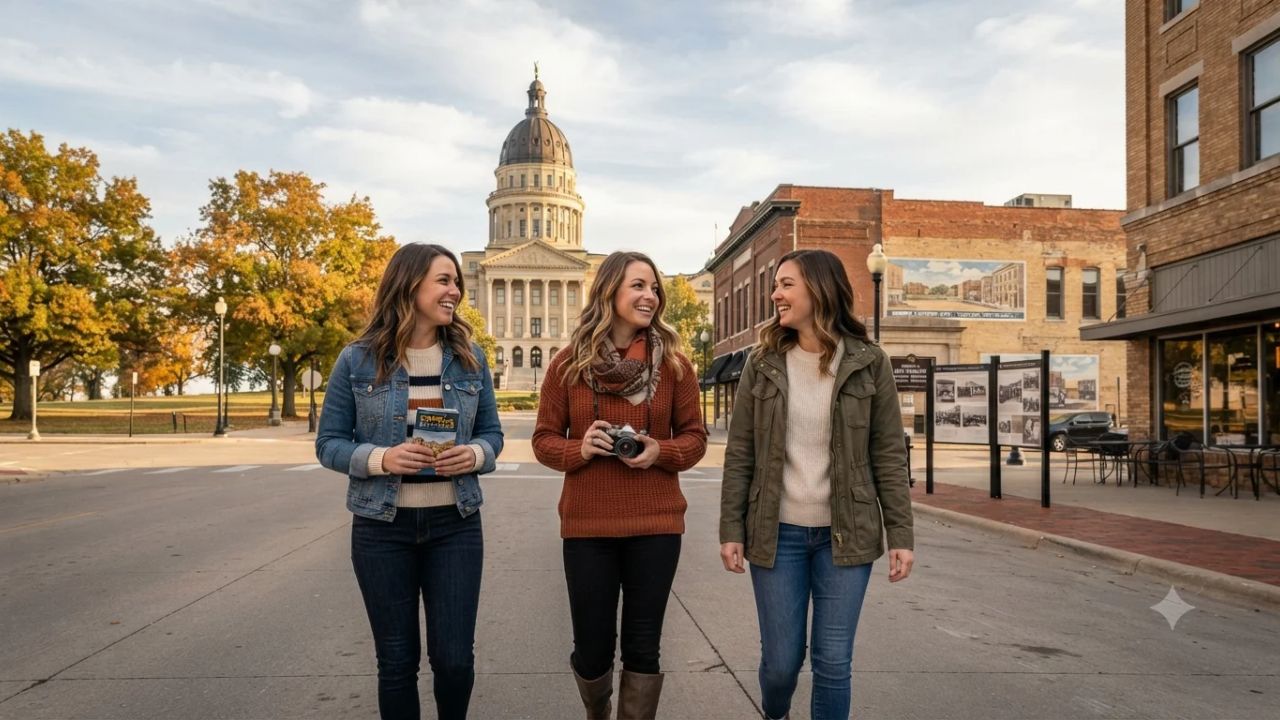
Image generated by AI
Inside the red-brick classrooms of the former Monroe Elementary School, a quiet neighborhood schoolhouse became the legal catalyst that struck down racial segregation in public education across the United States. In 1954, the landmark Supreme Court decision in Brown v. Board of Education of Topeka transformed this Midwest community into the epicenter of the American civil rights movement, establishing an enduring cultural landmark that anchors the city's modern travel renaissance.
From Administrative Waypoint to Heritage Destination
For decades, long-distance road trippers on Interstate 70 treated Kansas’s capital as an administrative pause between Kansas City and the Rocky Mountains. Today, Topeka is actively reshaping that narrative by highlighting its profound legal history, rich transportation heritage, and thriving community arts scene.
Travelers arriving in Topeka discover an unhurried, deeply reflective alternative to commercial tourist corridors. Here, monumental federal history sits alongside eccentric mid-century Americana. A morning spent walking the quiet corridors of a desegregated schoolhouse connects seamlessly to an afternoon climbing inside the copper-crowned dome of the Statehouse or examining the world’s largest collection of stunt-jumping artifacts.
Because Topeka’s primary cultural attractions are publicly stewarded and community-supported, visitors encounter accessible, crowd-free venues. Free admission at major historic landmarks and affordable dining across the North Topeka Arts District make the city an exceptional, high-value stop on any Heartland itinerary.
What Makes the Kansas Capital Journey Distinct
Topeka’s cultural identity is shaped by its geographical position along the Kansas River, where eastern agricultural woodlands meet the rolling expanse of the tallgrass prairie. This transition created a natural crossroads for 19th-century railroad pioneers, state lawmakers, and social reformers.
The centerpiece of any historical journey is the Brown v. Board of Education National Historical Park. Housed within the preserved 1926 Monroe Elementary School building, the park provides an unflinching look at the courage of local African American families, community leaders, and legal strategists who challenged state-sanctioned segregation. The permanent galleries immerse visitors in the daily reality of segregated schooling and the broader civil rights struggle through personal oral histories, archival documents, and interactive exhibits.
A short drive into downtown leads to the majestic Kansas Statehouse. Crowned by a soaring dome that rises above the city skyline, the building features detailed historical murals, bronze trim, and the iconic John Steuart Curry painting depicting abolitionist John Brown. The highlight for adventurous travelers is the guided dome tour, which takes visitors up 296 steps into the inner and outer cupola for sweeping panoramic vistas over the Shawnee County plains.
Key Topeka Heritage and Outdoor Landmarks
| Attraction & Location | Primary Experience | Practical Access & Timing | Key Feature to Spot |
|---|---|---|---|
| Brown v. Board Historical Park | Civil rights galleries, historic classrooms | Open Tue–Sat (9:00 AM – 5:00 PM), Free admission | Restored kindergarten classroom and audio oral histories |
| Kansas Statehouse | Government architecture, 296-step dome tour | Free weekday tours (advance booking advised, 40 mins) | Historic John Steuart Curry murals & dome catwalk |
| Kansas Museum of History | Frontier industry, rail heritage, prairie trails | 2–3 hour morning visit; on-site picnic grounds | 1880 Atchison, Topeka & Santa Fe locomotive & 1946 Funk plane |
| Evel Knievel Museum | Stunt memorabilia, jump bikes, pop culture | Located inside Historic Harley-Davidson of Topeka | "Big Red" Mack show rig and original jump leathers |
| Lake Shawnee Recreation Area | Sailing, paddleboarding, fishing, camping | Dawn to dusk year-round; ideal late afternoon | Waterfront paved trails and sheltered sunset picnic pavilions |
| Gage Park & Topeka Zoo | Family recreation, botanical gardens, wildlife | Daily family access; paid zoo entry | Restored 1908 vintage wooden carousel and mini-train |
Visitor Insider Tips
Experiencing Topeka like a local requires looking beyond the main government complex and engaging with the city's neighborhood rhythm.
- Dome Climb Timing: Book your Statehouse dome tour online well before arrival. The 296-step climb is physically rigorous and ascends narrow spiral staircases. Schedule the tour for mid-morning to take advantage of cooler temperatures and the best natural lighting across the rotunda.
- Neighborhood Arts Walk: Time your visit for the First Friday Artwalk in the NOTO (North Topeka) Arts District along North Kansas Avenue. Local artist cooperatives, glassblowing studios, vintage boutiques, and food trucks open late into the evening.
- Museum Prairie Trail: After touring the locomotive displays at the Kansas Historical Society Museum of History, do not skip the outdoor grounds. The 2.5-mile nature trail loops through native prairie grasslands and woodland creek bottoms, offering prime birdwatching for native meadowlarks and red-tailed hawks.
- Regional Flavor: Sample Kansas barbecue classics like hickory-smoked burnt ends and slow-cooked pulled pork at local independent smokehouses, followed by fresh pastries at historic North Topeka diners.
Cultural and Environmental Context
Topeka’s cultural landscape is grounded in grassroots preservation. The conversion of Monroe Elementary into a national park site was spearheaded by local civic organizers and descendants of the original plaintiffs, ensuring that the legacy of constitutional equality remains a living community dialogue rather than a forgotten chapter.
Environmentally, Shawnee County maintains a protective balance between urban growth and prairie conservation. Recreation hubs like Lake Shawnee, Gage Park, and the Governor's Cedar Crest trail system preserve native riparian wetlands and oak-hickory woodlands that buffer local waterways against agricultural runoff.
By distributing visitor foot traffic between historic downtown monuments, the creative workshops of NOTO, and waterfront parklands, Topeka ensures that tourism directly benefits local small business operators and artisans while keeping the heartland’s natural beauty intact.
FAQ: Visiting Topeka 2026
What is the ideal itinerary length for exploring Topeka?
A two-day stay allows ample time: dedicate Day 1 to the Brown v. Board National Historical Park and Statehouse dome climb, and Day 2 to the Kansas Museum of History, Evel Knievel Museum, and Lake Shawnee.
What is the closest major international airport to Topeka?
Kansas City International Airport (MCI) is the primary gateway, located approximately 70 miles (an easy 75-minute drive) northeast via Interstate 70.
Is admission required for the Brown v. Board of Education site?
No. Admission to the Brown v. Board of Education National Historical Park is completely free year-round, operating Tuesday through Saturday from 9:00 AM to 5:00 PM.
What is the best season for a Topeka road trip?
Spring (April to May) and autumn (September to October) offer pleasant daytime temperatures in the 60s and 70s Fahrenheit, making them ideal for outdoor park strolls and lake recreation.
When you take the exit into Topeka, you step directly onto the ground where ordinary citizens altered the course of American history.
Related Travel Guides
Head of the Charles Regatta 2026 Insider Guide to Boston and Cambridge Autumn Rowing Spectacle
Disclaimer
This article is for informational and educational purposes only. It does not constitute legal, financial, or professional advice. While we strive to provide accurate and up-to-date information, travel policies, regulations, and conditions change rapidly. Always verify information with official sources before making travel decisions. Nomad Lawyer makes no representations about the accuracy, reliability, completeness, or suitability of the information provided. Readers should consult qualified professionals for advice specific to their circumstances. The views expressed in this article are those of the author and do not necessarily reflect the views of Nomad Lawyer.
Kunal K Choudhary
Co-Founder & Contributor
A passionate traveller and tech enthusiast. Kunal contributes to the vision and growth of Nomad Lawyer, bringing fresh perspectives and driving the community forward.
Learn more about our team →