Eurostat 2026 Tourism Report Ranks Romania First in EU Domestic Travel Shares


Eurostat report highlights European domestic travel trends and €645.6 billion in resident tourism expenditure.
Romania has emerged as the European Union’s leading domestic tourism market, with 89% of all overnight journeys made by Romanian residents remaining within national borders during 2025. According to official European statistics published on October 9, 2026, by Eurostat, Romania topped the 27-member bloc in domestic travel preference, closely followed by Spain (87%), Greece (85%), France (85%), and Portugal (85%).
However, Eurostat's broader 2026 accommodation findings demonstrate that high domestic travel percentages do not automatically guarantee commercial hotel growth. While domestic trips accounted for 70% of the 1.20 billion personal and professional journeys undertaken by EU residents in 2025, foreign travel generated €379.4 billion—representing 58.8% of total EU tourism expenditure (€645.6 billion).
Eurostat 2025 EU Resident Domestic vs. Foreign Travel Breakdown
The table below details domestic versus foreign travel shares across eight highlighted European Union member states during 2025:
| European Union Member Country | Domestic Trip Share (%) | Foreign Outbound Share (%) | Primary Domestic Market Characteristics |
|---|---|---|---|
| Romania | 89% | 11% | Highest domestic trip share across the EU |
| Spain | 87% | 13% | High domestic preference; 175.7M total trips |
| Greece | 85% | 15% | High domestic travel coexisting with Q2 foreign stays |
| France | 85% | 15% | Major domestic market (193M H1 2026 guest nights) |
| Portugal | 85% | 15% | Robust domestic growth (+14% YoY in 2025) |
| Luxembourg | 5% | 95% | Highest outbound travel share (€3.8B spent) |
| Belgium | 29% | 71% | Predominantly outbound market (31.2M trips) |
| Malta | 32% | 68% | Strong international focus (95.2% foreign nights) |
Data published by the European Travel Commission reinforces that while 92% of all trips by EU residents remained inside the bloc (848 million domestic and 264 million intra-EU journeys), international journeys command significantly higher average daily spend.
Commercial Breakdown: Domestic vs. Outbound EU Tourism Spend
While domestic trips dominated overall volume, Eurostat data highlights that foreign travel drives the majority of financial value across European accommodation and transport sectors:
| Tourism Expenditure Metric | Domestic EU Trips | Foreign & Outbound Trips | Combined EU Total |
|---|---|---|---|
| Total Resident Spend (€) | €266.2 Billion | €379.4 Billion | €645.6 Billion |
| Share of Overall Spending (%) | 41.2% | 58.8% | 100.0% |
| Accommodation Expenditure | €90.3 Billion (34%) | €131.3 Billion (35%) | €221.6 Billion |
| Transport Expenditure | €56.0 Billion (21%) | €121.5 Billion (32%) | €177.5 Billion |
National Market Insights: Divergent Trends Across Leading EU Nations
Romania: High Domestic Share vs. 6.7% Accommodation Contraction
Despite leading the EU with an 89% domestic travel preference, Romania recorded a 6.7% decline in commercial tourist accommodation nights during the first half of 2026. Domestic guests generated 77% of total accommodation nights in Romania, while foreign visitors accounted for 23%. Industry analysts attribute the divergence to an increased reliance on non-commercial private stays and domestic day-tripping.
Spain vs. Portugal: Volume Decline vs. Growth Surge
Spain and Portugal recorded similar domestic trip shares (87% and 85%, respectively), but experienced opposing volume trends:
- Spain: Domestic resident trips fell 6.1% in 2025 to 175.7 million total trips, according to Spain's National Statistics Institute (INE). Foreign trips by Spanish residents grew by 5.2%.
- Portugal: Official statistics from Turismo de Portugal show Portuguese residents undertook 26 million total trips in 2025 (+13.7% YoY). Domestic trips surged 14% to 22.19 million journeys.
Luxembourg and Malta: Outbound Expenditures and International Gateways
- Luxembourg: Possessing the EU's lowest domestic trip share (5%), Luxembourg residents undertook 2.9 million leisure trips abroad in 2025, spending nearly €3.8 billion (averaging €1,304 per trip).
- Malta: With 68% of resident trips taken abroad, Malta's domestic accommodation sector relies overwhelmingly on incoming foreign tourists, who generated 95.2% of its accommodation nights during H1 2026 (+9.9% overall overnight growth).
Belgium: Methodological Update in Travel Surveying
Belgian residents registered a 29% domestic travel share in 2025 across 31.2 million overnight trips. National statistical authority Statbel noted that a transition from quarterly to monthly survey methodology improved short-trip tracking, making direct year-over-year percentage comparisons with 2024 invalid.
Key Passenger Facts & Highlights
- 89% Domestic Lead: Romania tops the EU in domestic trip proportion, followed by Spain (87%) and France (85%).
- €645.6B Total Spend: EU residents spent €645.6 billion on personal and professional travel in 2025.
- 58.8% Outbound Spend Share: Foreign journeys generated €379.4 billion, accounting for nearly 60% of total travel expenditure.
- 1.32B H1 2026 EU Guest Nights: Commercial accommodation stays across the EU rose 1.7% in H1 2026 to 1.321 billion nights.
- 258.8M Short-Term Rental Bookings: Q2 2026 platform bookings (Airbnb, Vrbo) increased 5.3% year-over-year.
Traveler Insider Tips for European Regional Travel
- Leverage Shoulder-Season Rates in Southern Europe: Travelers visiting Spain, Greece, or Portugal during October and November benefit from 20–30% lower accommodation rates as domestic summer peak demand subsides.
- Explore Regional Rail Options in Western Europe: In countries with heavy domestic car usage like Belgium and France, regional high-speed rail networks (SNCB, TGV) offer faster downtown-to-downtown transit.
- Book Coastal Stays Ahead in Malta & Luxembourg: High foreign visitor concentration in Malta means hotel availability tightens quickly during autumn shoulder months.
Macro Economic Outlook for EU Tourism
European tourism during the second half of 2026 is characterized by robust international inbound demand and expanding short-term rental bookings. While domestic travel provides a baseline for local hospitality markets in Eastern and Southern Europe, high-yielding international travel remains the primary engine for accommodation revenue and airline route expansion across the EU.
FAQ: Eurostat EU Domestic Tourism Rankings 2026
Which EU country had the highest domestic tourism share in 2025?
Romania ranked highest in the EU, with 89% of resident tourism trips remaining within the country, followed by Spain (87%).
How much did EU residents spend on tourism in 2025?
EU residents spent €645.6 billion in total, comprising €266.2 billion on domestic trips and €379.4 billion on foreign travel.
Why do domestic trips generate lower spend than outbound trips in Europe?
Outbound travel involves higher transport costs, longer average lengths of stay, and premium international accommodation.
Which EU country had the highest proportion of outbound trips?
Luxembourg recorded the highest outbound trip share, with 95% of resident overnight journeys taken outside the country.
Related Travel Guides
This article is for informational purposes. Flight routes, passenger regulations, visa rules, and transit advisories are subject to change by airlines and aviation authorities. Readers are advised to verify schedules and travel documentation with relevant carriers and border agencies before departure.
Related Stories

Beyond Green Expands Sustainable Luxury Portfolio to 22 Countries with New Costa Rica and Spain Hotels 2026
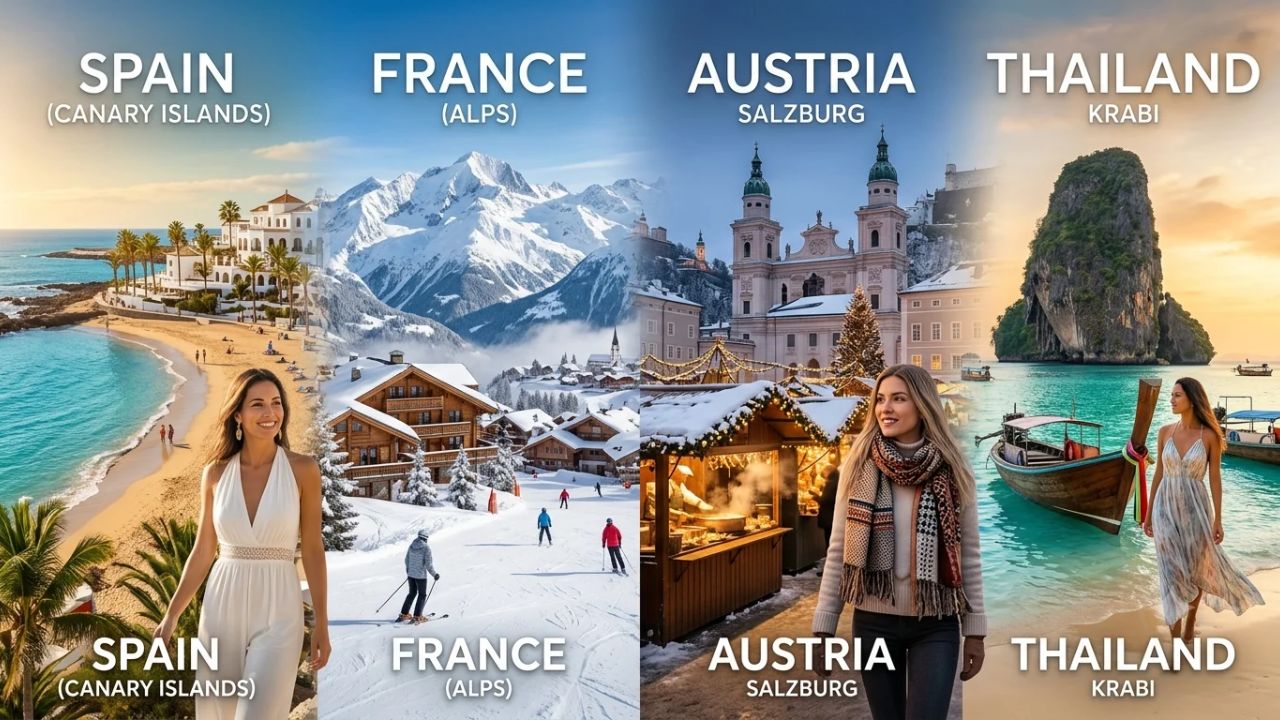
Spain, France, Austria, and Thailand Top Global Winter Tourist Rankings as Seasonal Migration Surges