
European Hotel Value Shift 2026: Why €150 Stays in Bulgaria and Romania Outperform €300 Luxury Rooms
New 2025-2026 data reveals a stark divide in European hospitality, where €150 hotels in Eastern Europe offer superior luxury and space compared to high-priced stays in Western hubs.

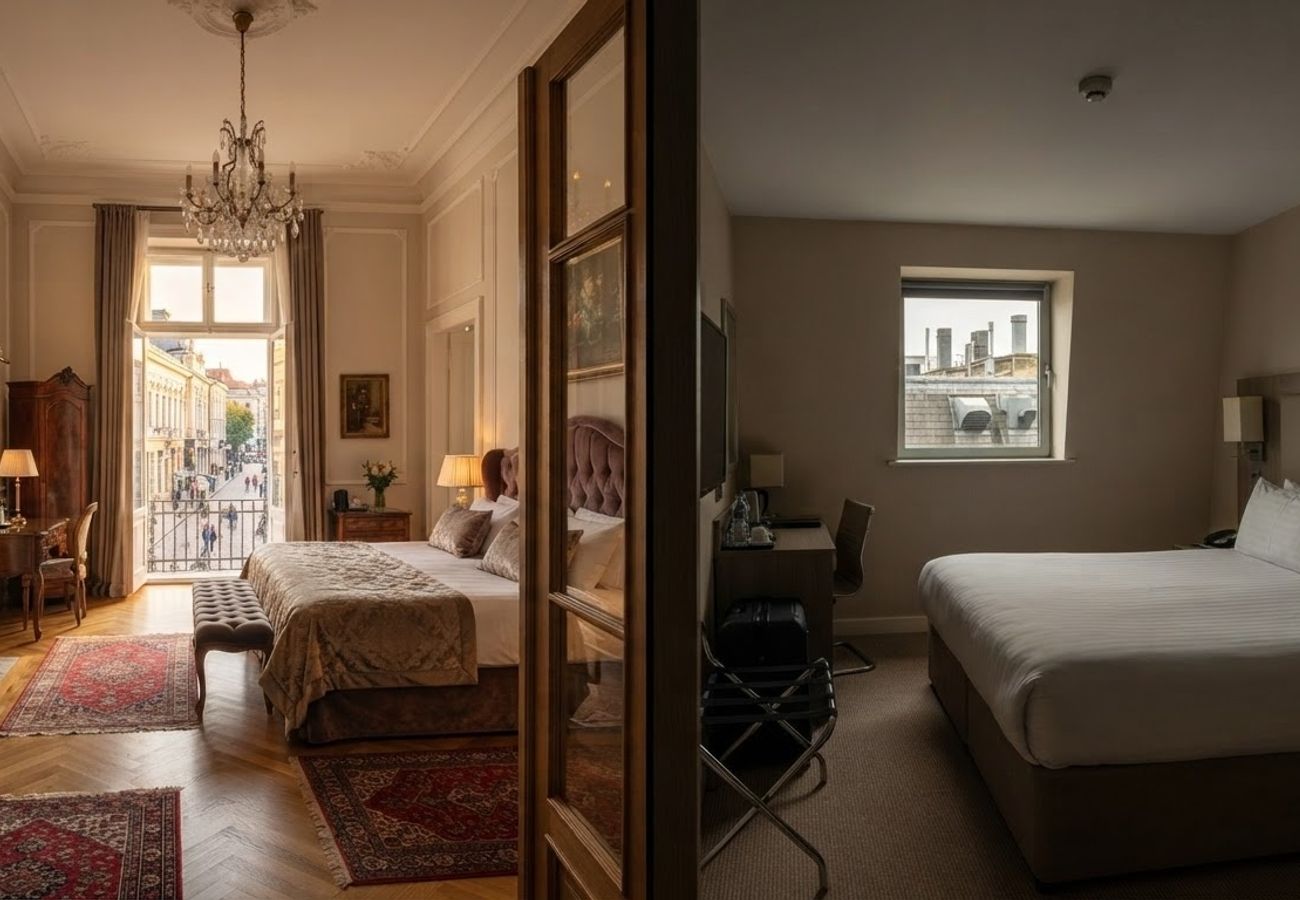
Image generated by AI
A growing disparity in the European hospitality market means a €150 room in Eastern Europe now frequently provides more space, better amenities, and higher character than a €300 room in Western capitals. This shift is driven by localized supply-demand imbalances and varying regional operating costs, creating a "value divide" that benefits strategic travelers.
The economics of European travel are no longer uniform. While the overall demand for accommodation continues to climb—with the European Union recording 3.1 billion overnight stays in 2025, a 2.2% year-on-year increase—the cost of those stays varies wildly by geography. According to Eurostat data, the price levels for household consumption in 2025 ranged from just 63% of the EU average in Bulgaria to a staggering 140% in Denmark.
Regional Price Disparities and Purchasing Power
When a traveler searches for a "€150 hotel in Europe," the actual experience they receive depends entirely on the destination's economic baseline. In high-cost markets, this budget might only secure a cramped room in a noisy central district. Conversely, in emerging luxury hubs, the same amount can unlock a spacious boutique suite, inclusive breakfast, and a prime location within a historic center.
The value of a hotel stay is a composite of room quality, service, location, and ancillary costs. A €145 room that includes breakfast and is within walking distance of major sites often provides a higher net value than a €190 room that requires daily paid transportation.
Eurostat’s 2025 comparative data highlights the broader cost environments that influence these hotel rates. In Bulgaria and Romania, household consumption prices stood at 63% and 65% of the EU average, respectively. In contrast, Denmark (140%), Ireland (136%), and Luxembourg (132%) maintain significantly higher baselines, meaning every euro spent on accommodation, dining, and transport has less purchasing power.
Comparative Household Price Levels (2025)
| Market | 2025 Household Price Level (EU=100) | Traveler Impact |
|---|---|---|
| Bulgaria | 63 | Maximum purchasing power for stays and daily spend |
| Romania | 65 | Highly favorable overall travel economics |
| Poland | 73 | Competitive destination costs |
| Denmark | 140 | High baseline costs for all trip components |
| Ireland | 136 | Premium pricing for services and rooms |
| Luxembourg | 132 | Elevated overall cost environment |
High-Value Destinations in Central and Eastern Europe
The most significant opportunities for "luxury value" are currently concentrated in Central, Eastern, and Southern Europe. Cities such as Sofia, Bucharest, Kraków, Riga, Vilnius, Ljubljana, Zagreb, Porto, Valencia, and Bratislava are redefining the €150 price point.
In capitals like Sofia and Bucharest, lower property and operational costs allow hotels to offer larger rooms and more personalized service without inflating the nightly rate. This creates a market where independent boutique hotels can compete with international chains on quality while remaining significantly more affordable.
Similarly, Kraków and Ljubljana leverage their historic architecture to provide a premium atmosphere that doesn't require the "luxury tax" associated with London or Paris. In Southern Europe, Porto and Valencia offer a similar proposition, combining strong independent hotel sectors with highly walkable urban layouts that reduce the need for additional transport spending.
The Scarcity Premium in Western Hubs
The contrast becomes stark when analyzing high-pressure markets. In these regions, hotel pricing is often a reflection of scarcity rather than actual luxury. The 2024 Olympic Games in Paris served as a primary example; occupancy peaked at 90.5%, with average daily rates (ADR) reportedly hitting €781.
In such environments, travelers pay a premium simply for a specific postcode. A €150 room in a less congested city often feels more luxurious because the price is based on value and competition, not on a desperate shortage of available beds.
Redefining Luxury Beyond the Room
True hotel value is often found in the "invisible" benefits that extend beyond the four walls of the bedroom. Location and inclusions can drastically alter the actual cost of a trip.
A centrally located hotel eliminates the need for expensive taxis, while proximity to railway hubs simplifies regional travel. Furthermore, inclusions such as rooftop terrace access, spa facilities, late check-outs, and complimentary breakfast can transform the economics of a stay.
Value Comparison: €150 vs. €300 Stays
| Feature | €150 Value-Market Stay | €300 High-Cost Market Stay |
|---|---|---|
| Room Size | Larger, often boutique | Smaller, standardized premium |
| Breakfast | Typically included | Often a separate charge |
| Design | Historic or unique character | Corporate international chain |
| Accessibility | Walkable to main attractions | Central but high-density/expensive |
| Logistics | Low transport requirements | Higher spending on transit |
| Amenities | More facilities bundled | Services priced individually |
Market Trends and Industry Data for 2026
The European accommodation landscape is expanding, but not uniformly. In 2025, hotels accounted for 1.9 billion nights (63% of all EU tourism nights), while short-term rentals via digital platforms grew by 11.4%, totaling 951.6 million nights.
Data from CoStar indicates that the average daily rate (ADR) across Europe was approximately €159 in 2025, with an overall occupancy rate of 71%. This suggests that the €150 benchmark is not a "budget" price, but rather the median for the European market. However, regional gaps persist; Southern Europe recorded the highest regional ADR in 2024 at €175.
Despite a slight cooling in demand growth, prices remain resilient. Projections for 2025 across 31 forecast markets suggested a 1.7% growth in Revenue Per Available Room (RevPAR), with 18 of those markets expecting further ADR increases.
Why This Matters for the Modern Traveler
For the traveler, this data proves that star ratings are an insufficient measure of quality. A five-star hotel in a high-cost city may offer a worse physical experience than a four-star boutique hotel in Sofia or Bucharest for half the price.
From a logistical standpoint, the "value-per-euro" approach is essential for families and long-term travelers. A difference of €150 per night over a four-day weekend results in a €600 saving—funds that can be redirected toward higher-quality dining, excursions, or extended stays. The shift toward Eastern Europe isn't just about saving money; it's about accessing a higher tier of hospitality that has previously been reserved for the ultra-wealthy in Western capitals.
The era of the overpriced, cramped city-center room is being challenged by the rise of Eastern European boutique luxury.
Related Travel Guides
Disclaimer
This article is for informational and educational purposes only. It does not constitute legal, financial, or professional advice. While we strive to provide accurate and up-to-date information, travel policies, regulations, and conditions change rapidly. Always verify information with official sources before making travel decisions. Nomad Lawyer makes no representations about the accuracy, reliability, completeness, or suitability of the information provided. Readers should consult qualified professionals for advice specific to their circumstances. The views expressed in this article are those of the author and do not necessarily reflect the views of Nomad Lawyer.
Naina Thakur
Contributor & Travel Specialist
Travel enthusiast and legal writer covering visa regulations, responsible tourism, and cultural journeys across global destinations.
Learn more about our team →