
Europe’s Underrated Autumn Foliage Destinations: Ambroz Valley, Gauja National Park, and Hidden Fall Escapes
Escape the crowds this fall with Europe’s most captivating hidden autumn foliage destinations, spanning Spain's Ambroz Valley, Latvia's Gauja National Park, Croatia's Plitvice Lakes, and the Bavarian Forest.

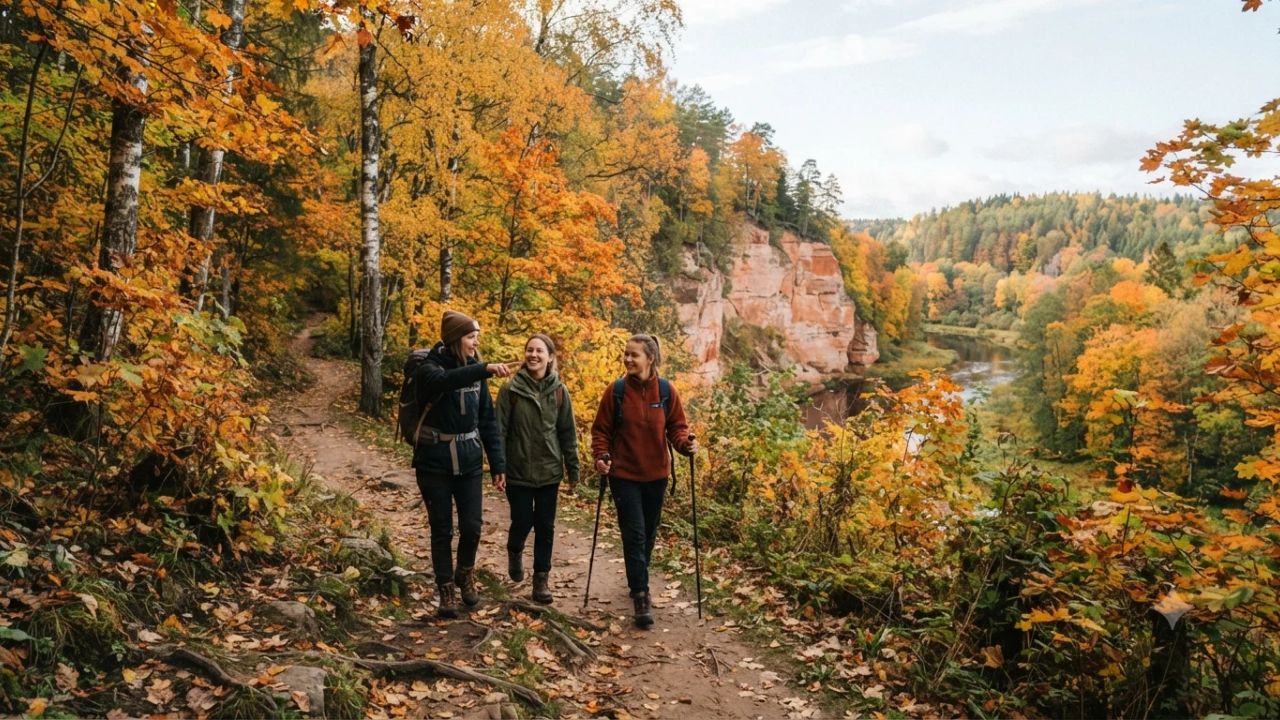
As global travellers seek peaceful, nature-immersive seasonal getaways beyond Europe's heavily congested capitals, a constellation of hidden forest valleys, mountain lakes, and medieval hamlets—led by Spain’s Ambroz Valley and Latvia’s Gauja National Park—has emerged as the continent’s premier frontier for autumn foliage exploration.
While iconic fall destinations like Vermont or Kyoto command immense crowds and premium prices, Europe’s lesser-known wilderness corridors offer dramatic color transitions, vibrant harvest gastronomy, and rich cultural traditions without the tourist congestion. From the chestnut groves of Extremadura and the sandstone river bluffs of the Baltics to the cascading waterfalls of inland Croatia and the primeval canopies of the Bavarian Forest, autumn transforms these regions into golden masterworks.
Navigating these destinations requires an understanding of shifting elevation bands, regional microclimates, national accommodation data, and authentic local bases for an unforgettable autumn journey.
       EUROPE'S UNDERRATED AUTUMN FOLIAGE NETWORK (2026)
       =================================================

                [ BALTIC REGION: LATVIA ]
                Gauja National Park (Sigulda / Cēsis)
                • Golden Birch, River Bluffs & Sandstone Caves
                • Peak Window: Late September – October
                               │
            ┌──────────────────┴──────────────────┐
            ▼                                     ▼
 [ CENTRAL: GERMANY ]                   [ EASTERN: ROMANIA ]
 Bavarian Forest (Zwiesel)              Transylvania (Brașov / Viscri)
 • Primeval Mixed Canopies              • Carpathian Beech Forests
 • Peak: Late Sept – October            • Peak: Late Sept – October
            │                                     │
            └──────────────────┬──────────────────┘
                               │
            ┌──────────────────┴──────────────────┐
            ▼                                     ▼
 [ SOUTHERN: SPAIN ]                    [ BALKANS: CROATIA & ALBANIA ]
 Ambroz Valley (Hervás)                 • Plitvice Lakes (Woodland Falls)
 • Ancient Oak & Chestnut Groves        • Theth, Albanian Alps (Limestone Peaks)
 • Peak Window: October – November      • Peak: Late Sept – October
At a Glance: Europe's Six Leading Underrated Fall Foliage Escapes
Autumn foliage timing is fundamentally dictated by latitude, tree species, and elevation rather than fixed calendar dates. Planning around broader seasonal windows guarantees vibrant landscape viewing regardless of minor weather shifts.
| Destination & Region | Prime Foliage Window | Dominant Tree Species & Scenery | Recommended Base Village / Town | Signature Seasonal Attraction |
|---|---|---|---|---|
| Ambroz Valley, Spain | October to November | Spanish chestnut, Pyrenean oak, mountain terraces | Hervás | Annual Otoño Mágico (Magical Autumn) festival |
| Gauja National Park, Latvia | Late September to October | Golden birch, silver maple, oak, sandstone river cliffs | Sigulda or Cēsis | Turaida Medieval Castle overlooking Gauja Valley |
| Plitvice Lakes, Croatia | Late September to October | Beech, European hornbeam, spruce, cascading waterfalls | Plitvička Jezera | Wooden lake boardwalks framed by autumn leaves |
| Albanian Alps, Albania | September to early October | Beech forests, alpine meadows, limestone peaks | Theth or Shkodër | Valbona-to-Theth mountain pass & stone kulla towers |
| Transylvania, Romania | Late September to October | Carpathian beech, spruce, oak, rolling Saxon hills | Brașov | Bran Castle & UNESCO fortified church of Viscri |
| Bavarian Forest, Germany | September to October | Mixed fir, spruce, mountain sycamore, glacial lakes | Zwiesel or Bayerisch Eisenstein | Tree Top Walk (Baumwipfelpfad) & Rachelsee hike |
1. Ambroz Valley, Spain: Golden Chestnuts and Extremaduran Heritage
Nestled in northern Extremadura near the border of Castile and León, the Ambroz Valley (Valle del Ambroz) represents one of Spain's best-kept rural secrets. Enclosed by the Sierra de Gredos foothills, this protected valley is sheltered from harsh Atlantic winds, creating an ideal microclimate for sprawling forests of sweet chestnut and Pyrenean oak.
The historic village of Hervás serves as the optimal base. Its remarkably preserved 15th-century Jewish Quarter (Barrio Judío) features narrow, cobblestone alleys lined with half-timbered houses made of chestnut wood and sun-dried adobe bricks, leading down to the clear waters of the Ambroz River.
During autumn, the valley hosts the celebrated Otoño Mágico (Magical Autumn) program, a month-long celebration running through November that features guided mycological walks, mountain bike excursions, theatrical storytelling, and open-air artisan markets.
- Where to Stay: Rural boutique hotels (casas rurales) and restored olive mills in and around Hervás, Baños de Montemayor, or Gargantilla.
- Gastronomy to Savor: Hand-carved Jamón Ibérico de Bellota from nearby Montánchez, migas extremeñas (crispy breadcrumb sauté with chorizo, bacon, and paprika), wild forest chanterelles, and roasted sweet chestnuts (calbotes).
2. Gauja National Park, Latvia: Sandstone Bluffs and Medieval Castles
Often celebrated as the "Switzerland of the Baltics," Gauja National Park is Latvia’s oldest and largest national park, preserving the deeply incised, ancient valley of the Gauja River. Spanning over 90,000 hectares, the park transforms into an ocean of blazing gold, crimson, and copper each October as dense stands of birch, maple, and oak change color against red Devonian sandstone cliffs.
Travellers can base themselves in either Sigulda or Cēsis:
- Sigulda: Known for the red-brick Turaida Medieval Castle, which rises majestically above the golden tree canopies of the Gauja Valley. Visitors can cross the valley via the Sigulda Cable Car, suspended 43 meters above the river, and explore Gutmanis Cave, the widest and highest cave in the Baltic region, inscribed with traveler graffiti dating back to the 16th century.
- Cēsis: A charming Hanseatic town boasting cobblestone lanes, wooden artisan cottages, and the imposing 13th-century Cēsis Medieval Castle, where visitors explore dark stone chambers by candlelight before walking through the castle's terraced autumn park.
- Gastronomy to Savor: Hearty dark rye sourdough bread (rupjmaize), traditional grey peas sautéed with smoked bacon lardons (pelēkie zirņi ar speķi), wild boletus mushroom cream soup, and hot berry herbal teas infused with Riga Black Balsam.
3. Plitvice Lakes National Park, Croatia: Waterfall Terraces Framed by Autumn Canopies
While summer tourists descend upon Croatia’s Dalmatian coastline, autumn is the definitive season to explore Plitvice Lakes National Park (Plitvička Jezera). A UNESCO World Heritage site since 1979, the park features 16 stepped, crystal-clear lakes linked by a labyrinth of tumbling waterfalls, travertine dams, and natural limestone barriers.
In late September and October, the dense beech and hornbeam woodlands surrounding the lakes turn vibrant shades of amber and yellow, creating mirrored reflections on the emerald and sapphire water surfaces.
Visiting in autumn offers distinct advantages: ambient temperatures are comfortable for walking the 18 kilometers of wooden boardwalks, and daily visitor counts drop significantly compared to summer peaks.
- Logistics & Tips: Secure timed-entry admission tickets online at least two weeks in advance. Entrance 1 provides the iconic viewpoint over Veliki Slap (the Great Waterfall), while Entrance 2 gives faster access to the serene Upper Lakes (Gornja Jezera).
- Where to Stay: Stay in traditional timber guesthouses in the villages of Rastovača, Korana, or Plitvica Selo to enter the park grounds when gates open at 7:00 AM.
- Gastronomy to Savor: Pan-seared freshwater brown trout sourced from local streams, spit-roasted Lika lamb, baked potatoes with paprika, and warm apple strudel.
4. Albanian Alps, Albania: Majestic Limestone Valleys and Living Traditions
For seasoned travellers craving remote wilderness and untamed topography, the Albanian Alps (historically known as the Accursed Mountains or Bjeshkët e Nemuna) offer an extraordinary autumn setting. Towering limestone crags rise above deep glacial valleys carpeted in wild beech and pine forests.
The isolated mountain village of Theth serves as the cultural and hiking nexus. Theth is renowned for its traditional stone architecture, including the 19th-century Catholic church framed by sheer mountain walls and the fortified "Lock-in Tower" (Kulla e Ngujimit), historically used for mediation under the ancient customary code of the Kanun.
- Hiking Corridors: Early autumn (September through early October) provides the final seasonal window to complete the legendary day-hike between Theth and Valbona across the 1,795-meter Valbona Pass before winter snowfall closes high-elevation trails.
- Where to Stay: Family-run stone guesthouses (bujtina) in Theth or the historic lakeside city of Shkodër, which serves as the logistical transit point.
- Gastronomy to Savor: Freshly baked flija (a multi-layered crepe pie baked over wood embers using a metal bell lid), sheep’s milk cheeses, wild mountain honey, pickled green tomatoes, and roasted mountain veal.
5. Transylvania, Romania: Carpathian Canopies and Medieval Saxon Citadels
Transylvania is synonymous with mountain lore, but its greatest visual asset is the immense sweep of virgin Carpathian mountain forests surrounding the historic city of Brașov.
Encircled by the Southern Carpathians, Brașov boasts gothic landmarks such as the Black Church (Biserica Neagră) and the pastel merchant houses of Piața Sfatului. Autumn turns the surrounding Mount Tâmpa into a steep hillside of gold, accessible via walking trails or a panoramic cable car.
Beyond Brașov, travellers can explore the medieval fortified Saxon villages of the surrounding countryside:
- Viscri: A UNESCO-listed Saxon village featuring a 13th-century fortified church and traditional blue-painted farmhouse homesteads.
- Bran Castle: Perched on a 60-meter rock promontory framed by dense autumn beech woods, offering atmospheric seasonal architecture.
- Sighișoara: A 45-minute drive northwest, Sighișoara is one of Europe's best-preserved inhabited medieval citadels, complete with nine fortified defense towers.
- Gastronomy to Savor: Traditional ciorbă de burtă or bean soup served in a hollowed bread loaf, cabbage rolls stuffed with minced pork and rice (sarmale) served with hot polenta (mămăligă), and homemade plum brandy (țuică).
6. Bavarian Forest, Germany: Old-Growth Mountain Woodlands and Canopy Trails
Covering 24,000 hectares along the Czech border, the Bavarian Forest National Park (Nationalpark Bayerischer Wald) was established in 1970 as Germany’s first national park. Managed under the conservation philosophy of "letting nature be nature," the park encompasses old-growth spruce, fir, and mountain maple forests where deadwood is preserved to regenerate natural biodiversity.
The park offers pristine hiking infrastructure, with marked paths leading past glacial tarns like the Rachelsee and up granite summits like the Großer Arber and Großer Rachel.
- Key Attractions: The Tree Top Walk (Baumwipfelpfad) in Neuschönau winds through the forest canopy at heights of 8 to 25 meters, terminating in a 44-meter-high egg-shaped wooden viewing dome that provides 360-degree vistas across glowing autumn treetops.
- Where to Stay: Traditional Bavarian guest inns (Gasthöfe) and wellness lodges in Zwiesel (famed for historic glassblowing workshops) or Bayerisch Eisenstein.
- Gastronomy to Savor: Bavarian bread dumplings (Semmelknödel) in rich wild chanterelle mushroom sauce (Pfifferlinge in Rahm), roast venison or wild boar, and seasonal Bavarian dark beers (Dunkelbier).
National Tourism Statistics: Five-Year European Recovery Benchmarks
Evaluating European autumn destinations requires looking at national accommodation data compiled by official statistical bureaus. Importantly, national figures represent overall commercial bed-nights rather than specific park gate entries.
Latvia: Rapid Accommodation Recovery (2021–2025)
According to the Central Statistical Bureau of Latvia, the country’s tourism accommodation sector has rebounded strongly from pandemic-era restrictions, benefiting regional nature hubs like Sigulda and Cēsis.
| Year | Accommodation Arrivals | Year-on-Year Growth | Total Overnight Stays | Market Observations |
|---|---|---|---|---|
| 2021 | 1.31 Million | -10.7% | 2.38 Million | Baseline during international pandemic border closures |
| 2022 | 2.20 Million | +66.2% | 3.90 Million | Border reopening sparked massive rebound across Baltic capitals |
| 2023 | 2.44 Million | +12.1% | 4.40 Million | Expansion into regional nature reserves and national parks |
| 2024 | 2.70 Million | +10.9% | 4.70 Million | Sustained growth in nature and cultural heritage travel |
| 2025 | 2.80 Million | +4.5% | 5.00 Million | Over 114% total arrival growth compared to 2021 baseline |
Croatia: Commercial Accommodation Performance (2023–2025)
Data from the Croatian Bureau of Statistics (Državni zavod za statistiku) reveals that tourism demand continues to expand across both coastal regions and inland national parks like Plitvice Lakes.
| Indicator | 2023 | 2024 | 2025 | Two-Year Trend |
|---|---|---|---|---|
| Total Tourist Arrivals | 19.49 Million | 20.25 Million | 20.70 Million | +6.2% growth; record post-pandemic performance |
| Total Overnight Stays | 92.38 Million | 93.68 Million | 94.80 Million | Sustained high occupancy across shoulder months |
| International Arrivals | 16.85 Million | 17.38 Million | 17.60 Million | Steady foreign visitor inflows from Central Europe |
| International Stays | 84.26 Million | 84.96 Million | 85.60 Million | Represents over 90% of all commercial nights |
| Average Nights per Stay | ~4.7 Nights | 4.6 Nights | 4.6 Nights | Consistent length of stay across commercial lodging |
Germany: Record-Breaking Guest Overnight Stays (2021–2025)
Figures from the German Federal Statistical Office (Destatis) show sustained domestic and European demand for nature-based regional holidays, including the Bavarian Forest.
| Year | Guest Overnight Stays (Nationwide) | Year-on-Year Change (%) | Tourism Industry Context |
|---|---|---|---|
| 2021 | 310.2 Million | — | Domestic-only travel restricted by health protocols |
| 2022 | 450.7 Million | +45.3% | Rapid resumption of domestic touring and European leisure |
| 2023 | 487.1 Million | +8.1% | Solid expansion across hiking trails and alpine regions |
| 2024 | 496.0 Million | +1.8% | Strong performance during summer and autumn shoulder seasons |
| 2025 | 497.5 Million | +0.3% | All-time historic record for German guest overnight stays |
Comprehensive Practical Travel Guide: Bases, Food, and Stays
| Destination | Primary Autumn Highlights | Best Logistical Base | Local Specialties to Taste | Suggested Length of Stay |
|---|---|---|---|---|
| Ambroz Valley | Chestnut grove hikes, historic Jewish Quarter, Otoño Mágico | Hervás (Extremadura) | Jamón Ibérico, migas extremeñas, roasted chestnuts | 2 to 3 nights |
| Gauja National Park | Castle viewpoints, sandstone river bluffs, cable car rides | Sigulda or Cēsis (Vidzeme) | Dark rye bread, wild mushroom soup, grey peas | 2 to 3 nights |
| Plitvice Lakes | Cascading waterfalls, boardwalk walks, woodland reflections | Plitvička Jezera / Rastovača | Freshwater trout, roast lamb, apple strudel | 2 nights |
| Albanian Alps | High mountain passes, stone kulla towers, limestone views | Theth or Shkodër | Flija, alpine cheeses, roasted mountain meats | 3 nights |
| Transylvania | Medieval castles, fortified Saxon churches, Carpathian trails | Brașov (Transylvania) | Sarmale, ciorbă sour soups, polenta, țuică | 3 to 4 nights |
| Bavarian Forest | Tree Top Walk, primeval old-growth hiking, wildlife enclosures | Zwiesel / Bayerisch Eisenstein | Semmelknödel with chanterelles, roast boar | 2 to 3 nights |
Curated 10-Day Multi-Region European Autumn Itinerary
For travellers seeking a diverse cross-section of Europe’s autumn foliage, the following 10-day itinerary framework balances the golden Baltic forests of Latvia with the old-growth mountain canopies of Bavaria and the sunny chestnut groves of Spain.
| Day | Destination & Region | Morning Itinerary | Afternoon Activities | Evening & Dining |
|---|---|---|---|---|
| Day 1 | Riga → Sigulda (Latvia) | Land at Riga Airport (RIX); scenic 50-minute drive to Sigulda | Tour the ruins of Sigulda Castle and walk to the Gauja River banks | Savor rye bread and mushroom soup at a traditional timber tavern |
| Day 2 | Gauja National Park | Explore red-brick Turaida Castle and climb the tower for 360° foliage views | Ride the Sigulda Cable Car; walk inside prehistoric Gutmanis Cave | Transfer to historic Cēsis; relax by the cobblestone medieval square |
| Day 3 | Cēsis & Forest Trails | Lantern-lit tour of 13th-century Cēsis Castle chambers | Hike along the Cirulisi nature trails past golden birch canopies | Traditional Latvian dinner featuring grey peas and Riga Black Balsam |
| Day 4 | Latvia → Munich → Zwiesel | Morning transit to Riga; short direct flight to Munich Airport (MUC) | Pick up rental car; drive 2 hours northeast into the Bavarian Forest | Check into a timber Gasthof in Zwiesel; enjoy a fresh Bavarian Dunkel |
| Day 5 | Bavarian Forest National Park | Walk high above the canopies at the Neuschönau Tree Top Walk | Hike the wilderness loop around the glacial Rachelsee tarn | Feast on Semmelknödel dumplings smothered in chanterelle mushroom sauce |
| Day 6 | Großer Arber & Bavarian Trails | Ascend the Großer Arber peak via cable car or hiking trail | Visit a traditional heritage glassblowing studio in Zwiesel | Relax in a thermal alpine sauna; enjoy roasted venison stew |
| Day 7 | Bavaria → Madrid → Hervás | Drive to Munich Airport; direct flight to Madrid-Barajas (MAD) | Scenic 2.5-hour drive west across Castile into the Ambroz Valley | Settle into a rustic casa rural in Hervás; evening walk along cobblestones |
| Day 8 | Ambroz Valley Chestnut Groves | Walk the Castañar Gallego trail through centuries-old chestnut groves | Explore the preserved 15th-century Jewish Quarter (Barrio Judío) | Attend an Otoño Mágico cultural concert; sample migas and Iberian ham |
| Day 9 | Baños de Montemayor & Peaks | Soak in historic Roman thermal baths at Baños de Montemayor | Drive to Puerto de Honduras mountain pass for sweeping valley vistas | Farewell dinner featuring roasted chestnuts and local Extremaduran wine |
| Day 10 | Extremadura → Madrid Return | Morning coffee in Hervás town square; pack regional ceramics and pimentón | Scenic drive back to Madrid-Barajas for international departures | Conclude your seasonal journey |
Essential Packing and Travel Tips for European Autumn Escapes
- Layering System: Autumn weather in the Baltics and Bavaria fluctuates between 5°C and 18°C within a single day. Wear a merino wool base layer, an insulating fleece, and a breathable, seam-sealed waterproof shell jacket.
- Trail Footwear: Fallen leaves frequently conceal wet limestone roots, mud, and uneven granite. Wear waterproof hiking boots with Vibram outsoles to prevent slipping on slick boardwalks and mountain trails.
- Trail Navigation Apps: High-elevation trails in the Albanian Alps and Transylvanian Carpathians can become obscured by autumn fog and fallen leaves. Download offline GPS map regions on apps like AllTrails or Komoot before setting out.
- Car Rental Advice: Exploring the Ambroz Valley and Bavarian Forest requires a rental car. Book vehicles equipped with all-season tires (Ganzjahresreifen) if travelling into higher elevations where early morning frost is common.
Frequently Asked Questions
When is peak autumn foliage season across Europe?
Peak foliage varies by latitude and elevation. Baltic destinations like Latvia peak from late September to mid-October, Central European regions like Bavaria and Transylvania peak in October, while southern valleys like Spain's Ambroz Valley peak from late October through November.
What makes Ambroz Valley in Spain unique for autumn travel?
The Ambroz Valley in Extremadura features sprawling ancient chestnut and oak forests, a preserved 15th-century Jewish Quarter in Hervás, and the annual Otoño Mágico festival offering guided walks, local gastronomy, and cultural events throughout November.
Do I need advance tickets to visit Plitvice Lakes in autumn?
Yes. Plitvice Lakes National Park strictly caps hourly visitor entries to protect its fragile travertine barriers. Visitors should purchase tickets online through the park’s official portal at least one to two weeks ahead, even during shoulder months.
How difficult is the hike between Theth and Valbona in the Albanian Alps?
The Theth-to-Valbona pass is a moderately demanding 17-kilometer mountain trek taking 6 to 8 hours with roughly 1,000 meters of elevation gain. It is best completed between late September and early October before winter snowfall closes the pass.
Related Travel Guides
- WTTC Economic Impact Report: US Leads $2.63T Global Tourism Economy as Spain, India, and Malta Surge
- Vietnam Surges as Australia’s Fastest-Growing Holiday Destination: Phu Quoc and Hoi An Lead Travel Boom
- Antigua and Barbuda Lead Caribbean Luxury Tourism with Expanded American Airlines Flights, Island-Hopping, and 7-Day Guide
Disclaimer
This article is for informational and educational purposes only. It does not constitute legal, financial, or professional advice. While we strive to provide accurate and up-to-date information, travel policies, regulations, and conditions change rapidly. Always verify information with official sources before making travel decisions. Nomad Lawyer makes no representations about the accuracy, reliability, completeness, or suitability of the information provided. Readers should consult qualified professionals for advice specific to their circumstances. The views expressed in this article are those of the author and do not necessarily reflect the views of Nomad Lawyer.
Kunal K Choudhary
Co-Founder & Contributor
A passionate traveller and tech enthusiast. Kunal contributes to the vision and growth of Nomad Lawyer, bringing fresh perspectives and driving the community forward.
Learn more about our team →