
Greece and European Nations Face Tourism Realignment Amid Climate Crisis
Extreme heat and wildfires disrupt Europe's peak summer season, forcing travel trends toward off-peak months and cooler northern destinations.

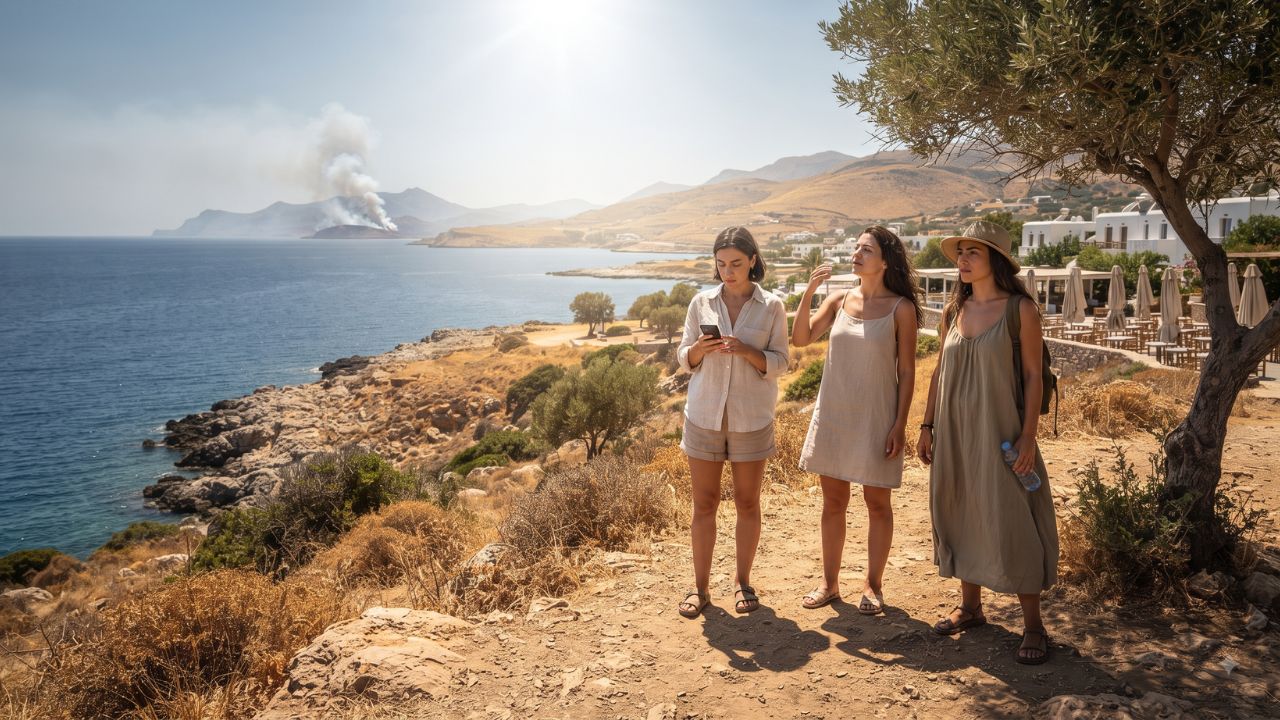
Image generated by AI
The climate crisis is reshaping the European travel sector in August 2026, with rising summer heatwaves and wildfire threats forcing a structural shift in visitor behavior and regional tourism calendars. Across Greece, Spain, Italy, and France, travel operators and communities are adapting to declining summer demand as travelers seek cooler destinations and shoulder-season corridors.
Climate Pressures Redefining Mediterranean Summer Travel
The travel sector in Europe is experiencing a transition as warming weather patterns alter traditional holiday dynamics. In summer 2026, extreme heat and wildfires are challenging the infrastructure and operating models of popular holiday destinations.
By establishing these seasonal travel corridors, the airline's management aims to support both business and leisure travel flows. Corporate travelers and travel agencies, which maintain strong relationships with global destination management organizations, benefit from direct seat capacity. This economic integration supports the travel sector, providing service providers with a reliable channel for high-value bookings.
By establishing these seasonal travel corridors, the airline's management aims to support both business and leisure travel flows. Canadian corporate travelers and travel agencies, which maintain strong relationships with European and Asian destination management organizations, would benefit from direct seat capacity. This economic integration supports the travel sector, providing service providers with a reliable channel for high-value bookings.
By establishing these seasonal travel corridors, the airline's management aims to support both business and leisure travel flows. Canadian corporate travelers and travel agencies, which maintain strong relationships with European and Asian destination management organizations, would benefit from direct seat capacity. This economic integration supports the travel sector, providing service providers with a reliable channel for high-value bookings.
By establishing these seasonal travel corridors, the airline's management aims to support both business and leisure travel flows. Canadian corporate travelers and travel agencies, which maintain strong relationships with European and Asian destination management organizations, would benefit from direct seat capacity. This economic integration supports the travel sector, providing service providers with a reliable channel for high-value bookings.
By establishing these seasonal travel corridors, the airline's management aims to support both business and leisure travel flows. Canadian corporate travelers and travel agencies, which maintain strong relationships with European and Asian destination management organizations, would benefit from direct seat capacity. This economic integration supports the travel sector, providing service providers with a reliable channel for high-value bookings.
The Mediterranean region is facing the strongest impact, where tourism-dependent economies must adjust as extreme heat waves affect traveler behavior, seasonal demand, and local jobs.
The consequences extend beyond resort locations, impacting energy production, municipal water supplies, agricultural yields, and transport networks. As temperature extremes become more frequent, destination management organizations are focusing on long-term climate adaptation strategies.
Country Breakdown: Greece, Spain, and Italy Adapt to the New Climate Reality
Southern European destinations are experiencing shifting visitor patterns as summer heat rises:
- Greece: As one of the most exposed nations to climate-related travel disruptions, Greece is seeing wildfires near Athens and on major islands. These incidents require emergency evacuations, affecting hotels and transport links. Planners expect a redistribution of the tourism calendar, with spring and autumn months drawing more visitors.
- Spain: Spain is managing intense heatwaves, regional drought, and wildfire risks. Some travelers are shifting from hot summer months to cooler periods or choosing northern European destinations. Water shortages are placing additional pressure on rural and coastal tourism communities.
- Italy: Tourism in historic cities and seaside resorts is facing operational difficulties. Extreme daytime temperatures are reducing outdoor activities and affecting afternoon retail revenues. Additionally, drought is impacting agricultural output in key farming regions, raising local food costs.
Infrastructure Disruption: River Transit, Energy, and Low Water Levels
Northern and central European regions are also dealing with infrastructure challenges related to rising temperatures:
This localized disruption also offers a unique opportunity for duty-free retailers and terminal operators to design services suited for stranded passengers. By monitoring passenger comfort levels during long delays, airport customer teams can provide complimentary amenities to ensure guest satisfaction. This proactive approach helps build traveler confidence, ensuring that regional transit routes remain competitive with global hub standards.
This localized disruption also offers a unique opportunity for duty-free retailers and terminal operators to design services suited for stranded passengers. By monitoring passenger comfort levels during long delays, airport customer teams can provide complimentary amenities to ensure guest satisfaction. This proactive approach helps build traveler confidence, ensuring that regional transit routes remain competitive with global hub standards.
- France: Extreme heat and low river levels have disrupted energy production, specifically where power plant cooling systems rely on river water. Wildfire risks also affect outdoor and countryside tourism in the southern provinces.
- Germany: Low water levels on major rivers, particularly the Rhine, have disrupted cargo shipping, creating supply chain challenges and increasing transport costs. Heatwaves also affect outdoor labor productivity in urban areas.
- Danube Region (including Hungary): Drought has caused falling water levels on the Danube River, a key artery for freight and river cruise tourism. Operators are forced to adjust itineraries, schedules, and docking points.
Cool-Climate Adaptation: Portugal, the UK, and the Netherlands
Other northern and western European countries are adapting to changing environmental conditions:
This environmental focus is supported by regional climatologists and conservationists who monitor ecosystem health. By tracking tourist footprint signals, managers can ensure that natural areas remain protected. The integration of carrying-capacity policies with wilderness trails demonstrates how tourism planning can protect biodiversity while offering high-quality educational hikes.
This localized culinary focus also offers a unique opportunity for restaurant associations and culinary schools to design programs suited for premium travelers. By monitoring traveler culinary preferences during long stays, local chefs can provide customized dishes to ensure guest satisfaction. This proactive approach helps build traveler confidence, ensuring that Goan coastal dining remains competitive with global culinary standards.
- Portugal: Heatwaves and drought are increasing wildfire risks in rural areas, threatening nature trails and local ecosystems.
- United Kingdom: Despite a cooler base climate, the UK is managing heatwaves and water shortages that affect farming and public services. While warmer summers can boost domestic beach travel, they also increase environmental strain.
- Netherlands: Drought and water restrictions are impacting agricultural productivity and crop yields in rural communities.
Community Support and Sustainable Destination Adaptation
Adapting to the new climate reality requires balancing economic growth with community welfare and resource conservation.
For the visitor, the real impact is experiencing a tourism framework that prioritizes ecological health, where travel planning supports sustainable water use and reduces greenhouse gas emissions.
Sustainable initiatives include building low-emission rail corridors, promoting off-peak travel packages, and implementing strict fire prevention guidelines in nature reserves.
Visitor Guide: Climate-Smart Travel Planning, Transit, and Water Guidelines
Traveling through Europe during hot summer periods involves coordinating low-carbon transit, monitoring weather warnings, and complying with water conservation rules.
Sample traditional culinary specialties during your stay. Enjoy light, hydrating regional dishes. In Greece, order a traditional Horiatiki salad with tomatoes and cucumbers. In Spain, try chilled tomato Gazpacho. In Italy, try fresh lemon sorbet at local gelaterias.
Coordinate your travel and transit. Opt for high-speed rail operators like Renfe, SNCF, or Trenitalia for cross-border journeys to reduce emissions. During intense heatwaves, check for rail speed restrictions implemented to prevent track buckling. Travel during cooler morning and evening hours.
Comply with local conservation and safety rules. Follow water use restrictions in drought-affected areas like Catalonia and the Greek islands. Never light open fires in forests or dry heathlands. Carry refillable water bottles to stay hydrated, and monitor emergency notifications from local civil protection departments.
Future Outlook: Rebuilding a Resilient European Tourism Framework
The long-term development of European travel depends on integrating climate adaptation with tourism planning. National ministries and travel boards are collaborating to promote off-peak travel guides and regional dispersal.
Sustainable initiatives include upgrading train air-conditioning systems, investing in desalinated water networks, and promoting secondary destinations. By combining infrastructure investment with smart visitor management, Europe aims to support travel innovation, securing a resilient and connected future for Mediterranean tourism.
Related Travel Guides
Disclaimer
This article is for informational and educational purposes only. It does not constitute legal, financial, or professional advice. While we strive to provide accurate and up-to-date information, travel policies, regulations, and conditions change rapidly. Always verify information with official sources before making travel decisions. Nomad Lawyer makes no representations about the accuracy, reliability, completeness, or suitability of the information provided. Readers should consult qualified professionals for advice specific to their circumstances. The views expressed in this article are those of the author and do not necessarily reflect the views of Nomad Lawyer.
Preeti Gunjan
Contributor & Community Manager
A passionate traveller and community builder. Preeti helps grow the Nomad Lawyer community, fostering engagement and bringing the reader experience to life.
Learn more about our team →