
Europe Airport Chaos: New EES Rules Trigger 3-Hour Queues, Missed Flights Across Schengen Zone in April 2026
EU's Entry/Exit System (EES) rollout creates airport chaos with 3-hour queues, stranded passengers, and missed flights across 29 Schengen countries as biometric registration replaces traditional stamping.

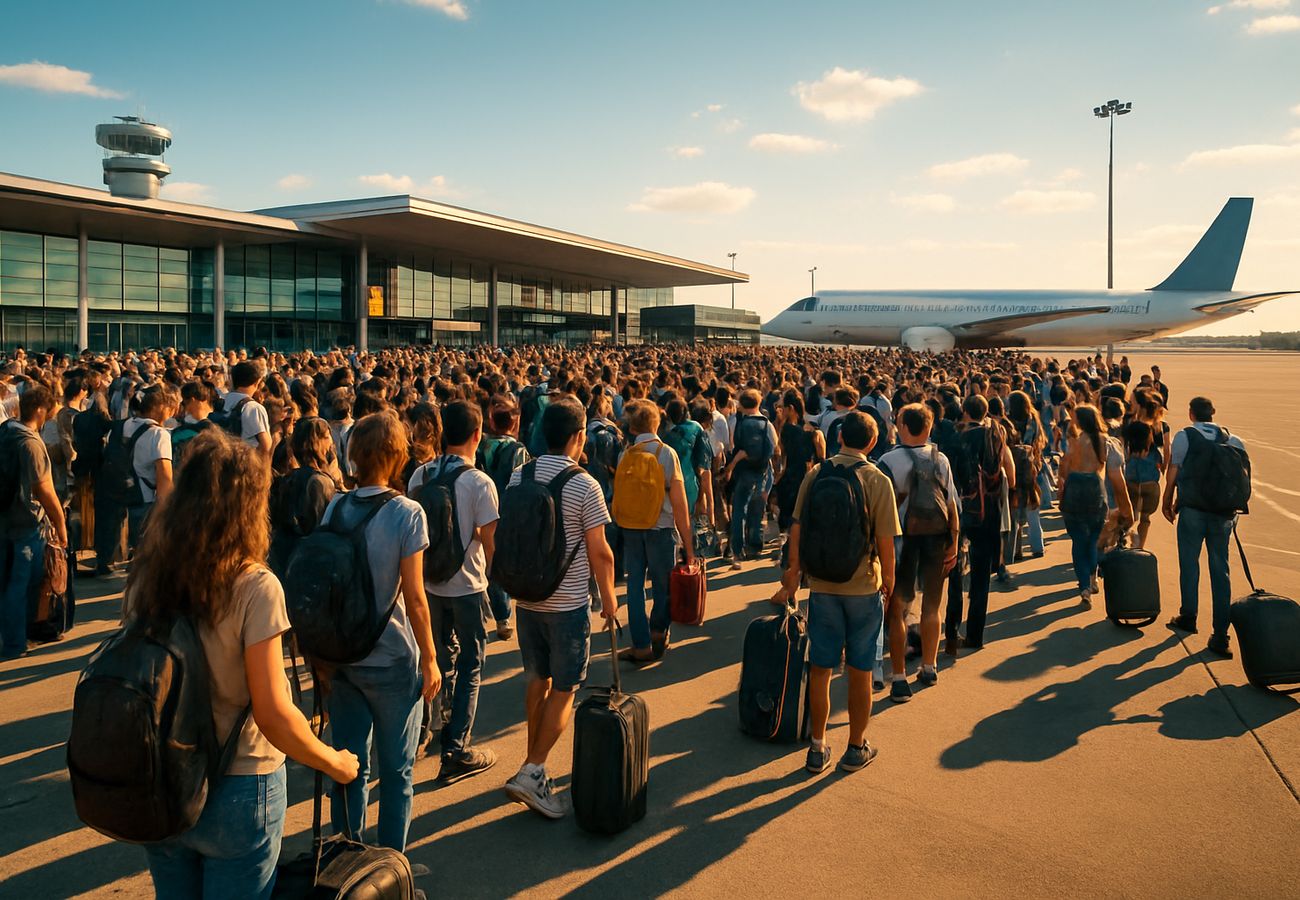
Image generated by AI
The Digital Border Revolution Meets Reality: Understanding the EES Crisis
For years, the European Union's Entry/Exit System (EES) promised modernization—a high-tech "seamless" border that would replace traditional ink stamps with swift biometric scans. However, as the system reached full operation in April 2026, that promise collided with harsh reality: three-hour queues, chaotic terminals, and hundreds of passengers watching their planes depart without them.
From the sun-soaked terminals of Spain to the busy hubs of Italy and France, the rollout of the EES has transformed standard airport transit into a high-stakes race against the clock. For British travelers and other non-EU nationals, the "dream holiday" is increasingly starting with a "border control nightmare."
The Big Switch: What Changed on April 10, 2026
On April 10, 2026, the transition period for the EES officially ended. For the 29 countries within the Schengen Area, manual passport stamping is now a thing of the past. In its place is a mandatory digital registration that requires every non-EU traveler to provide:
- Four Fingerprints: Scanned at dedicated kiosks or border desks
- Facial Biometrics: A high-resolution photo captured to link identity to passport
While the EU Commission insists that subsequent entries will be faster once a profile is created (records last for three years), the initial registration is proving to be a logistical bottleneck. Industry experts note that registering a single traveler can take up to four times longer than a traditional stamp, creating a "ripple effect" that can paralyze an entire terminal.
The Human Toll: Stories from the "No-Show" Gate
The statistics are jarring, but the human stories are even more compelling. Just this past Sunday at Milan's Linate Airport, over 100 passengers—including families with young children—were left stranded after being stuck in a "nightmare" queue for over three hours.
One flight to Manchester reportedly departed with the majority of its seats empty because passengers were physically prevented from reaching the gate by the sheer volume of the border backlog. "We were told we were 'no-shows' while we were standing right there in the queue," one frustrated traveler shared. "We could see the gate, but the system just wouldn't move."
Airlines like easyJet and Ryanair have expressed "frustration and disappointment," urging border authorities to use "permitted flexibilities"—essentially pausing the biometric capture when queues become dangerous—to keep the flow of people moving.
Why Is the Chaos Happening Now? The Perfect Storm of 2026
Several factors have converged to create this operational crisis:
Staffing Shortages: Many airports are struggling with a chronic lack of border personnel to manage the new kiosks.
Tech Teething Issues: Reports of kiosk failures and software glitches have been widespread in hubs like Lisbon, Paris CDG, and Brussels.
The "First-Time" Hurdle: Because the system is new, almost every non-EU traveler is a "first-time" registrant, meaning the maximum amount of time is being spent on every single passenger.
Your Rights: Who Pays for a Missed Flight?
This is the part that hits travelers the hardest: If you miss your flight due to border control queues, the airline is generally not legally liable.
Under current regulations, airlines are responsible for delays they cause (such as mechanical issues or crew scheduling). However, immigration and visa processing are considered "third-party" actions. While some airlines, like easyJet, have offered free transfers as a gesture of goodwill, many passengers have been forced to pay over £1,000 for last-minute alternative flights.
Pro Tip: Check your travel insurance policy immediately. Some "Premium" policies cover missed departures due to "unforeseen airport congestion," but many standard policies do not.
What This Means for Travelers
The EES implementation represents a significant shift in how travelers navigate European borders. Non-EU citizens must now budget additional time for biometric processing, and the current system is operating at capacity during peak travel periods. Airlines are not obligated to compensate passengers for missed flights caused by border delays, making travel insurance and early arrival critical strategies for summer 2026 travel.
How to Survive the EES Era: Essential 2026 Travel Tips
If you are heading to the Continent this summer, you cannot afford to travel as you did in 2024. Consider these critical adjustments:
The 4-Hour Rule: While the old advice was to arrive two hours early, major hubs like Paris and Malaga are now recommending arriving four hours before departure.
Download the App: The EU has launched a "Travel to Europe" mobile app. In some countries, you can pre-load your passport data and even a facial scan up to 72 hours before arrival to shave minutes off your kiosk time. Visit the official EU travel information portal for more details.
Avoid "Duty-Free Dallying": The time you used to spend browsing for perfume should now be spent heading straight to the passport control queue.
Keep Your Boarding Pass: Since you no longer get a physical stamp, your boarding pass (digital or paper) is your best proof of when and where you entered or exited the zone.
Plan for Peak Season: As the peak summer season of 2026 approaches, expect extended queues at all major European airports. Check real-time airport congestion data through FlightAware before traveling.
Looking Ahead: The Long-Term Vision
The EES was designed to make Europe safer and more efficient, and in the long run, it likely will. However, for now, the system is in its "infancy," and travelers are the ones feeling the growing pains.
As travel experts continue to monitor the situation, the message is clear: Prepare for the worst, arrive earlier than ever, and keep your cool. The "Rose of the Balkans" or the "Beaches of the Algarve" are still there, but getting to them now requires significantly more patience than it used to.
For the most current information on Schengen Area travel requirements, consult the International Air Transport Association (IATA) and your airline's official guidance before booking your summer 2026 travel.
Related Travel Guides
Disclaimer
This article is for informational and educational purposes only. It does not constitute legal, financial, or professional advice. While we strive to provide accurate and up-to-date information, travel policies, regulations, and conditions change rapidly. Always verify information with official sources before making travel decisions. Nomad Lawyer makes no representations about the accuracy, reliability, completeness, or suitability of the information provided. Readers should consult qualified professionals for advice specific to their circumstances. The views expressed in this article are those of the author and do not necessarily reflect the views of Nomad Lawyer.
Kunal K Choudhary
Co-Founder & Contributor
A passionate traveller and tech enthusiast. Kunal contributes to the vision and growth of Nomad Lawyer, bringing fresh perspectives and driving the community forward.
Learn more about our team →