
EU Entry Exit System 2026: Non-EU Travelers Face Potential Border Queues as Digital EES Launches
The European Union is implementing the Entry Exit System (EES) in 2026, replacing passport stamps with biometric digital registration for non-EU visitors, sparking warnings of significant border delays.

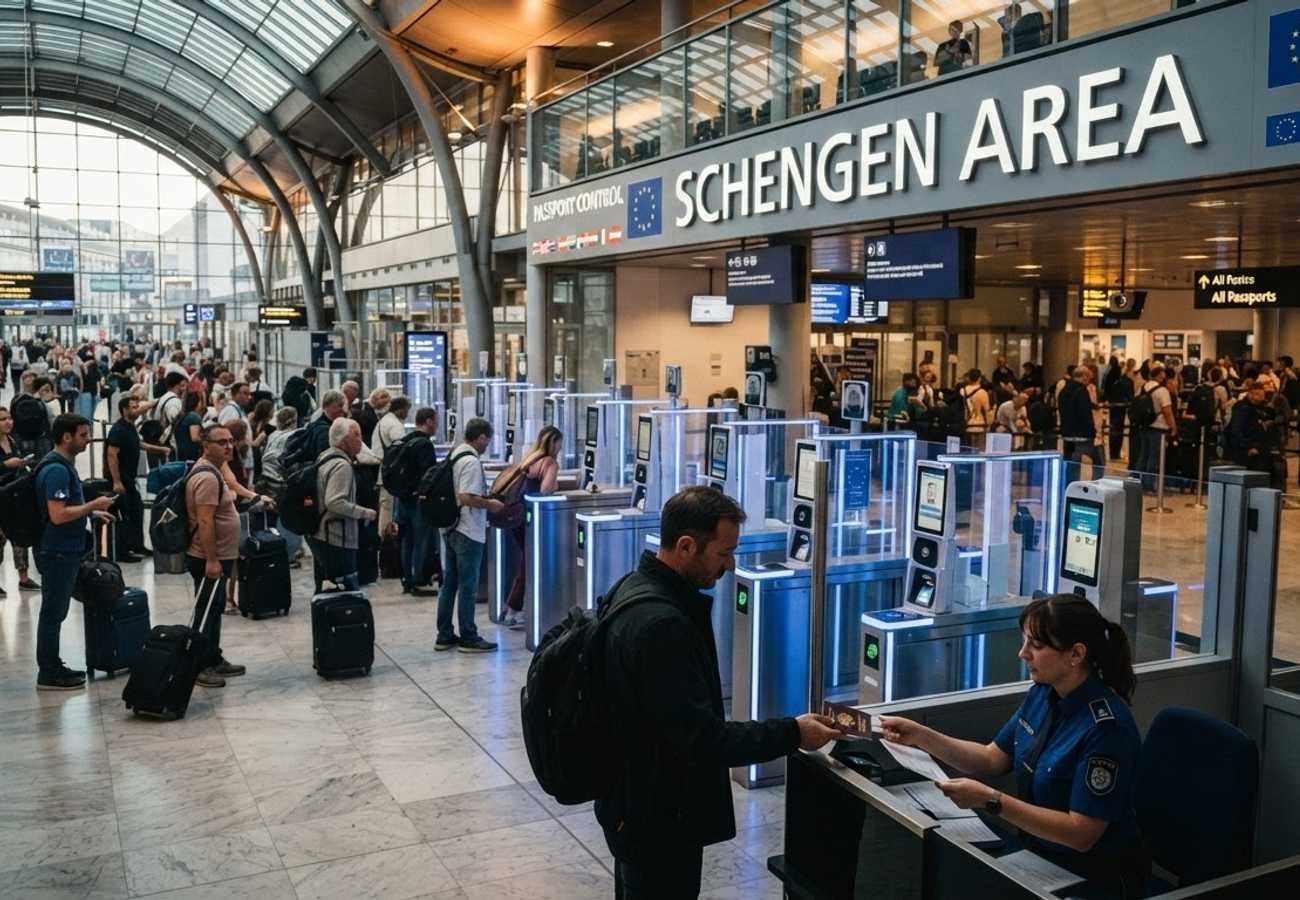
Image generated by AI
[Brussels, August 27, 2026] — Millions of international visitors entering the Schengen Area are facing a fundamental shift in border protocols as the European Union prepares to activate the Entry Exit System (EES). This digital overhaul replaces traditional manual passport stamping with a biometric registration process, a move that officials warn could trigger significant processing delays at major European gateways during the initial rollout.
The transition to a fully digital border management framework aims to tighten security and eliminate the inaccuracies associated with physical stamps. However, the requirement for non-EU nationals to provide fingerprints and facial scans upon arrival is creating logistical anxiety for airport operators and travel planners across the continent.
Biometric Registration Replaces Manual Passport Stamps
The Entry Exit System represents a pivot toward automated surveillance of non-EU nationals entering the Schengen zone for short-term stays. Under the new mandate, the traditional ink stamp—used for decades to track visa durations—is being phased out in favor of an electronic ledger.
Eligible travelers will now undergo a digital registration process that captures specific biometric data, including facial images and fingerprints, alongside their passport details. This data is stored in a centralized system that automatically records the exact date and time of entry and exit.
By digitizing these movements, the EU intends to create a foolproof mechanism for identifying "overstayers"—individuals who remain in the Schengen Area beyond their legal permit. This shift is expected to reduce irregular migration and provide border guards with real-time data on visitor movements, significantly strengthening the external perimeter of the EU.
Infrastructure Strain at Major European Gateways
The implementation of EES is expected to create immediate bottlenecks at the busiest points of entry. Aviation authorities in France, Germany, Spain, Italy, and the Netherlands are currently coordinating with border police to expand processing facilities and enhance passenger communication to mitigate chaos.
The primary concern involves the "first-time registration" window. Because the system requires the collection of biometric data for every non-EU traveler, the initial encounter at the border kiosk will inevitably take longer than a standard passport glance.
Industry reports suggest that during peak travel windows—such as the summer holiday rush or major international summits—even a marginal increase in per-passenger processing time could result in massive queues. This is particularly concerning for airports that are already operating at maximum capacity.
Transit Risks and Transport Operator Warnings
Airlines and international rail providers are now issuing urgent advisories to passengers. The added time required for EES registration could jeopardize tight connection windows, especially for those transferring between flights in hub cities or moving across borders via high-speed rail.
Transport operators are urging visitors to arrive at terminals significantly earlier than previously required. There is a specific warning for travelers with short layovers, as the biometric registration process cannot be bypassed, and any delay at the primary border check could lead to missed connecting departures.
The tourism sector is watching these developments closely. There is a prevailing fear that "border friction"—the stress and time lost during entry—could negatively impact the overall visitor experience and discourage short-term tourism from key global markets.
Digital Strategy for Schengen Border Security
The EES is not a standalone project but a core component of a broader EU strategy to modernize border management. By investing in high-tech digital tools, the Union aims to replace fragmented national systems with a unified, interoperable database.
This digital transformation allows member states to share information instantaneously, ensuring that a traveler flagged in one country is immediately visible to authorities in another. While the immediate focus is on security and the prevention of illegal stays, the long-term objective is to create a more predictable and seamless flow of people once the biometric profiles are established and the "friction" of first-time registration subsides.
Essential Requirements for Non-EU Nationals
The burden of this transition falls almost entirely on non-EU citizens. Travelers from major source markets—including the United States, United Kingdom, Canada, and Australia—must now prepare for a different entry experience.
Unlike EU citizens, who move through borders with minimal interference, non-EU visitors will be the primary users of the new biometric kiosks. Travel experts suggest that the only way to mitigate the risk of delays is through rigorous pre-trip planning and a clear understanding of the biometric requirements.
For the digital nomad or the frequent business traveler, this means the "fast track" experience may be temporarily suspended as the system stabilizes. Checking official government portals for the most current guidance is now a necessity rather than a recommendation.
Why This Matters: The Impact on the Modern Traveler
From a logistical standpoint, the EES transforms the border from a simple check-point into a data-collection event. For the traveler, this means the "invisible" part of the journey—passing through customs—now becomes a visible, time-consuming hurdle.
The real-world implication is a shift in travel psychology; the "spontaneity" of European travel is being replaced by a need for calculated buffering. If you have a three-hour layover in Frankfurt or Paris, that window may no longer be sufficient to clear biometric registration and reach a departing gate. Furthermore, the permanent storage of biometric data raises new questions about digital privacy and data sovereignty for non-EU citizens.
While the EU promises a more "efficient" future, the immediate reality is one of increased bureaucracy and potential congestion. The success of the EES will be measured not by the security it provides, but by how quickly it can move a traveler from the aircraft to the city center without a three-hour queue.
The era of the passport stamp is ending, replaced by a digital fingerprint that tracks every movement across the European continent.
Related Travel Guides
Disclaimer
This article is for informational and educational purposes only. It does not constitute legal, financial, or professional advice. While we strive to provide accurate and up-to-date information, travel policies, regulations, and conditions change rapidly. Always verify information with official sources before making travel decisions. Nomad Lawyer makes no representations about the accuracy, reliability, completeness, or suitability of the information provided. Readers should consult qualified professionals for advice specific to their circumstances. The views expressed in this article are those of the author and do not necessarily reflect the views of Nomad Lawyer.
Raushan Kumar
Founder & Lead Developer
Full-stack developer with 11+ years of experience and a passionate traveller. Raushan built Nomad Lawyer from the ground up with a vision to create the best travel and law experience on the web.
Learn more about our team →