
EU Biometric Border Chaos 2026: Facial Scans & Fingerprint Checks Create Airport Nightmares Across France, Spain, Italy & Greece
The EU Entry/Exit System (EES) has triggered massive border delays across European airports, with travelers facing three-to-five-hour waits for mandatory biometric checks in summer 2026.

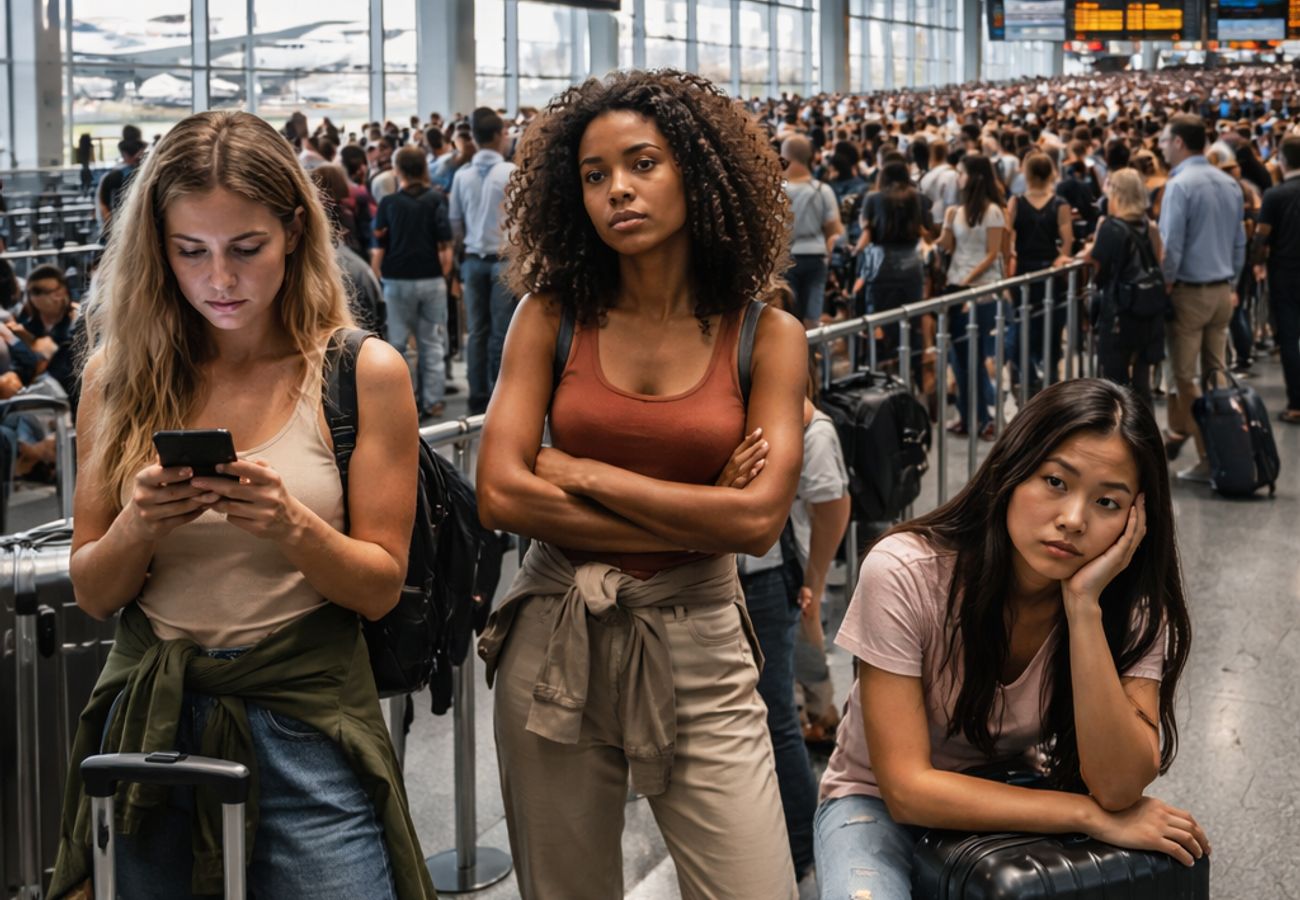
Image generated by AI
The Digital Border System That Broke European Airports
On April 10, 2026, the European Union Entry/Exit System (EES) went fully operational. What was supposed to be a streamlined security upgrade has instead become the summer's biggest travel catastrophe. Border control authorities across Europe now capture facial images and fingerprints from every non-EU traveler entering the Schengen zone. Traditional passport stamps are gone. Digital biometric data is in.
The result? Three-to-five-hour delays at Europe's busiest airports.
Reddit: "I missed my connection at CDG because I spent four hours in the biometric queue. They only had two kiosks open for hundreds of people." — r/travel
The Numbers: 66 Million Scans and Counting
Since the EES launch, border authorities have processed over 66 million entries and exits through the new biometric system. More than 32,000 travelers have been banned from entry for lacking proper documentation. The scale is staggering. The operational execution is fractured.
Major European airports—Paris Charles de Gaulle, Barcelona El Prat, Madrid Adolfo Suárez, Rome Fiumicino, and Athens International—are experiencing unprecedented congestion. Peak summer travel has collided with a system that was not built to handle the volume.
France: Europe's Central Bottleneck
France operates one of Europe's busiest transit hubs. Travelers arriving at Charles de Gaulle and Orly airports now face mandatory biometric registration that can take 5-10 minutes per person. During peak hours, single-file queues snake backward through entire terminal wings.
In response, French border authorities temporarily eased some procedures to manage crowding. This is a band-aid on a much larger wound. Airlines operating out of Paris have issued formal advisories urging passengers to arrive four hours early instead of the standard two.
Spain: Barcelona, Madrid, and the Canary Islands Grinding to a Halt
Spain's three primary summer destinations—Barcelona, Madrid, and the Canary Islands—are reporting severe bottlenecks at biometric registration kiosks. Wizz Air, Ryanair, and other major carriers have issued passenger alerts.
The gridlock is so pronounced that families are missing flight connections. Tour operators are reporting cascading cancellations. Hotel check-ins are delayed because guests are stuck in border queues instead of traveling to their accommodations.
Italy: Registration Kiosks Overwhelmed
Rome Fiumicino and Milan Malpensa—Italy's primary international gateways—have become operational disasters. Bottlenecks form immediately at biometric registration kiosks where travelers must scan faces and provide fingerprints. Employees are overwhelmed. Systems crash during peak hours.
Complaints from stranded passengers have flooded airlines and travel agencies. The EU's own border management reports acknowledge insufficient kiosk deployment in Italian airports.
Greece: Reversing Course, Facing Consequences
Greece initially paused biometric checks temporarily to manage summer crowds. The government reversed that decision, reintroducing full EES requirements for all travelers—including UK and EU nationals—in late May 2026.
The reversal has triggered immediate backlash. Travelers from London, Manchester, and Dublin report two-to-three-hour delays at Athens International. British tour operators describe the situation as "unmanageable."
UK and Non-EU Nationals Hit Hardest
United Kingdom travelers are among the most severely affected cohort. Post-Brexit, UK citizens are classified as non-EU travelers and must complete full biometric registration.
Wizz Air and other carriers have formally requested passengers allow three hours minimum for border processing. Passengers from the USA, Canada, UAE, and Australia are experiencing identical delays. Missed connections are epidemic.
Airlines Under Operational Siege
Europe's major carriers are in crisis mode. Airlines have requested temporary waivers of biometric registration during peak travel periods, though EU officials have largely rejected these appeals.
The operational impact is real: boarding delays ripple through schedules, causing cascade cancellations. Flight crews exceed duty-time limits waiting for passengers to clear border control. Turnaround times between flights have become impossible to meet.
The Economic Reckoning: Tourism Revenue at Risk
Tourism demand remains strong—EU accommodation bookings are up year-over-year. However, negative traveler experiences are driving cancellations and deterring spontaneous bookings.
Industry analysts project that peak summer tourism revenue could decline by 8-12% if border delays persist. Hotels, tour operators, and ground transportation services are reporting financial strain. A traveler stuck in a four-hour airport queue is less likely to spend money on excursions or fine dining.
The paradox: security has improved. Traveler satisfaction has collapsed.
What You Must Do: Practical Survival Guide
Arrive three hours early minimum. This is non-negotiable for EU travel in summer 2026. Many airports now recommend four hours for international flights during peak periods.
Have your passport ready. Ensure it's not expired and that you have the correct biometric documentation for your nationality. UK travelers must have valid passports (not expired national identity cards).
Plan for extended border time. Budget an additional hour beyond normal airport procedures. Bring water, charging cables, and entertainment. Queues are long.
Book flexible tickets. Given operational unpredictability, consider refundable or flexible booking options to protect against missed connections.
Register with your embassy. If traveling as a UK, USA, Canadian, or other non-EU national, register with your country's embassy in advance.
FAQ: What Every Traveler Needs to Know
Q: What exactly is the EU Entry/Exit System (EES)?
The EES is a digital border control system that captures facial images and fingerprints from non-EU travelers upon entry to the Schengen zone. It replaces manual passport stamps and is designed to track overstays and security threats.
Q: Do all travelers have to go through biometric checks?
Yes. All non-EU citizens entering the Schengen zone must provide biometric data. EU and Schengen citizens initially had exemptions, but Greece and other nations have expanded the requirement. Always assume you'll need biometrics.
Q: How long will biometric queues really be?
During peak summer travel (June through August), expect three-to-five hours at major hubs. Off-peak travel (early morning, late evening) may see shorter waits of 45 minutes to 1.5 hours.
Q: Can I appeal a biometric rejection or overstay ban?
Yes. The EES system flags travelers for overstays. If you believe you've been incorrectly flagged or banned, contact your country's embassy or the relevant national border authority immediately. Appeals can take weeks to months.
Q: Will biometric checks eventually speed up?
Possibly. EU officials have committed to deploying additional kiosks and staff by late summer 2026. However, system improvements typically lag behind deployment timelines.
The Larger Paradox: Security vs. Experience
The EU Entry/Exit System represents a genuine security advancement. Identifying overstayed visas, tracking high-risk individuals, and digitizing border processes are legitimate governmental priorities.
The implementation, however, reveals a critical gap between policy design and operational reality. European border authorities underestimated volume, underdeployed resources, and failed to coordinate with airlines and airports beforehand.
Travelers are caught in the middle: safer borders, worse experiences.
The EU promised seamless security. Summer 2026 delivered queues.
Related Travel Guides
United Airlines Signals Sharp Summer Fare Hikes as Jet Fuel Costs Surge Globally
Disclaimer
This article is for informational and educational purposes only. It does not constitute legal, financial, or professional advice. While we strive to provide accurate and up-to-date information, travel policies, regulations, and conditions change rapidly. Always verify information with official sources before making travel decisions. Nomad Lawyer makes no representations about the accuracy, reliability, completeness, or suitability of the information provided. Readers should consult qualified professionals for advice specific to their circumstances. The views expressed in this article are those of the author and do not necessarily reflect the views of Nomad Lawyer.
Preeti Gunjan
Contributor & Community Manager
A passionate traveller and community builder. Preeti helps grow the Nomad Lawyer community, fostering engagement and bringing the reader experience to life.
Learn more about our team →